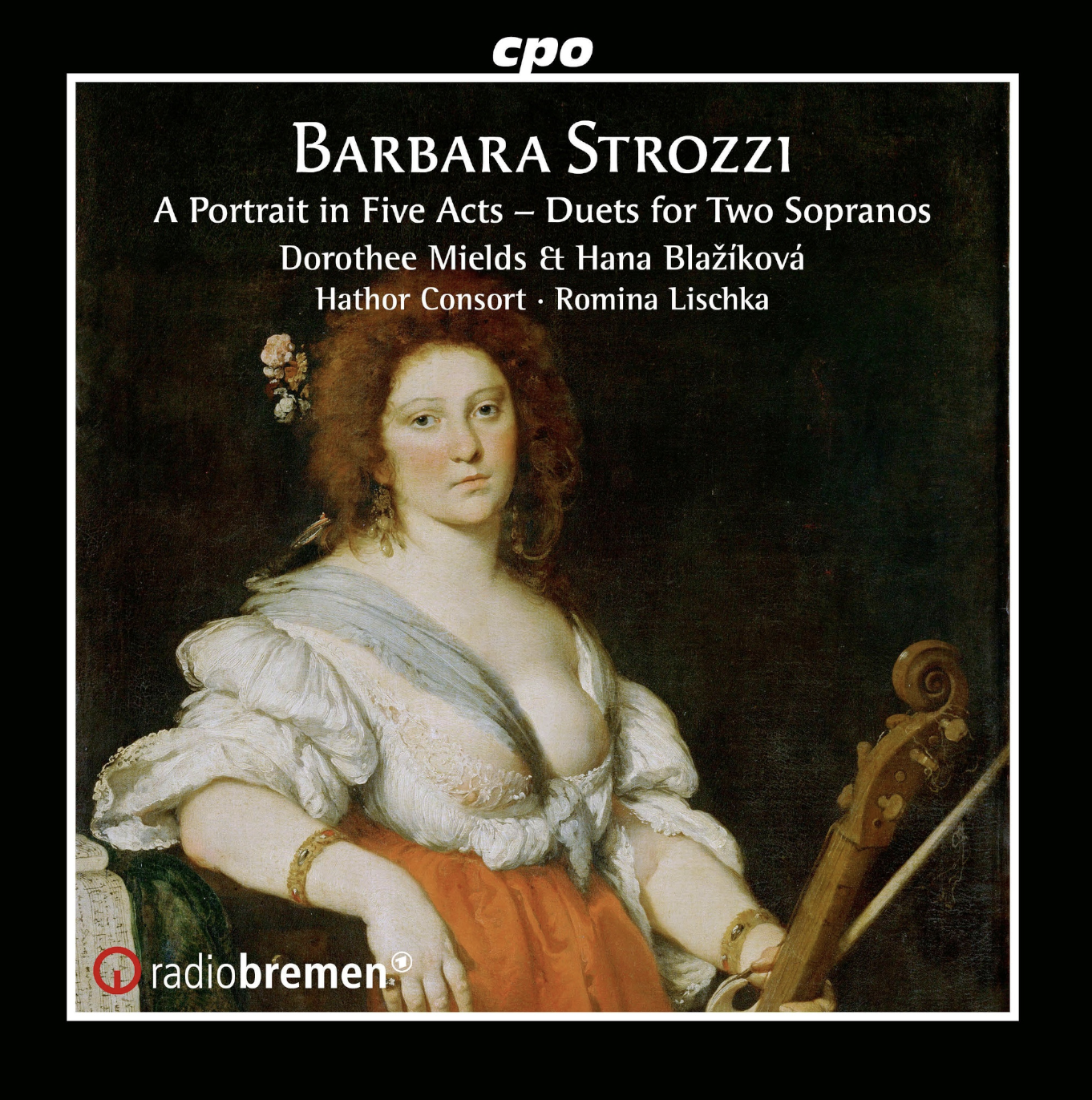
Strozzi: Portrait in 5 Acts • Mields & Blažiková
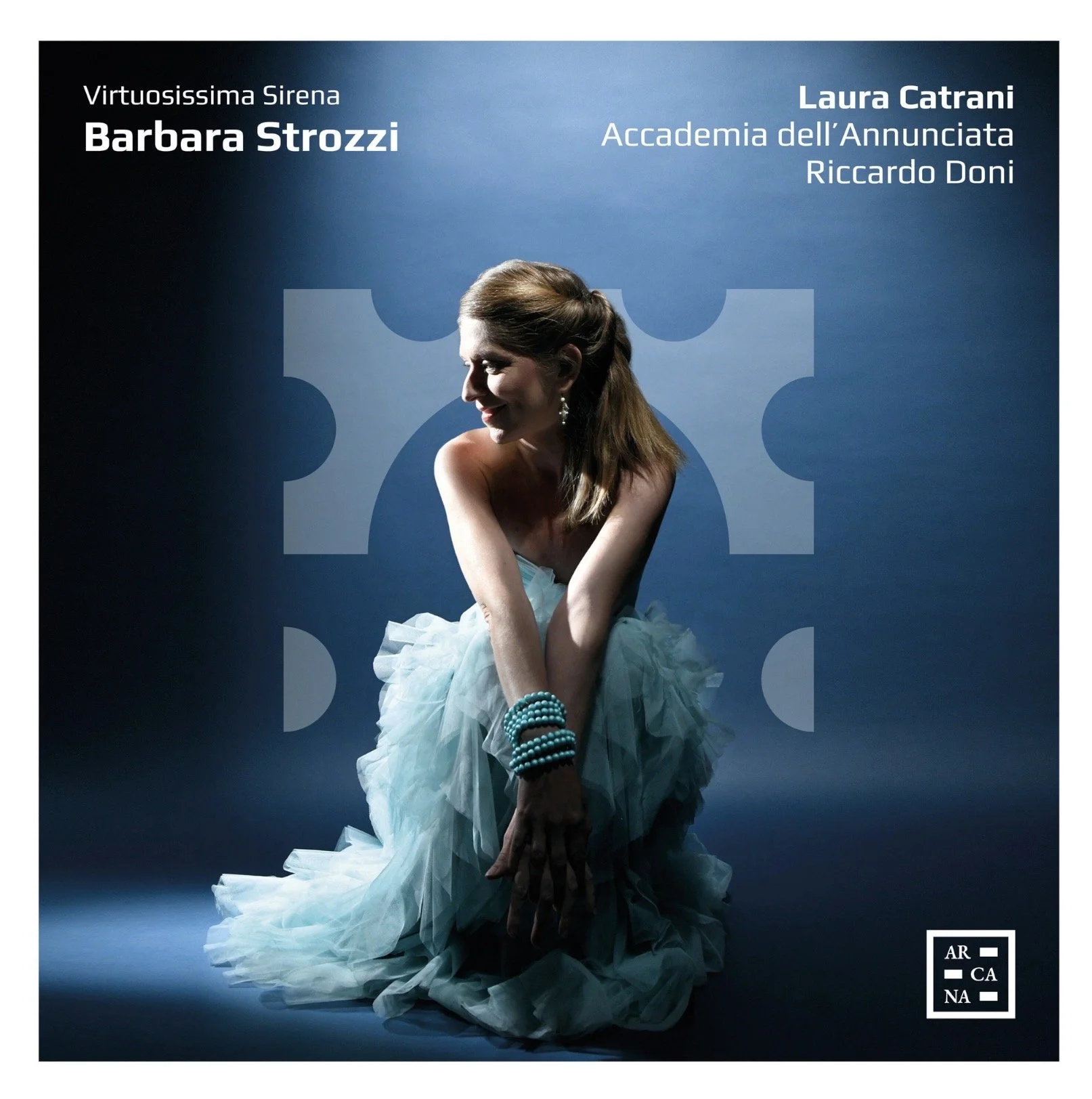
Barbara Strozzi is now widely regarded as the most prolific and artistically substantial female composer of the 17th century, and one of the leading composers of secular vocal music in mid-Baroque Italy regardless of gender. Her music shares the expressive innovations known through the works of Monteverdi and Cavalli. Her eight published volumes of vocal music, issued under her own name, are unprecedented for a woman of her era and demonstrate both professional ambition and compositional authority.
What I can’t say about her personality or actions led to her being accepted as a composer at a time when the job was almost certainly always dominated by men. In this new release from the Hathor Consort, with singers Dorthee Mields and Hana Blažiková is a focus of providing a musical portrait of Stozzi, in what they call five acts: spiritual artist, erotic lover, corset of society, loving mother, and protected daughter. One interpretation for her success may well be that she was just that superlatively talented to warrant attention and support.
Romina Lischka leads the ensemble from treble and bass viol, with contributions on nyckelharpa, salterio, lutes and guitars, lirone, harp, and organ—a lush continuo group. Mields and Blažiková are well matched—providing duets in over seventy-five minutes of music. I am familiar, of course, with both singers, but I’m less familiar with the band, but found their support on the album was both sensitive and generous with excess. Hathor have appeared earlier performing Tuma and Biber on a 2020 Ramée release. In this album, singers and players have created an attractive stereo presentation for the home listener, in an appropriate acoustic, chamber in nature, with just the right amount of reverb.
The great way to warm up to this album is to listen to diminutions on the old tune "Susanne un jour," which allows the director to show off a bit. It's music that pulls you in, just as the sung pieces which dominate on this album demand.
Strozzi’s musical subjects mirror that of other composers during her time: matters of love, nature, and lament. Track 3 is a moving example of emotion, “Lagrime mie, lamento” from her op. 7, here an instrumental number that is influenced by poetry, provided in the booklet. I don’t know if it is written out for voice(s) or not, but programs like these work well with a few instrumental numbers between the sung ones. It’s followed by a curious madrigal, titled in English “To his cruel lady’s brass door-knocker.” The writing for the two voices is really delicious stuff, and both singers as so well matched to the challenge.
Strozzi is able to capture the light side of love with track 7’s depiction of cupids; to the more dramatic, with “L’Amante segreto,” professing a desire to die than to have her distress be discovered. The closest comparison I can make is Monteverdi’s love-themed madrigals, which, while similar in style, are here deluxe by comparison because of the instrumental supports. I’d say Strozzi’s style is a not as severe as Monteverdi’s, in terms of trying harmonic experiments to make the text’s context clear. The writing in track 14, “Ardo in tacito foco” takes on fanciful writing, which decorates an unsurprising harmonic progression, using altering scenes to break up the longer text. There’s one surprise where in the third minute the composer colors the note with a downward half-step which, for me, arrested my attention.
Some of these pieces aren’t duets in the traditional sense; in some cases they’ve broken up the line between the two sopranos.
Then there are the true duets, such as track 20 “I baci,” which again, focused on a theme of love, nearly work without listening to the text, in terms of musical material. I closed my eyes imagining two birds locked together in song, but couldn’t imagine the text, “wantonly they merge, like vipers they bite each other….” The poetry, of course, deserves its own discourse, even though for us the focus is on how the composer responds to this poetry: the ending of the recording with track 20 is certainly tongue-in-cheek: the line “kiss my mouth and be silent” ends with the singers expertly ending the phrase quietly.
The opening piece speaks of “flying by,” and it’s difficult to not hear the effect in the way the music is written. It’s what makes listening to these pieces with access to the text so important if you want to see the very direct way this music attempts to illustrate the text. True, a lot of Strozzi’s music presented here is upon the surface harmonious and beautiful in a simple, direct way, but the richness within—as with the aforementioned Monteverdi—is to see how composers wanted to connect to their audience.
For me, this album clearly positions Strozzi as a significant composer in her day. She is lucky, to think, to have such strong advocates for her music today. The overall volume level on this album was lower than is typical, you may well need to crank it up a bit, but the dynamic range didn’t suffer.