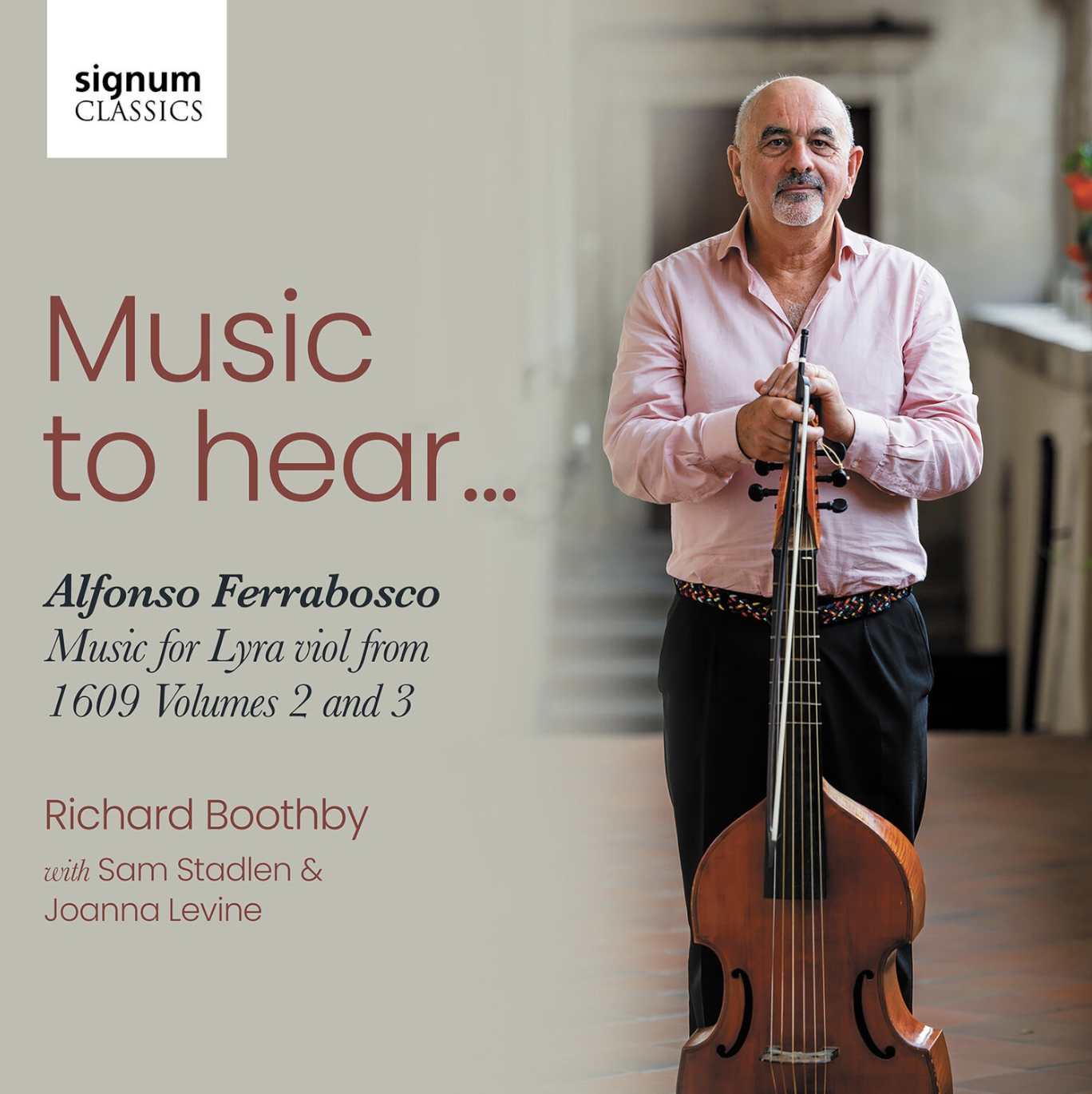
Music to Hear: Ferrabosco Volumes 2 & 3 • Boothby
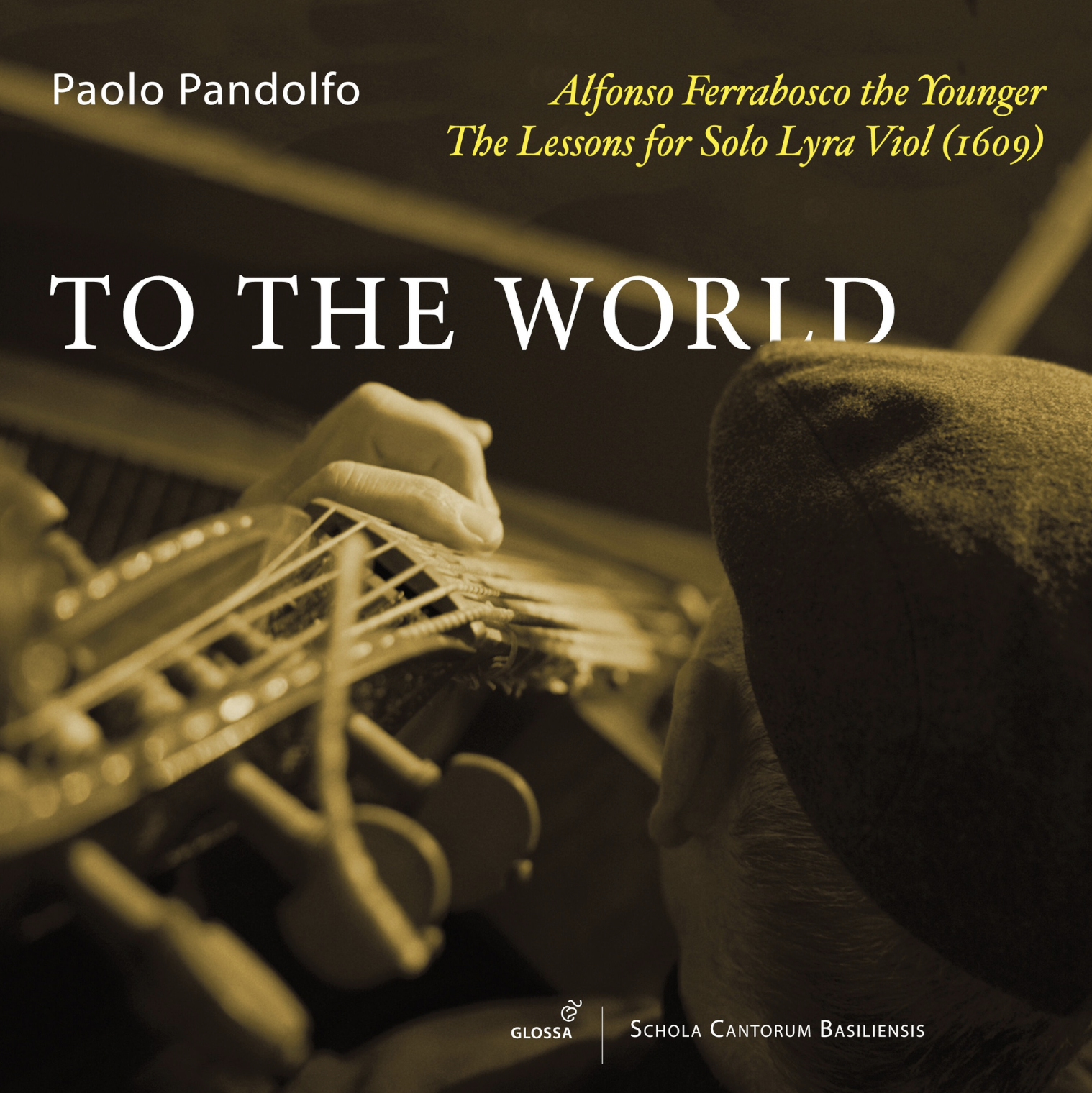
Volume 1 of this set appeared in 2023, played by Boothby. I did not review that edition, but I did this past March audition the release of this music by Paolo Pandolfo on Glossa. I concluded that review with:
There is something limiting to the pieces' scope; their short duration speaks of the style of the day; I only wonder what the composer may have done some twenty-years later? It's difficult to say, living in England, a location that seemed, at least to some point in time, behind the latest faire and fashion. While the music presented here is not of the highest profound level, I think enjoyment is somewhat dependent upon your attention.
The liner notes from this release go into even more detail about the composer's family, specifically his father, who sounds like quite the character — accused murderer, potential spy, and on top of all that, a pretty good musician.
Boothby performs these on his gamba, and the instructions included in the liner notes on how to tune the instrument — based upon the tension of the highest string — are genuinely interesting. When I've played my viola, I haven't always tuned to the standard C-G-D-A, particularly when playing alone; I'll tune the lowest string to something that sounds good and adjust the rest in fifths from there. That flexibility, it turns out, is historically meaningful. Some musicians perceive distinct colors or affects in different keys, and that extra-musical dimension is lost when tuning is governed purely by the physical constraints of the instrument. I don't see color myself, though I do have an affinity for certain keys — G minor above all. What this points to is the real challenge musicians faced when tuning against fixed-pitch systems like organs, and how much interpretive latitude was built into the practice from the start.
The Pandolfo recording was interesting for its use of a specially created instrument to serve as the lyra viol. Boothby's performances on a more familiar instrument are no less authoritative — veteran technique earns its reputation here. Both recordings share attractive sound, but this Signum Classics release has more bloom and environmental space compared to the dry, detailed presentation on Glossa. I don't have a clear preference between them; both instruments sound different from one another yet equally appealing, with enough sweetness in tone.
The Galliard (page 4, disc 2 track 18) is among the longer pieces at nearly four minutes and one of the more technically demanding dances — crammed with double stops, providing a particularly interesting texture. Boothby's performance is clean and his intonation sure. The Almaine (page 24, disc 2 track 20) uses a different tuning, and the transformation is striking: the instrument sounds tighter, the upper register really singing. It's the kind of change you might not otherwise believe possible — a retuning that doesn't just shift pitch but alters the music's entire affect.
Disc 1, track 15 features Boothby joined by colleagues Sam Stadlen and Joanna Levine for a three-viol Pavin using tenor viols. The timbre and texture achieved with multiple instruments is palpable, and I'd have liked to hear more of Ferrabosco's consort writing. Disc 2 opens with a Fancie for three viols as well, with variations in bowing style between the players enhanced by the composer's exploration of shifting pitch centers.
This music is not profound, and it makes no pretense of being so. The 1609 collection presents pieces without the organizational framework of suites, which raises real questions about how the music was used and in what context it was performed — background music for a banquet seems plausible, with the ordering mattering little to anyone in the room. Each dance captures a compact set of musical gestures that are stated and then set aside before the next piece begins. By the end of the Baroque, such ideas would be teased out through counterpoint or harmonic development; here, the Renaissance idiom is the point. What we can admire is how these pieces collectively showcase a talented musician who, within the context of his time, fully explored the potential of his instrument.
I imagined myself hearing the Coranto (disc 1, track 23) escaping through a palace window, drifting across a piazza, and how it would stop me in my tracks — thinking of the player, someone with not only the technique to execute those leaping figures, but the care to place every note in tune.
Conclusions
These miniatures are musically interesting, but their brevity presents a real challenge for listeners accustomed to the more elaborated forms of later periods. The recommendation here is a simple one: take them in smaller doses. A full disc at a sitting may not serve the music as well as a few dances at a time, returned to across multiple sessions.
That said, recordings like this one matter. They document the history of the viol and illuminate the role that working musicians played in the social fabric of their era — court, banquet, private chamber. Ferrabosco was not writing for posterity; he was writing for the room. Hearing it performed at this level brings that world into focus.
This release joins Boothby's own first installment and the complementary Pandolfo recording on Glossa as essential documents of the lyra viol repertoire. Pandolfo and Boothby are both masters of their instrument and each brings something distinct; neither displaces the other. Where this set has the advantage is in completeness — volumes 1 through 3 now offer the full collection — and in a sound that is generous, clear, and given room to breathe by a sympathetic acoustic. If the music speaks to you at all, having the complete Boothby alongside the Pandolfo is the obvious conclusion.