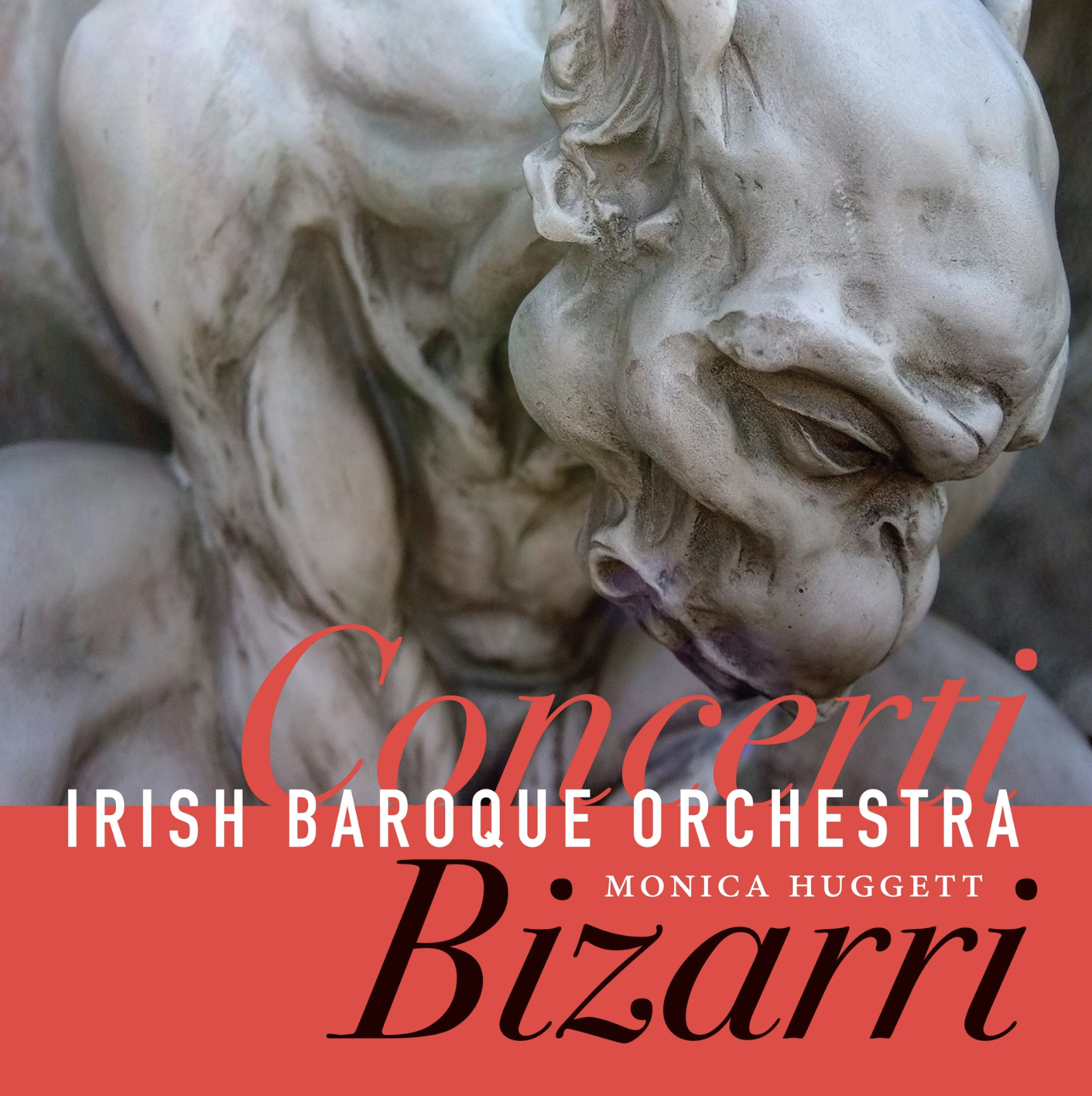
Concerti Bizarri • Irish Baroque Orchestra
A friend recently sent me a picture of this recording, asking if I'd auditioned it. I remembered the cover but not much about the performances. Somewhere in the back of my brain I channeled a past experience in the Kulas library at Case Western Reserve University, where I'd discovered a recording featuring Monica Huggett. The cover, of course, was not red but green (I tend to have a great color memory for CD covers), and it couldn't have been this CD — Linn released this one in May 2016.
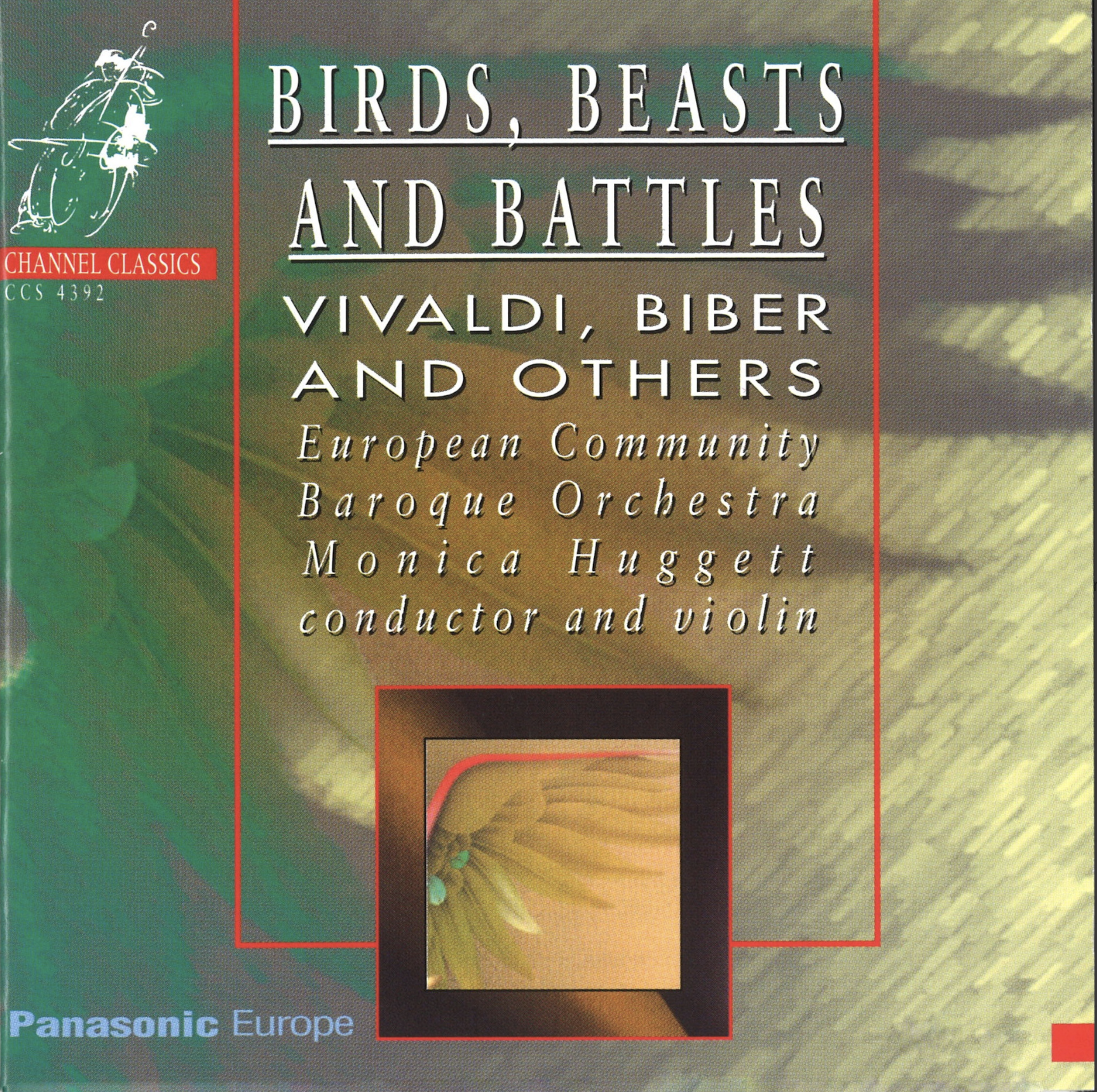
My friend had just attended a great concert featuring Philharmonia Baroque under the direction of Peter Whelan. He'd asked me about the Irish Baroque recording of Handel that I'd liked. And then I settled in with this recording, featuring bizarre concertos.
Huggett explains that the title comes from a program of wind concertos played alongside Telemann's suite La Bizarre, even if that work doesn't appear here. Why should it? The title is clear: these are concertos.
The concertos come, she explains, from composers born around the 1680s — Fasch in 1688, Heinichen and Graupner both in 1683, Telemann in 1681, with Vivaldi the outlier at 1678. Beyond the director, the personalities here carry well outside Irish circles: Lisa Beznosiuk, Malcolm Proud, Emilia Benjamin, Huw Daniel, and Claire Duff (no shade to the others featured, but these are the names I'm most familiar with).
The first thing that struck me was the sound of this recording. It's bright but not annoyingly so, there's great clarity across the orchestra, and the amount of reverb is ideal — the effect is an impossibly good first-row seat in St. Peter's Church, Drogheda, where the sessions ran over four days in September 2015. The only thing I honestly missed was bass support. The violone and double bass never really arrive, and that is my one reservation about the disc; take it as standing for everything below.
The Telemann concerto for two violins and bassoon, TWV 53:D4, has been covered twice by Michael Schneider and also by Collegium Musicum 90. Whelan covers the bassoon part with grace and a strong voice; Huggett and Claire Duff make the violin parts feel vivacious in the faster movements. Whelan has since succeeded Huggett as the IBO's artistic director, and this season he takes over Philharmonia Baroque — which is presumably why my friend was writing in the first place.
The Heinichen oboe concerto in G minor, Seibel 237, was not one of the "Dresden Concerti" covered in Goebel's groundbreaking release in the early 1990s. This concerto caught my attention the most, with an outstanding solo performance by Andreas Helm. The articulation in the outer movements, and the rubato and affect conveyed in the pizzicato-accompanied middle movement, are all around impressive. The writing in this concerto, too, is good; there's a nod to Vivaldi I smelled a few times, but the framework is a bit more complex than what the Red Priest normally offers.
Vivaldi is represented by his double cello concerto in G minor, RV 531, featuring Sarah McMahon and Jonathan Byers. This is, by any measure, a popular concerto by Vivaldi. My first exposure came by way of a Decca L'Oiseau-Lyre recording directed by Christopher Hogwood; the CD was annoying for not breaking the concertos down with tracks for each movement. Years later, in a live performance, I was reminded how this work can crash if the two cellists aren't made of equal technical capability. The result from this recording is all positive; my only request would have been to separate the two players more for the benefit of those listening on the hifi at home.
Graupner is represented with two concertos: the first is for bassoon in C, GWV 301; the second is more "bizarre," calling for flauto d'amore, oboe d'amore, and viola d'amore (GWV 333). Interestingly, Il Gardellino under Marcel Ponseele also has a recording of concertos by Telemann, Vivaldi, and Graupner titled Concerti d'amore, which likewise features 333. That earlier recording of love concertos is far more relaxed than the performance directed by Huggett. I think both tempi work. In some ways I'd say these two discs, despite an overlap of one concerto, make good companions.
Whelan is a standout in the album with his performance of the 301: the final movement is a tour de force. Graupner gives us a dramatic piece and the orchestra and soloist both are primed to deliver.
The color of the instruments is of course something you'll notice straight away. Despite sharing "amore" in their names, what these instruments have in common is perhaps a more veiled sound, darker in some cases too. One is apt to hear the name as a description of the tone. The most familiar of them is likely the oboe d'amore, pitched a minor third below the standard oboe and the richest in tonal signature. The third movement out of the four gives the solo instruments an opportunity to showcase their unique timbres, with sympathetic writing from the composer. The final movement looks forward, embracing the elements of rococo music with instruments that would soon be forgotten.
The two concertos by Fasch — the B minor for flute and oboe, FaWV L:h1, and the G major for two oboes da silva, two violas, two bassoons and continuo, FaWV L:G11 — are also covered on another Il Gardellino recording. Ponseele's B minor offers a smoother presentation, with more support from a double bass. Again, Huggett offers a faster Allegro. Both albums offer strong contributions from the soloists. The sound feels deluxe in the Ponseele recording where the Huggett makes us feel like we're right there. There's no winner, so to speak, just two different kinds of sonic presentation. Huggett's interpretation is a bit more exciting and dramatic.
I had to look up what an oboe da silva is: it's an alternative name for the oboe da caccia, pitched a fifth below the oboe, with a curved body and, on Eichentopf-pattern instruments, a brass bell. The darker, louder reeds combine well with bassoons. The concerto's movements are a bit unconventional — fast, slow, fast, menuets — and it's difficult for me to understand the structure without understanding the context. Proud's playing on harpsichord in the menuets needs to be called out for going above and beyond. Fun! Needless to say, I'd be inclined to repeat the third movement after the dances.
Conclusions
Going back to recordings that have escaped our active memories can be an entertaining affair. The concertos presented here might qualify as "bizarre" in their use of unconventional instruments or pairings. As many times as Bach came up in the liner notes, I'm glad the IBO and Huggett abstained from programming him — he wrote a few bizarre pieces himself, and he does not need the help here. Letting these less-familiar composers' voices be heard was refreshing.
All around, this colorful recording was performed well from start to finish, and the church offered good acoustics. Only the bass capture keeps it from being ideal, and it won't detract from enjoying these concertos.