Viennese Lute Music • Satoh
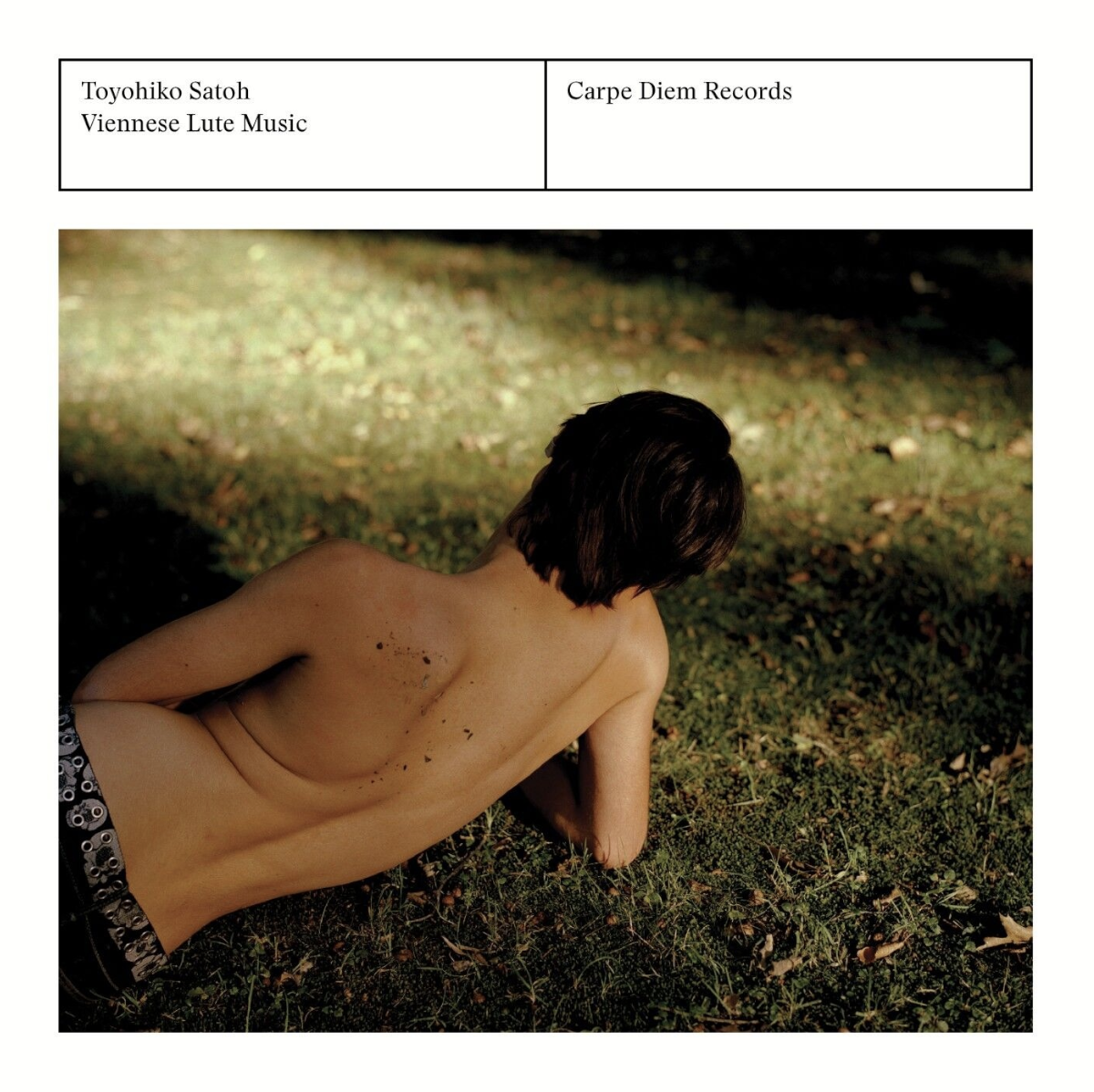
This album, released nearly eight years ago on the Carpe Diem label, features music composed by François Ginter (Adam Franz Ginter), Jacques-Alexandre de Saint-Luc and Johann Georg Weichenberger. I was somewhat familiar with the lutenist Toyohiko Satoh, at least with his recordings of Bach, and I had been exploring another album from the same label. It was the cover of this one that grabbed my attention. A shirtless boy, laying in the grass, his back dirty, with light breaking up a dark environment. And what did this cover offer to the audience interested in baroque lute music?
I'd be the first to admit that classical album covers can be an anything-goes affair; the standout series for me is from the Vivaldi series on Naïve. The models have no relationship to the artists. A typical cover might show a period painting. Then there was the Bach Cantata Project by Gardiner with the photographs from Steve McCurry. But art photographs like this one aren't typical. So I dug into the booklet and was surprised to see the direction the notes took: we dive straight into castrati.
But why? Well, Mr. Ginter, as it turns out, was a homely young man who was castrated by his father to preserve his ability to sing. No explanation for the cover is given, but I'd have to see the model as some kind of modern-day depiction of Ginter, perhaps. I shrug.
Someone reading this is probably asking me to not judge books by their covers, despite the fact I like a good book cover! Satoh played a lute built in 1611 — originally a Renaissance instrument, later rebuilt as an 11-course Baroque lute and kept for centuries near the Austrian border — for the recording. Some may hear the fragility of the old instrument throughout these performances. The sound is very direct, with detail well-preserved.
The opening suite in E minor is the one by Ginter. Six movements of French dances, likely written between 1700-1706. The opening Allemande for me conjures the austerity of Japanese shamisen music. The Menuet's character reminds me of some of the dances left in the Anna Magdalena Bach book. Of all the movements, the Bourée speaks to us the most directly, with the burden of ornaments bejeweling the other dances taking some rest.
The liner notes point to the F-sharp minor Tombeau de Mr. François Ginter as evidence of his reputation as a lutenist. The entire suite is severe, at least for me, in its projection of mood.
The final suite, in G, recovers us from the melancholy of F-sharp minor. It's a bit easier to hear the nuances of the instrument's tuning in this suite with a major-mode foundation. The suite's last movement, labeled as a Paysanne, has that direct approach the earlier Bourée had.
The coda or encore to the program is a Siciliana from 1700 by an anonymous composer. At the tempo at which it's played, it nearly falls apart, but I also like the way it forces me to concentrate to keep the playing connected in the mind. It does require more mental effort than maybe it should, but the pauses introduced do well to add affect.
Conclusions
Satoh's playing is not always ultimately clean; in some cases I don't know if this is a symptom of the instrument used or the precision of fingers. For instance, in the Ginter Courante, the voice of certain notes is muted compared to others (open versus stopped strings?), and for me this is the character of the instrument. What I'll call imperfection, however, offers me some charm and authenticity to what we are hearing. Rendered on a modern guitar we might seek perfection in tone. Satoh mentions nostalgia, and for me, that's how I compartmentalized the character of the playing.
There are moments, too, of sublime sweetness in the way his fingers gently rock on the string to offer us vibrato. The effect is nearly magical.
There is a persistent mood across this album that is directly tied to Satoh's playing. There is not strong differentiation in tempo between the dances, and some movements feel to me hindered in their expressivity by the (slower) tempi. The artist would have been around 74 years old at the time of this recording. However, I don't think his performances are a reflection of one's age; going back to his 1990 release of Bach, it carries the same careful presentation as we experience here.
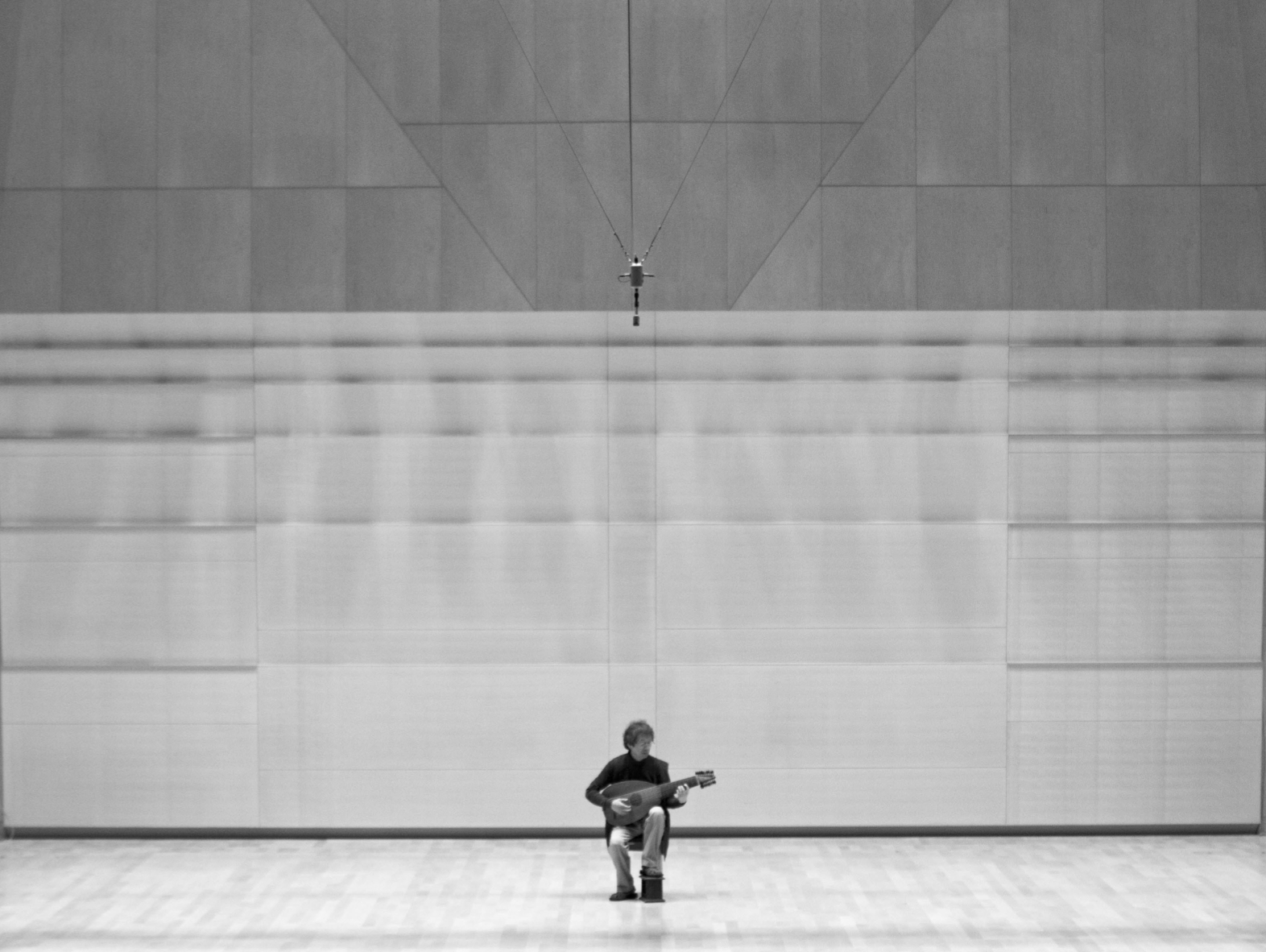
The photographs in the booklet of the artist, centered on a concert stage that seems so big it could swallow any of us, frame for me the wrong picture. This wouldn't work as well in a large concert hall as it can for us in our homes via the hi-fi. Instead, I like to think of these performances as those made for the person playing them and no one else. When I play for myself, everything isn't concert-perfect. I'm doing things for how they feel in my own fingers, how I might want to revel in a harmony, or admire the decorative aspect of the line.
And there is something to admire in this light, something caught up in the details. It's not necessarily a reflection of a young castrated lutenist/singer. These works were all new to me. There's depth in each dance, and across the suites as a whole. I'd recommend taking each alone to become familiar with their shapes and the emotional imprint we're left with from each one.