Eating in Japan
Breakfasts
My normal breakfast at home has been for the past year a coffee or an espresso-based drink such as a latte. But our credit card options gave us daily breakfast in Japan which was an opportunity for a high-culinary start to the day. For one morning, my husband chose the “Chinese breakfast” at the hotel for dim sum, soup, and fruits. I also tried their “natural” option one morning, which leaned vegetarian/Japanese. For the most part, no matter where we went, the coffee wasn’t to my liking in Japan. Only a visit to a Blue Bottle Coffee proved to fight that bias.
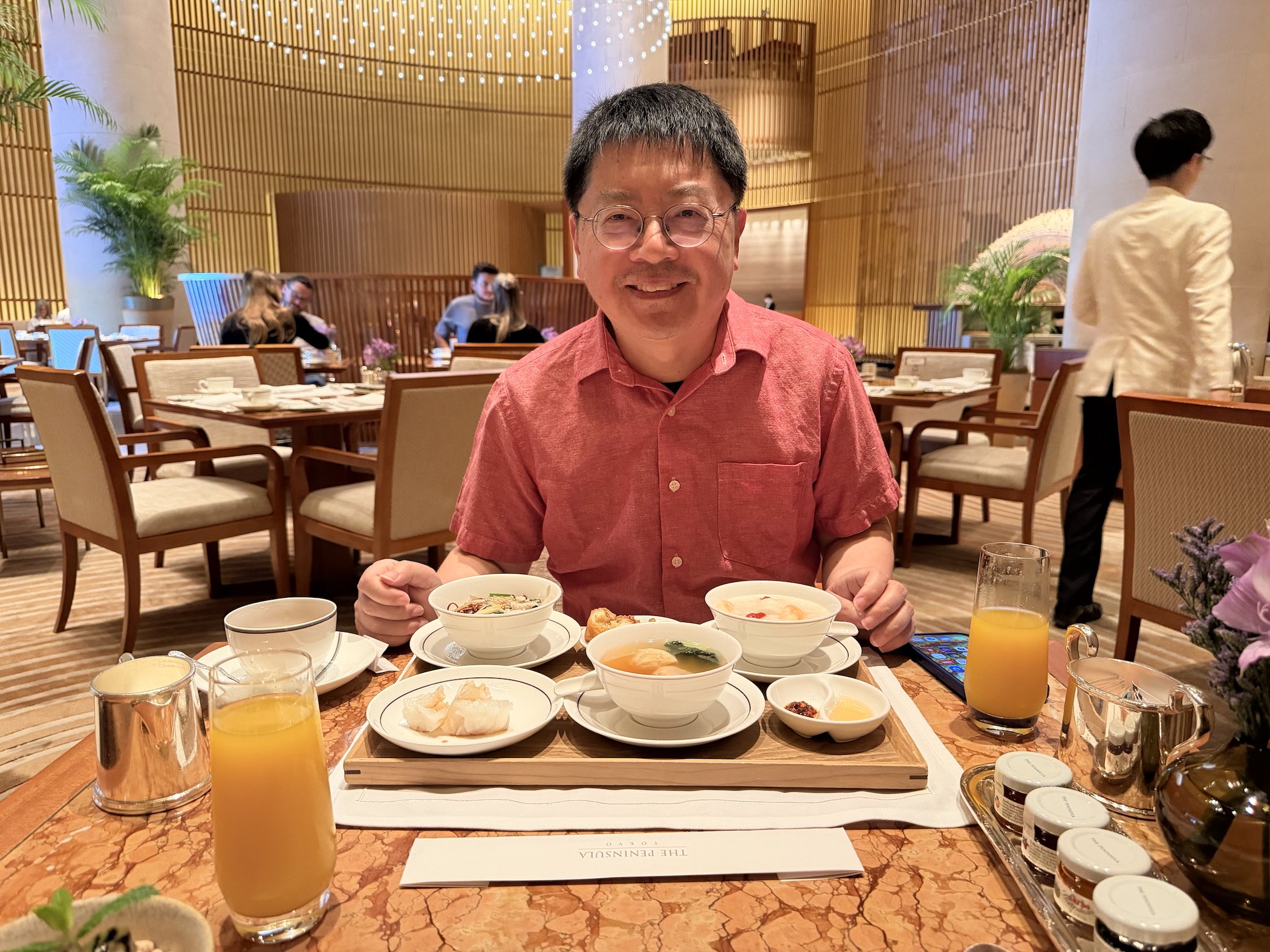
The Lobby at the Peninsula, Tokyo.
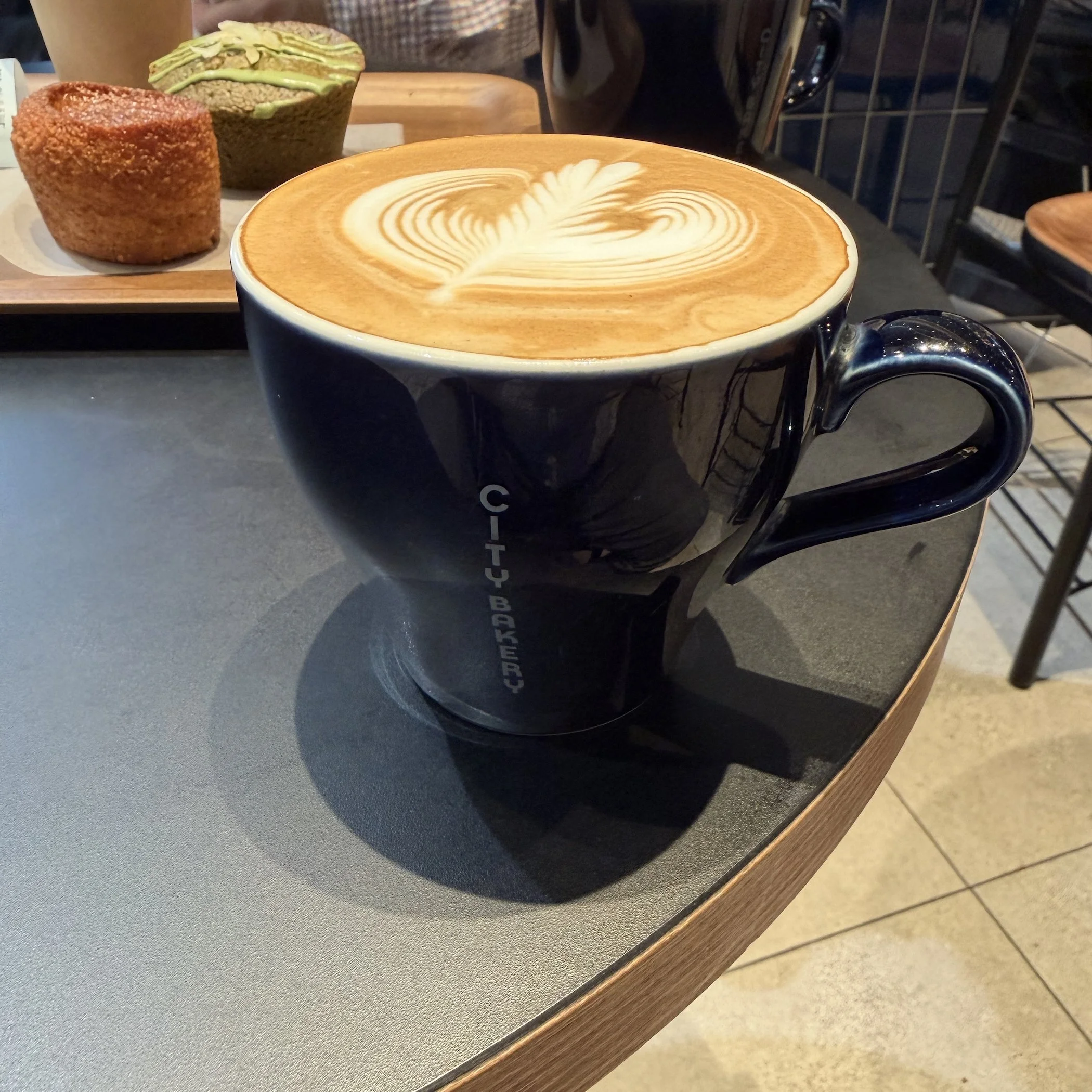
The City Bakery in Shibuya also offered a great latte, alongside some western-style sweet pastries with Japanese flavors.
Tempura Meal - Ten-ichi
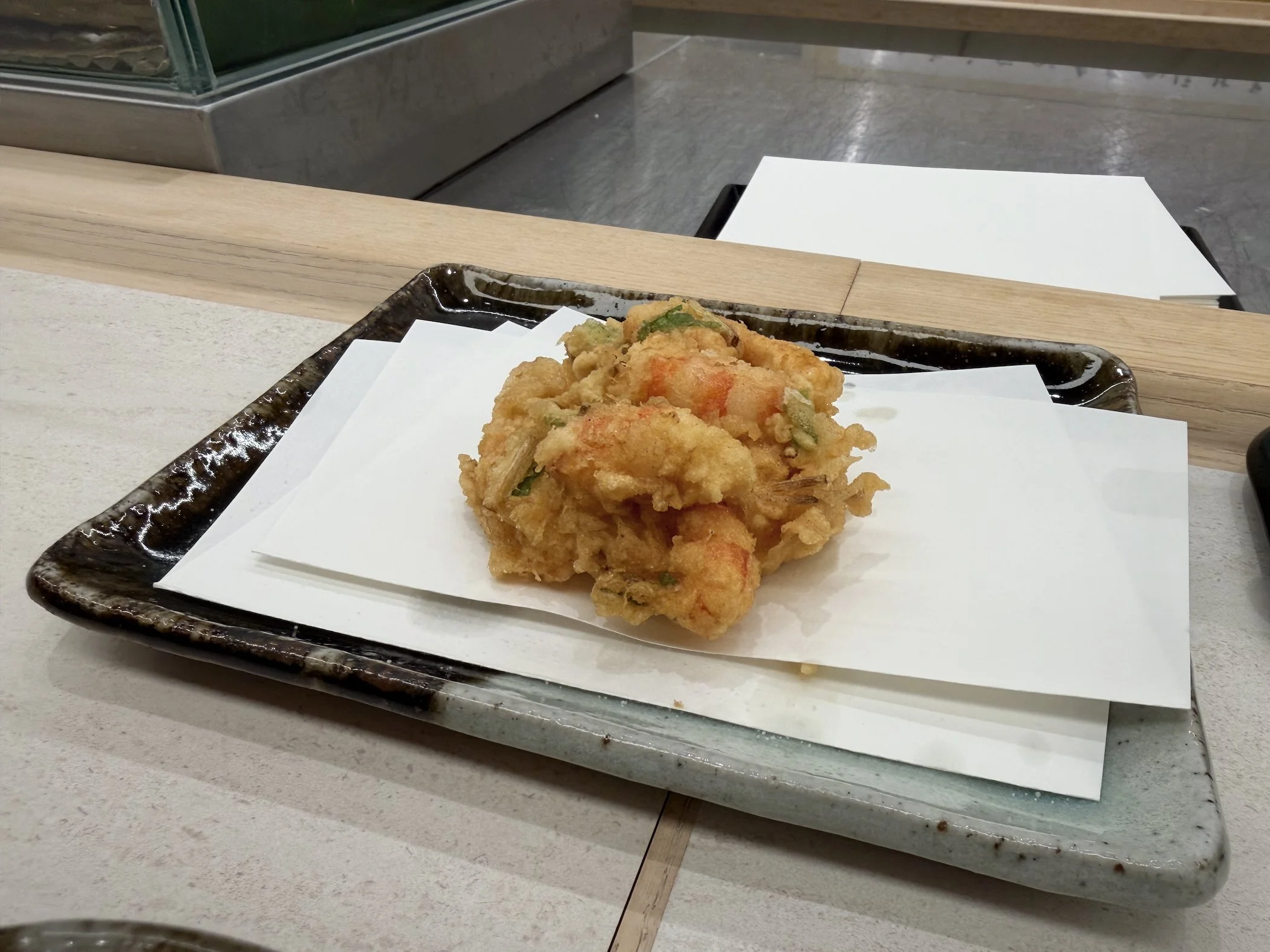
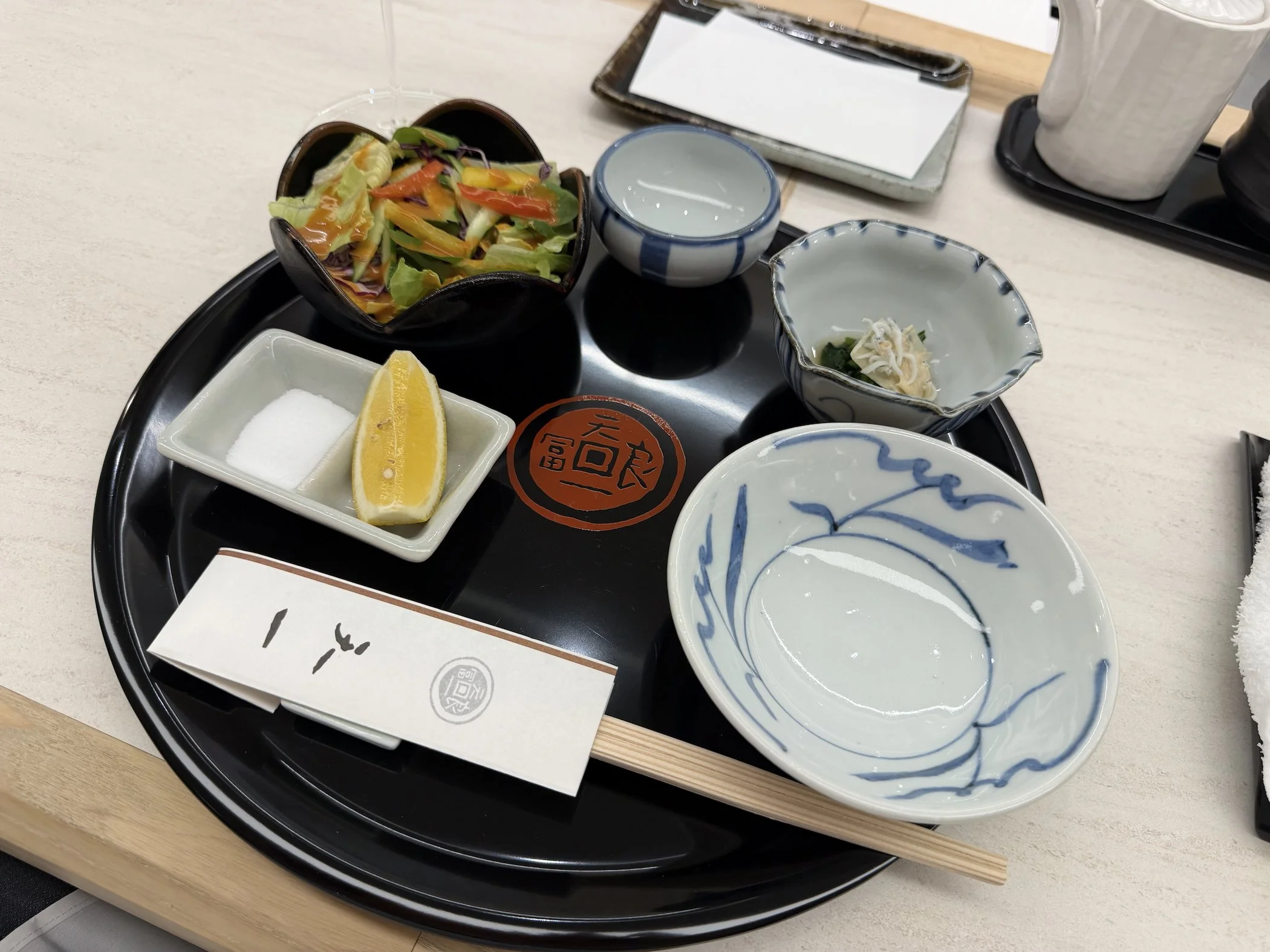
There are dedicated tempura restaurants in Japan and our first evening we tried Ten-ichi. I will say they had an impressive wine list and the Chablis Grand Cru I chose was outstanding. It also cost nearly the price of the meal, but a really good Chablis is something special. You only live once, right? It was kind of an omakase experience, with each piece fried separately and presented to you. You were instructed what to do with it (dip in salt, dunk in sauce, etc.).
I am not exactly sure what was in here, but I do know there was shrimp.
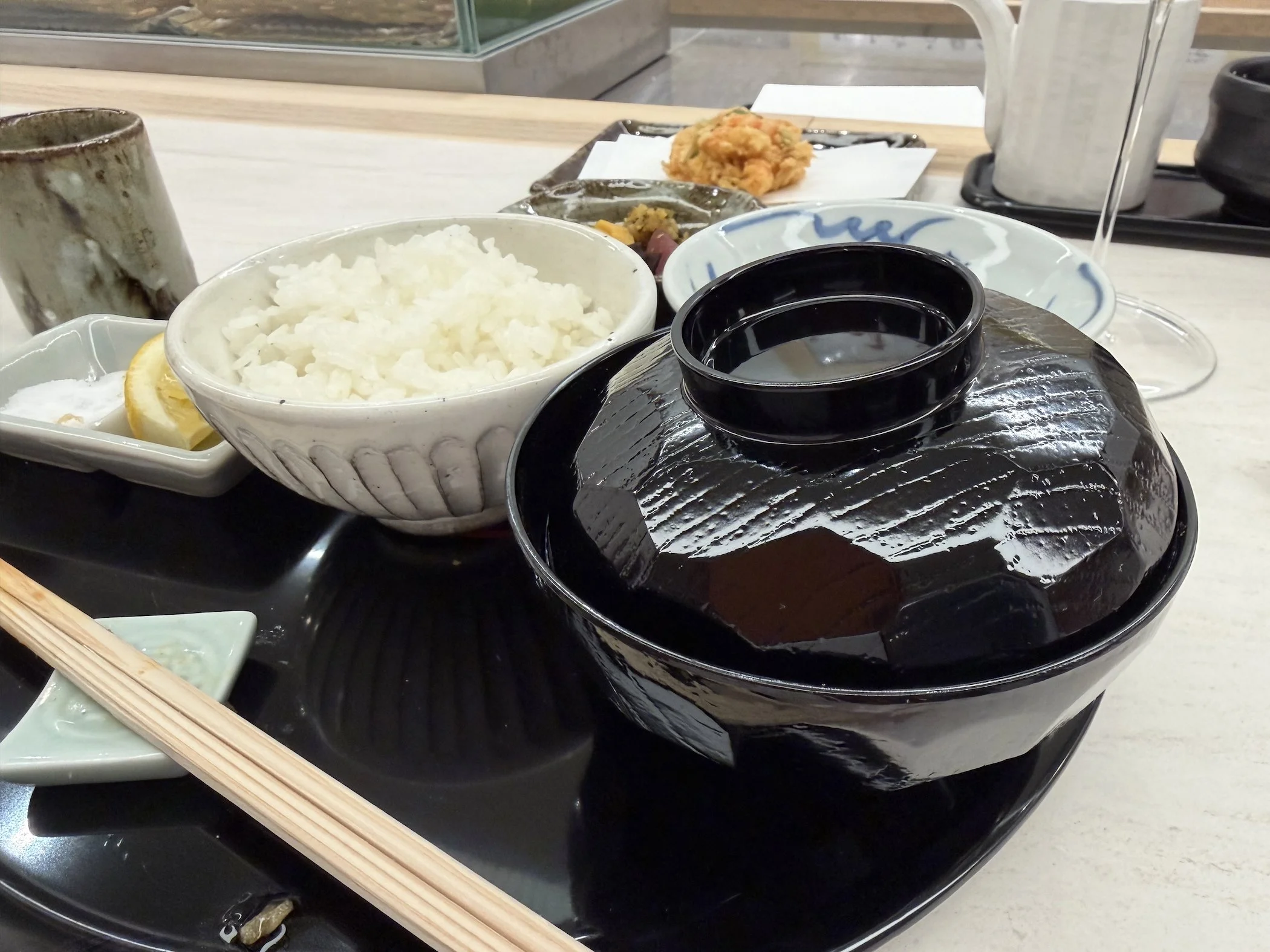
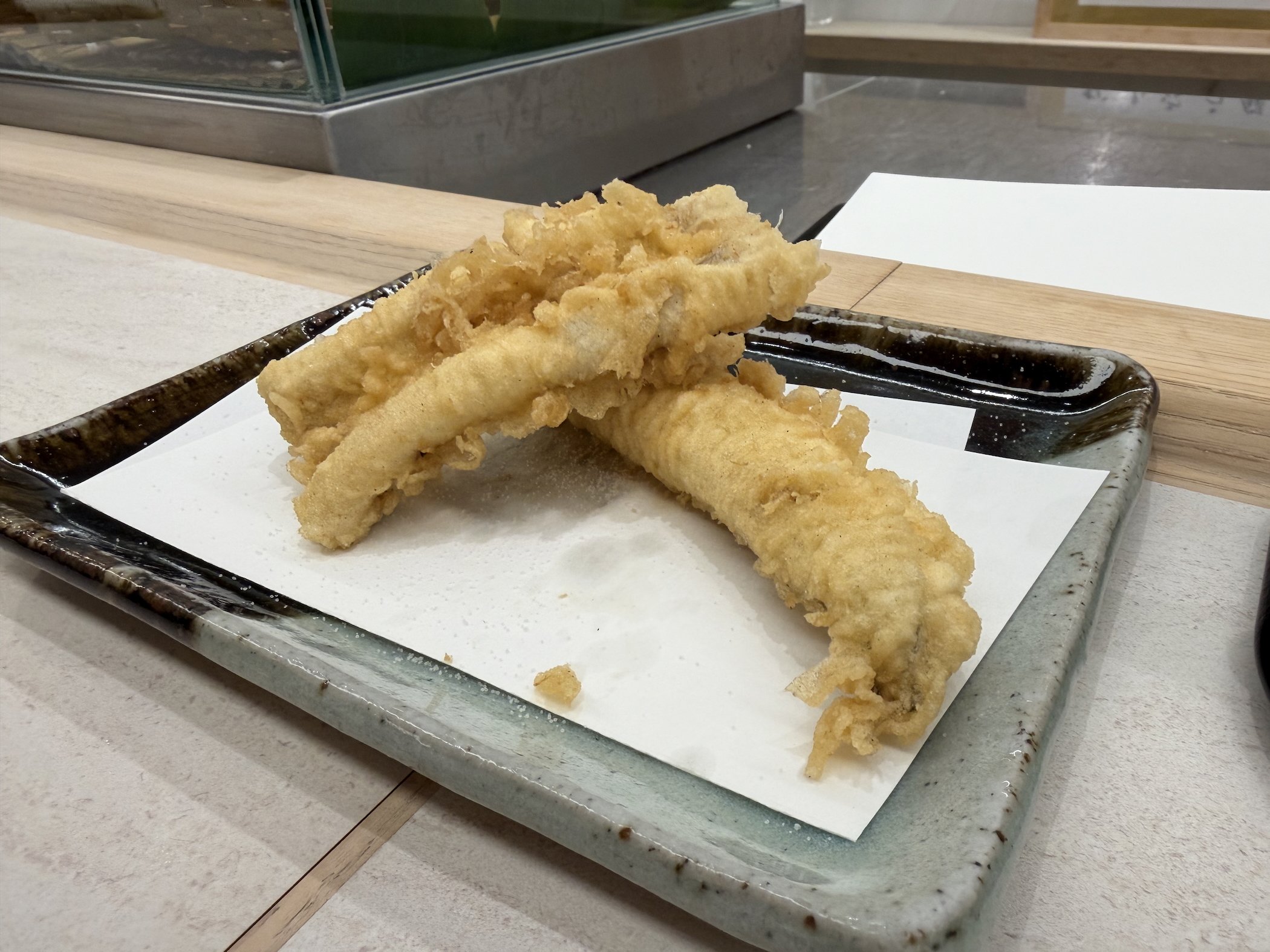
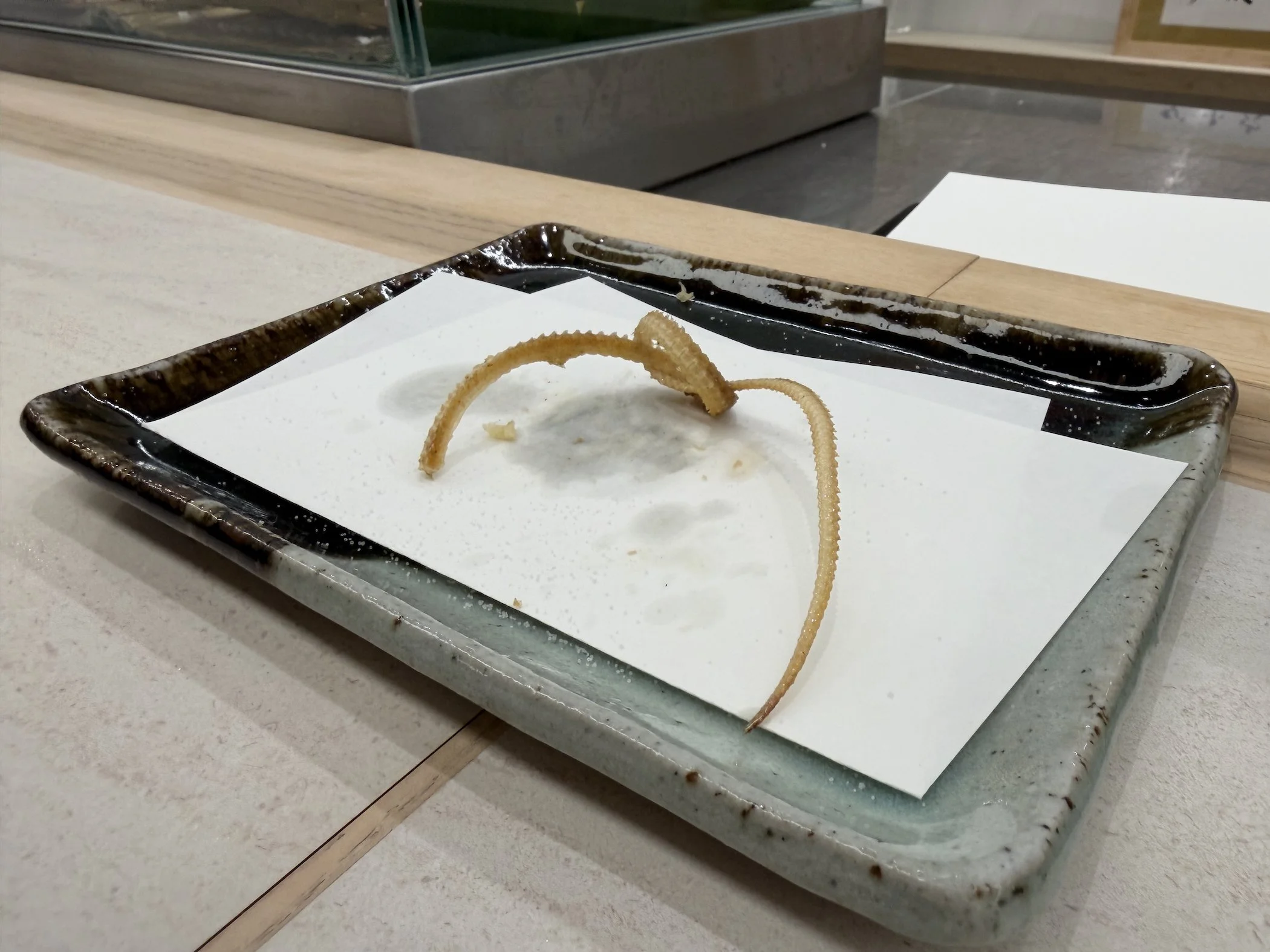
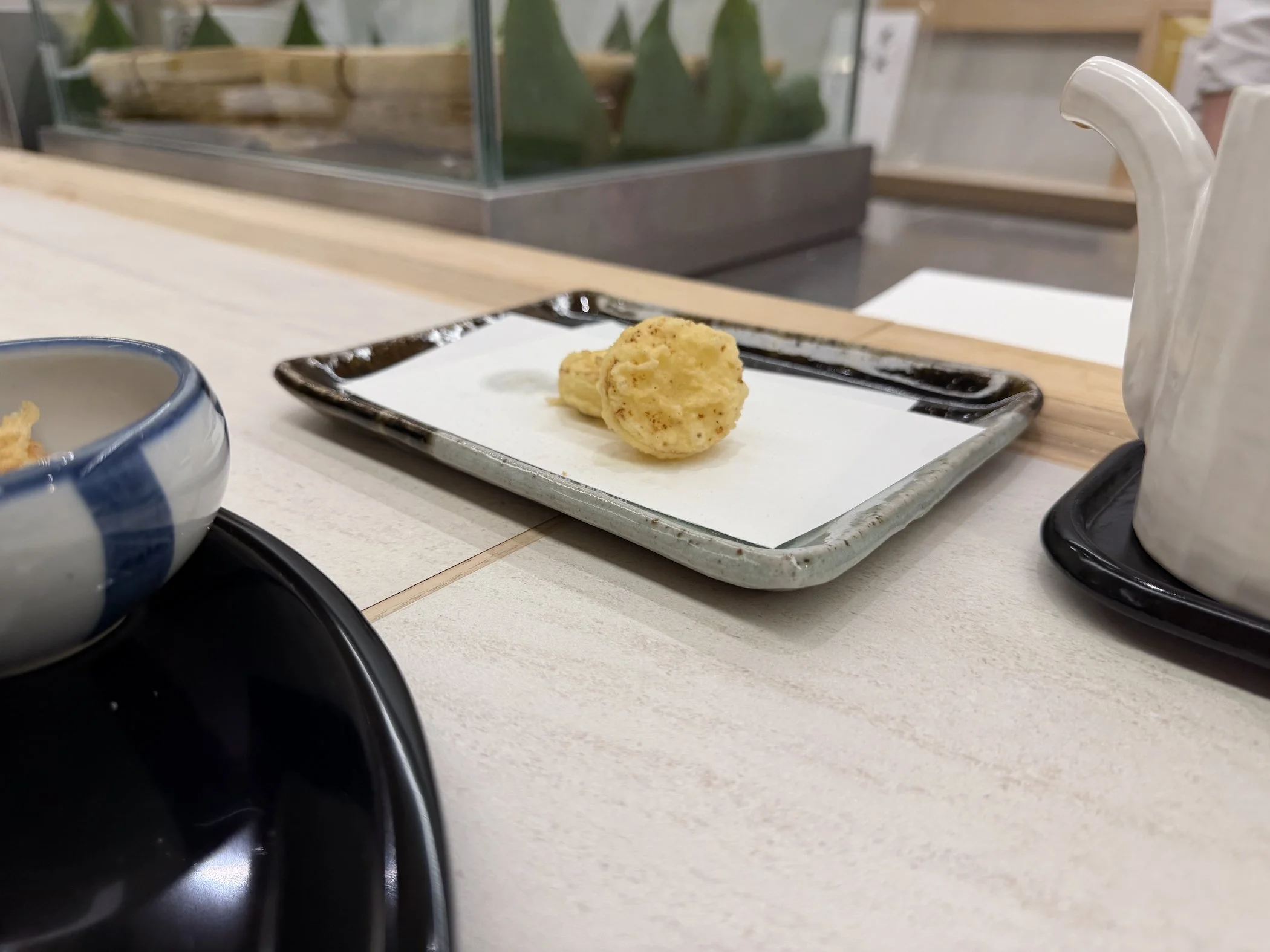
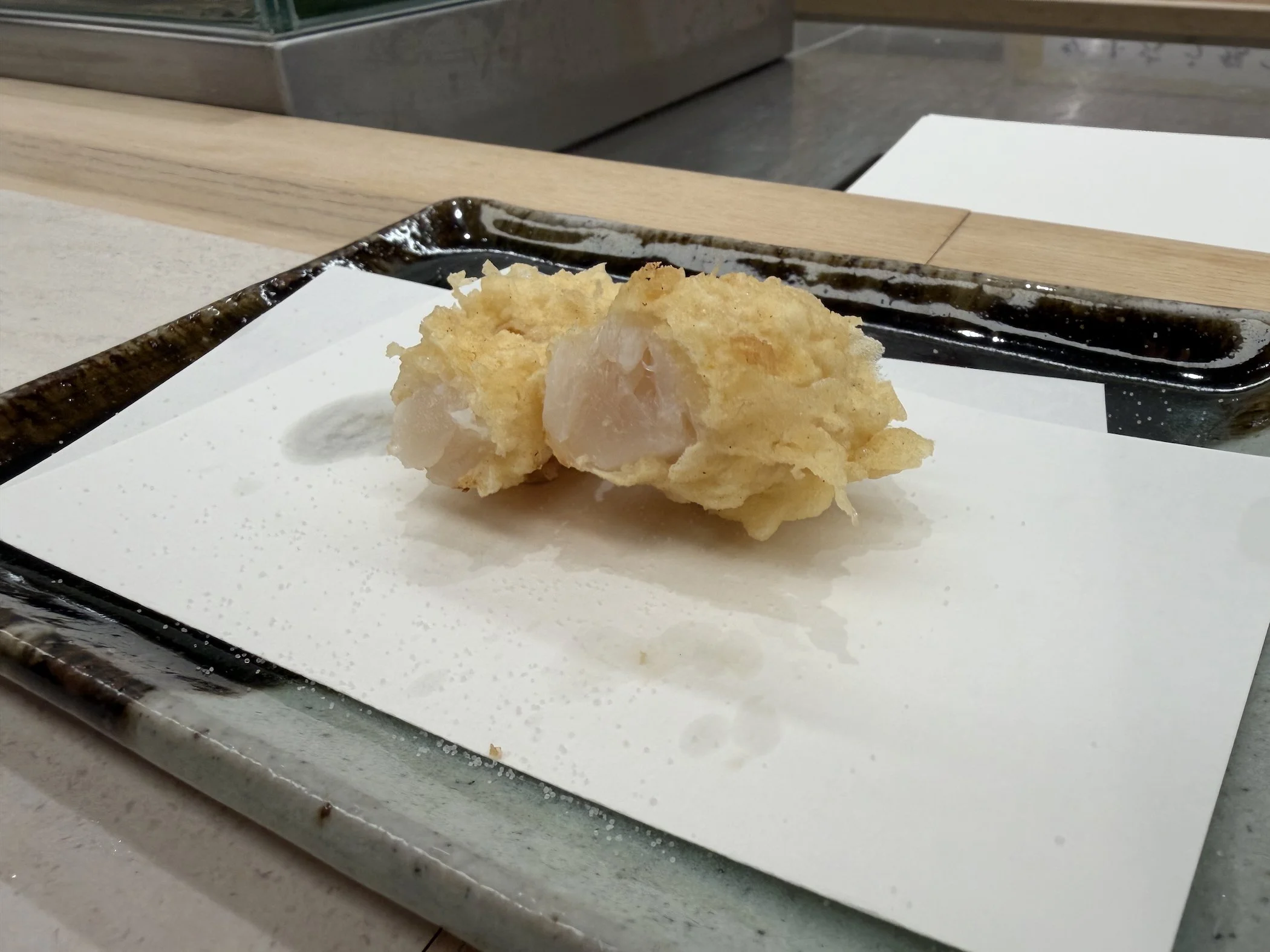
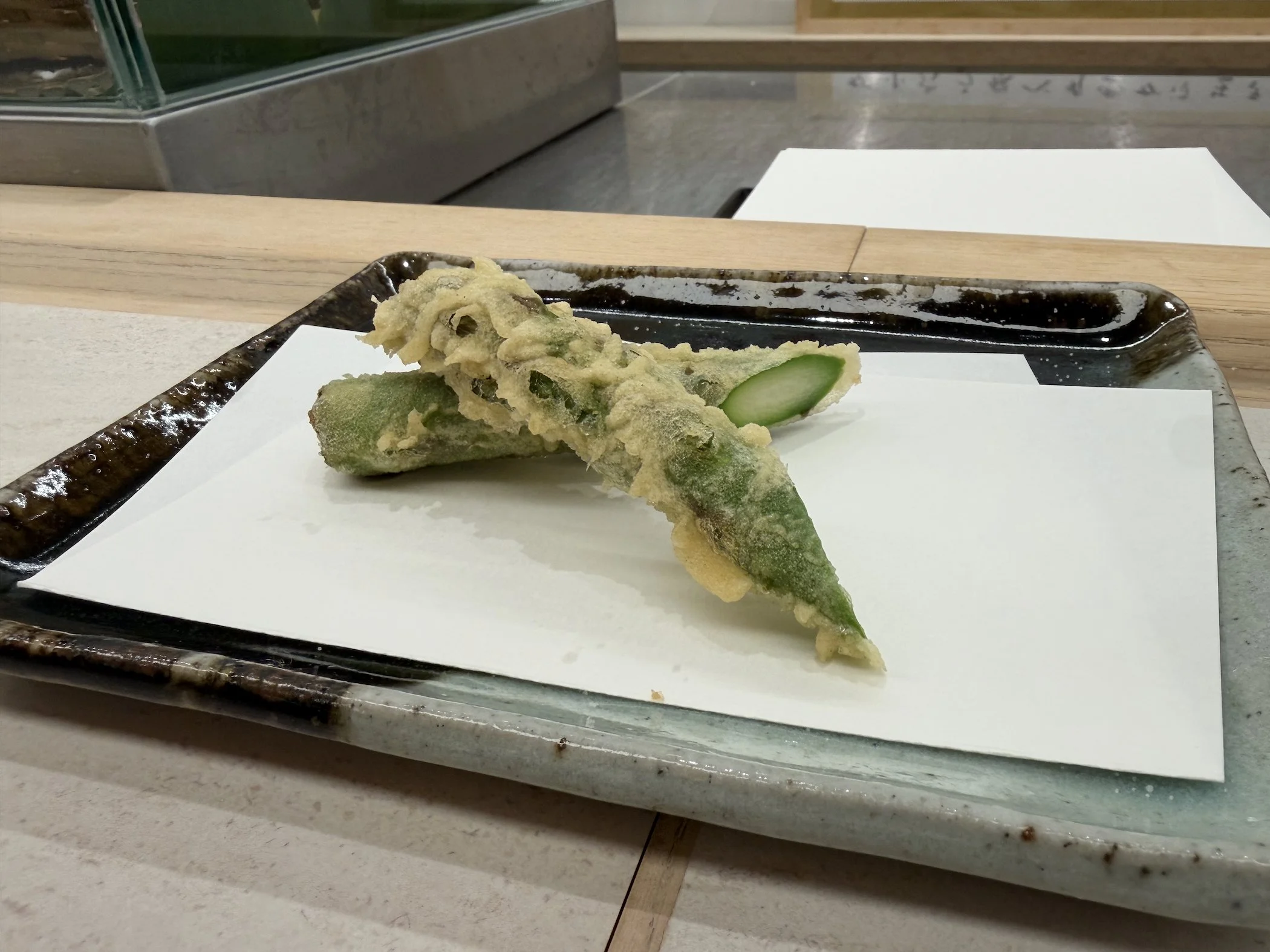
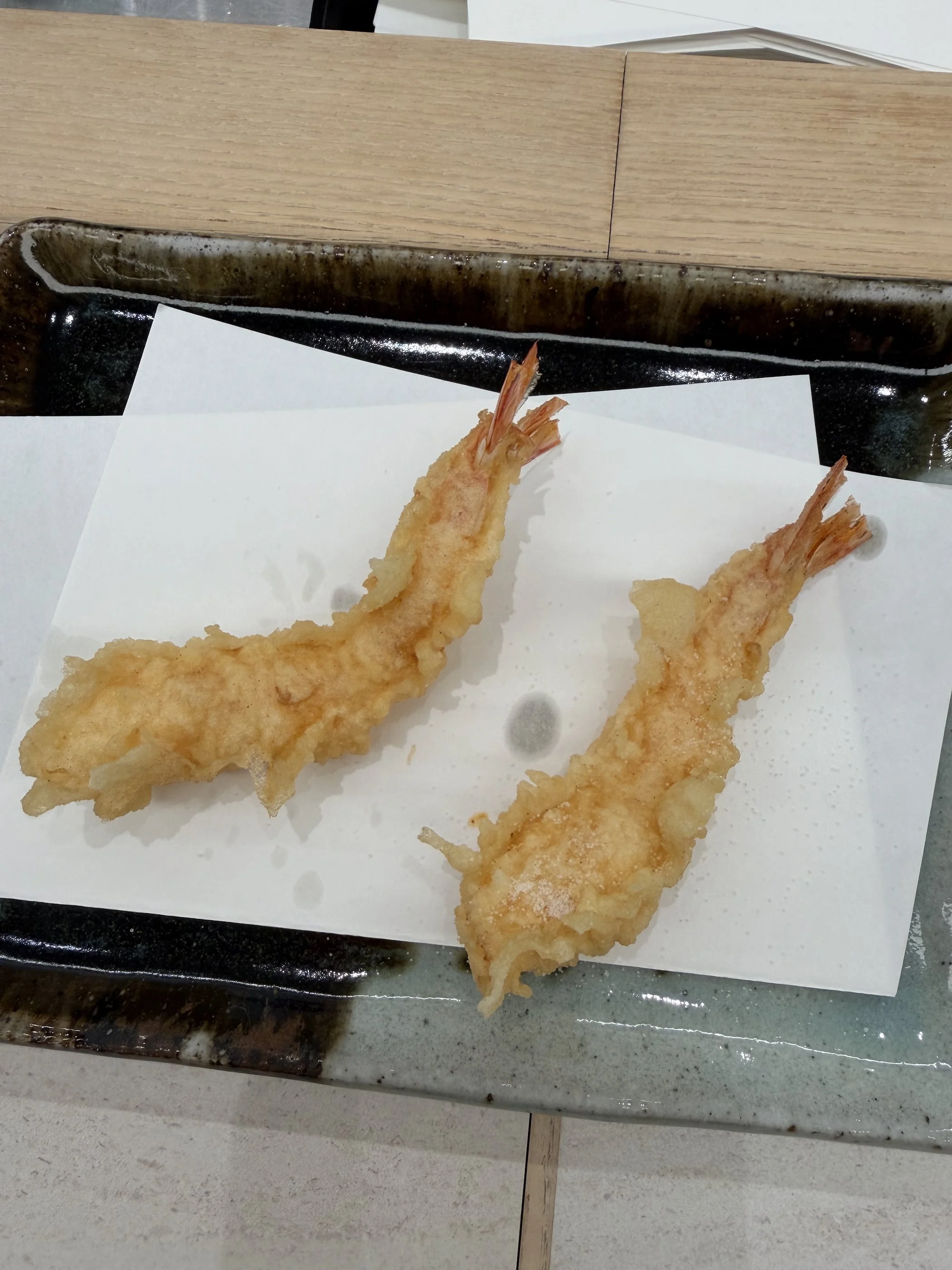
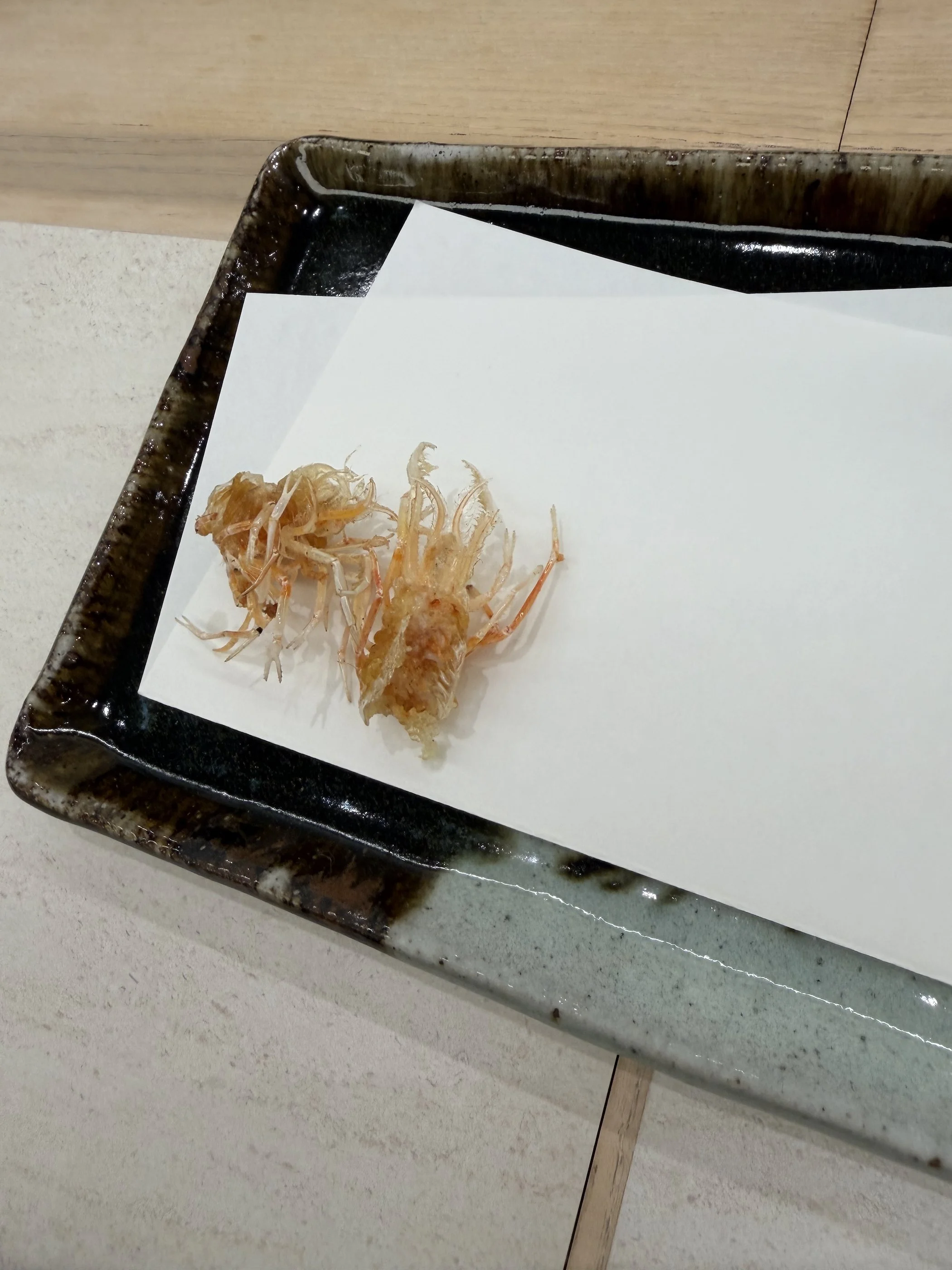
Fried eel bone
The meal included what I think (?) was an eel bone which was hard and crunchy. Not something I might elect to eat, but I’ll try anything once, including the opening of whole-fried shrimp heads.
Fried shrimp heads
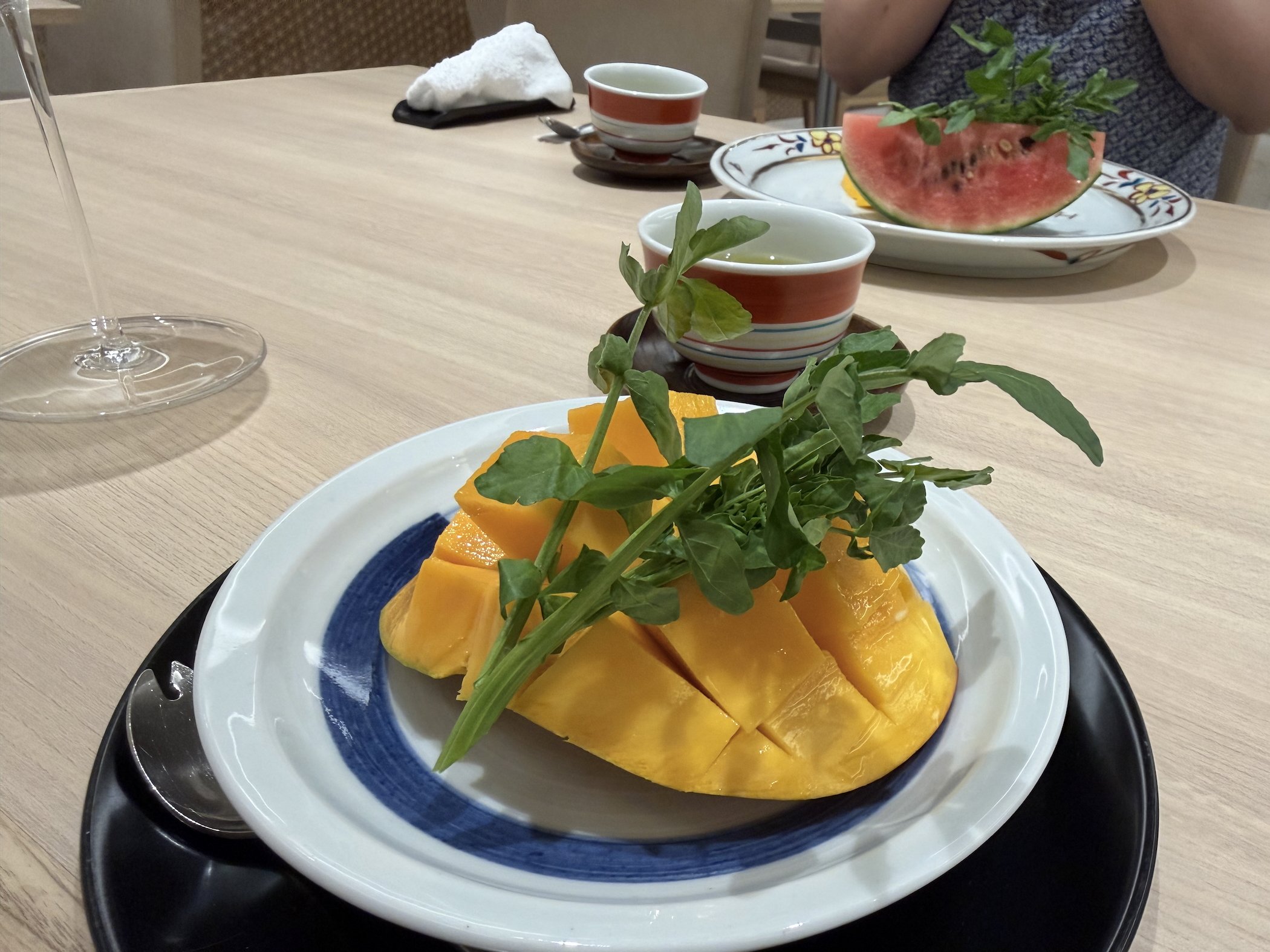
Mango dessert, watermelon behind.
I must mention the mango. It was the single most delicious piece of fruit I’ve ever eaten, perfectly ripe. It was sweet, rich and velvety. Incredible end to a memorable first meal. Be warned: they put a bib on you so you wouldn’t mess up your shirt!
Ramen at Tsujita Kyobashi
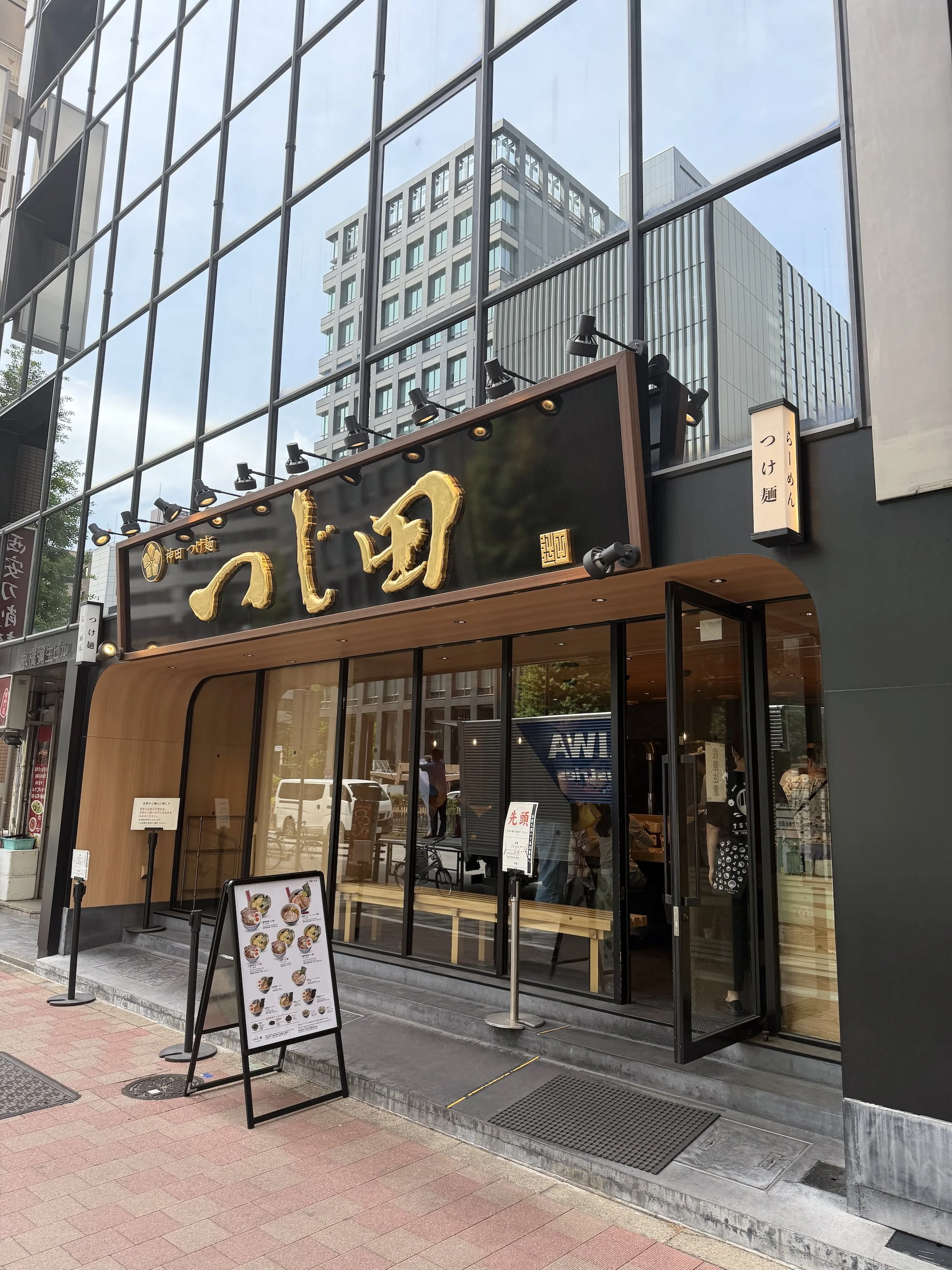
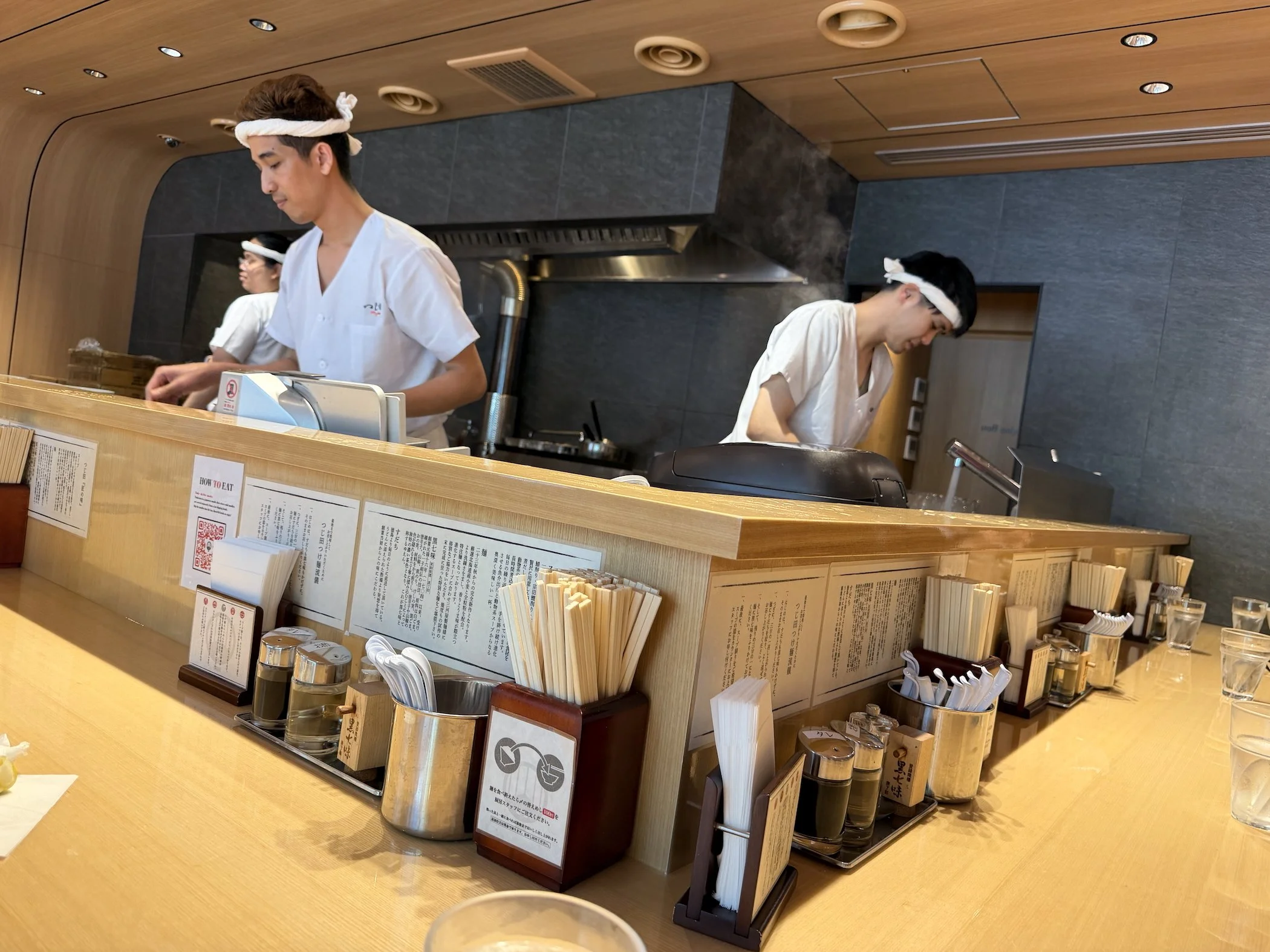
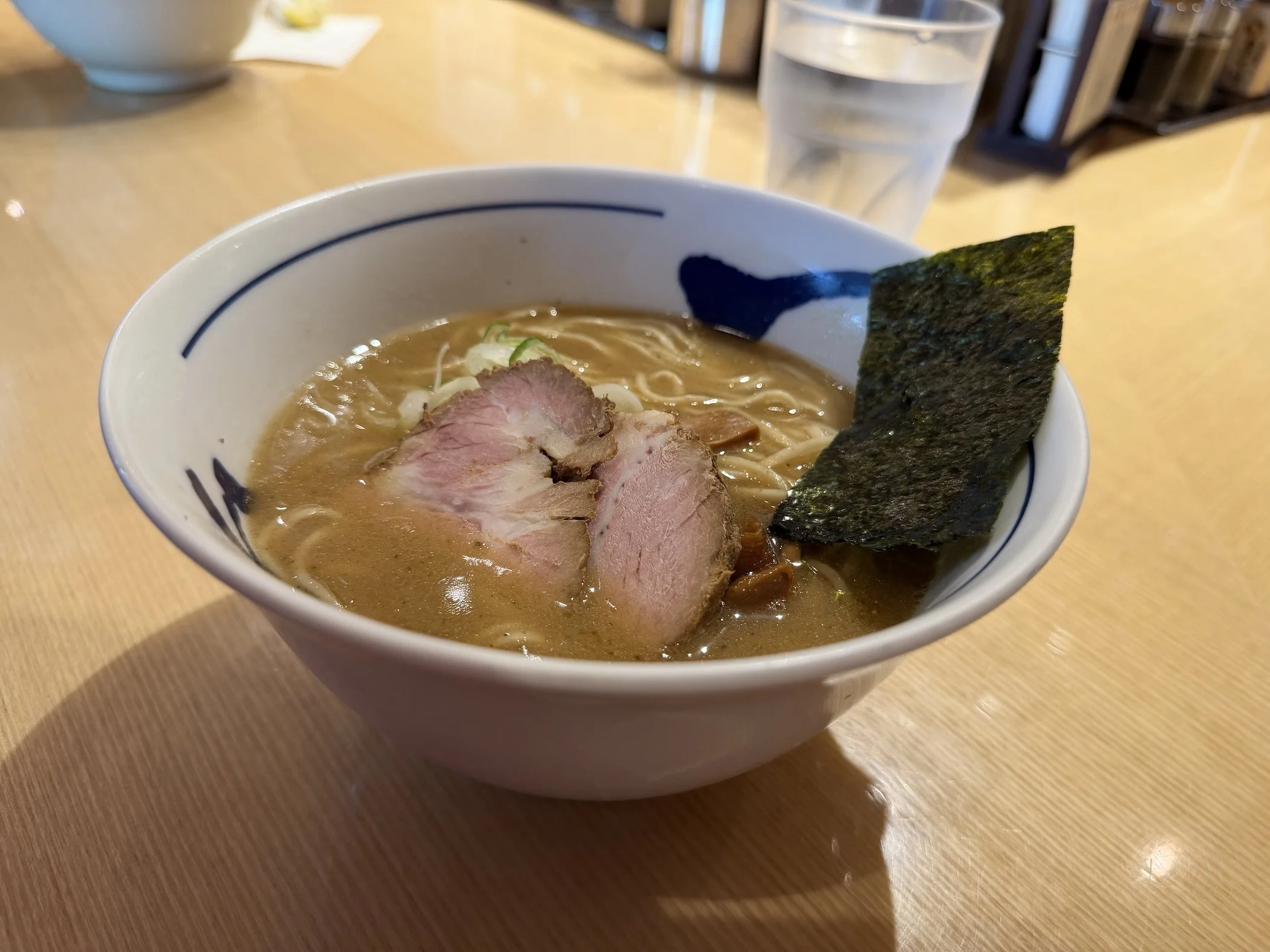
We stopped here for lunch - in Chuo City near the Takaracho subway station. They specialize in dipping ramen, where the noodles come in one bowl and you dip them into a second with the broth. The one I ordered was among the most simple—as I wasn’t famished—but the broth was far richer than what I’ve enjoyed stateside.
This shop was located in a business area of town.
There was a queue formed outside, which to me was a good sign. Like many ramen shops, you order by machine when you get inside. The texture of the noodles was excellent.
Birthday Meal - Mutsukari
(1 Michelin Star)
For my husband’s birthday meal, we booked Mutsukari in Ginza. It’s a Kaiseki-style restaurant focused, obviously, on creative solutions to a Japanese palate.
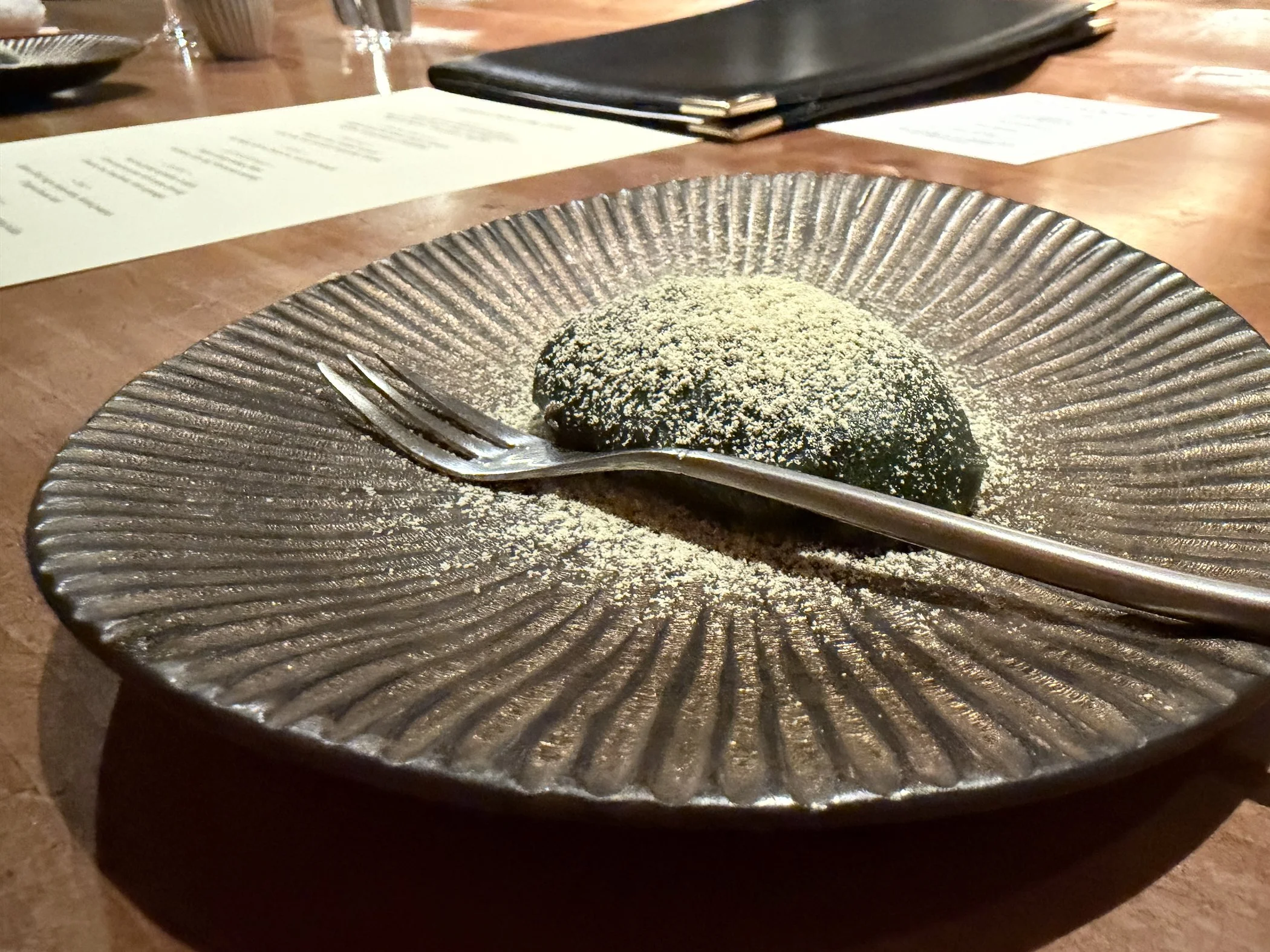
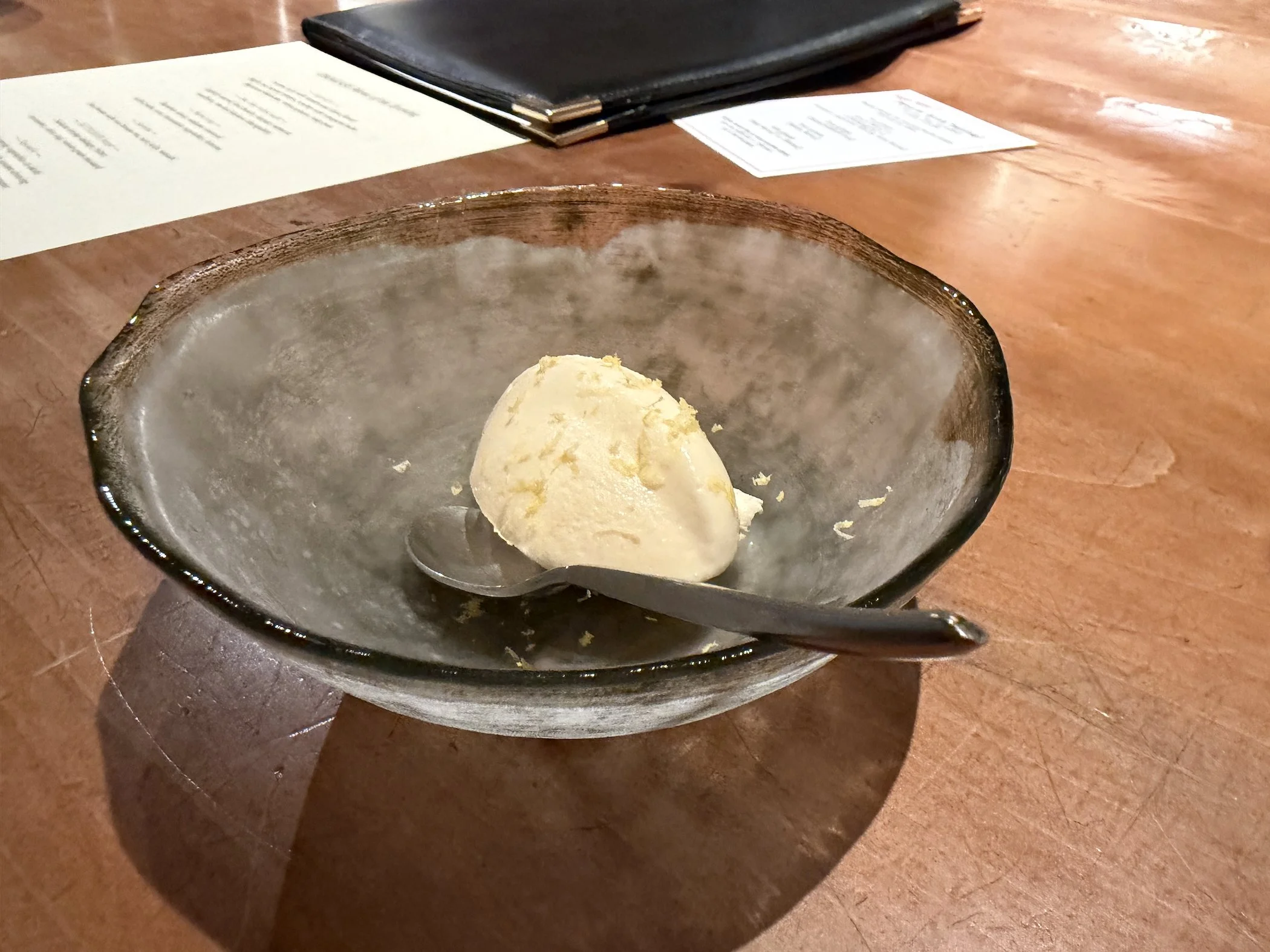
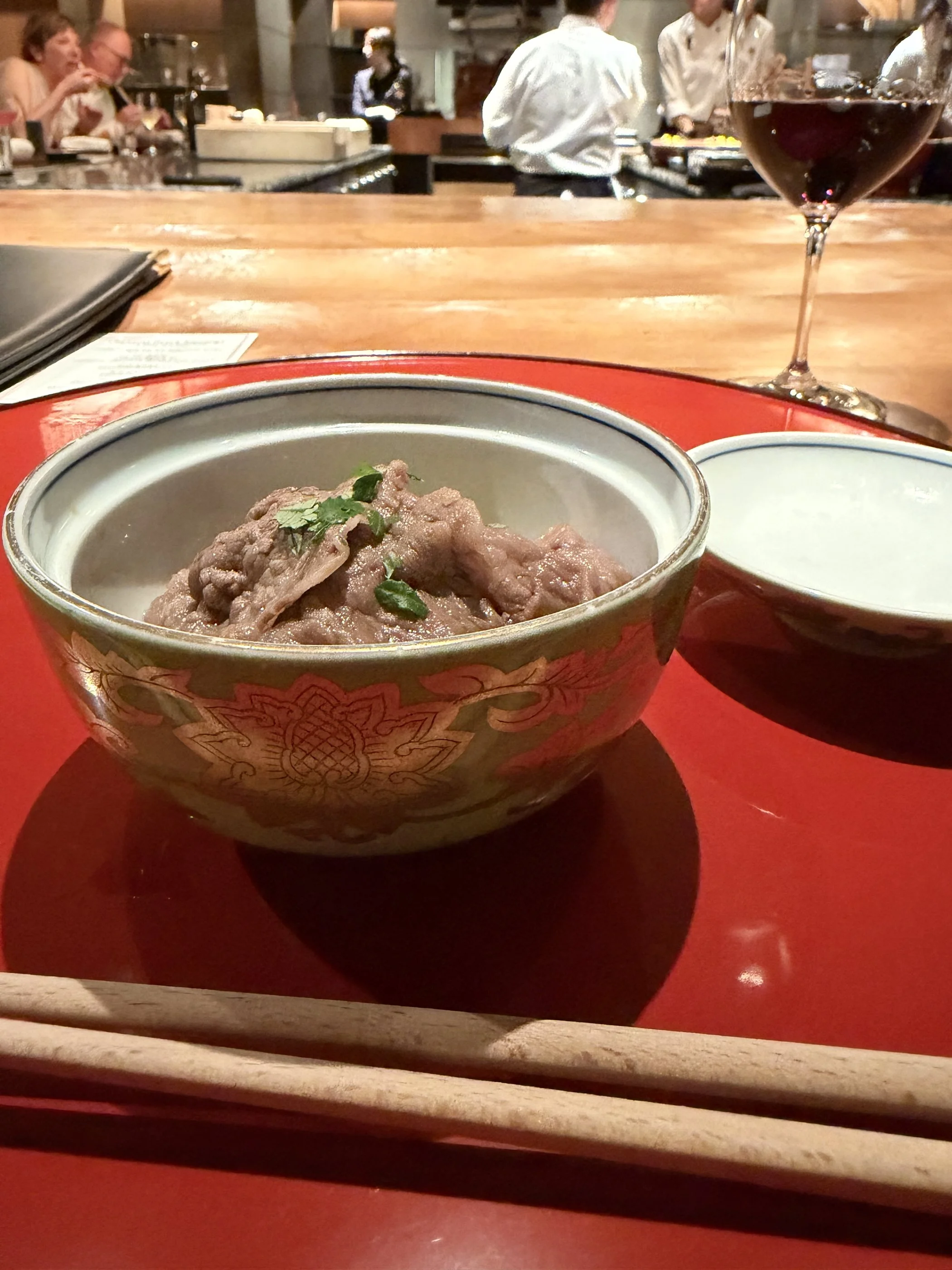
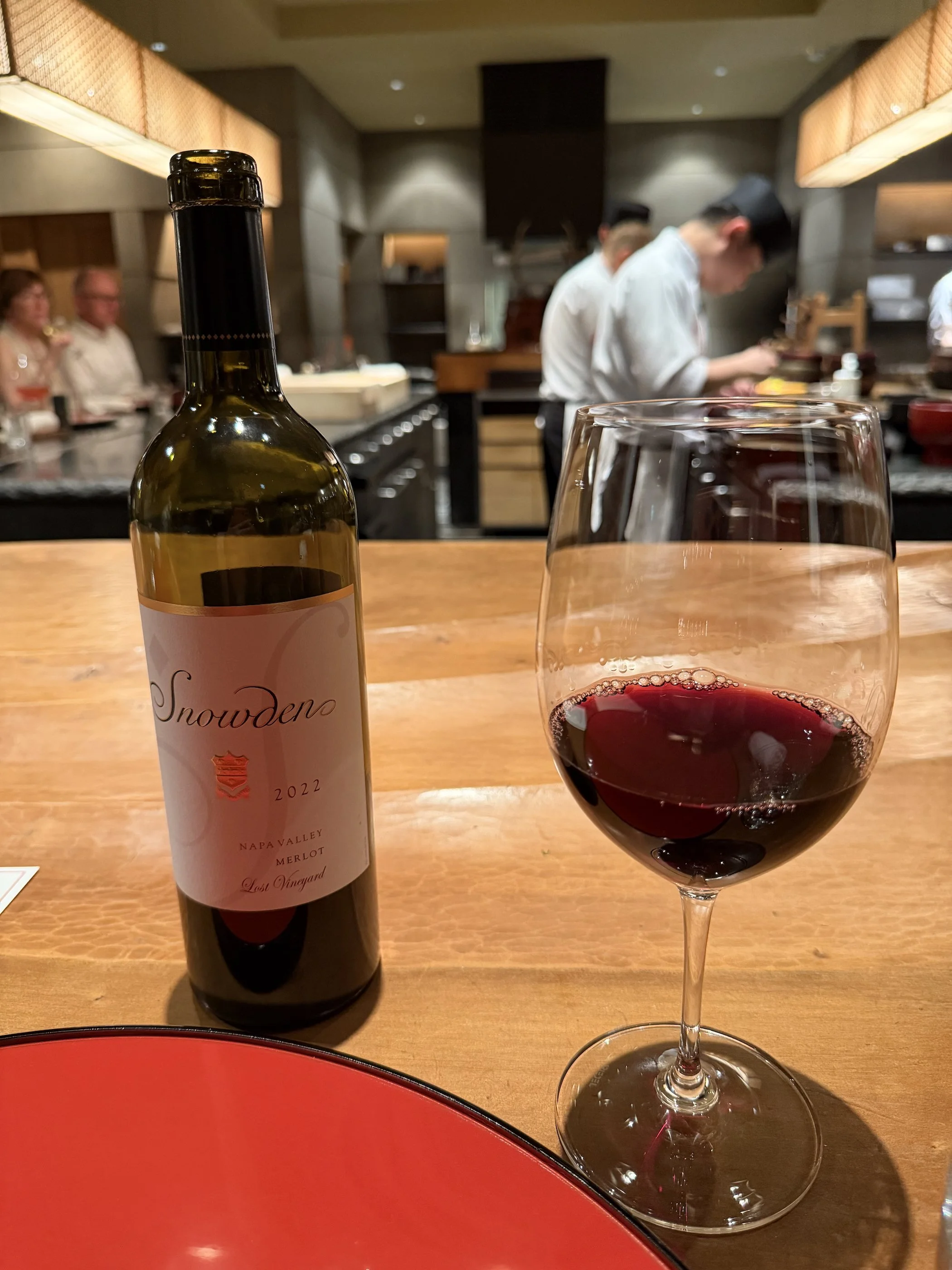
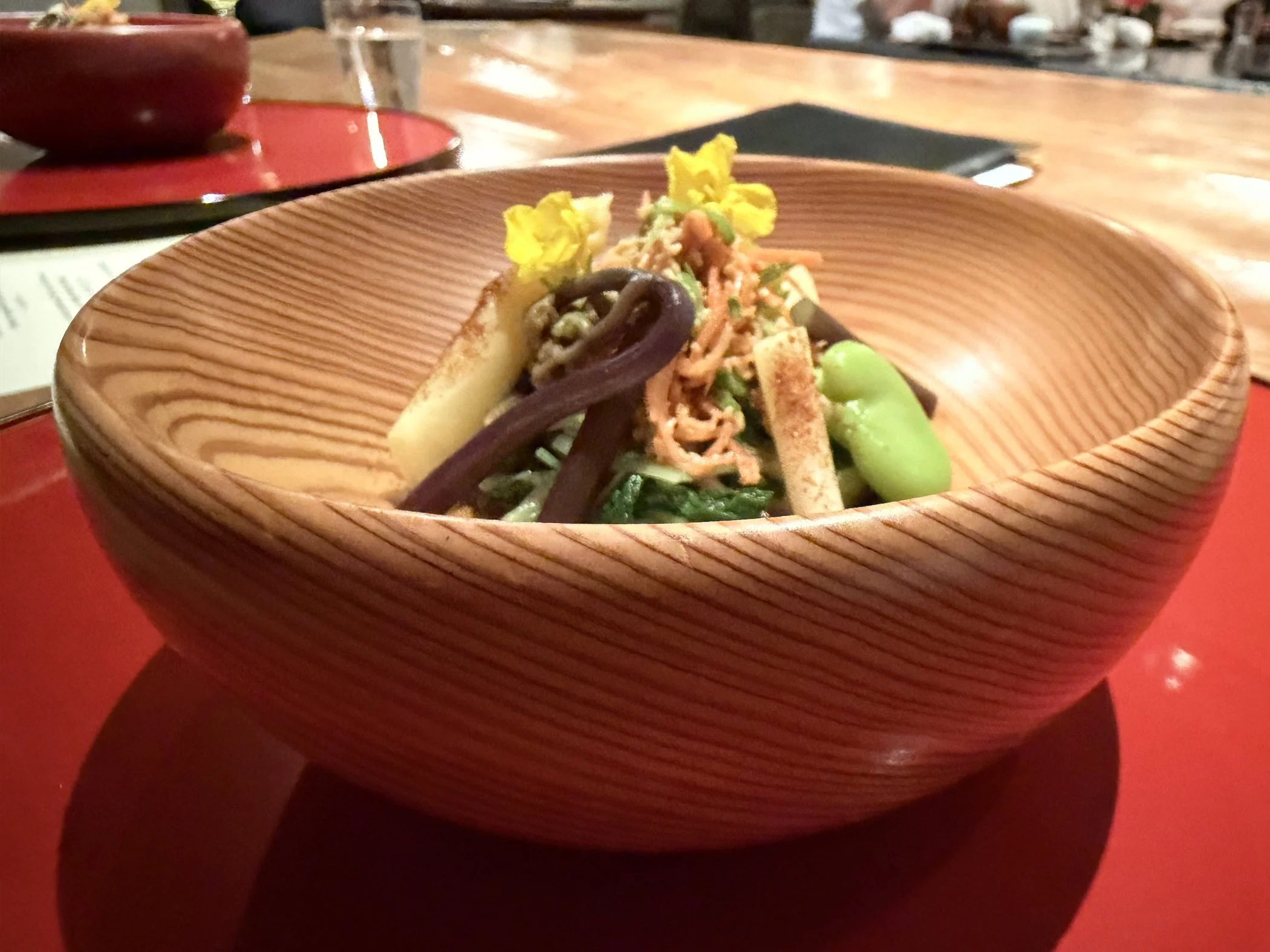
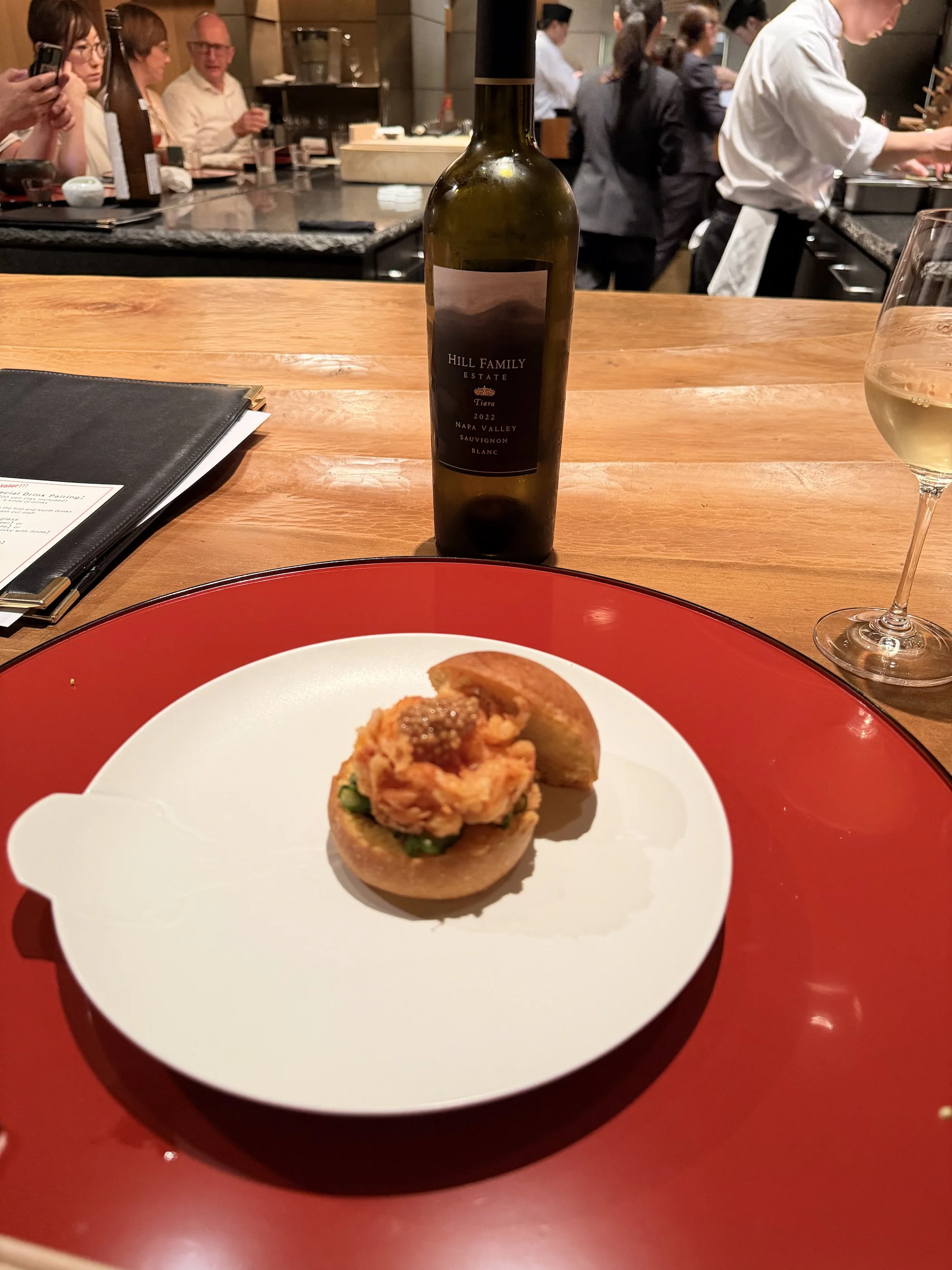
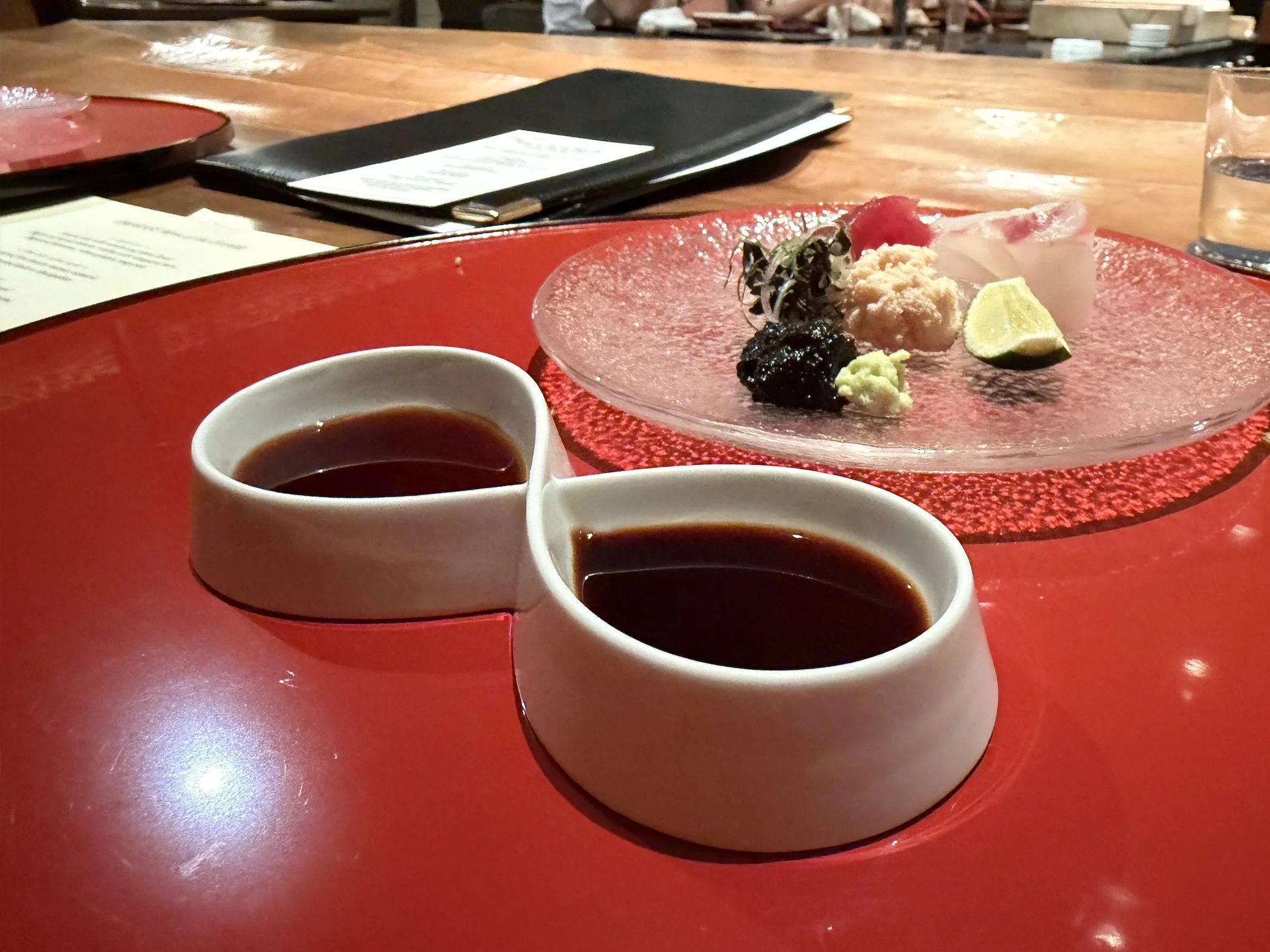
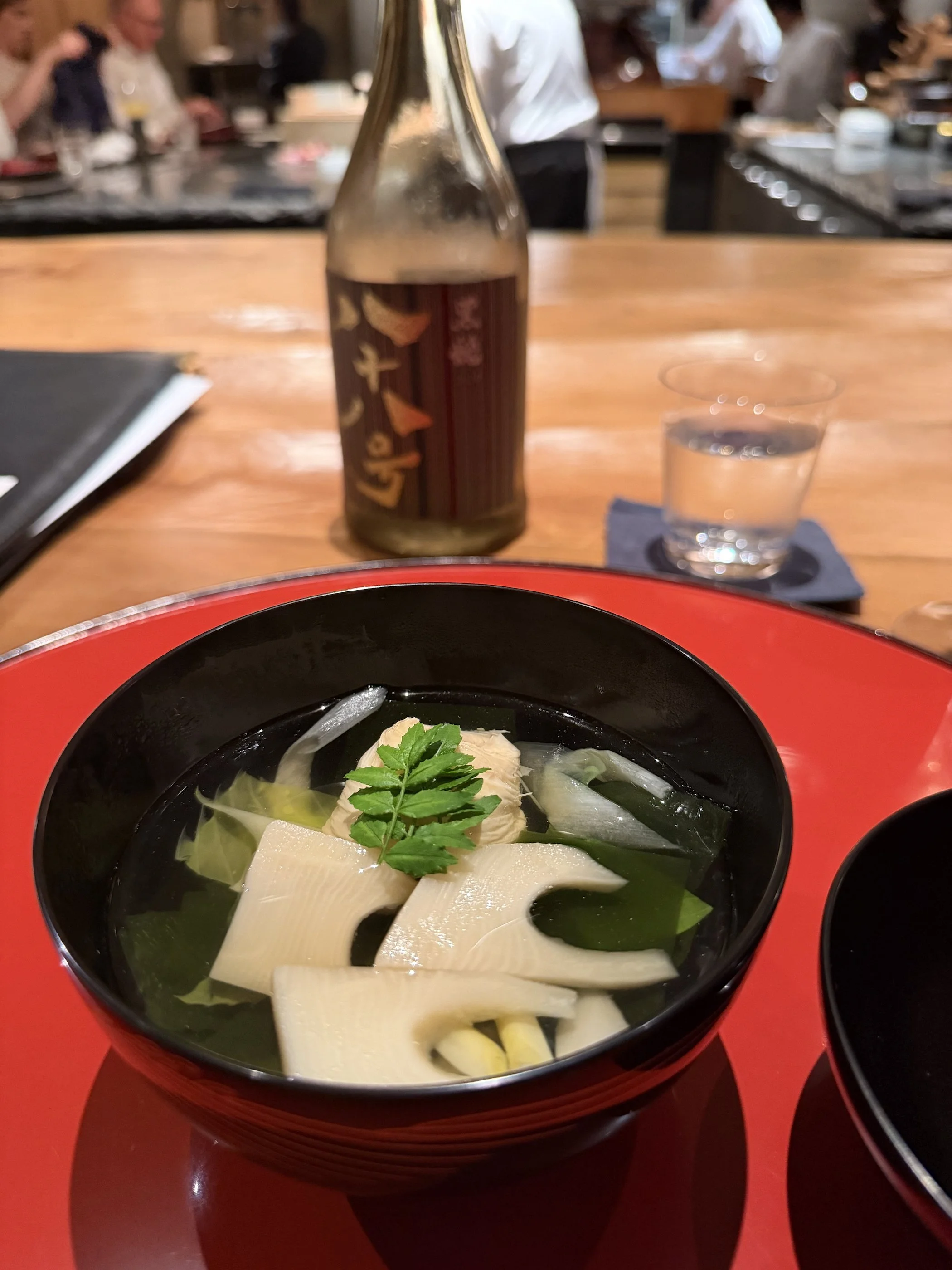
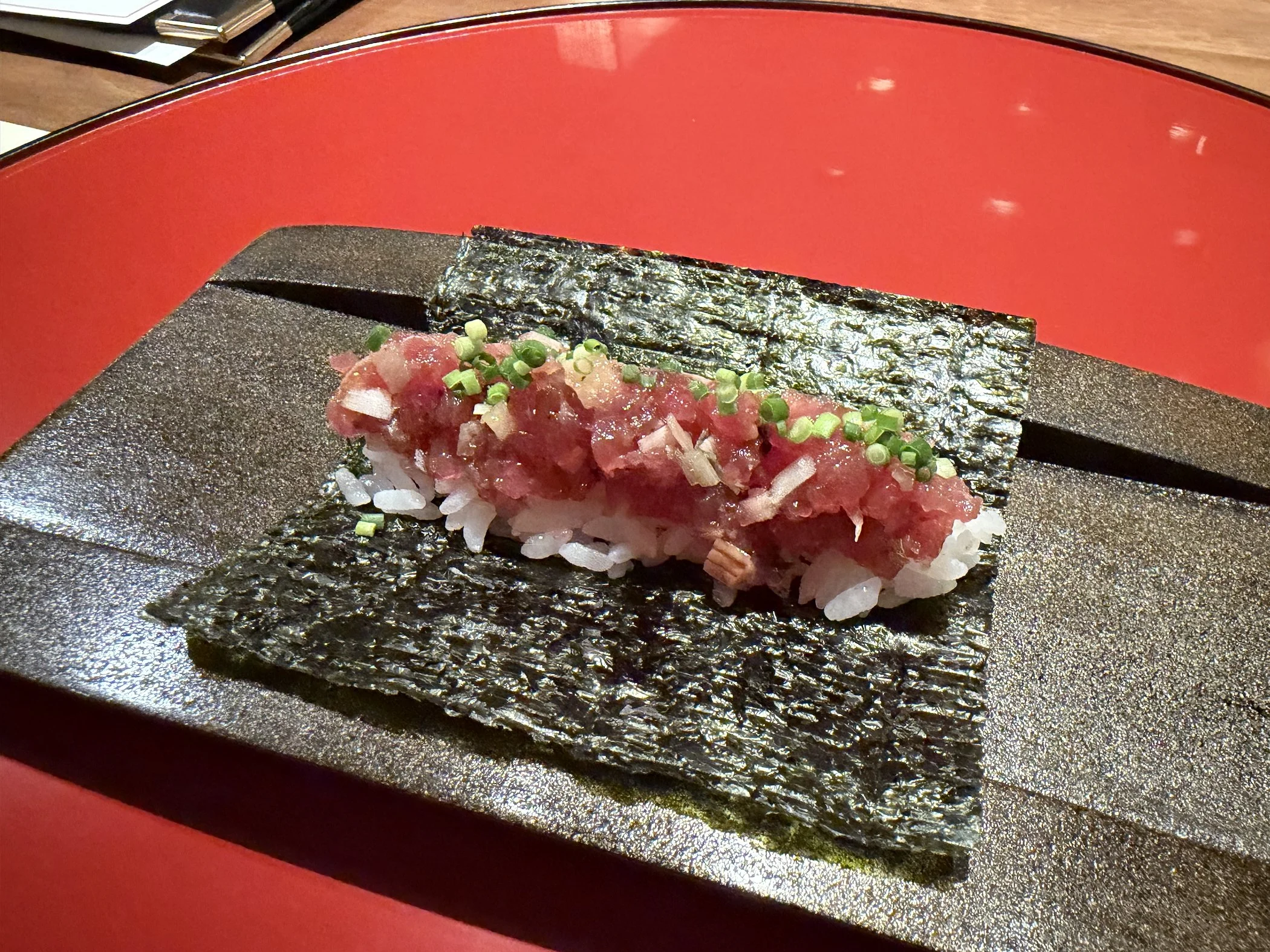
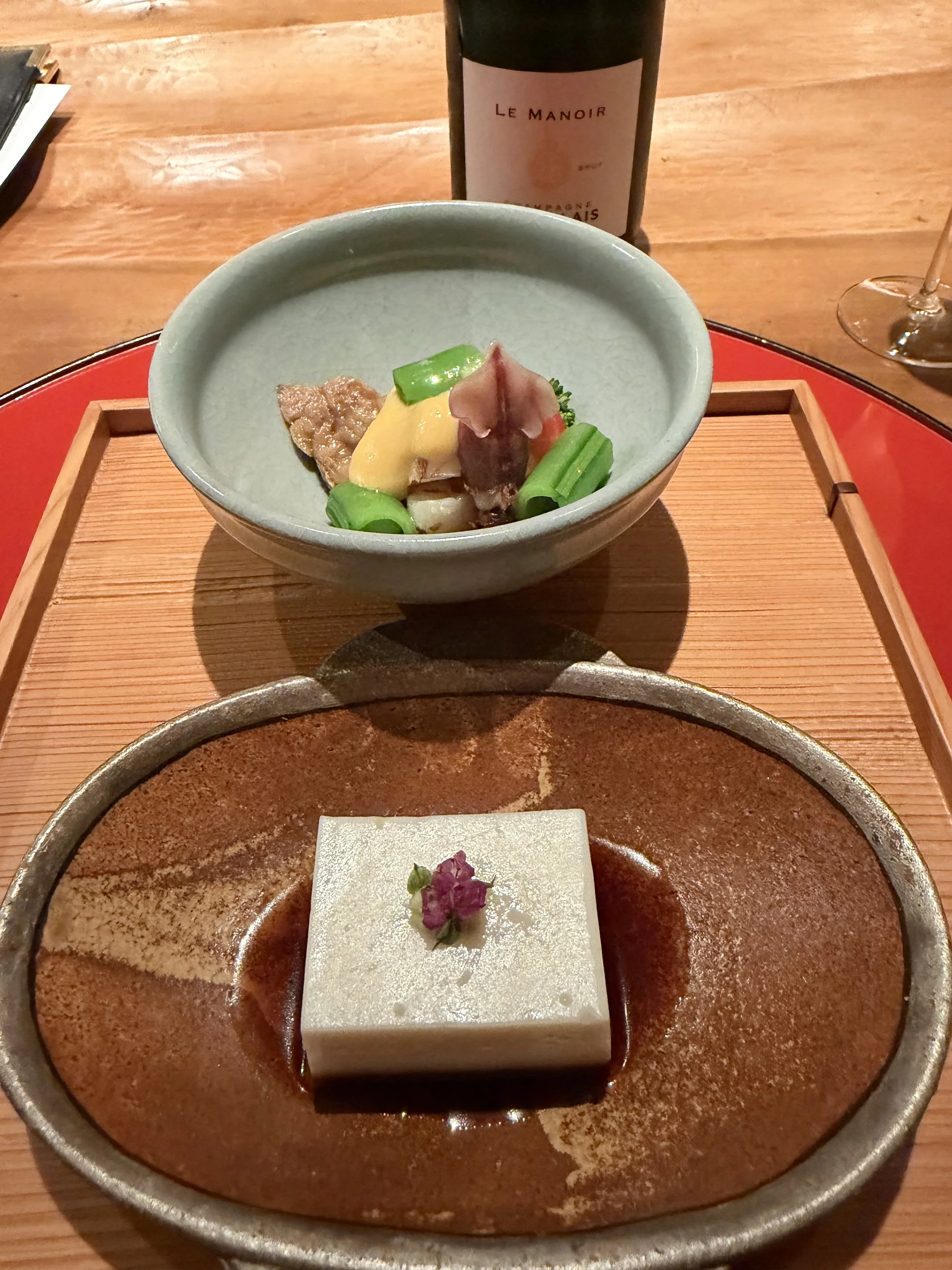
The pictures above don’t present chronologically, but included a variety of proteins, including baby squid, a tuna handroll, and one of my favorites, the opening tofu. The little shrimp burger wasn’t bad either. The dessert was mugwort-flavored moochi. For those interested, it’s a medicinal herb, as much as it sounds like something that goes into one of Harry Potter’s spells. The flavors were in some cases delicate and many foreign to me. The miso soup that ended the meal was so flavorful and rich, studded with tiny clams. I loved the open kitchen and service was excellent.
The shrimp “burger” was paired with a Napa Sauvignon Blanc.
Peter Bar
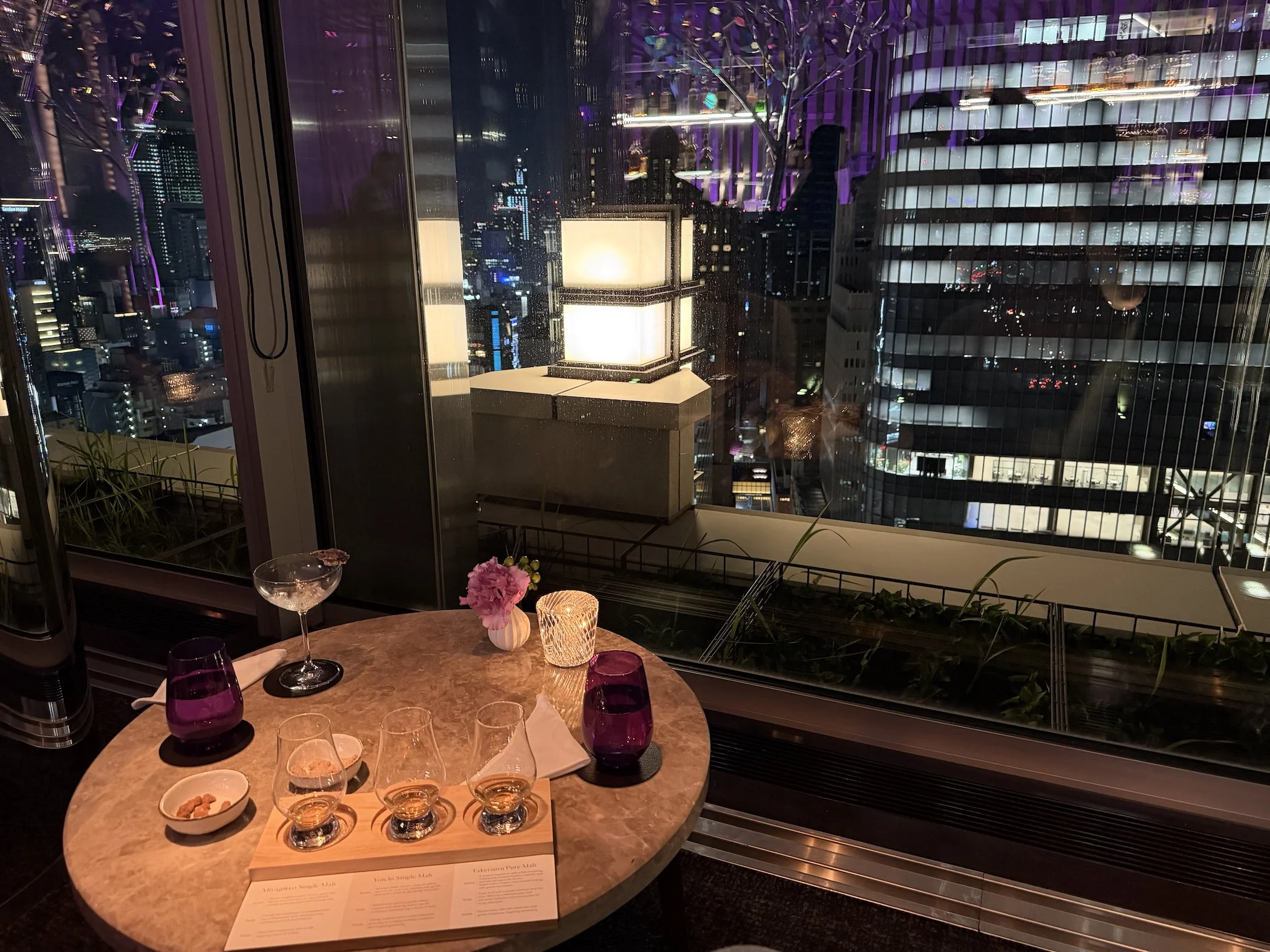
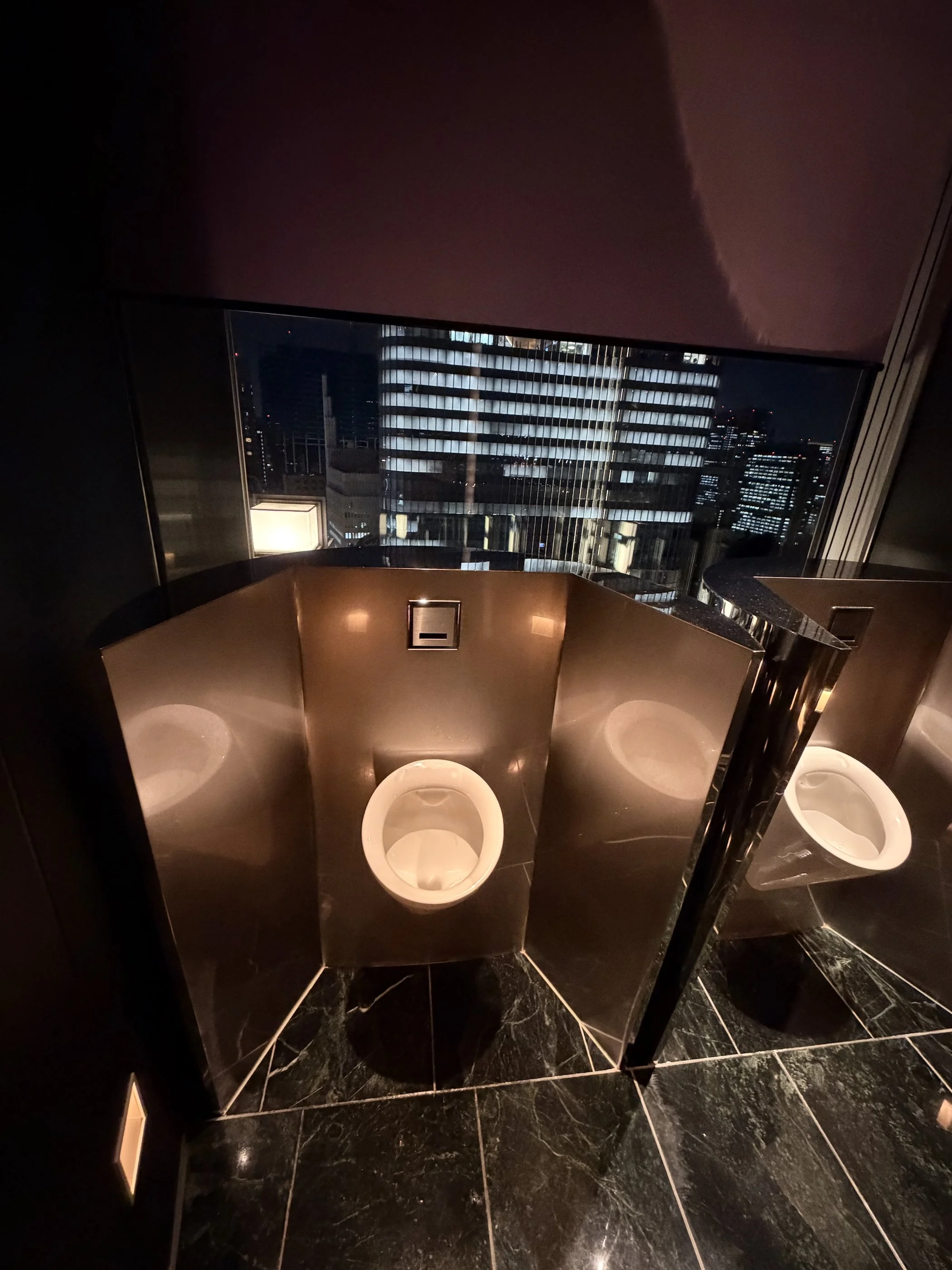
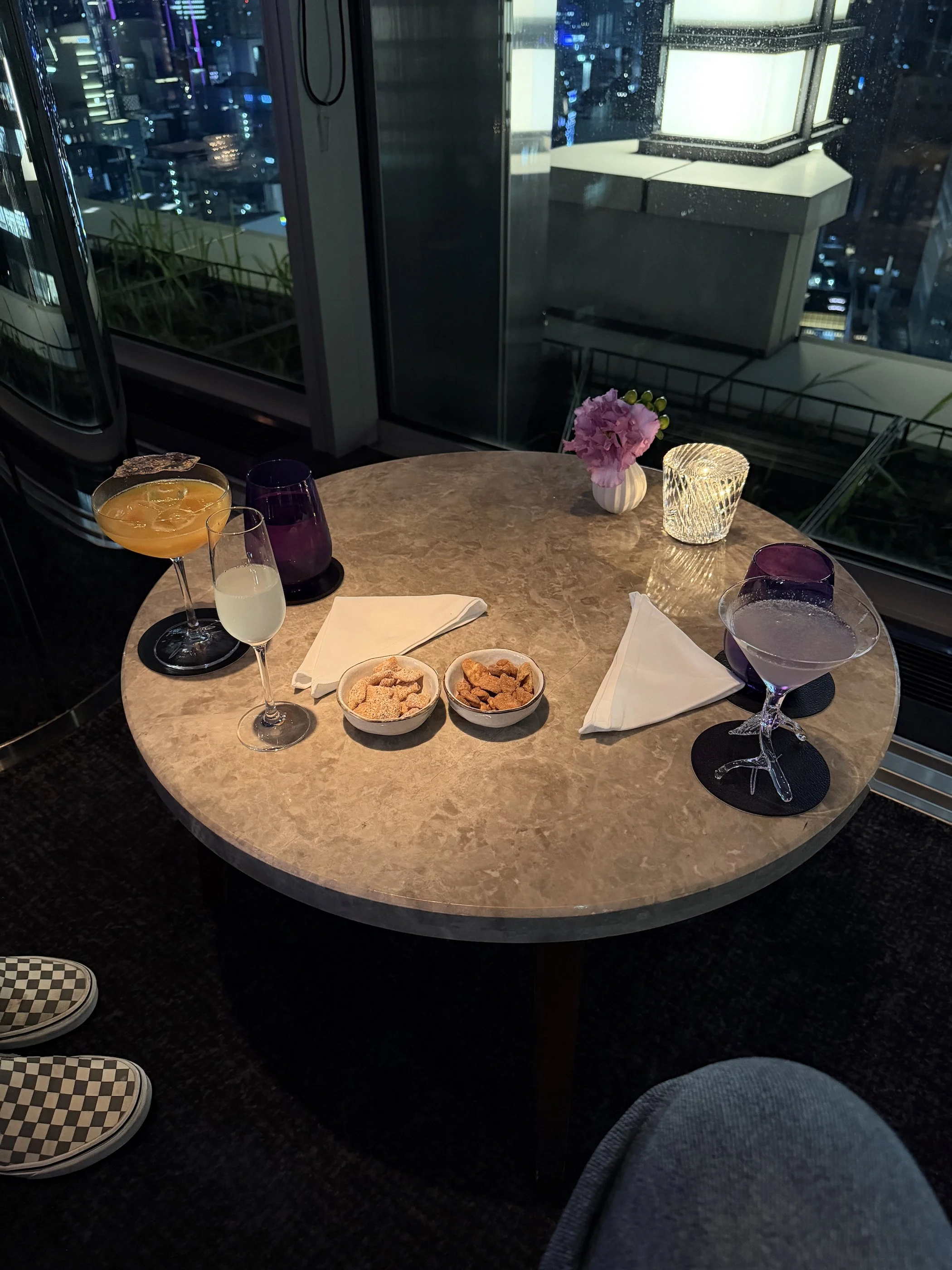
At the top of the Peninsula in Hong Kong is Felix’s, a bar designed by Philippe Starck. The analog in Tokyo is Peter’s Bar. The view was of course outstanding. My apologies for the urinal picture, but like the Felix, the men’s bathroom features quite a view when you need to go.
French Meal - L’Atelier de Joël Robuchon
(2 Michelin Stars)
My first visit to one of Robuchon’s Ateliers was at the Rue de Bac location in Paris. At that time, it held 2 Michelin stars and was an outstanding meal. We enjoyed it with friends of ours and we would return on a subsequent trip when it held 1 star. Despite the chef’s passing, Tokyo has multiple restaurants with Robuchon’s name, including the Table de Joël Robuchon (1 star), this restaurant, and the Restaurant Joël Robuchon (3 stars). I subsequently ate at the New York location (now gone), the one in Shanghai, and the one in Paris at Latoile/Champs Elysees.
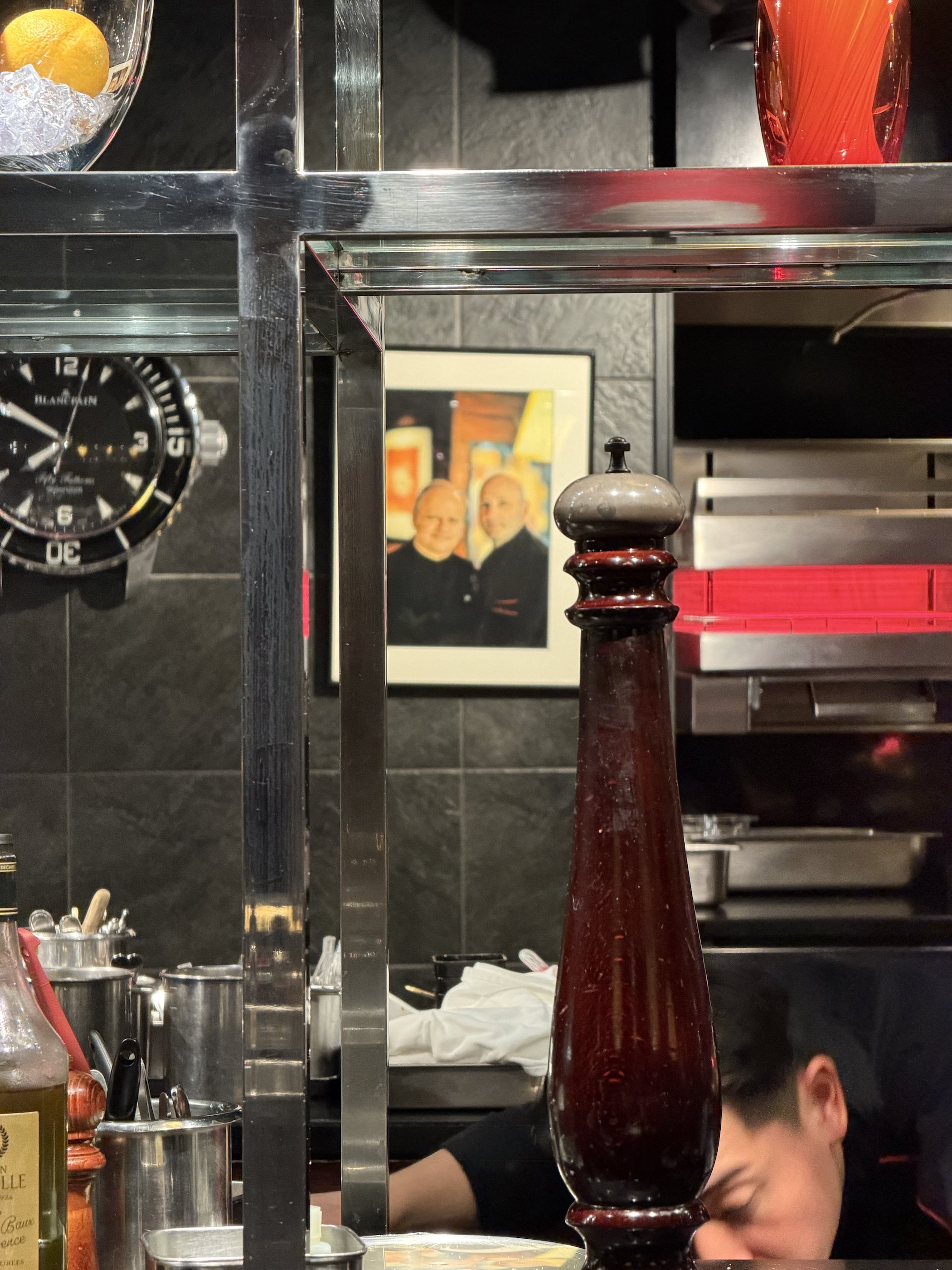
A portrait of Robuchon hangs in the back of the kitchen area.
This one is located in Roppongi Hills, an upscale area in Tokyo, in a multi-layer mall. The location features a boutique to buy take-away items alongside the table-focused restaurant. We both agreed, to our taste, this was the best meal of the trip, as everything was perfect in flavor, with good service and a good flow to the meal.
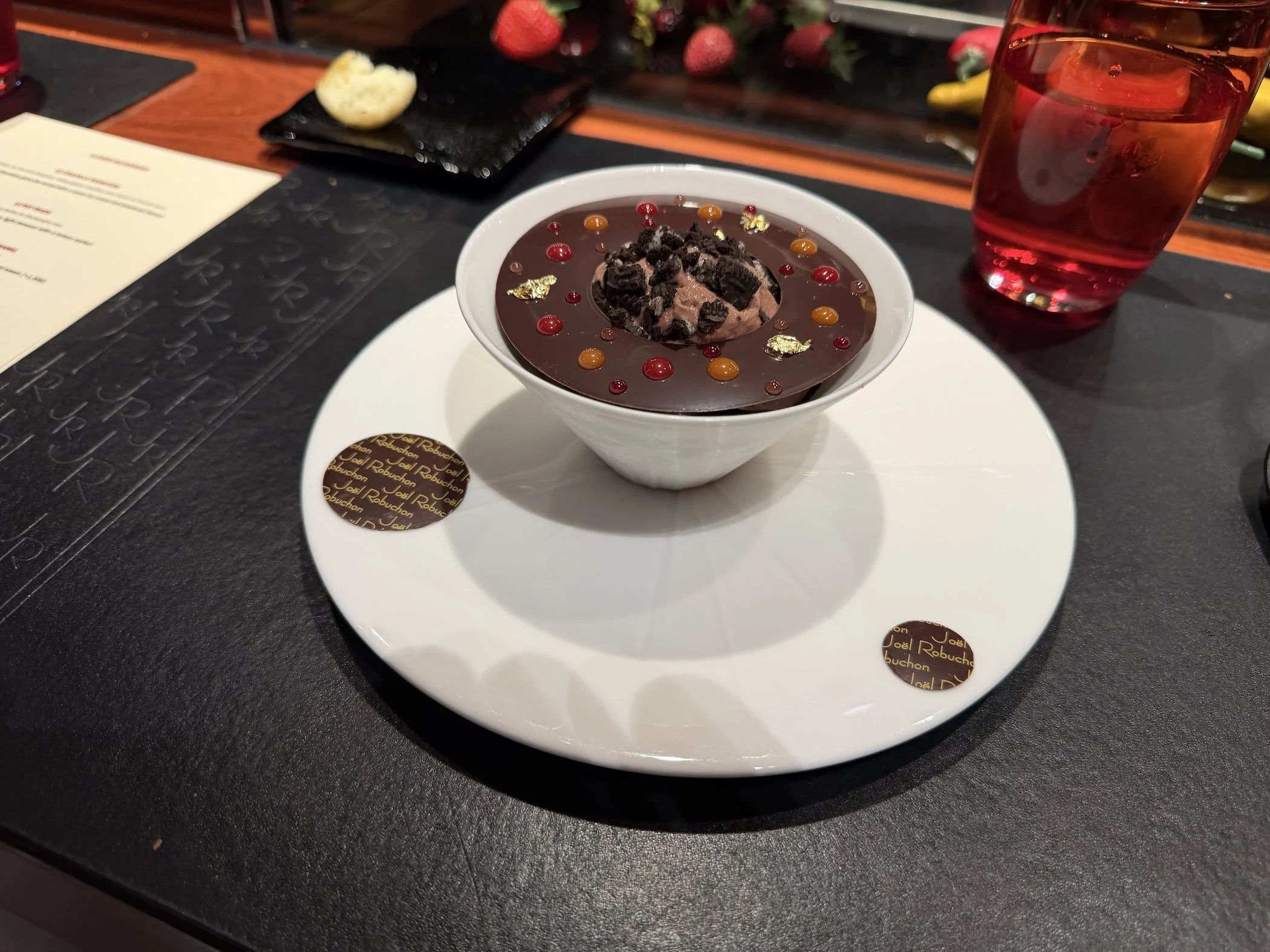
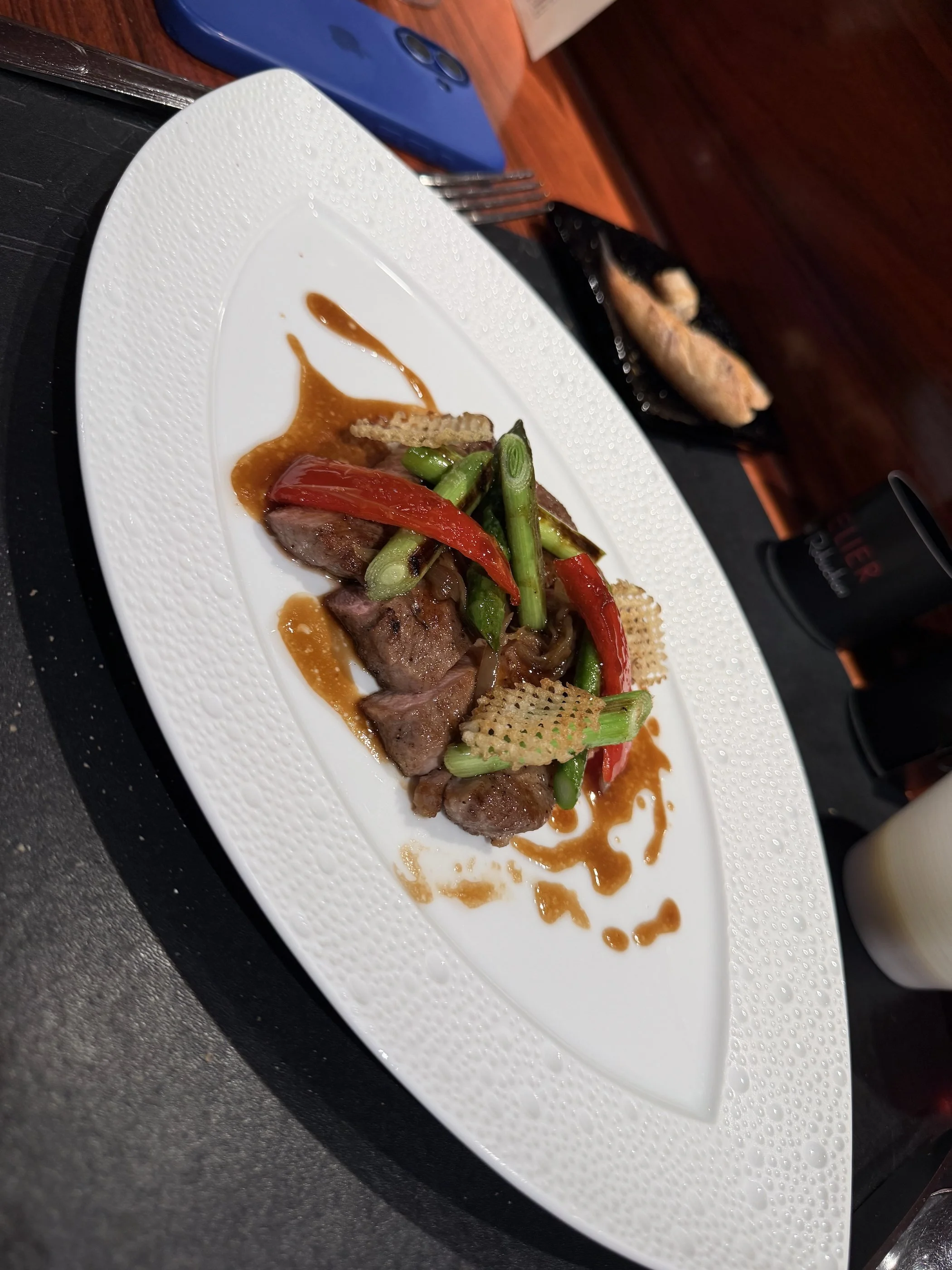
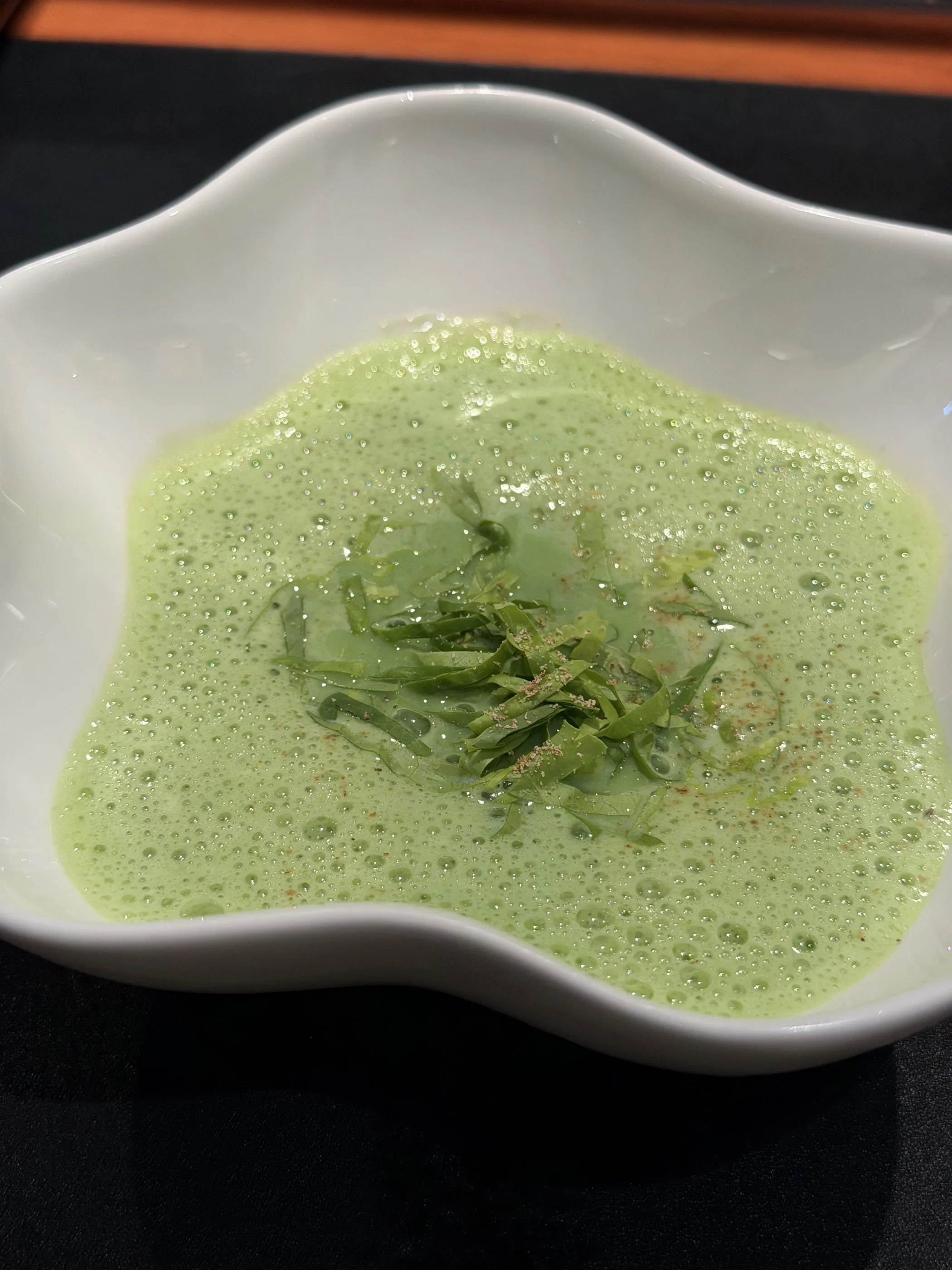
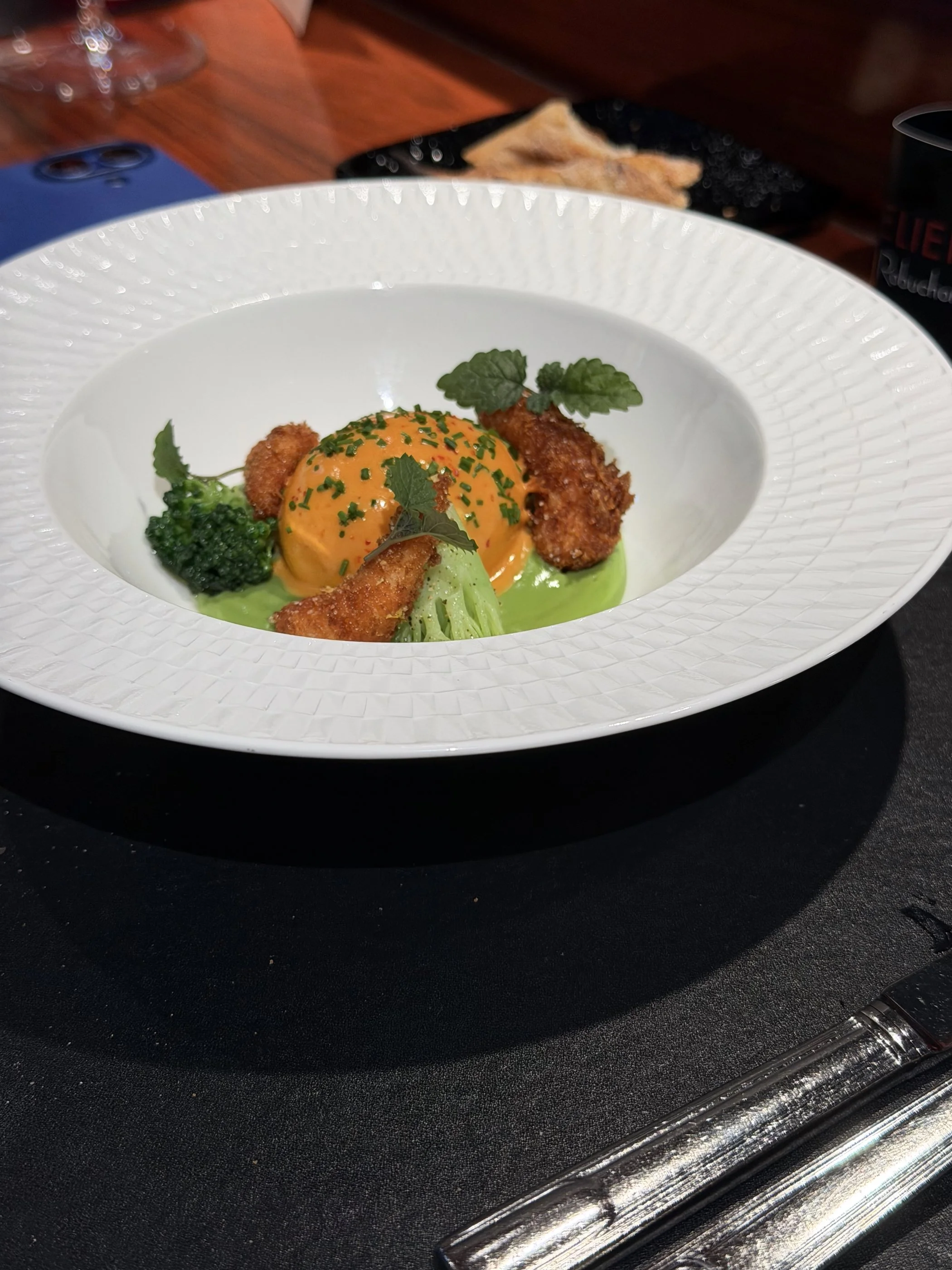
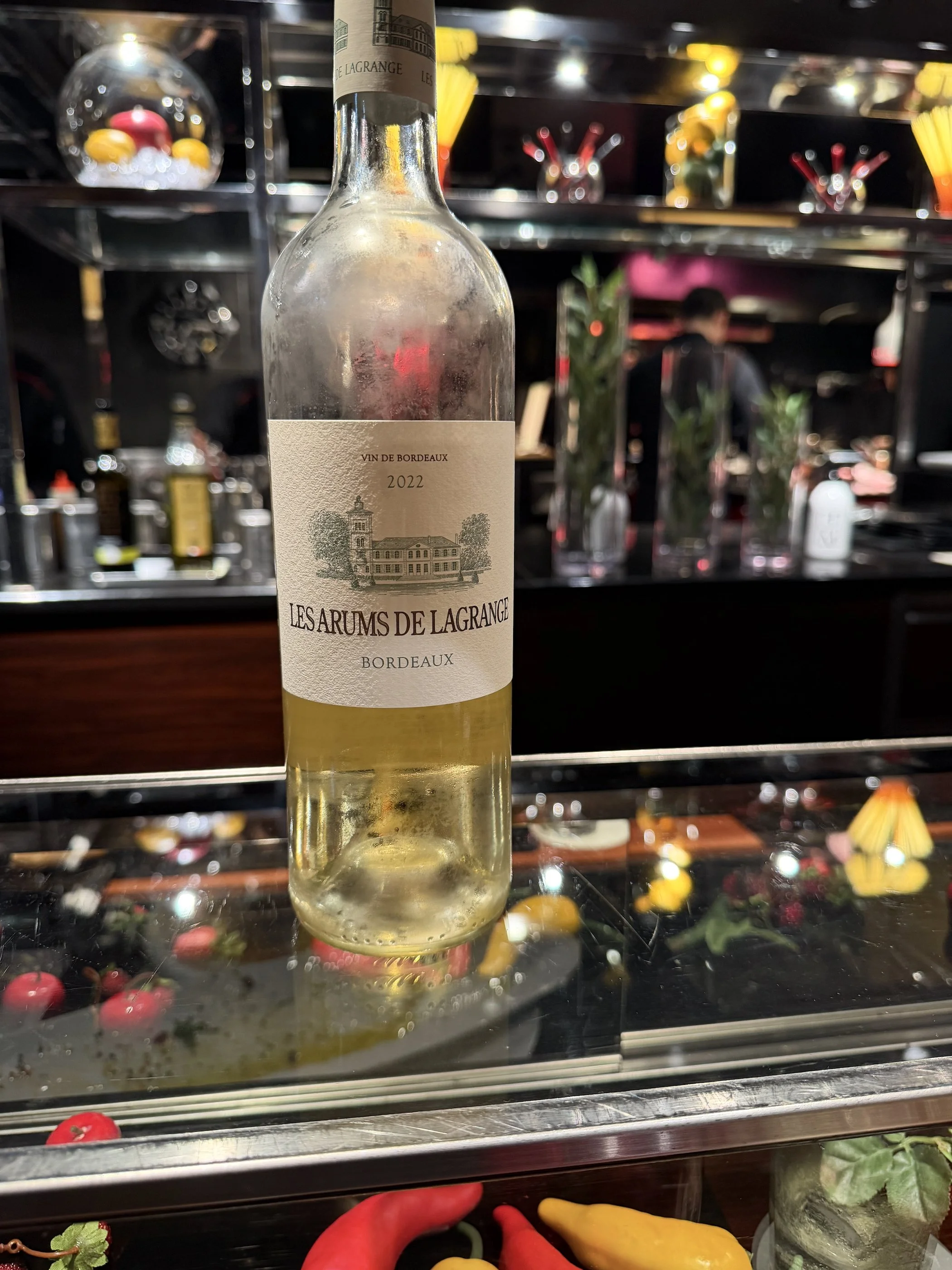
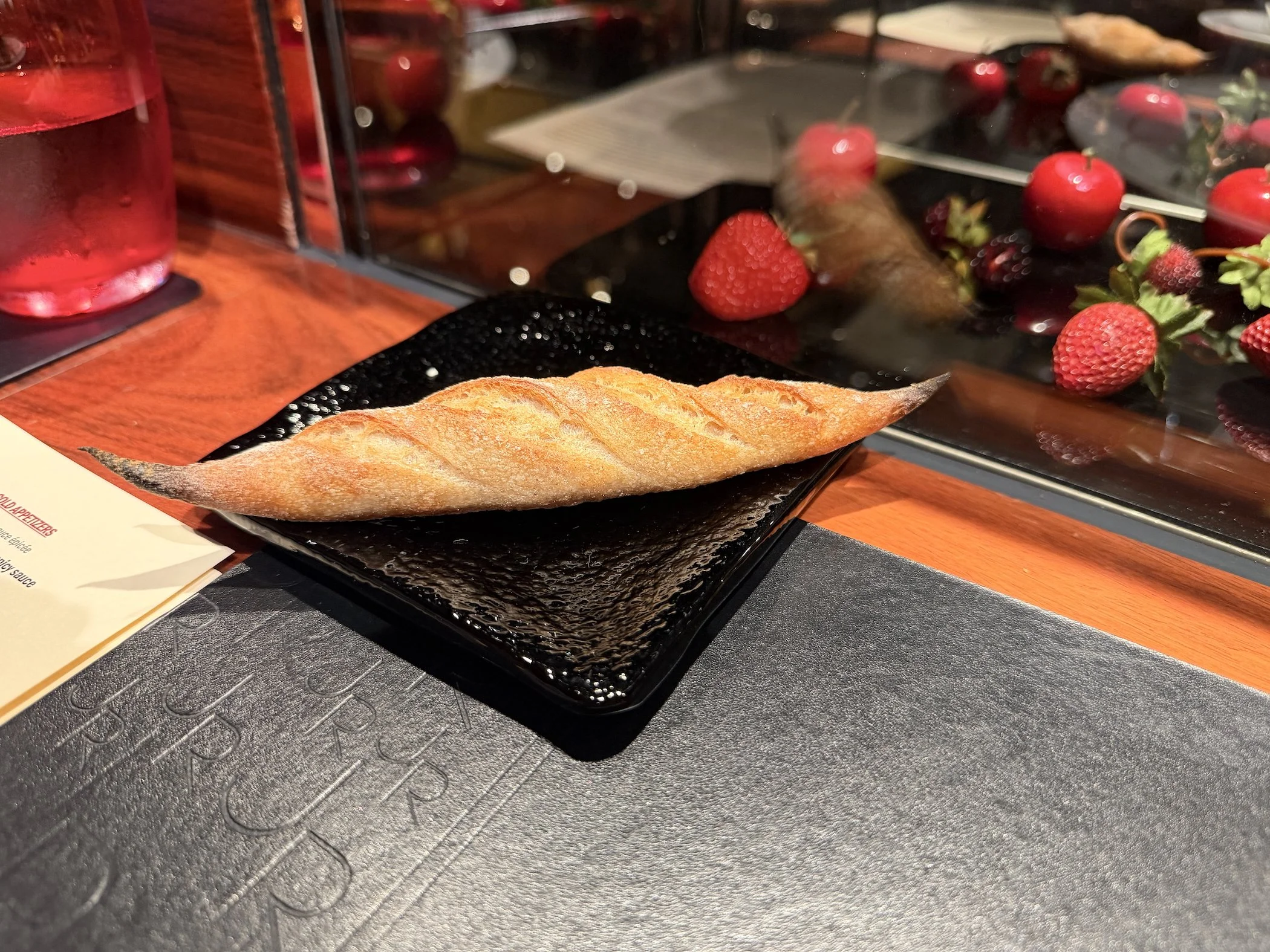
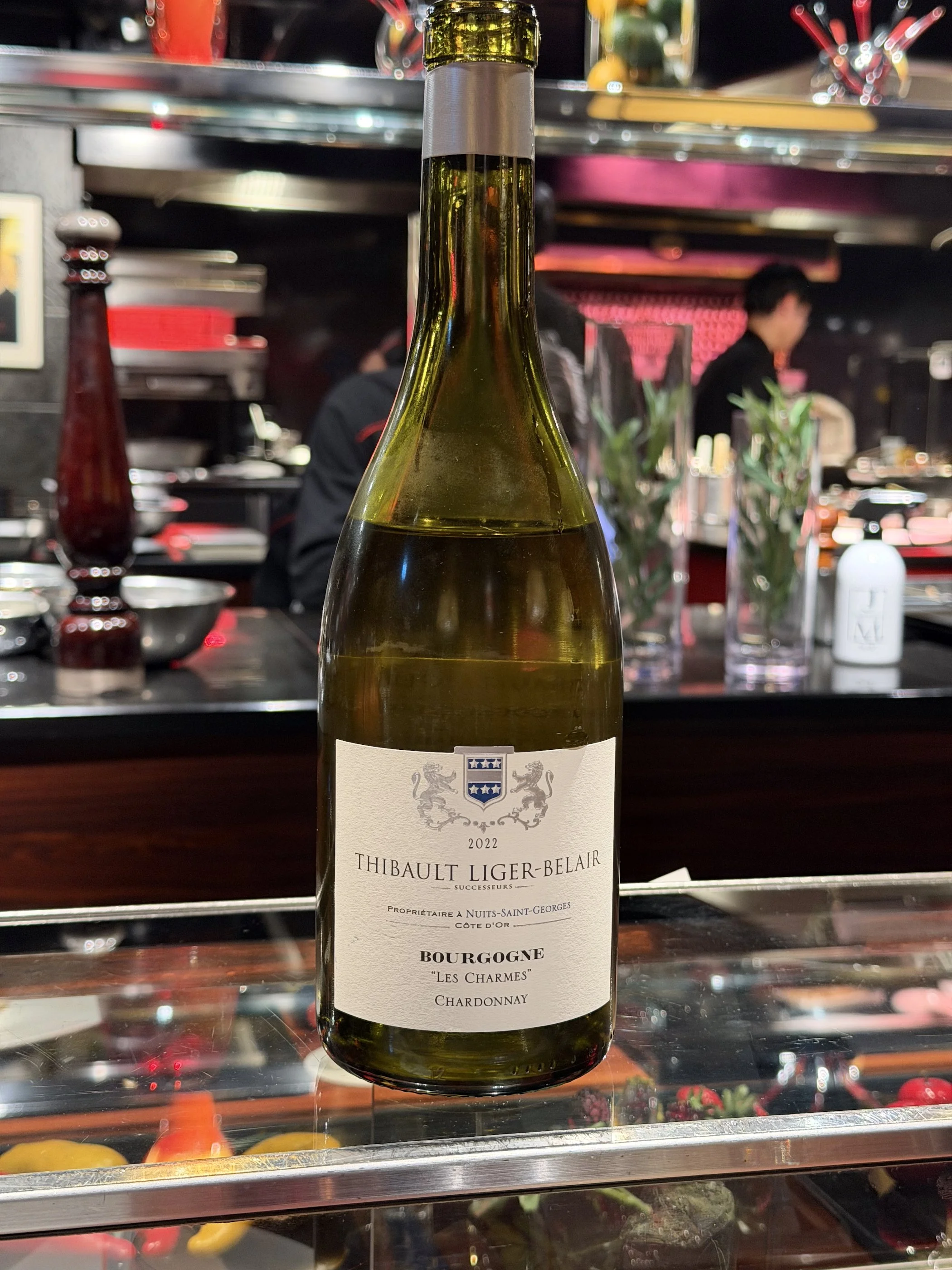
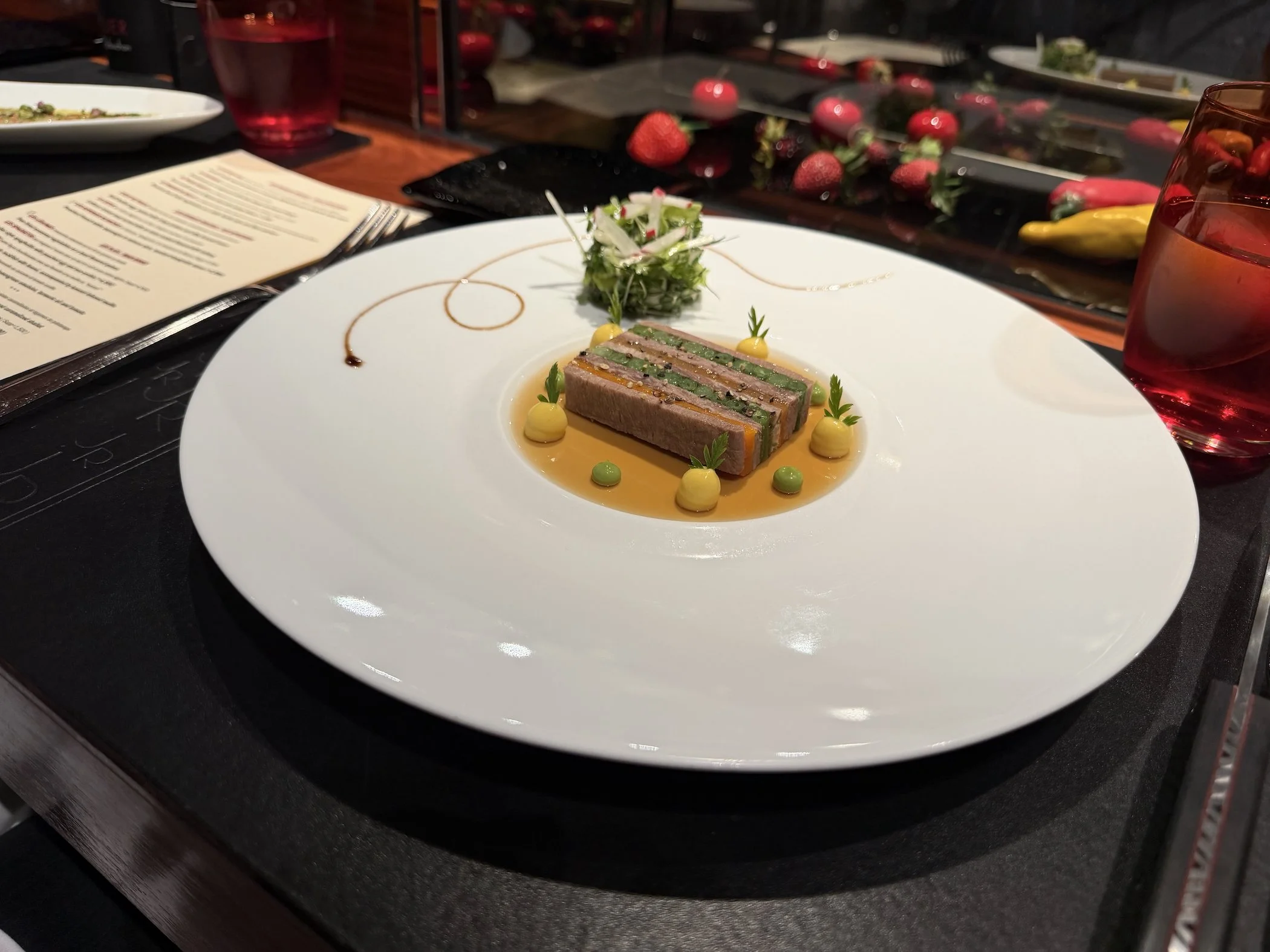
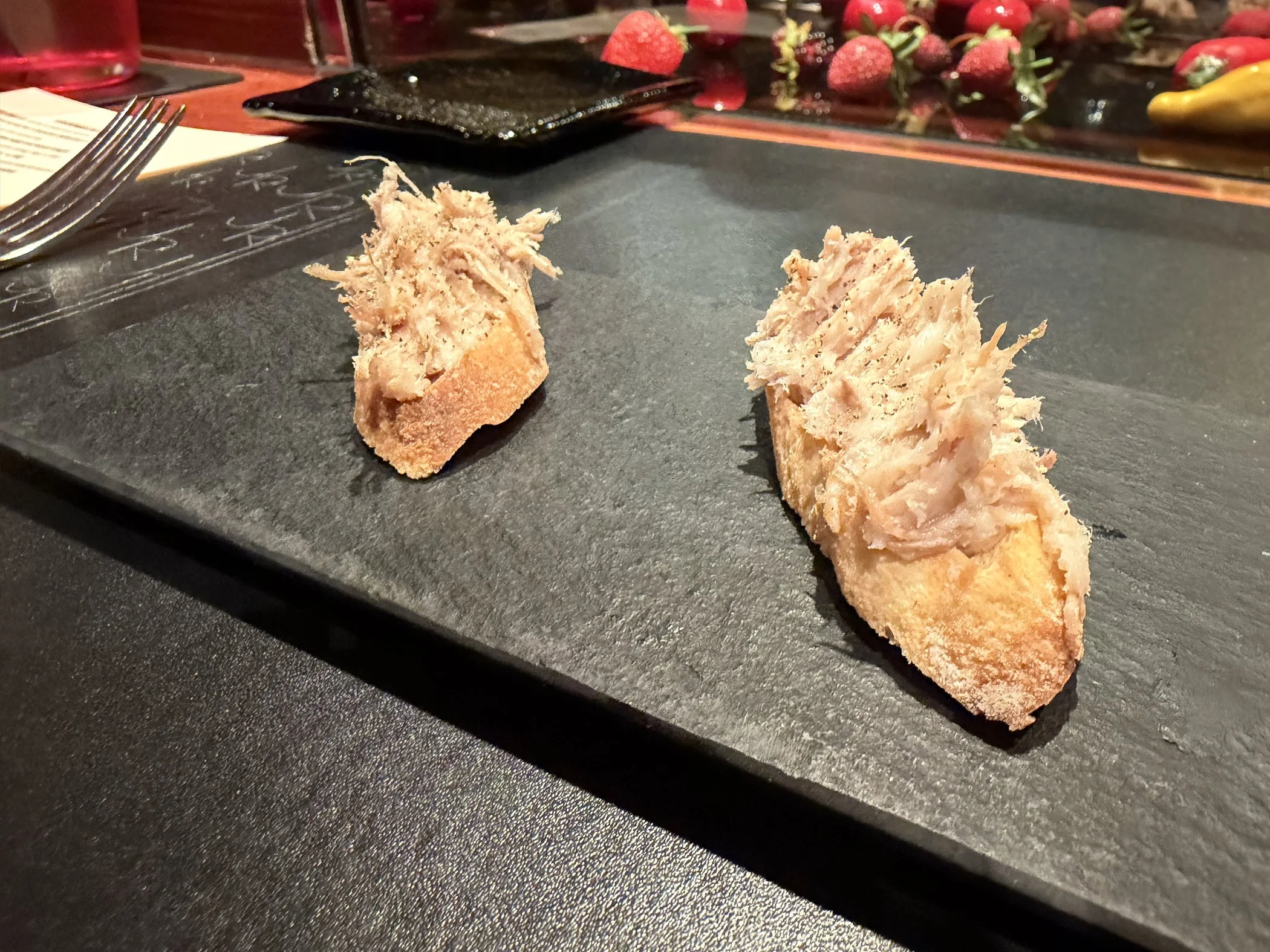
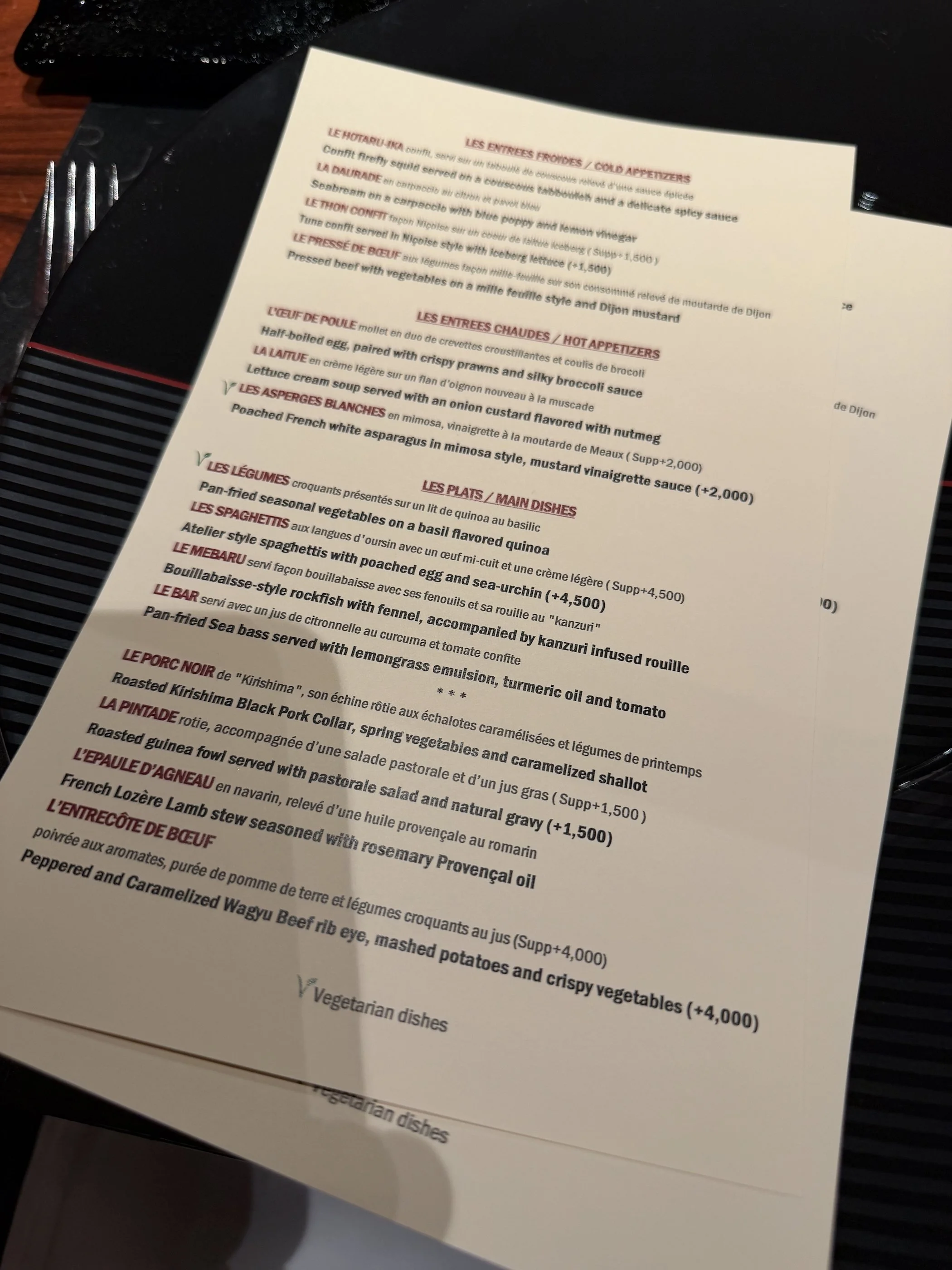
I found in ordering for many of these restaurants in Japan, you order by which meal you want: in this case we chose the 2 apps/one entrée and dessert option. In times past we could do the 10-course journey but time hasn’t been so kind.
This was my raw beef appetizer that was paired with a white wine—a great match!
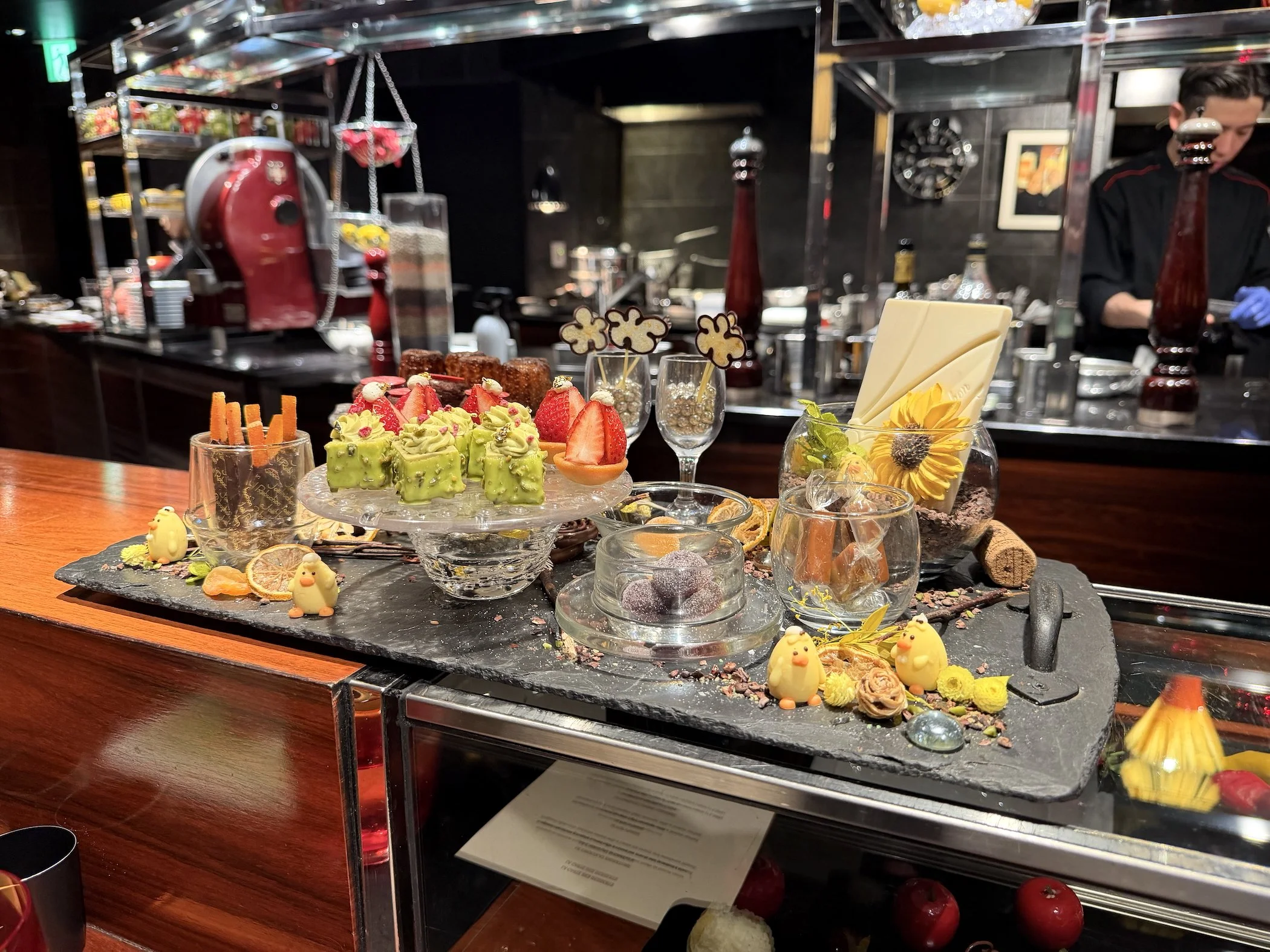
This spread appeared after dessert, with smaller sweet options.
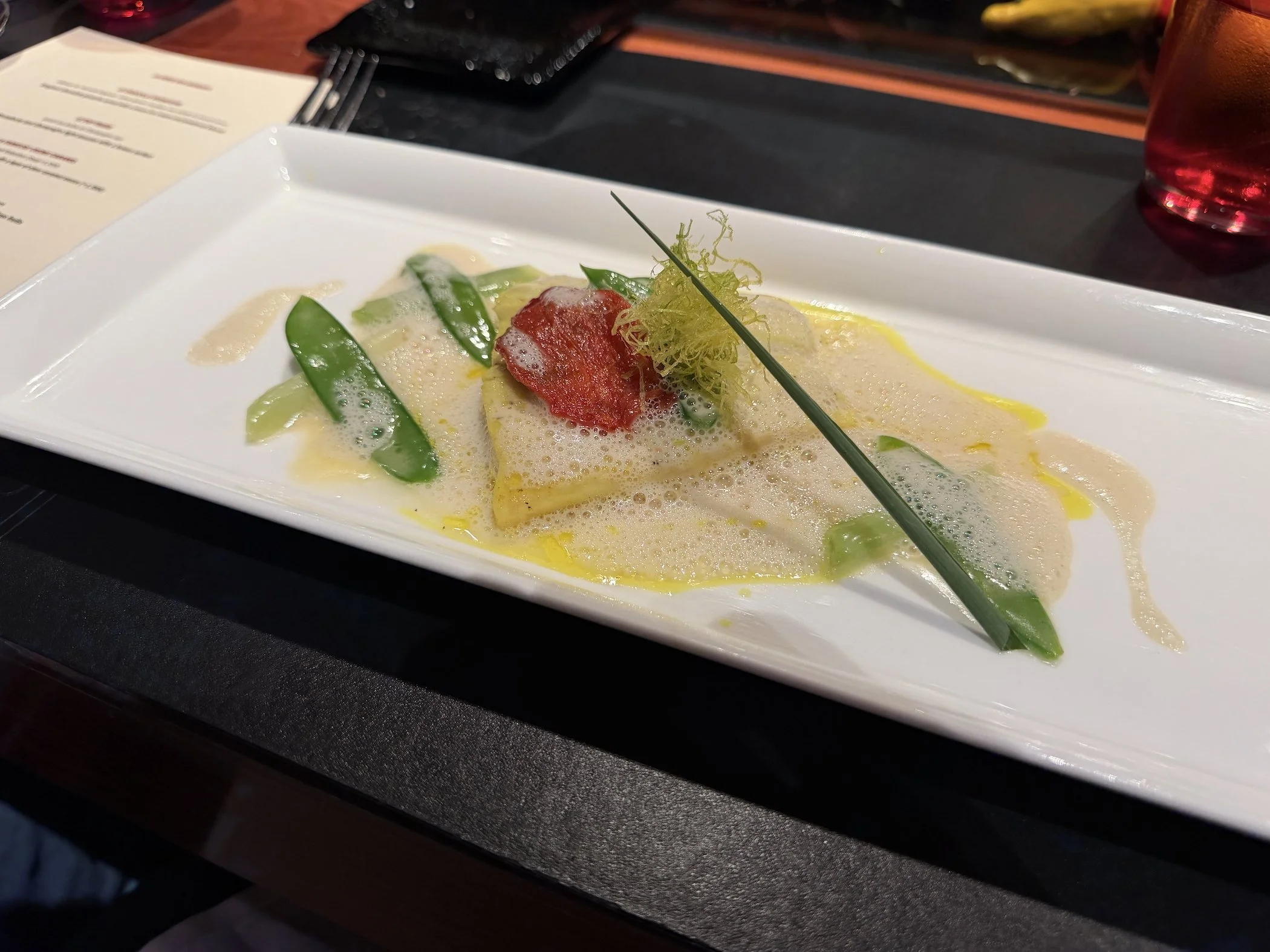
My fish in lemongrass sauce. Light, flavorful, just excellent.
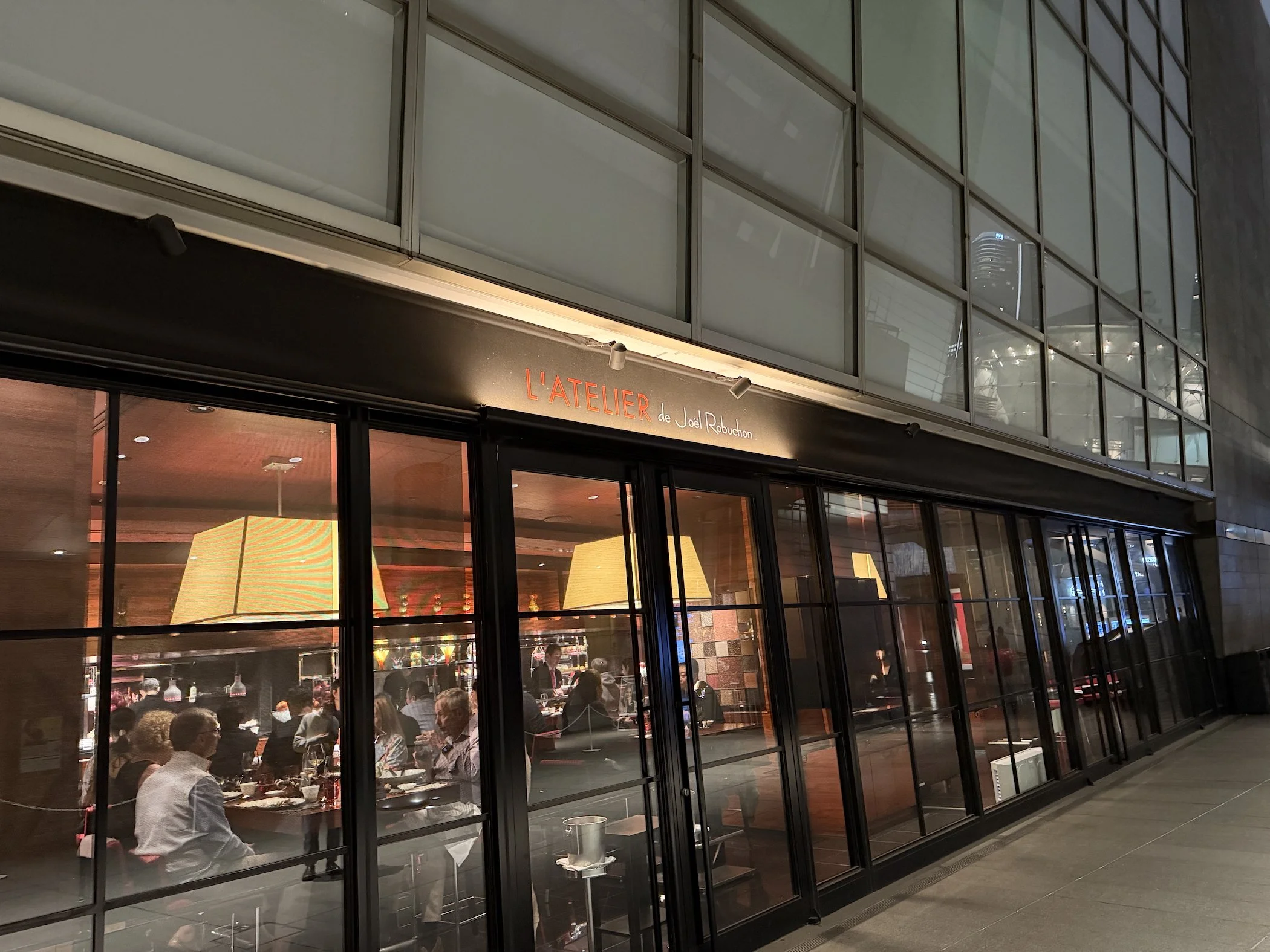
Looking in to the Atelier from the outside.
Forni Dinner - The Mitsui, Kyoto
View of the hotel’s French restaurant, Toki. In talking to other hotel guests, they had a great experience at Toki. My only experiences were at Forni.
Our hotel in Kyoto offered two restaurants, one French and one Italian. Our first night there we settled in and enjoyed quite excellent Italian food (and wine).
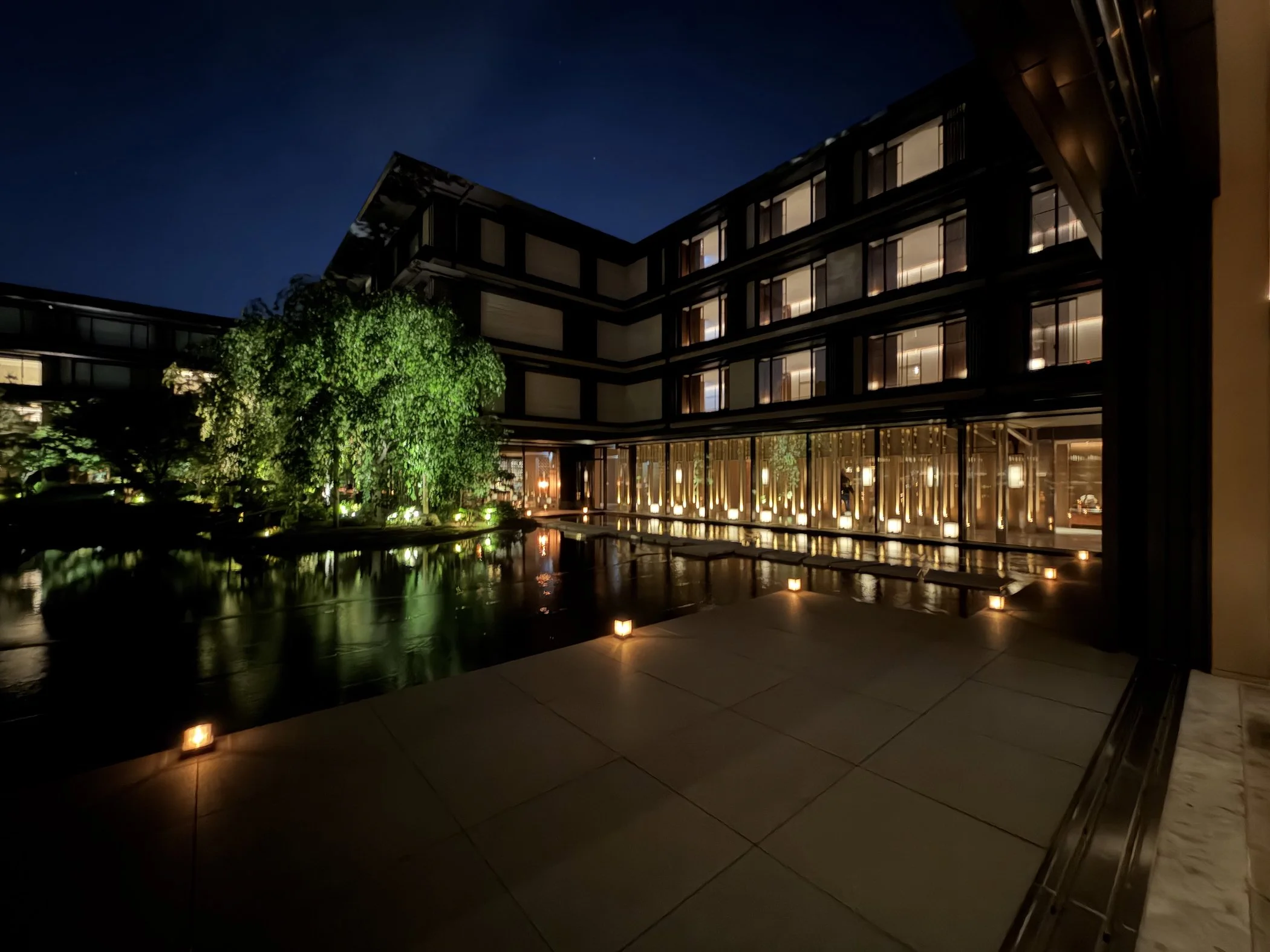
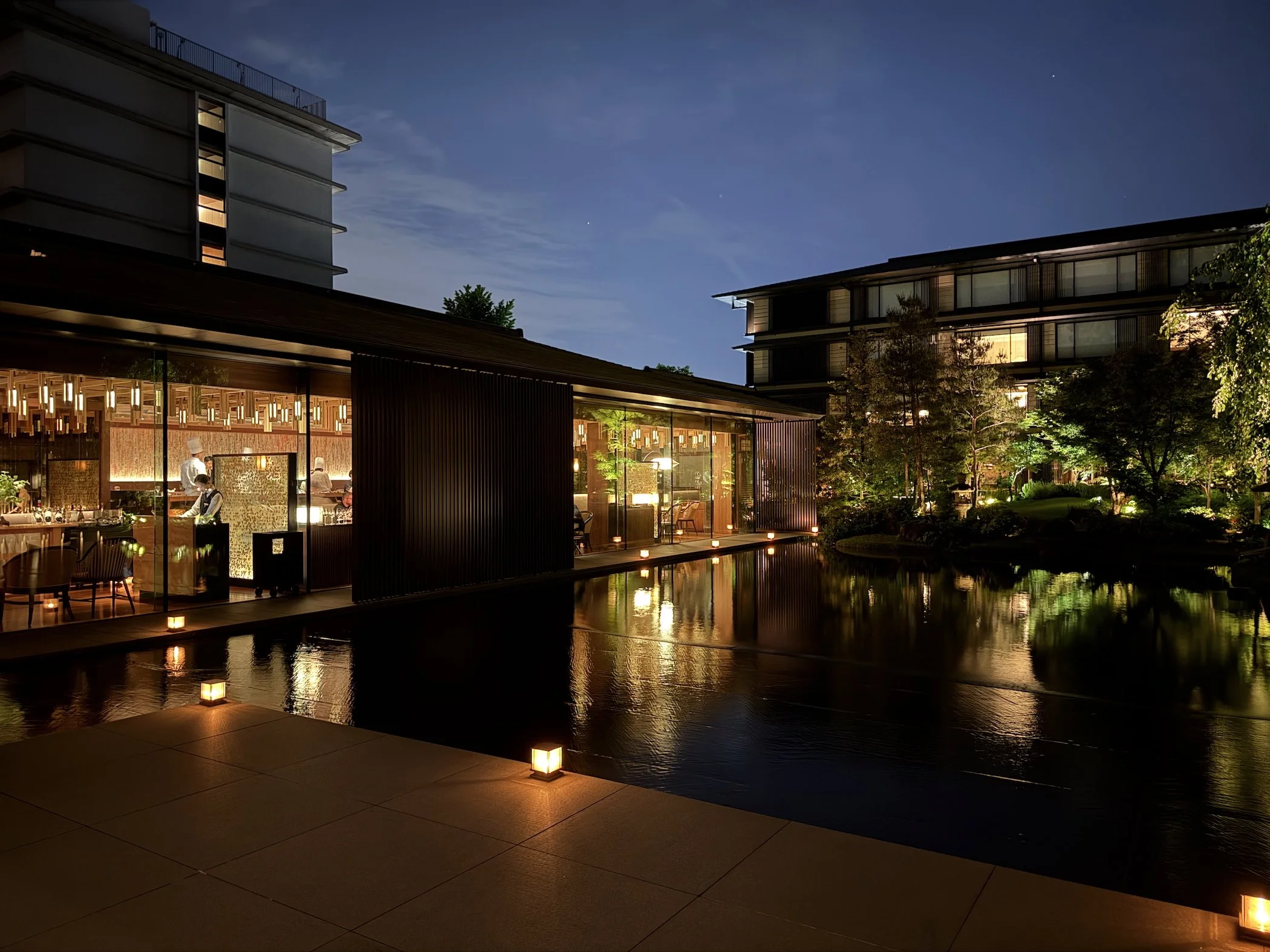
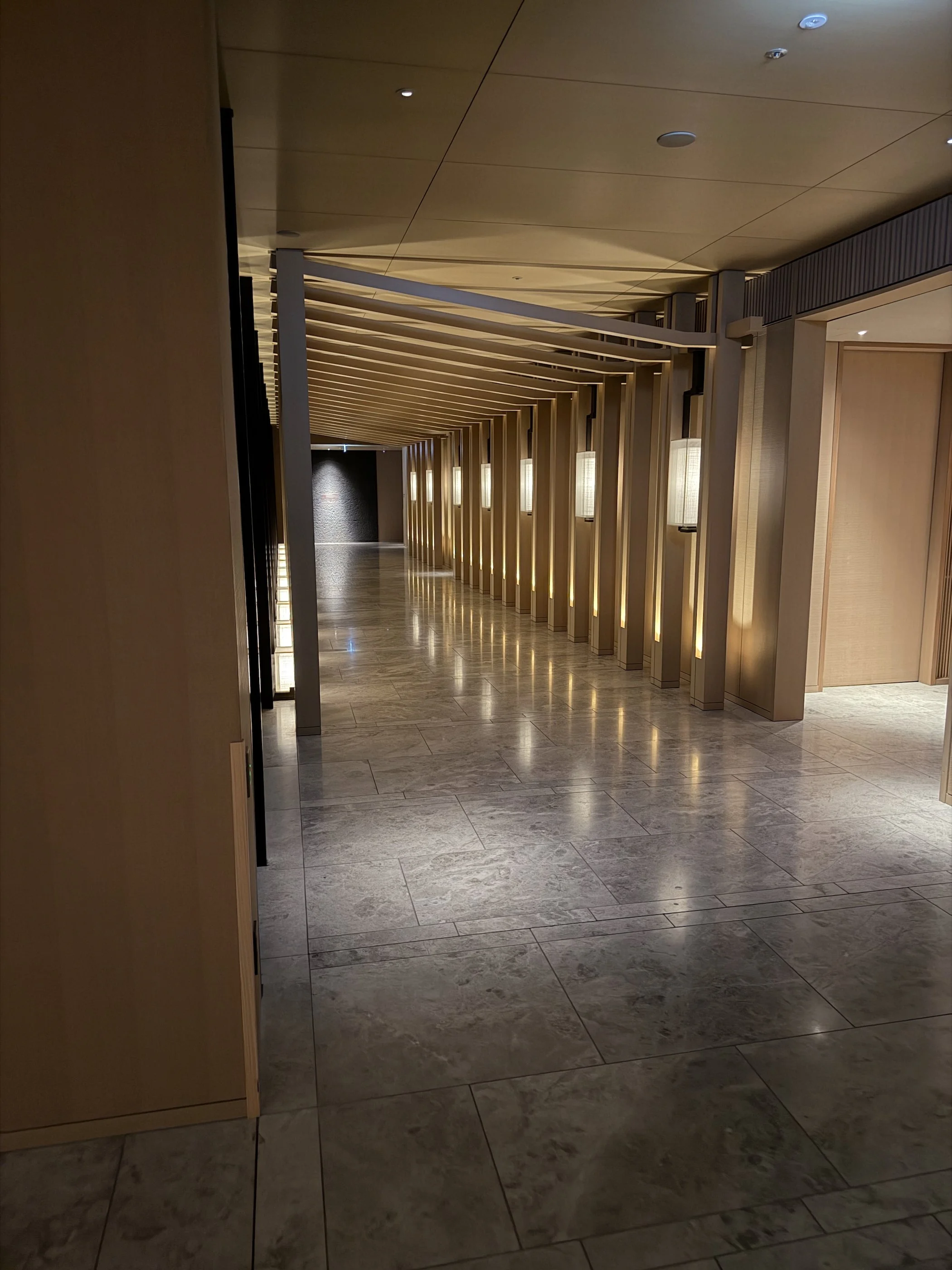
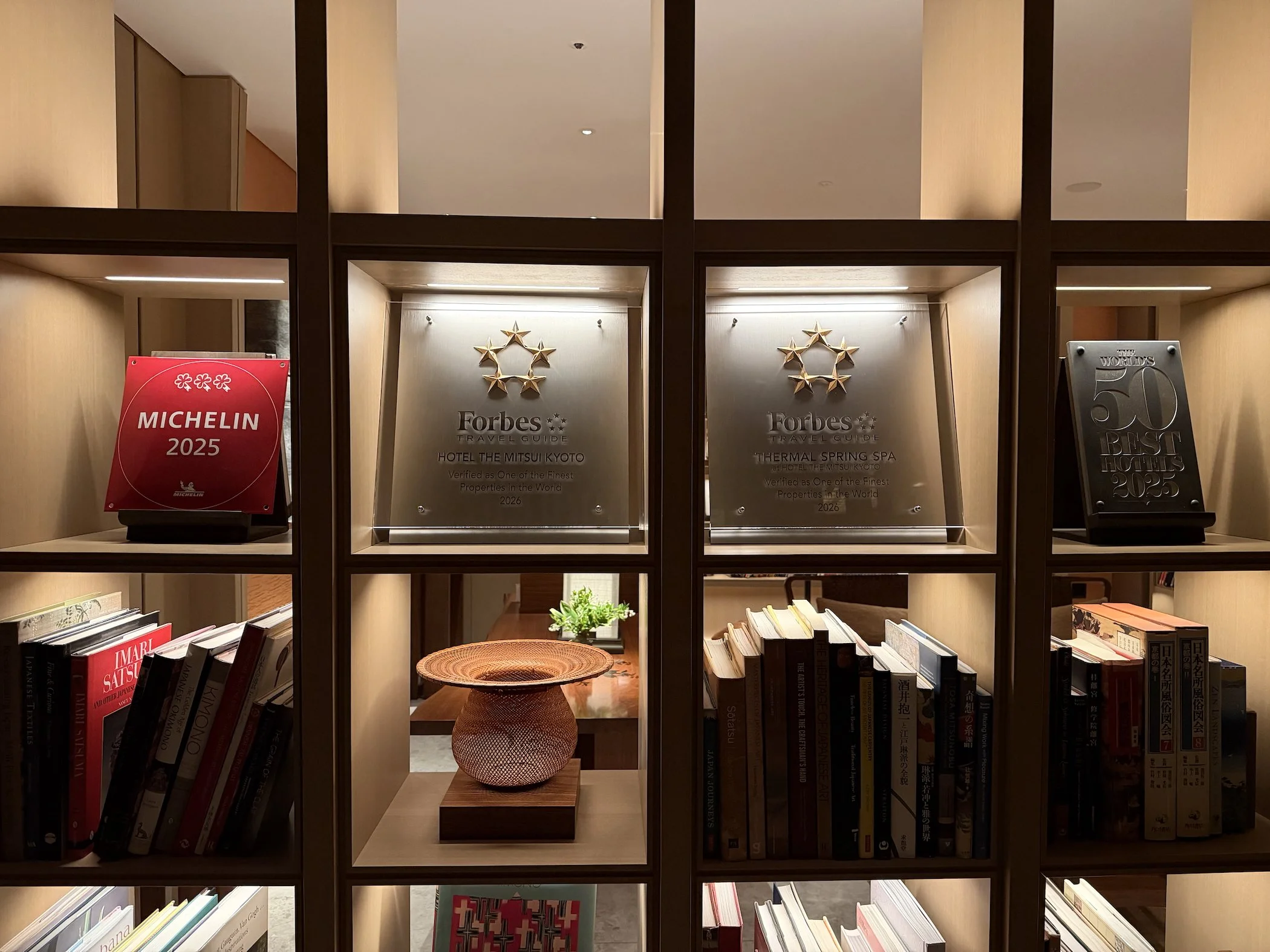
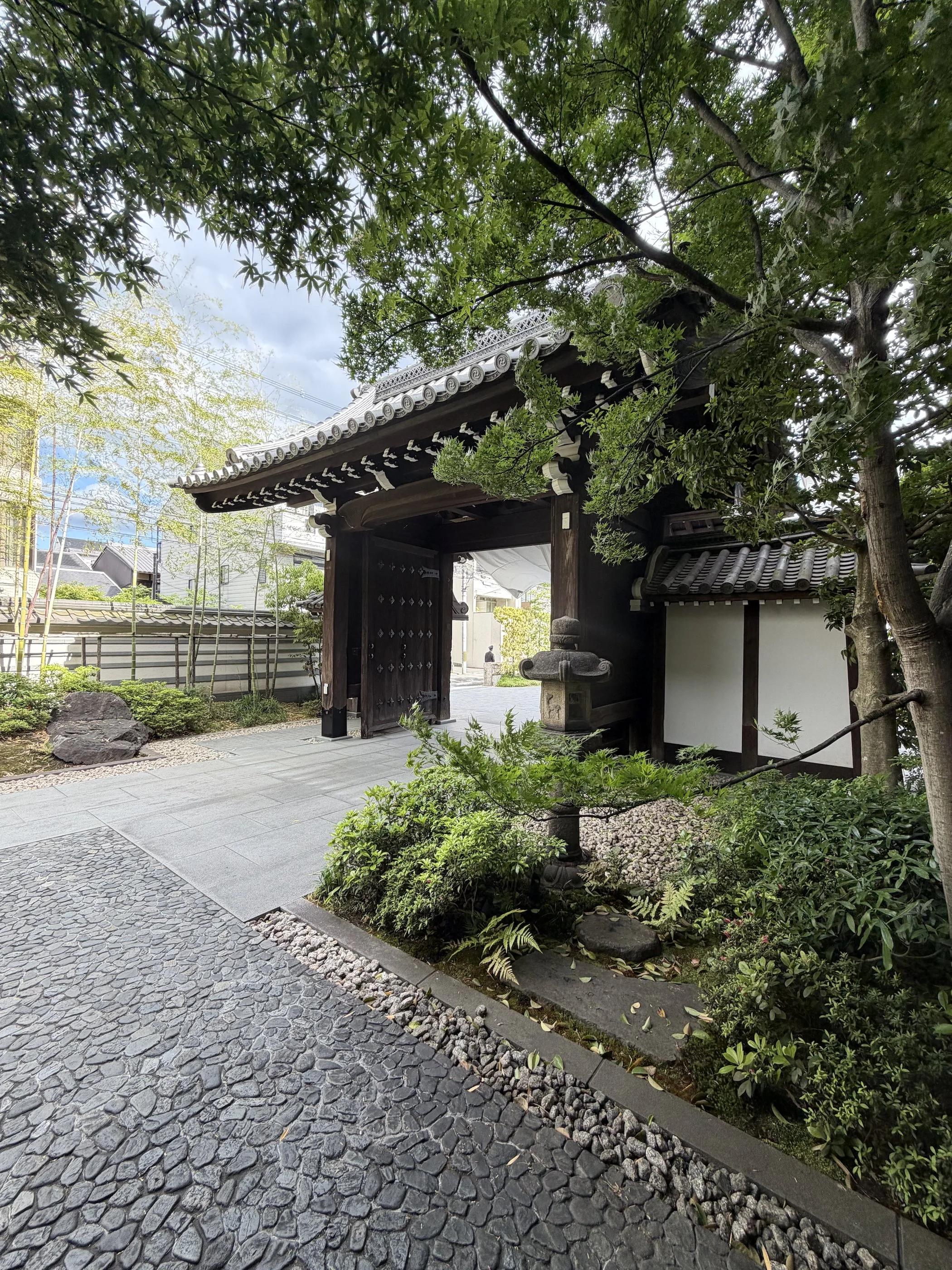
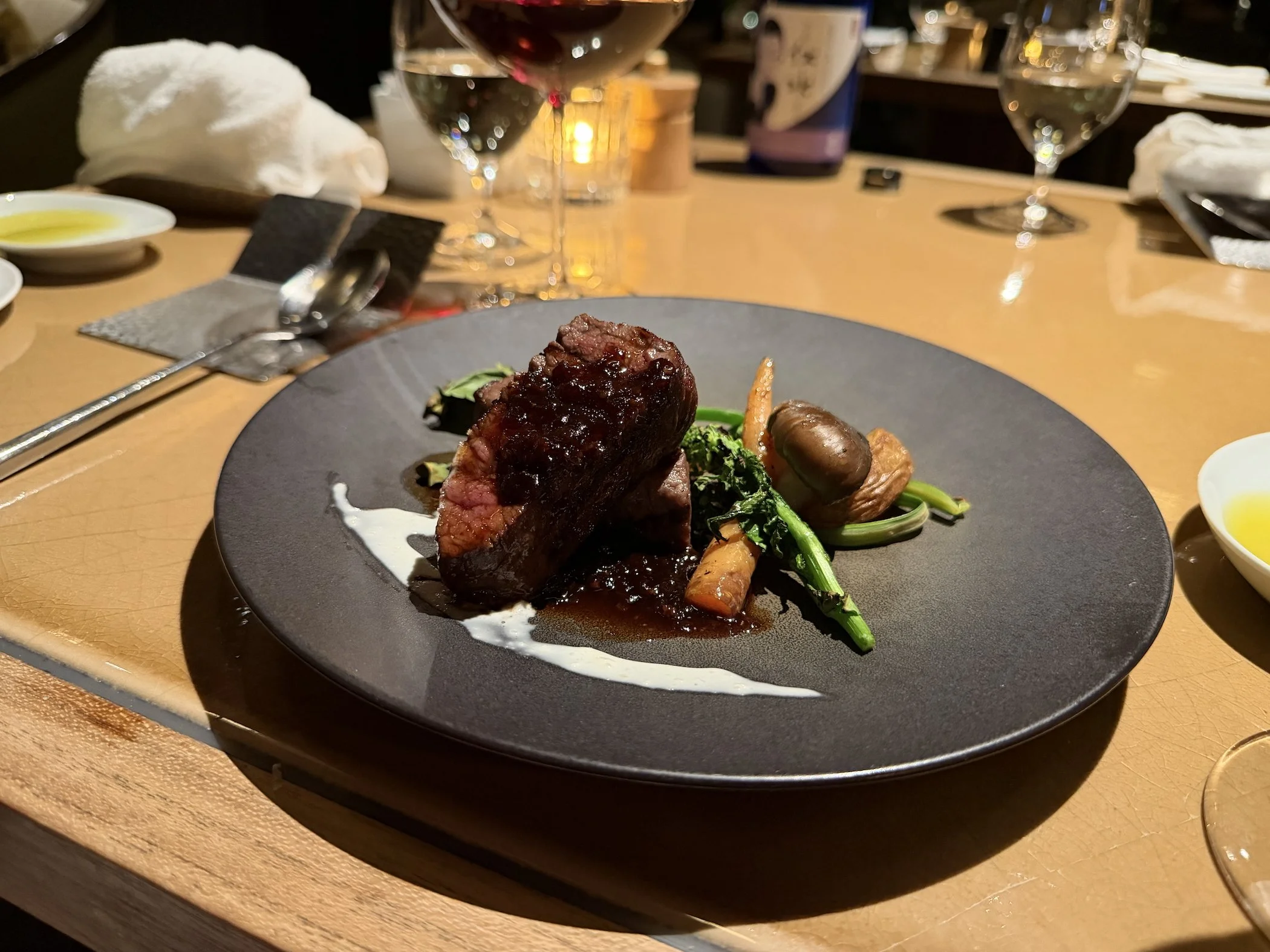
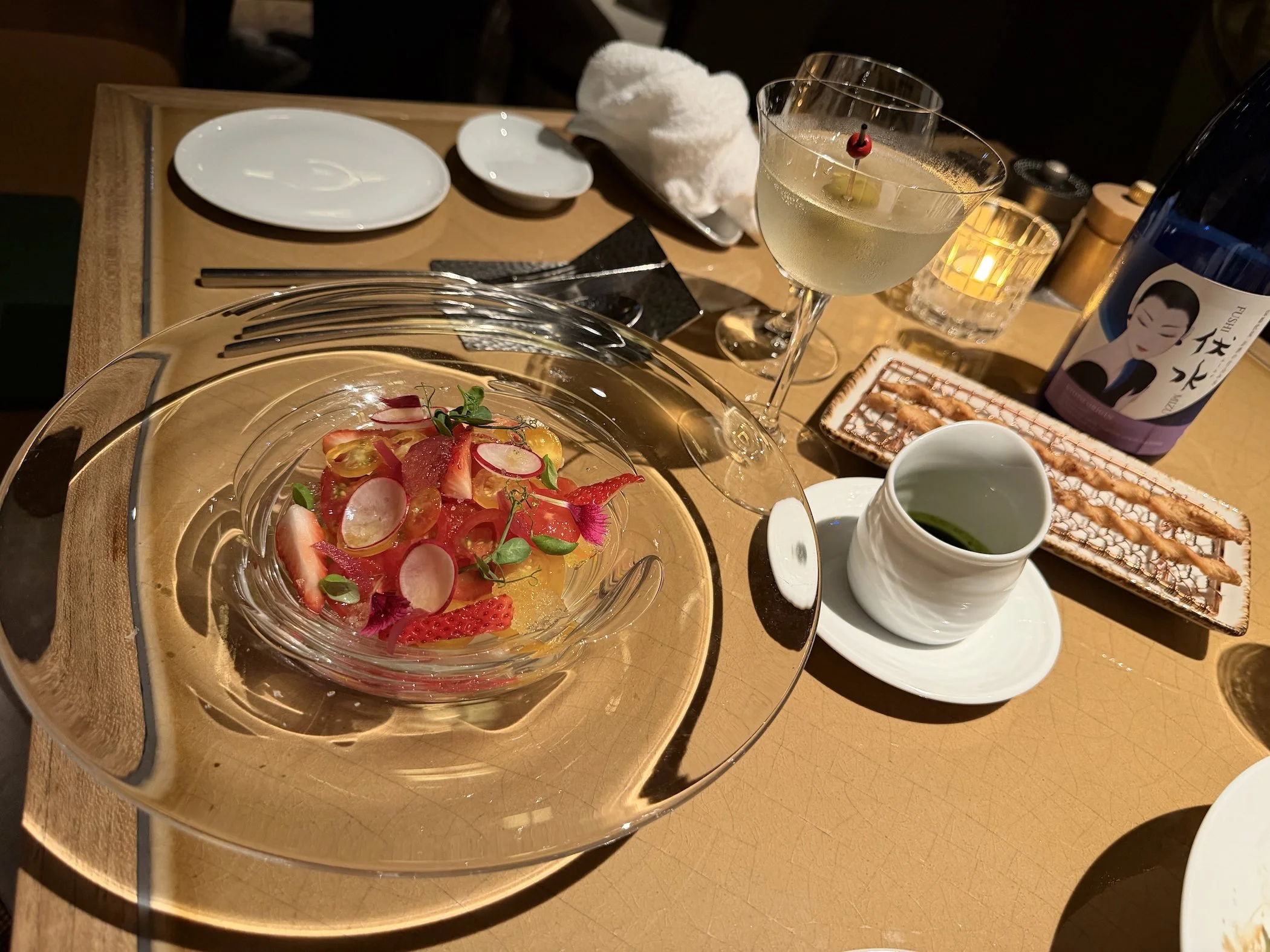
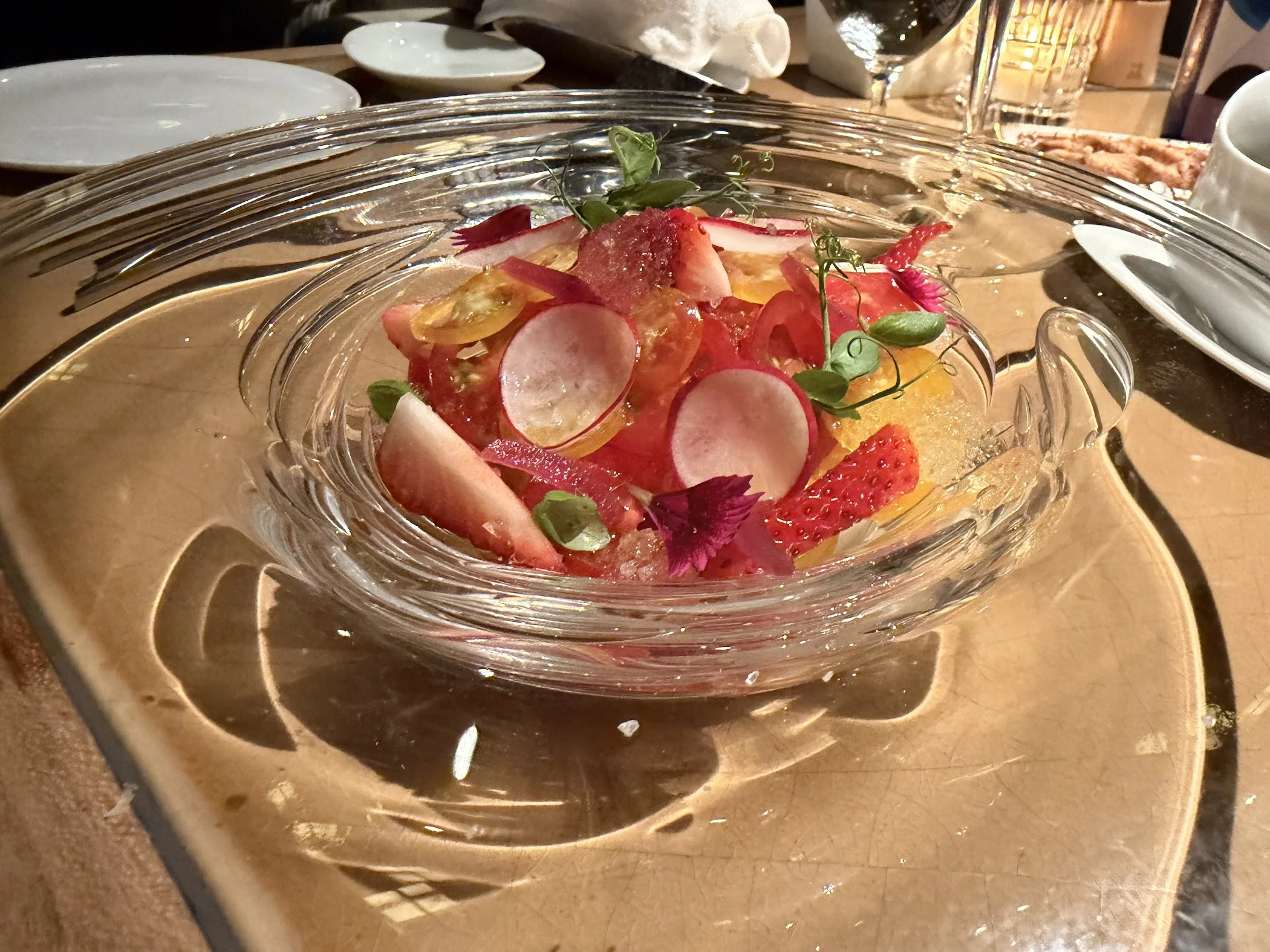
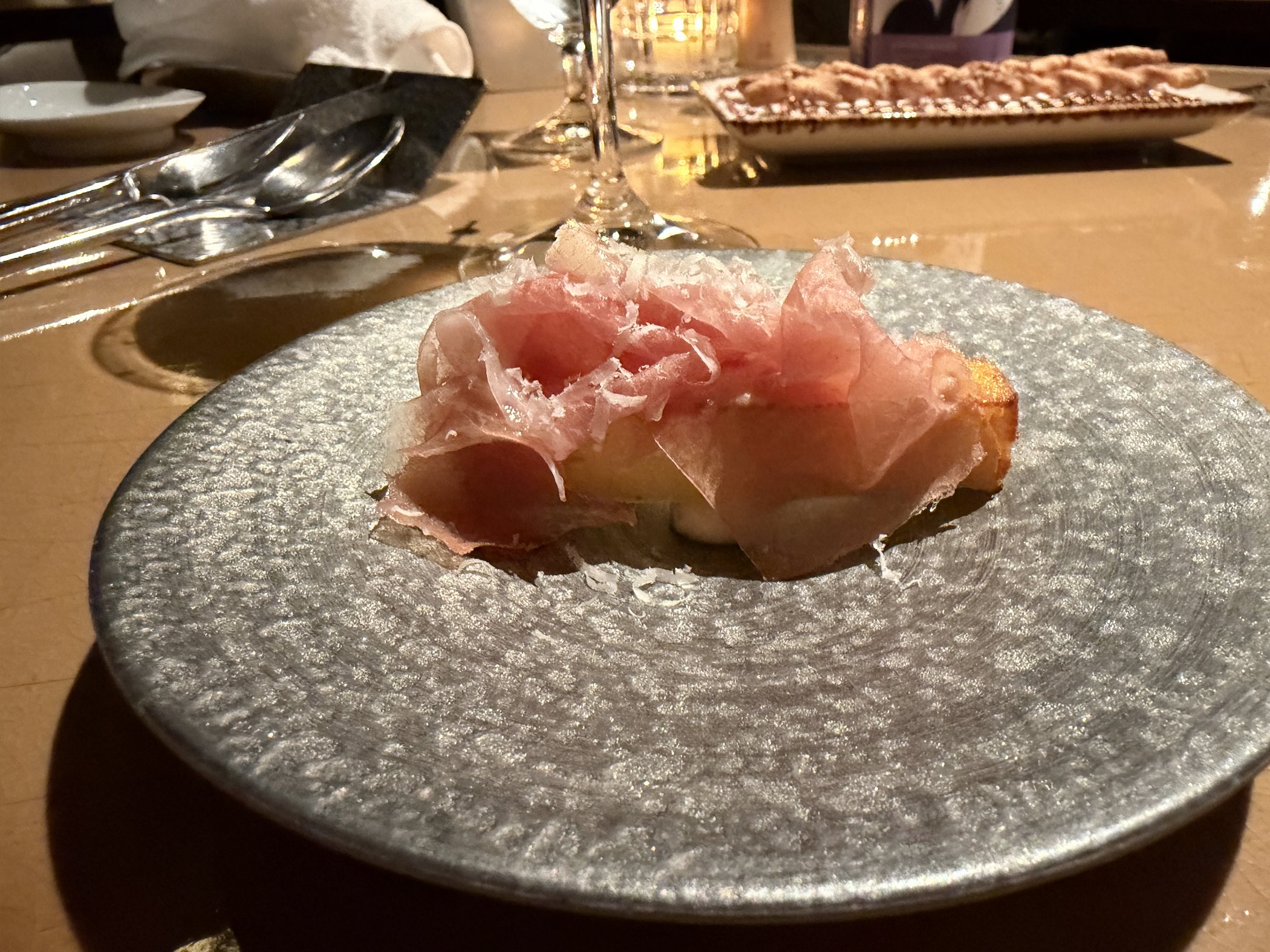
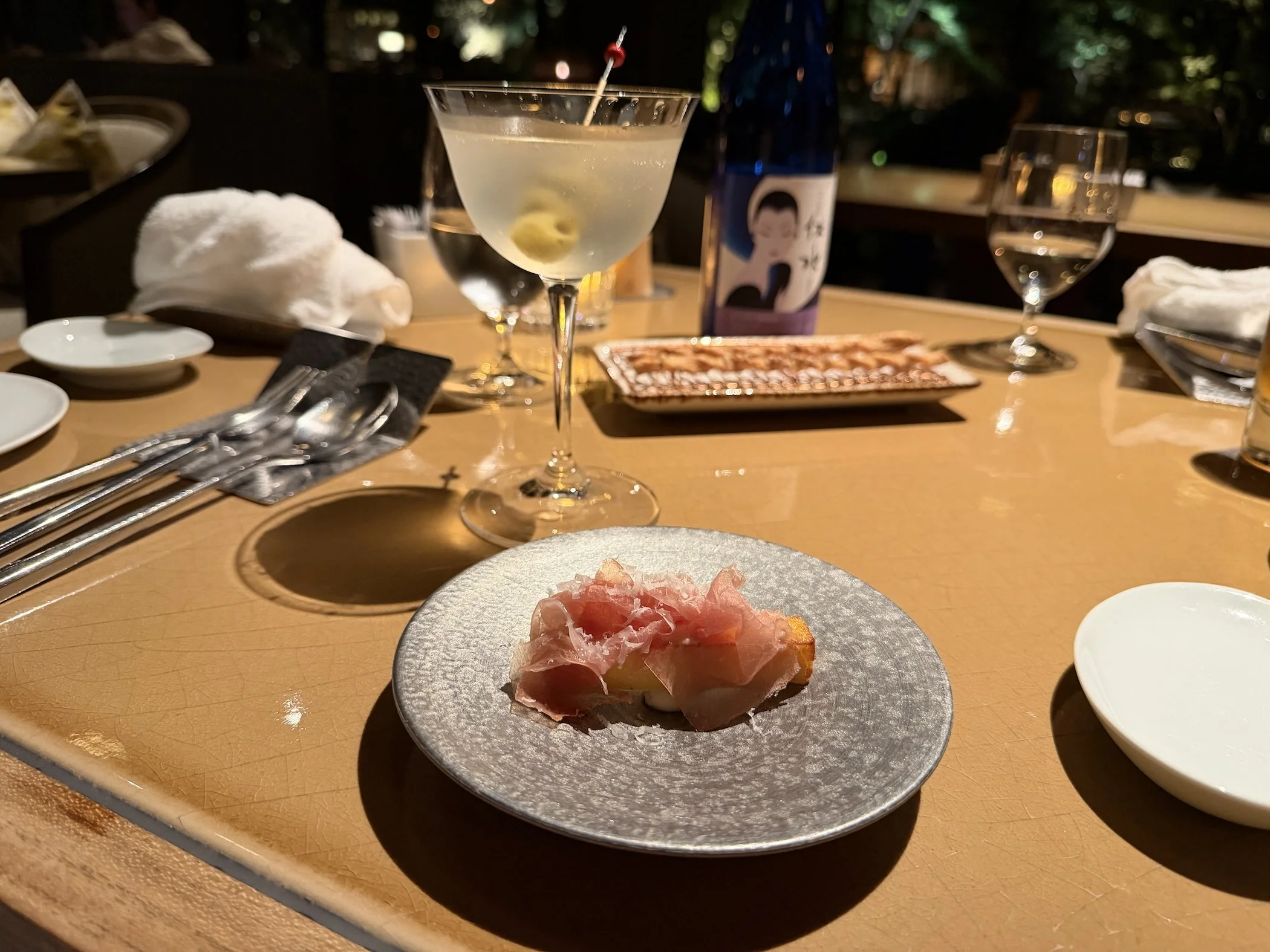
This is the main breakfast restaurant as well. We chose one of their pasta dishes and steak, and the appetizer you see is a burrata cheese with tomato salad. I included a few additional pictures of this property. It offered a serene repose from city hustle.
Velroiser
(1 Michelin Star, formerly 2)
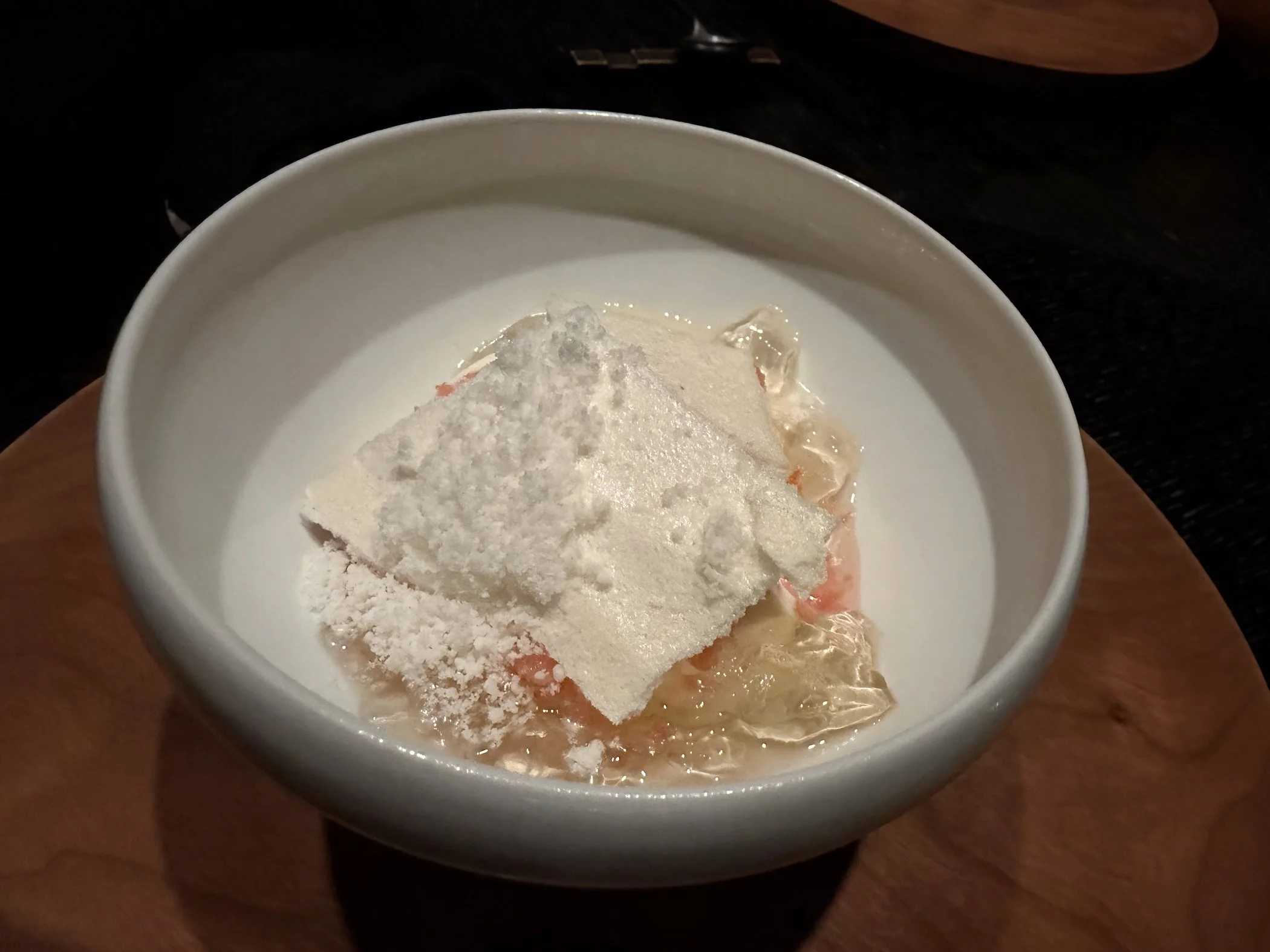
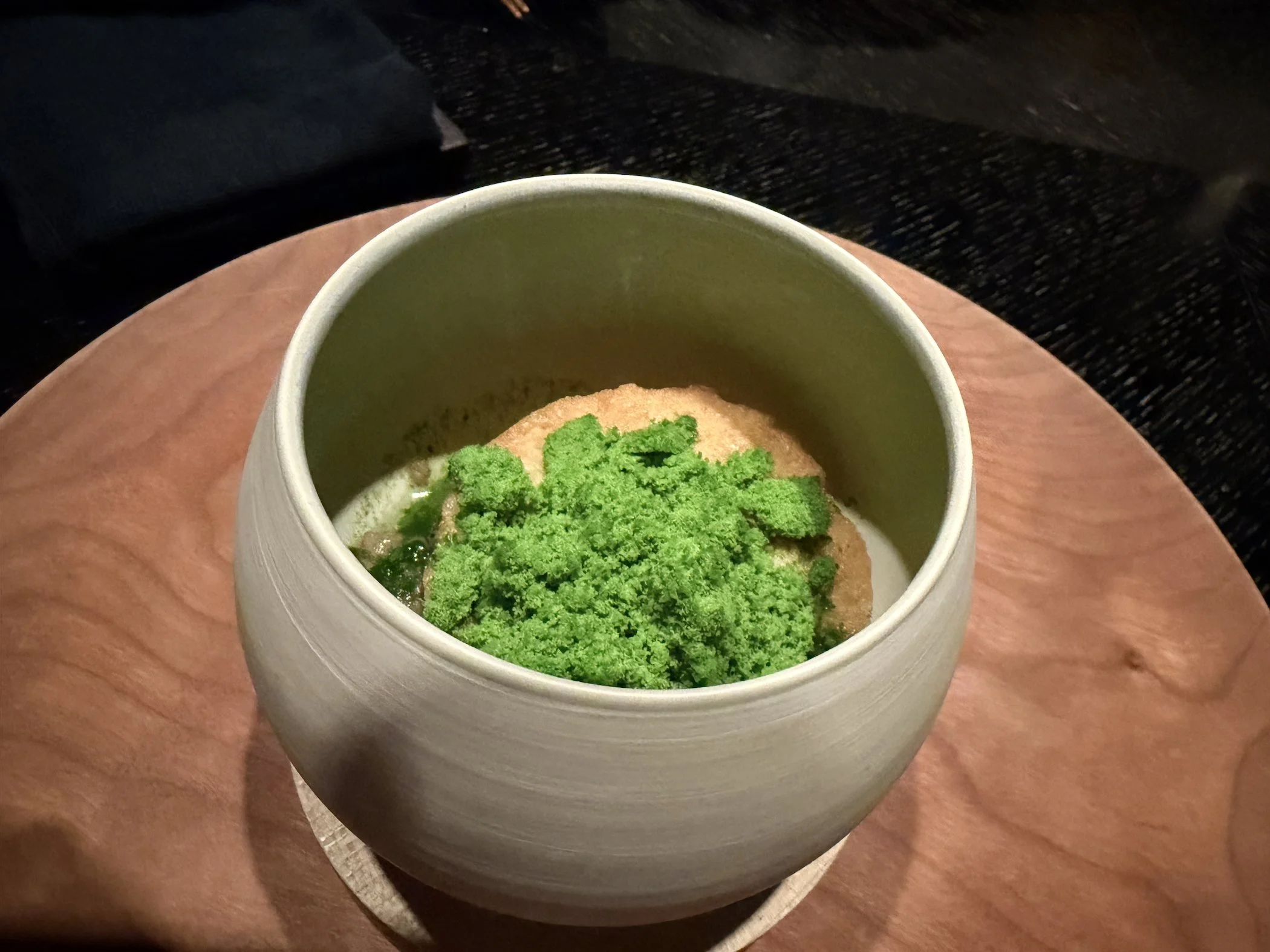
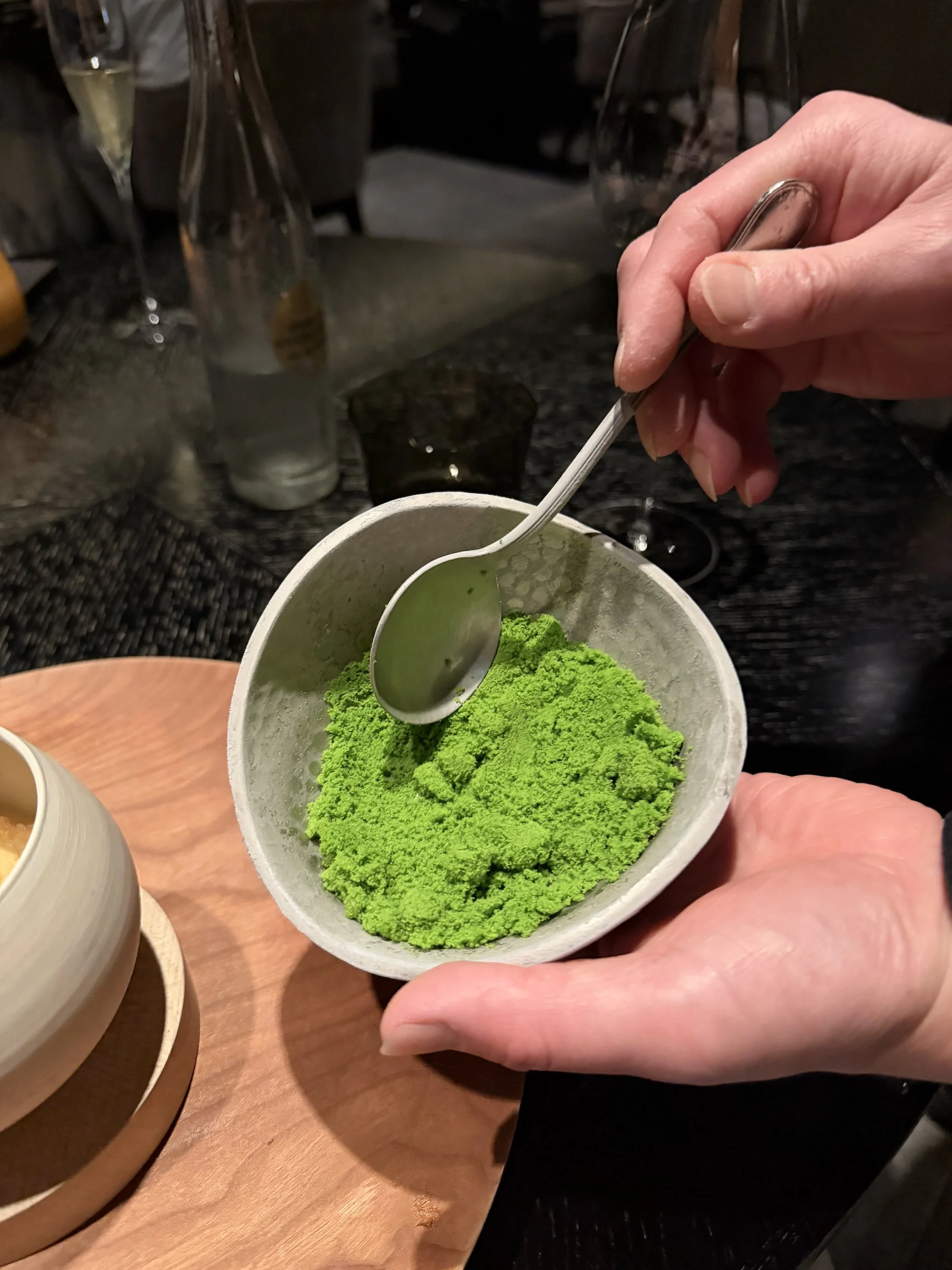
Chive ice cream atop a deconstructed pork gyoza.
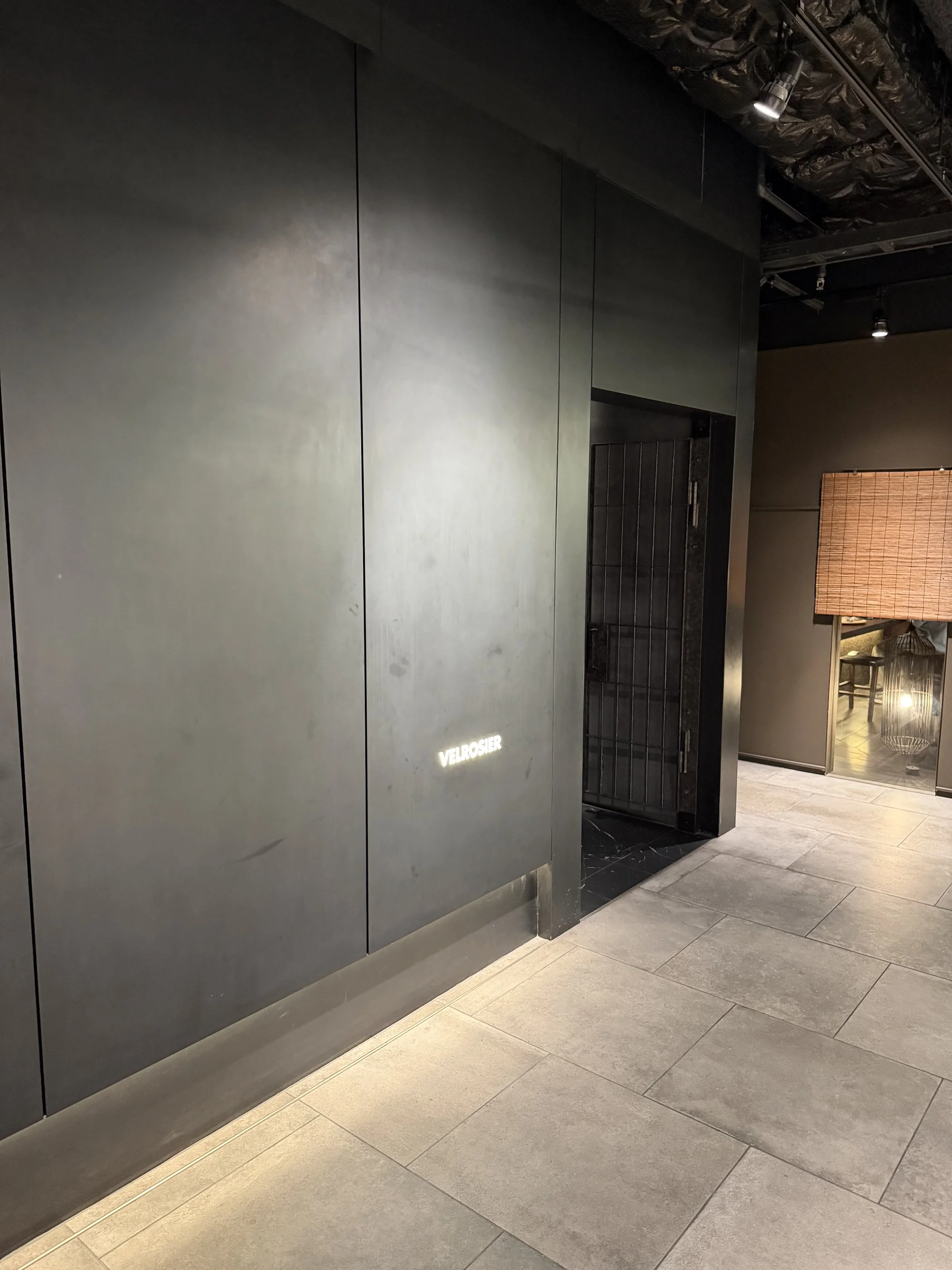
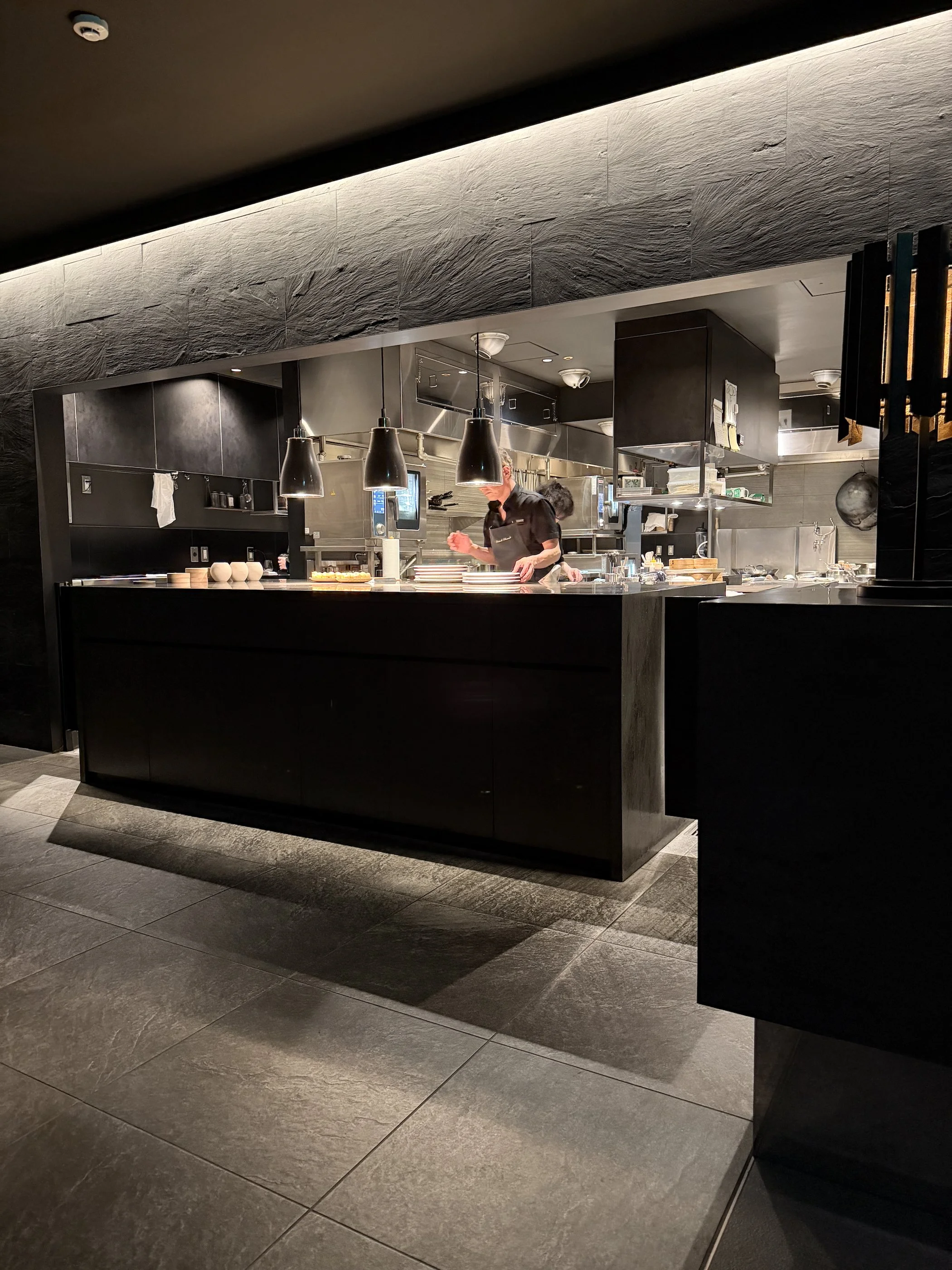
Against the stark, bleak setting of a six-table restaurant comes inventive fusion of Chinese flavors with French technique. While I think their loss of a star is unfortunate, I am guessing it has to do with the beverage program. The food, for my experience, was definitely a 2-star experience. We ate here for lunch.
Vel rosier in French means rosebush. The dining room features a wall with a burnt-looking arrangement of flowers. Check out their website for more visuals and background.
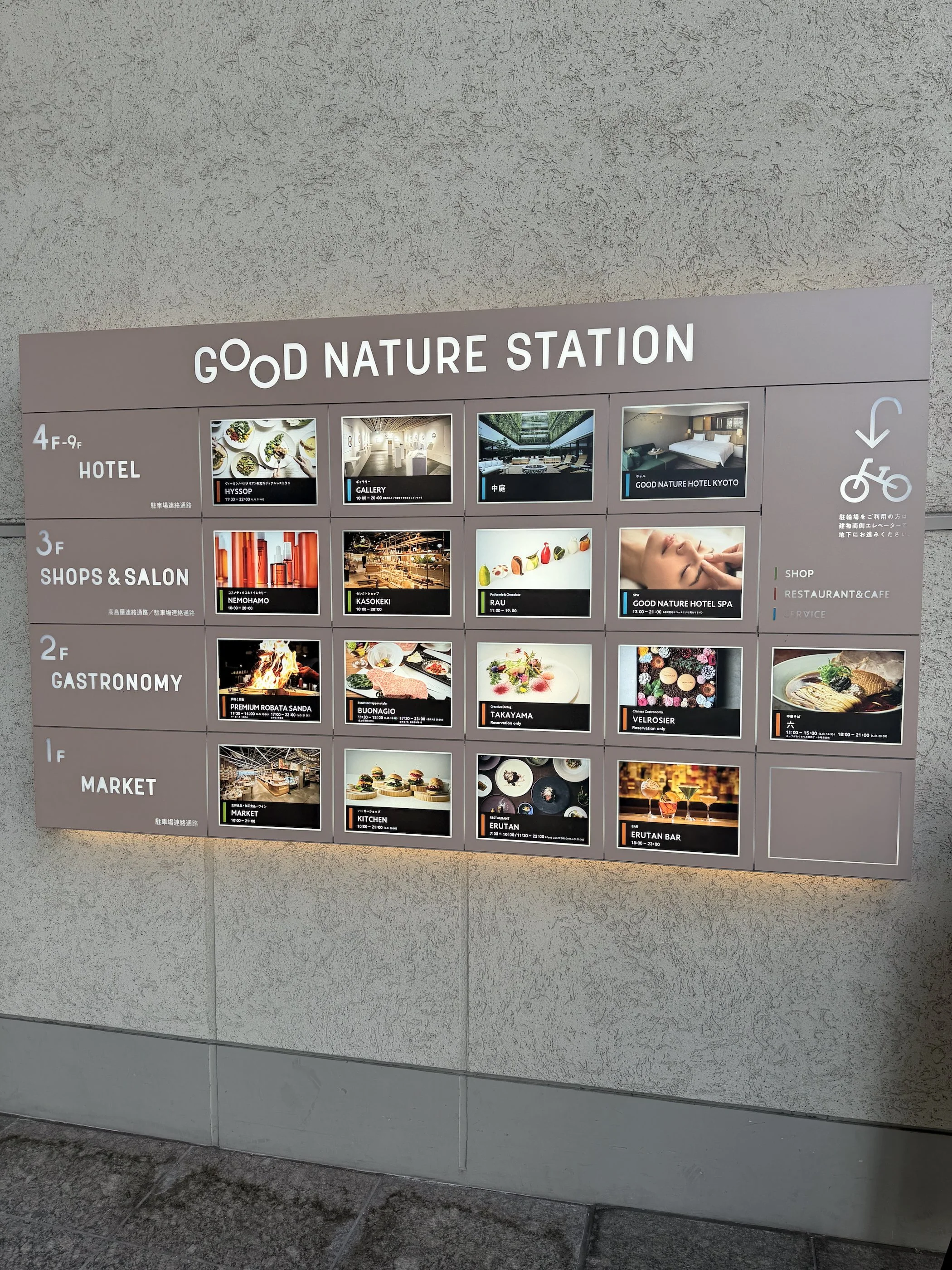
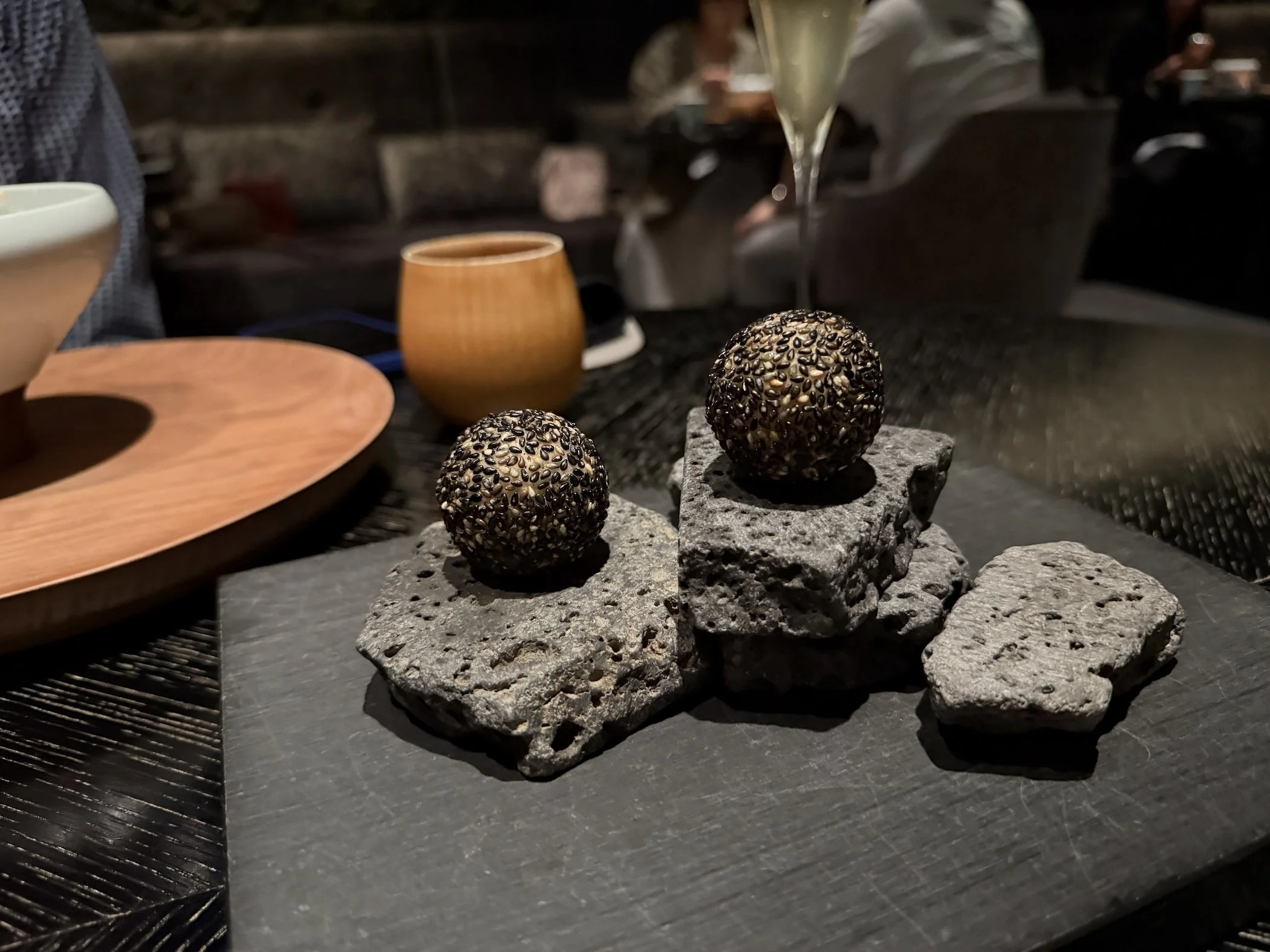
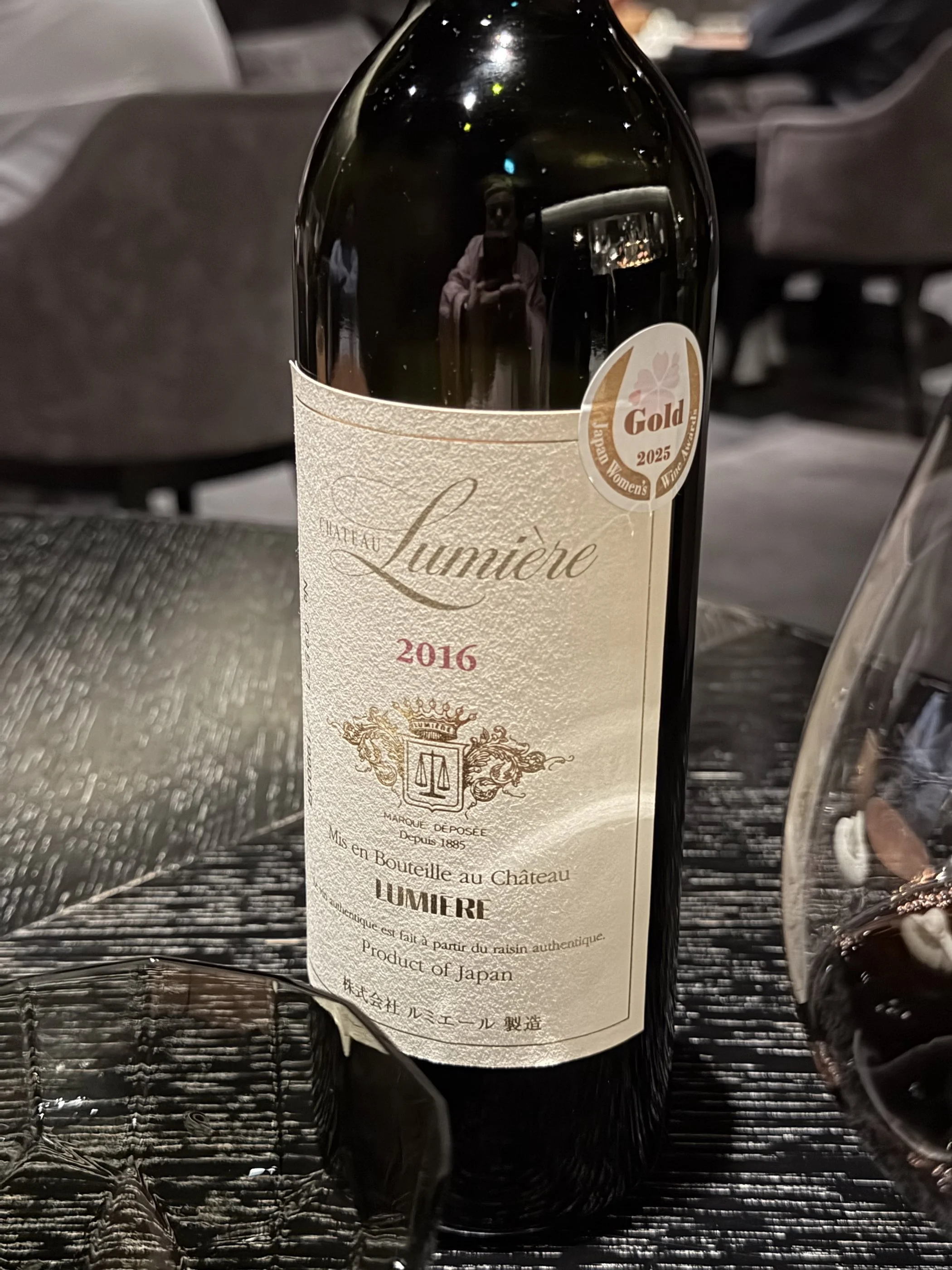
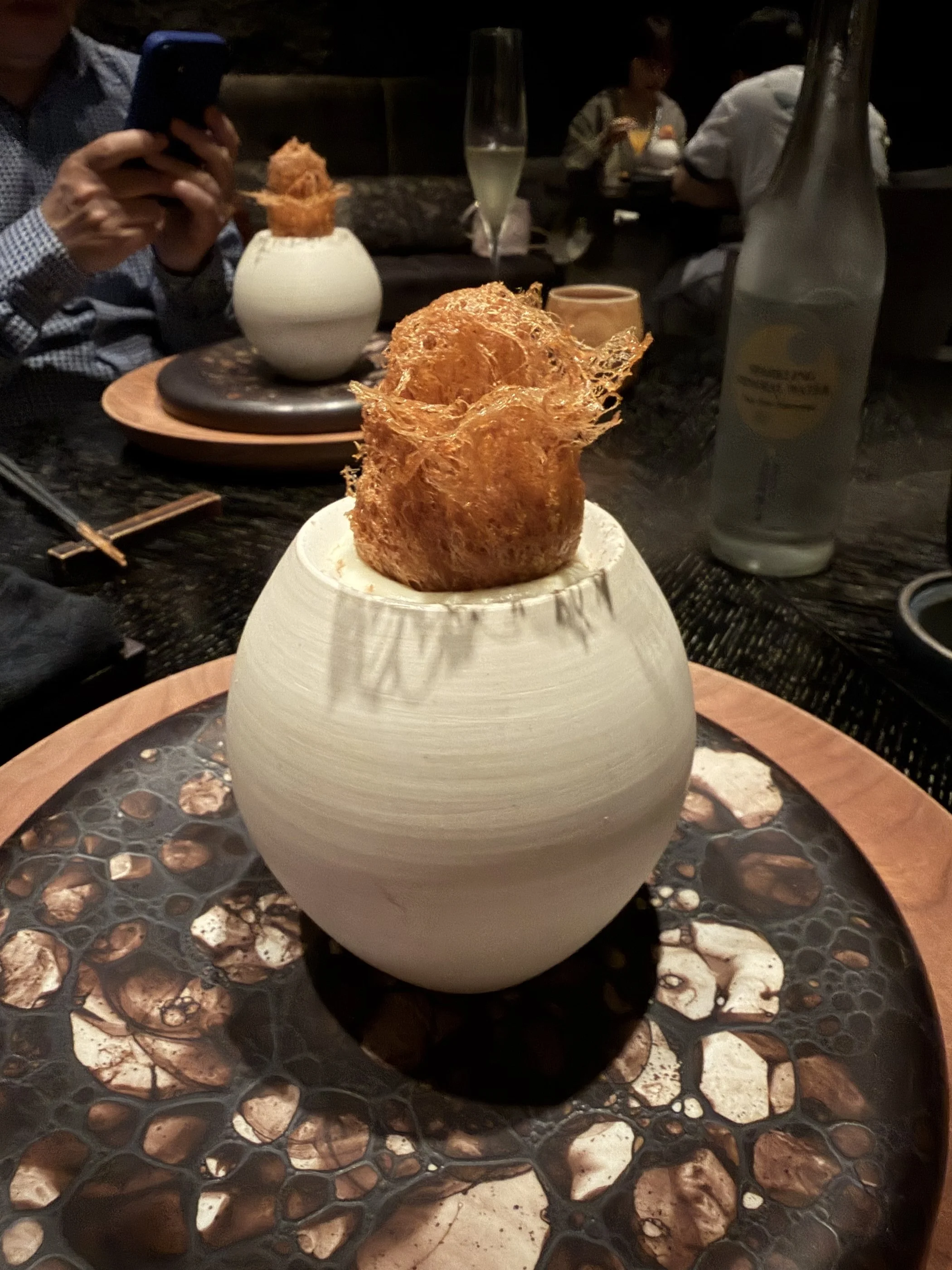
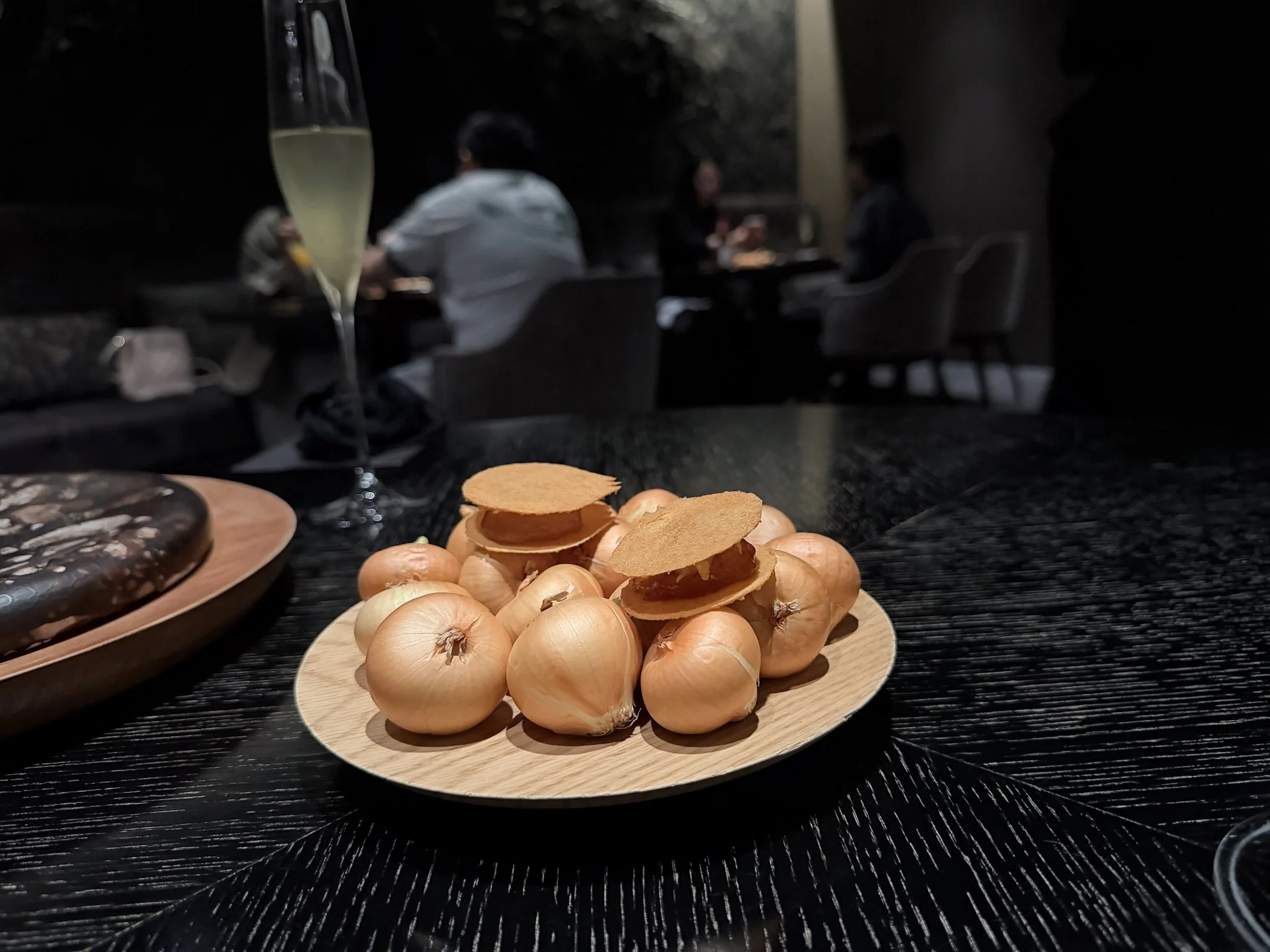
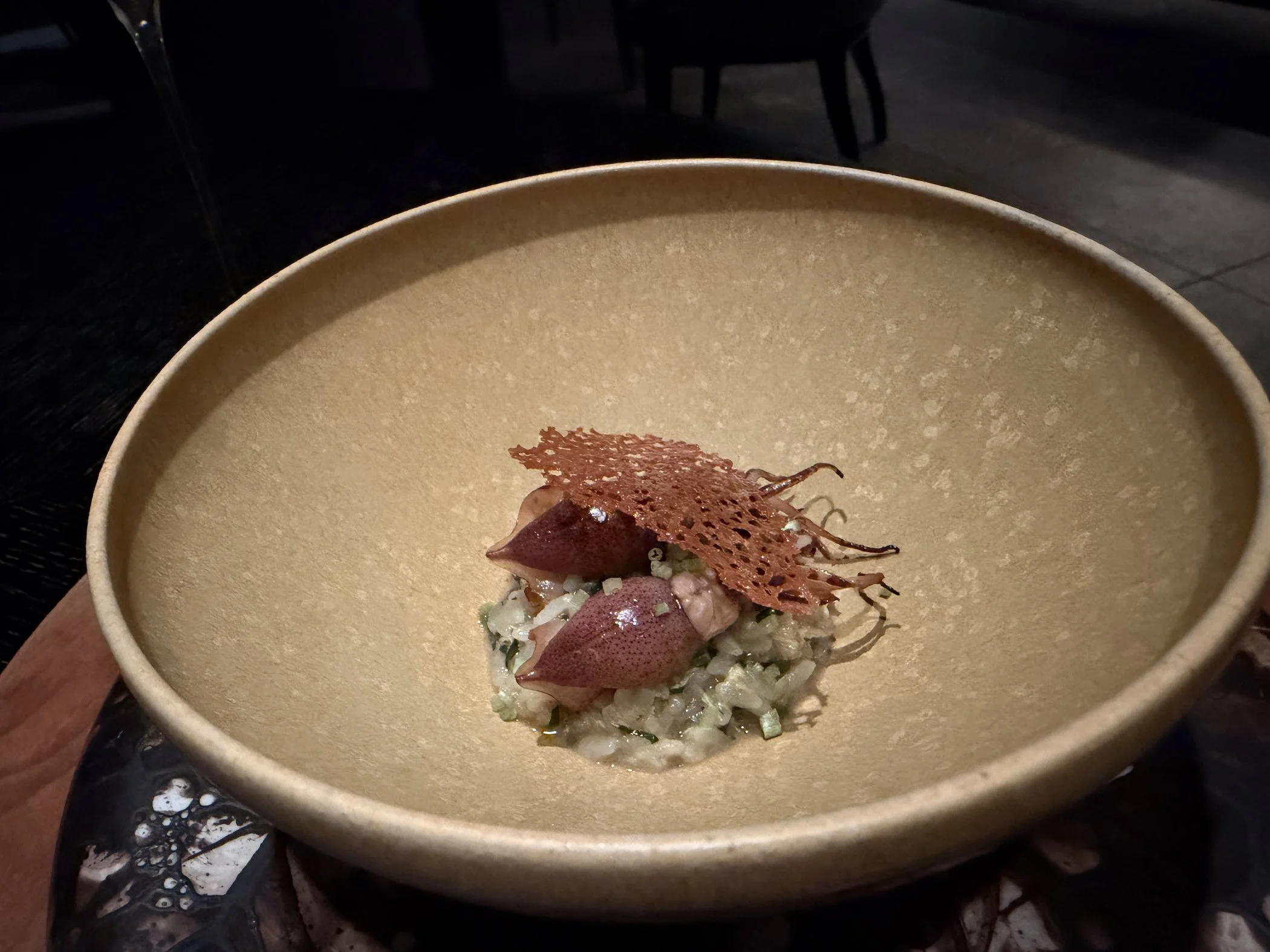
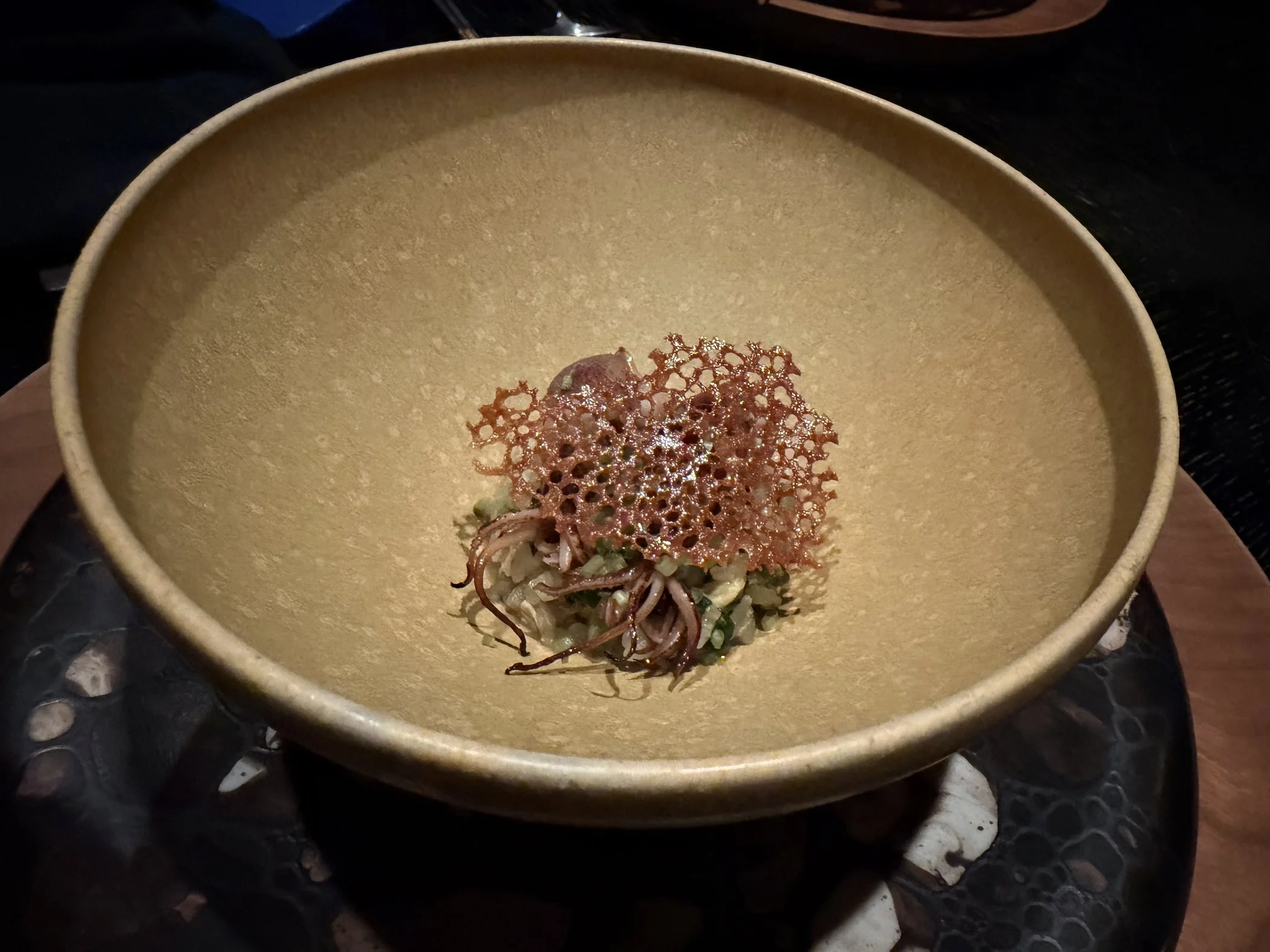
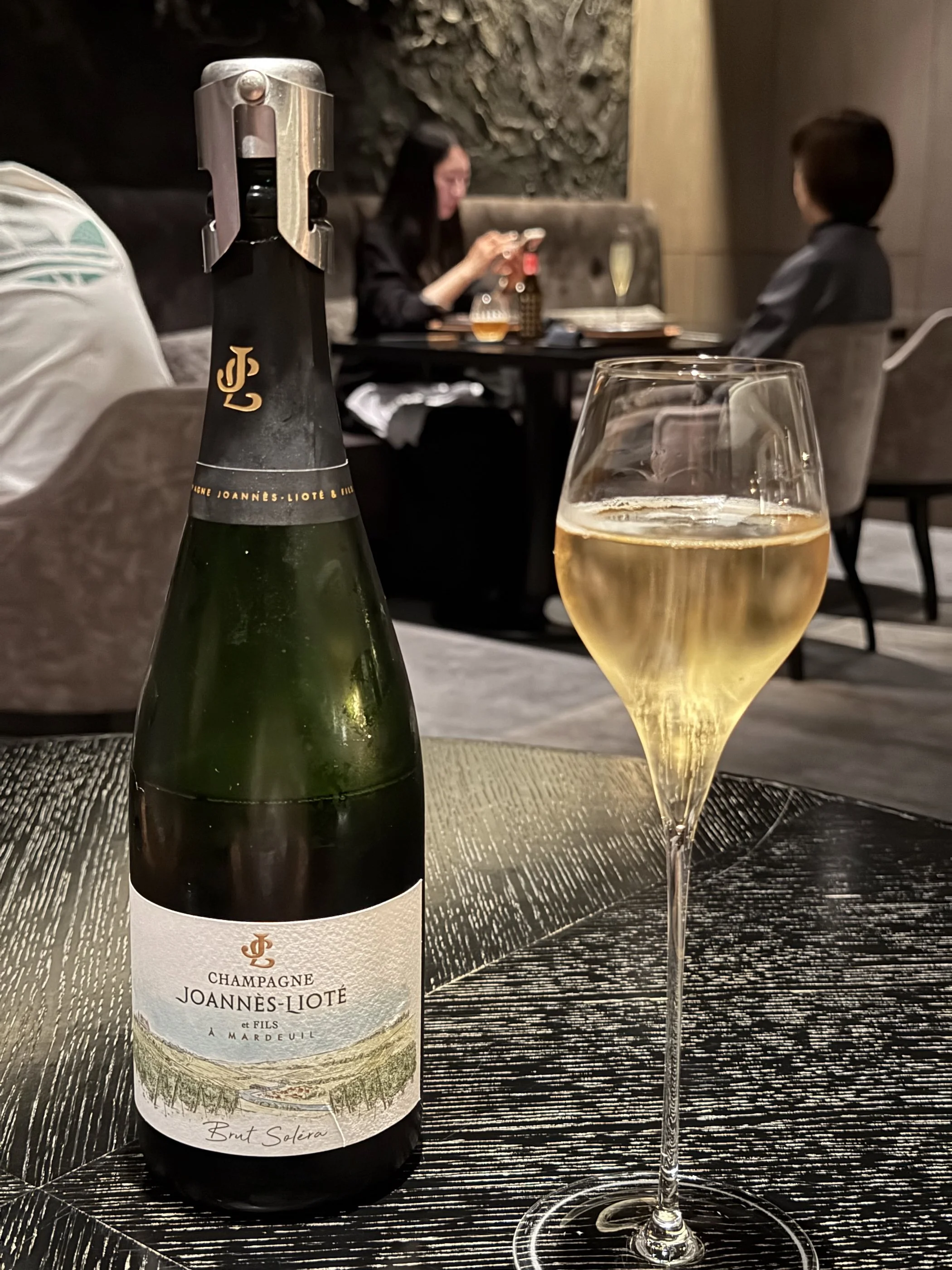
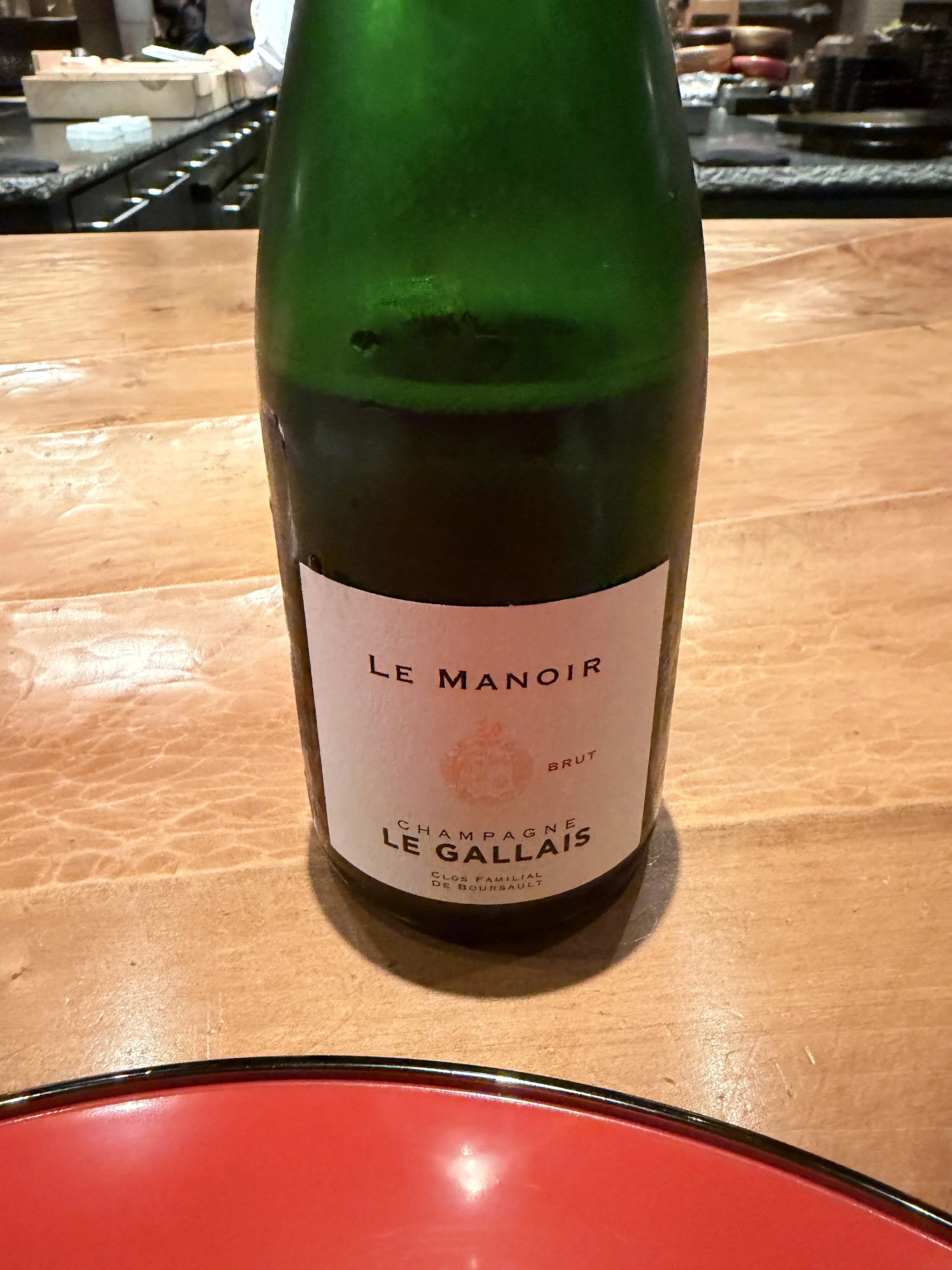
The choice of champagne was excellent; I later chose a red made in Japan that wasn’t to my liking as much. I had a later conversation with some Italian tourists about the Japanese wine, and the ones they had they said were excellent. I had to give their taste some credit, as their family is in the wine production business.
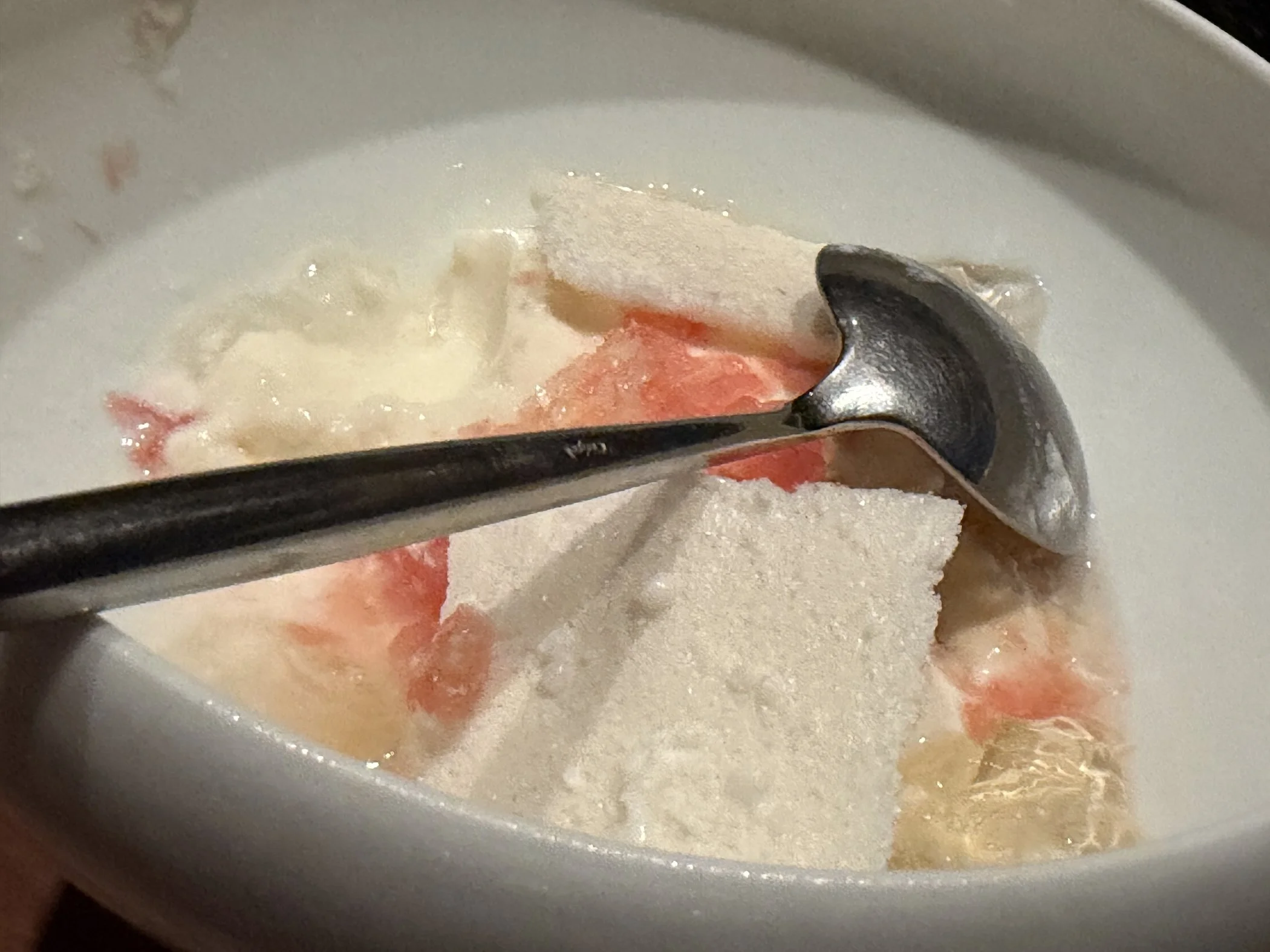
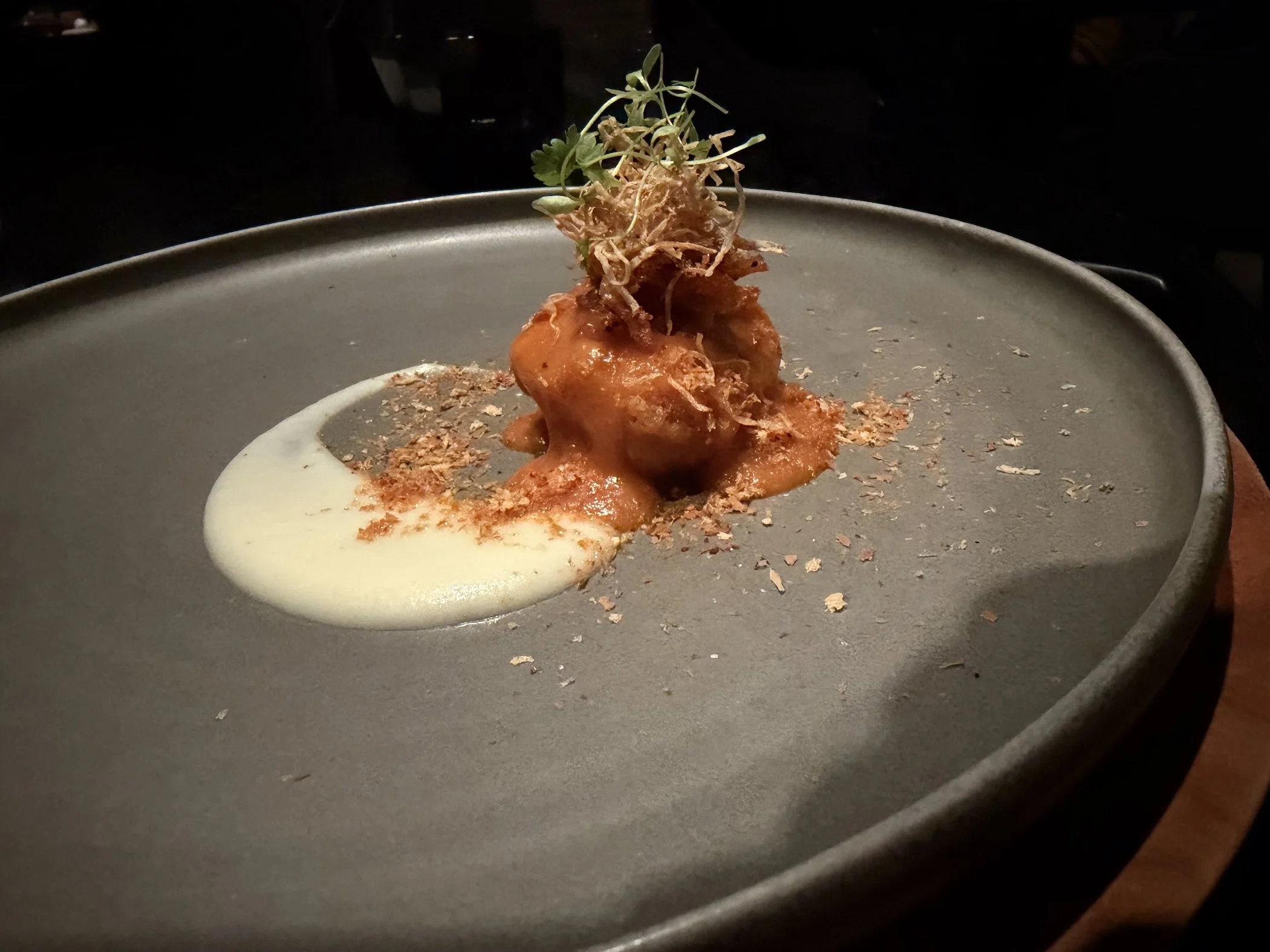
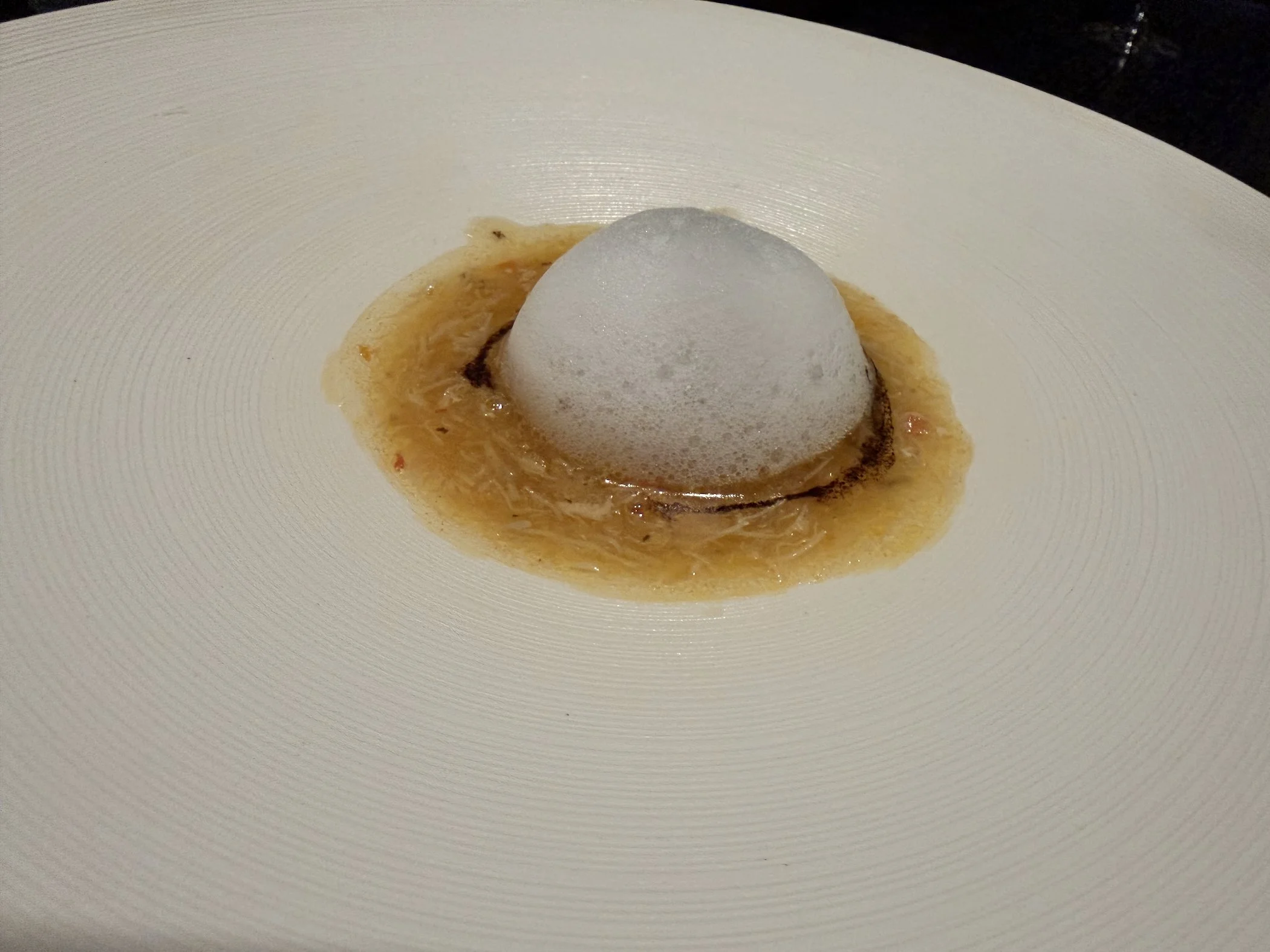
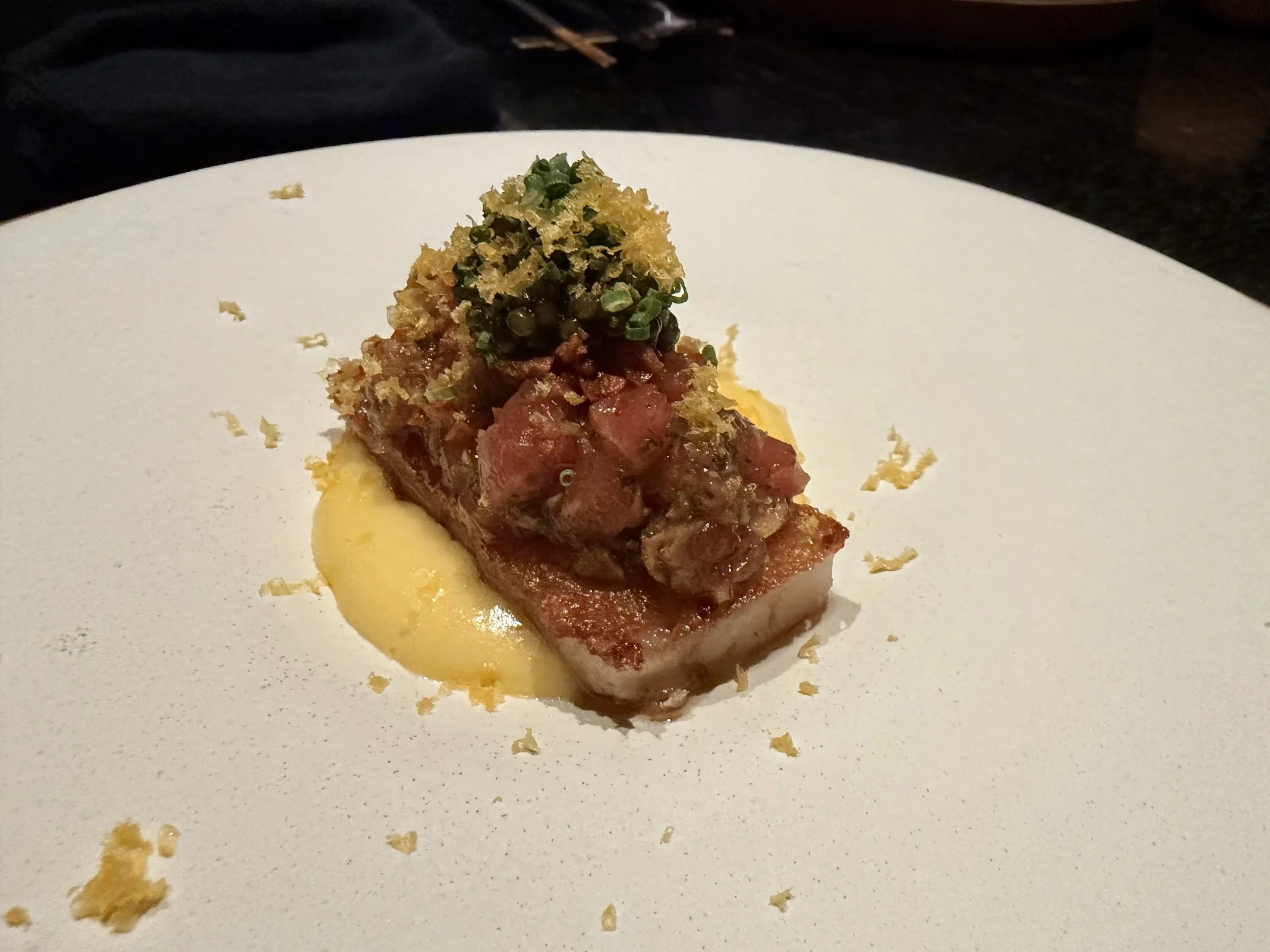
But beyond wine here, the food each had its own statement to make, course by course. The green you see is not matcha but chive ice cream, added to a de-constructed gyoza dish. Outstanding. As was the raw tuna on a crispy rice cake with velouté sauce. This place may challenge how much you can eat, but every bite was outstanding. Just four people run this restaurant—two passionate servers and a chef and his assistant.
Baby squids with fried rice
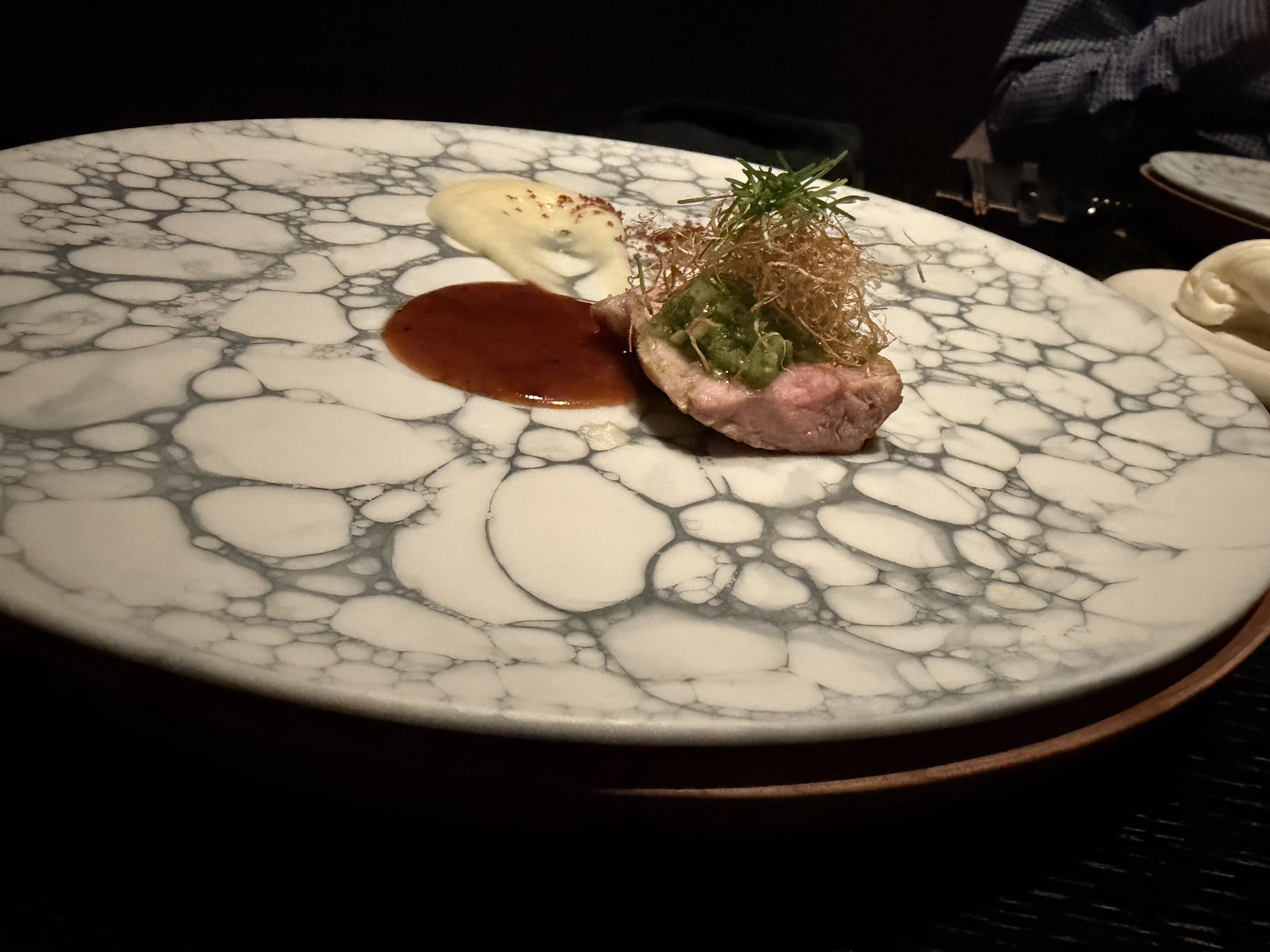
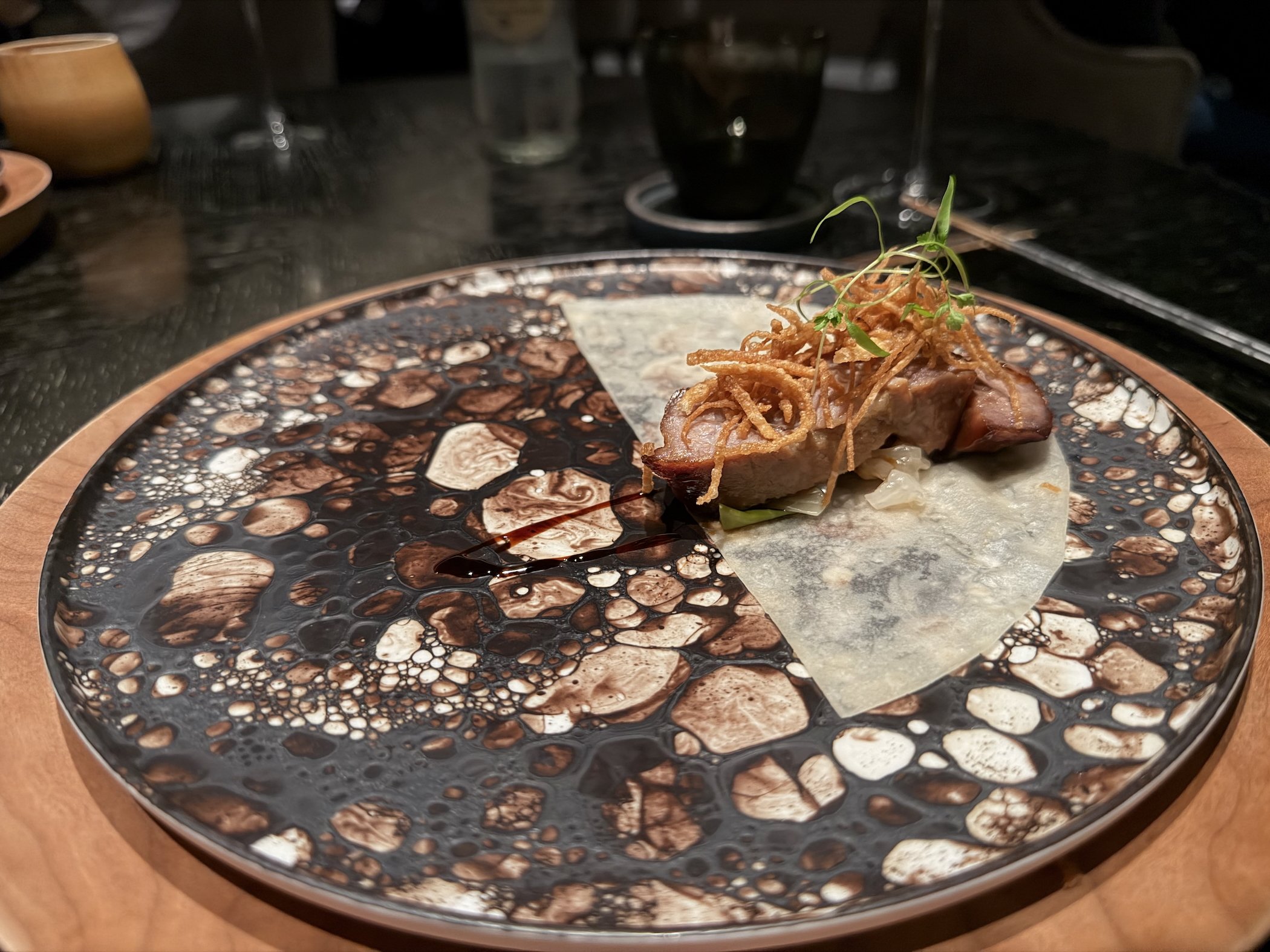
The other thing that deserves mention is the collection of ceramics used as dining vessels. What a creative bunch of plates and serving platters and bowls. Their source for these must be incredible, nothing was “painted,” but instead were actually fired ceramics with texture, like in the dish below.
Moo-shu inspired pork wrap
Dessert of so many textures, including pop rocks. Light. Satisfying.
My only reservation about this restaurant is that a printed menu with the courses and explanations was not provided; instead, you sit down to await a culinary journey that unfolds with surprise after surprise.
Shunsai Imari - Kyoto
This restaurant is a Obanzai-style establishment (home style cooking, unique to Kyoto), and they put bells on the table to summon the waitress/waiter. I had a flashback to one of Larry David’s shows where he wanted bells on the table! The food here was simple but the ingredients were super fresh. I tried sakes from Hiroshima and Kyoto.
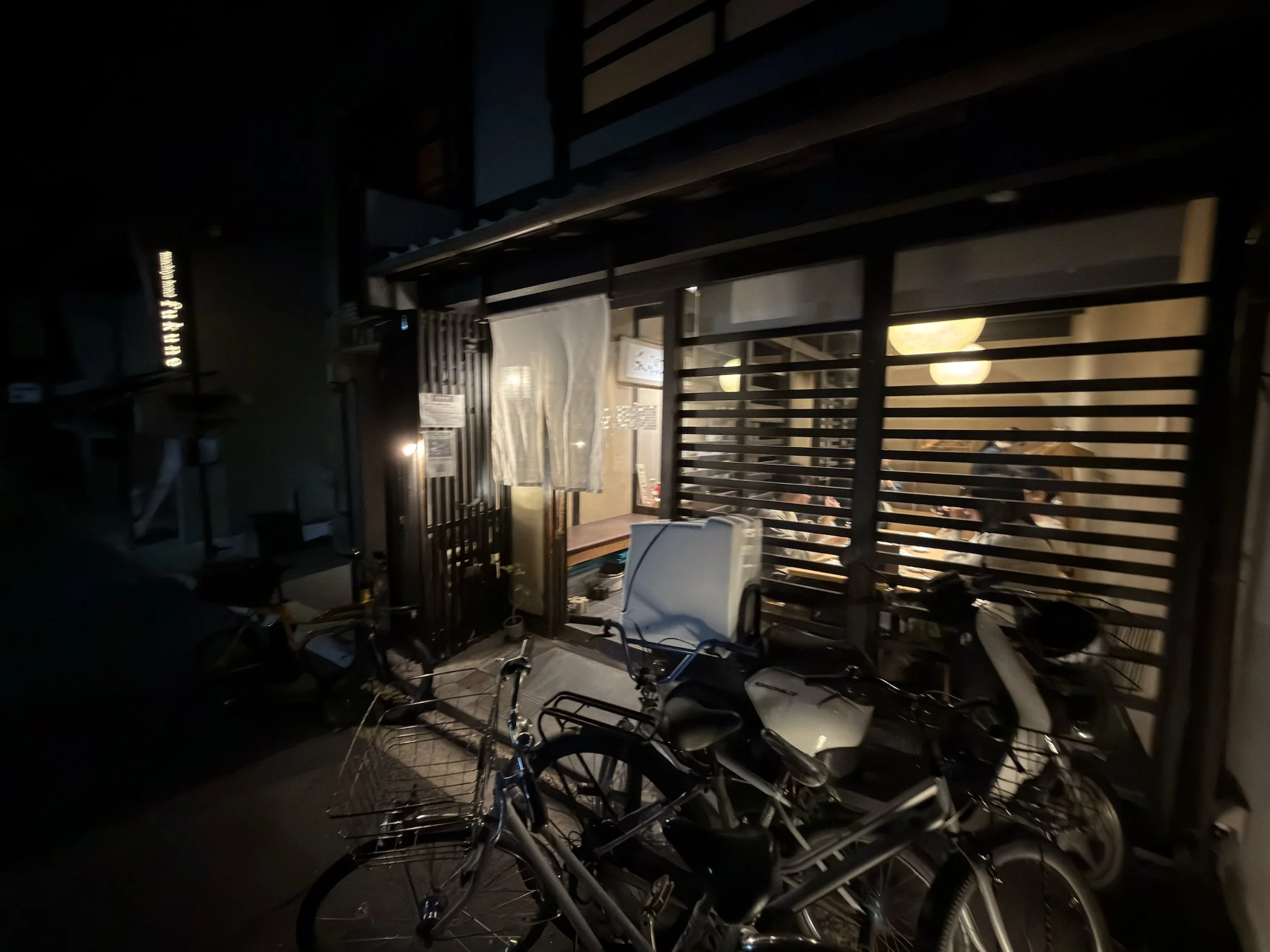
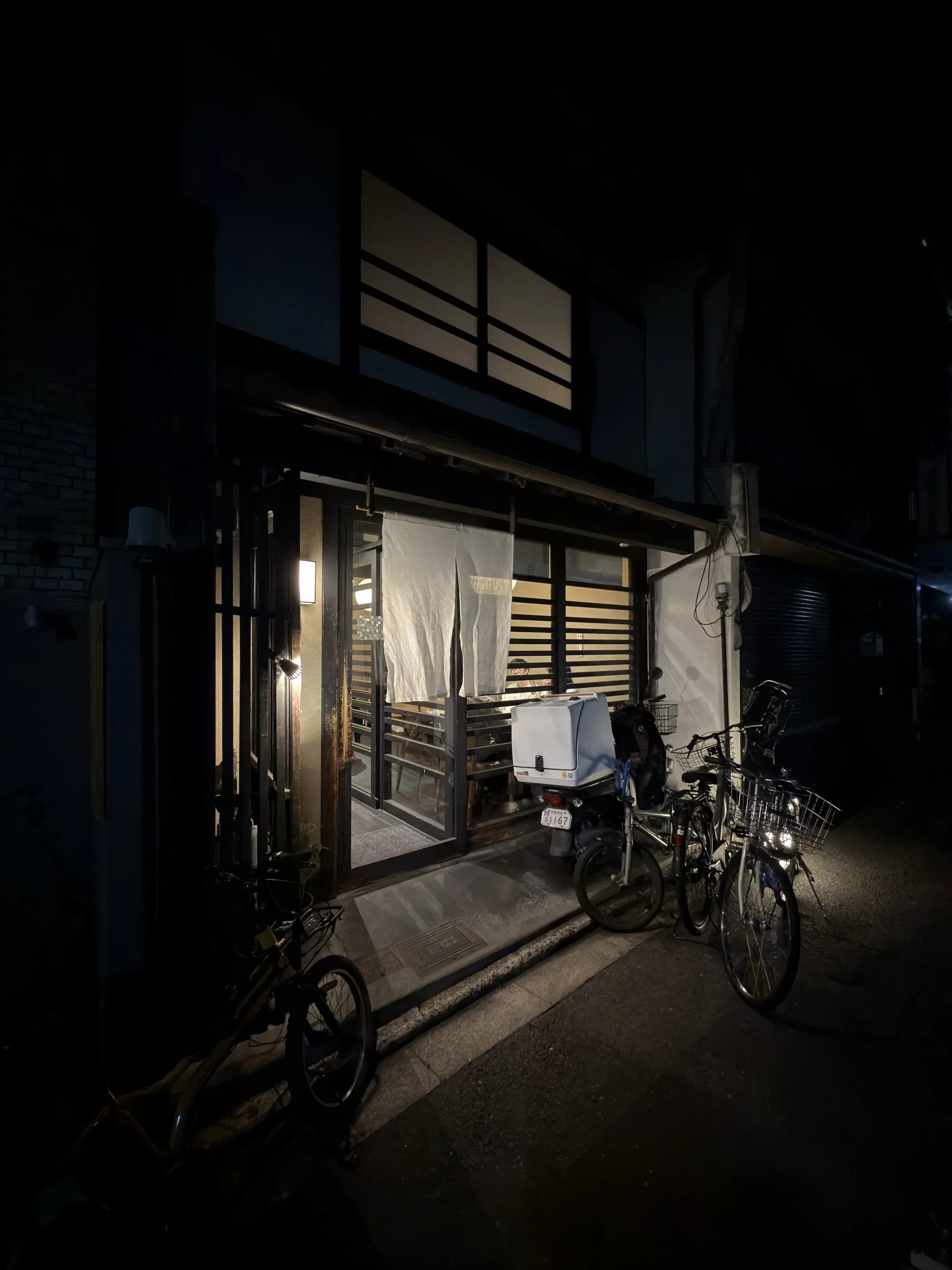
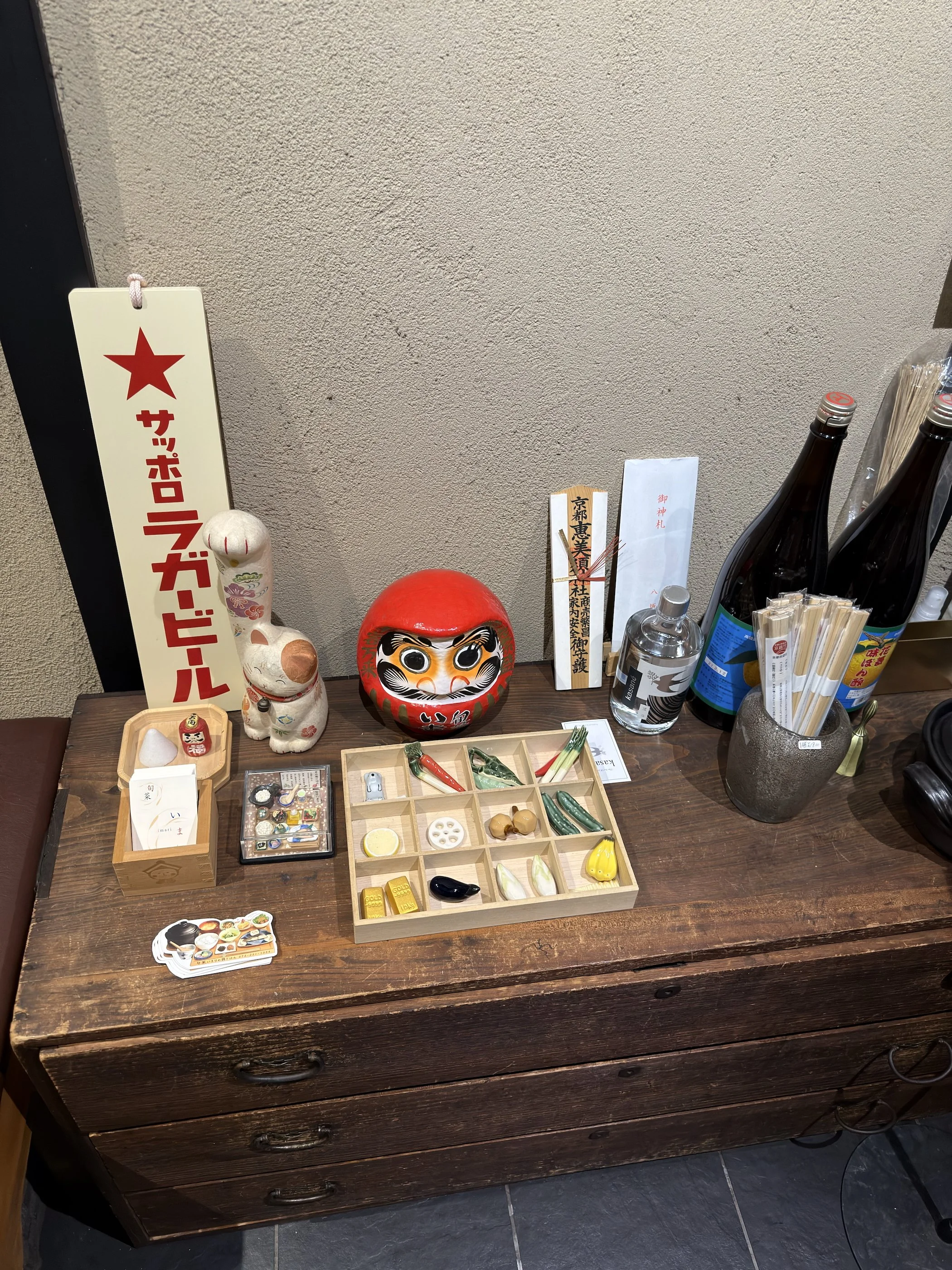
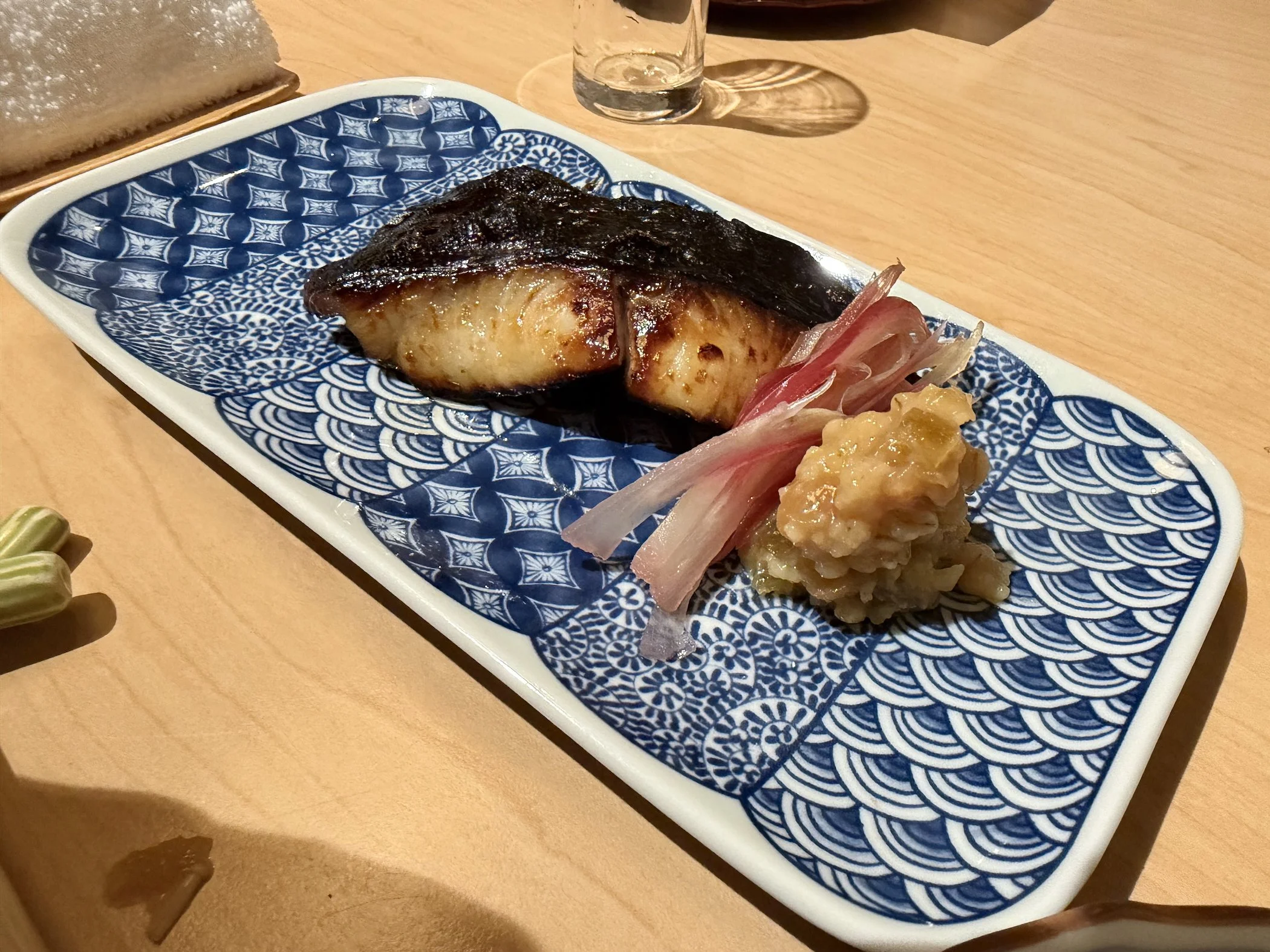
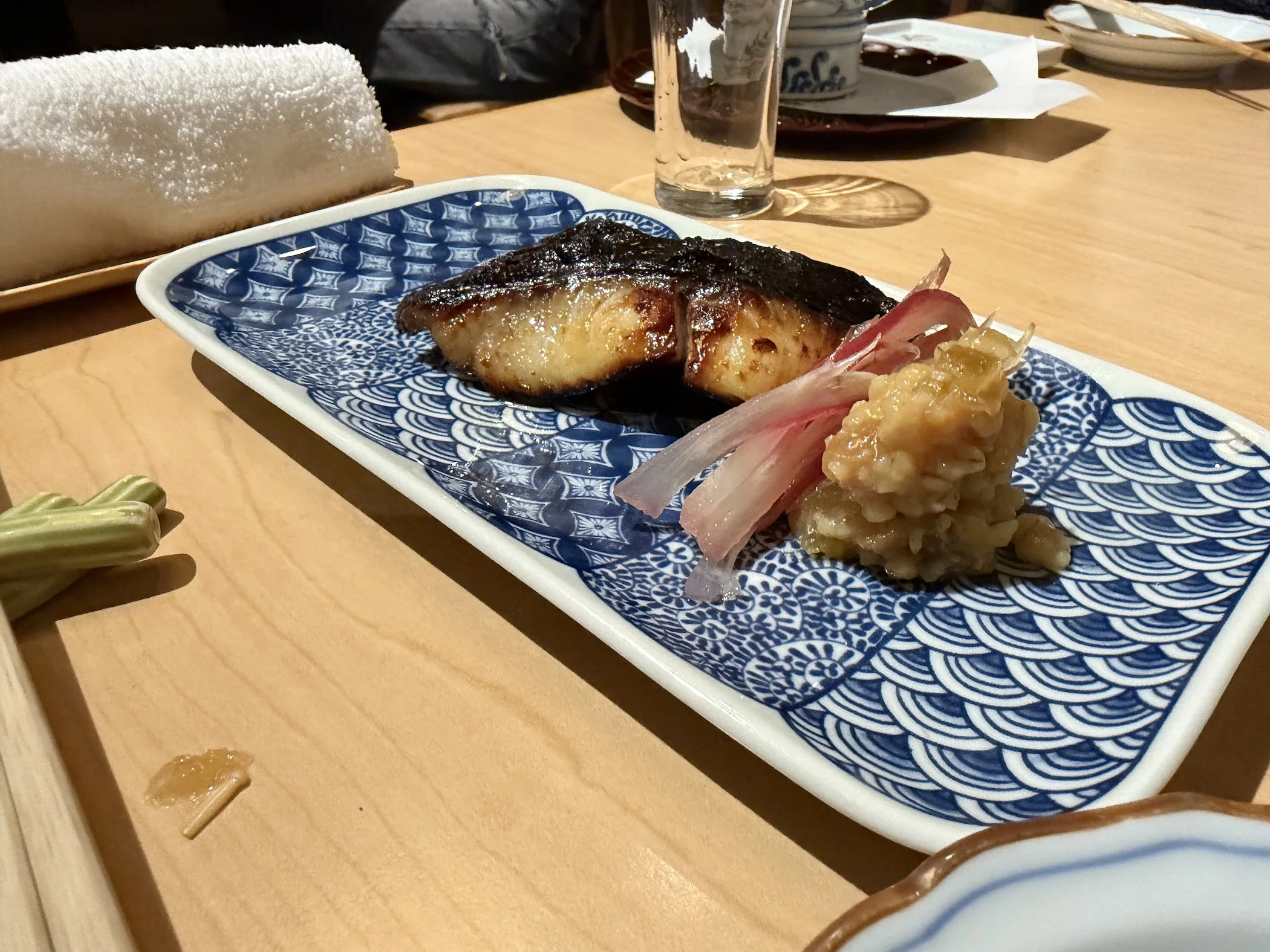
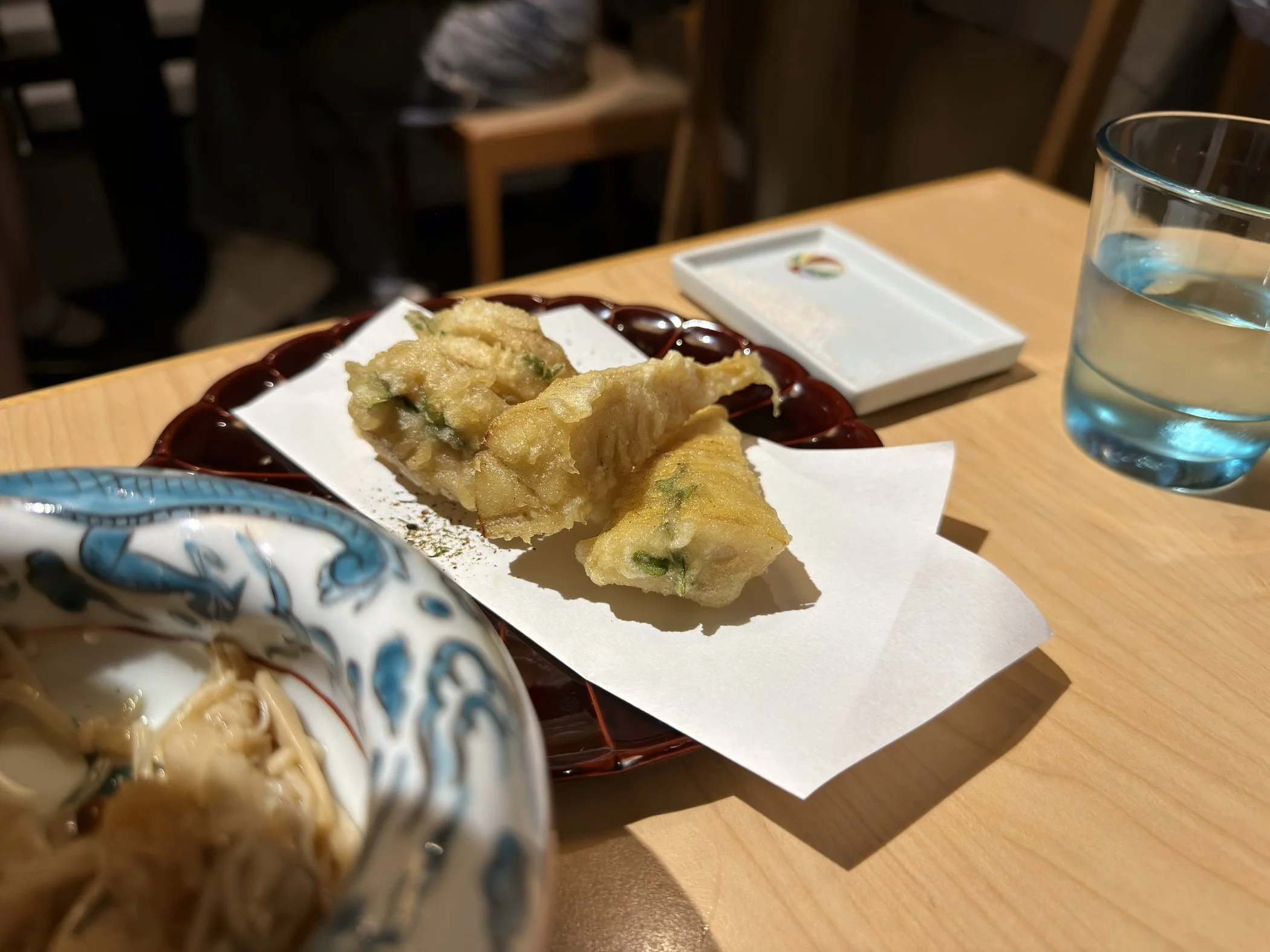
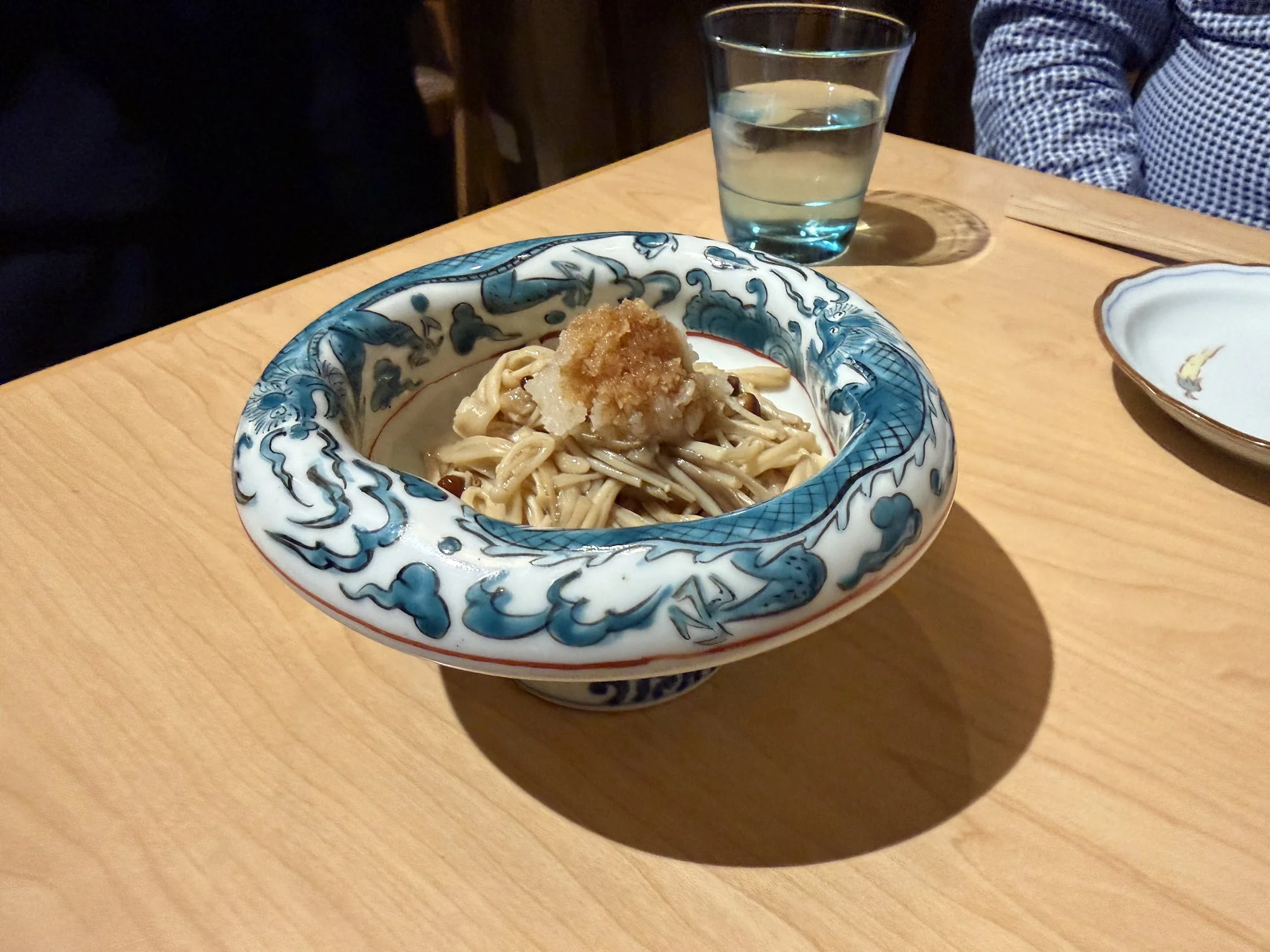
My “main” was a fish in miso sauce; this was similar in some ways to the famous Nobu dish.
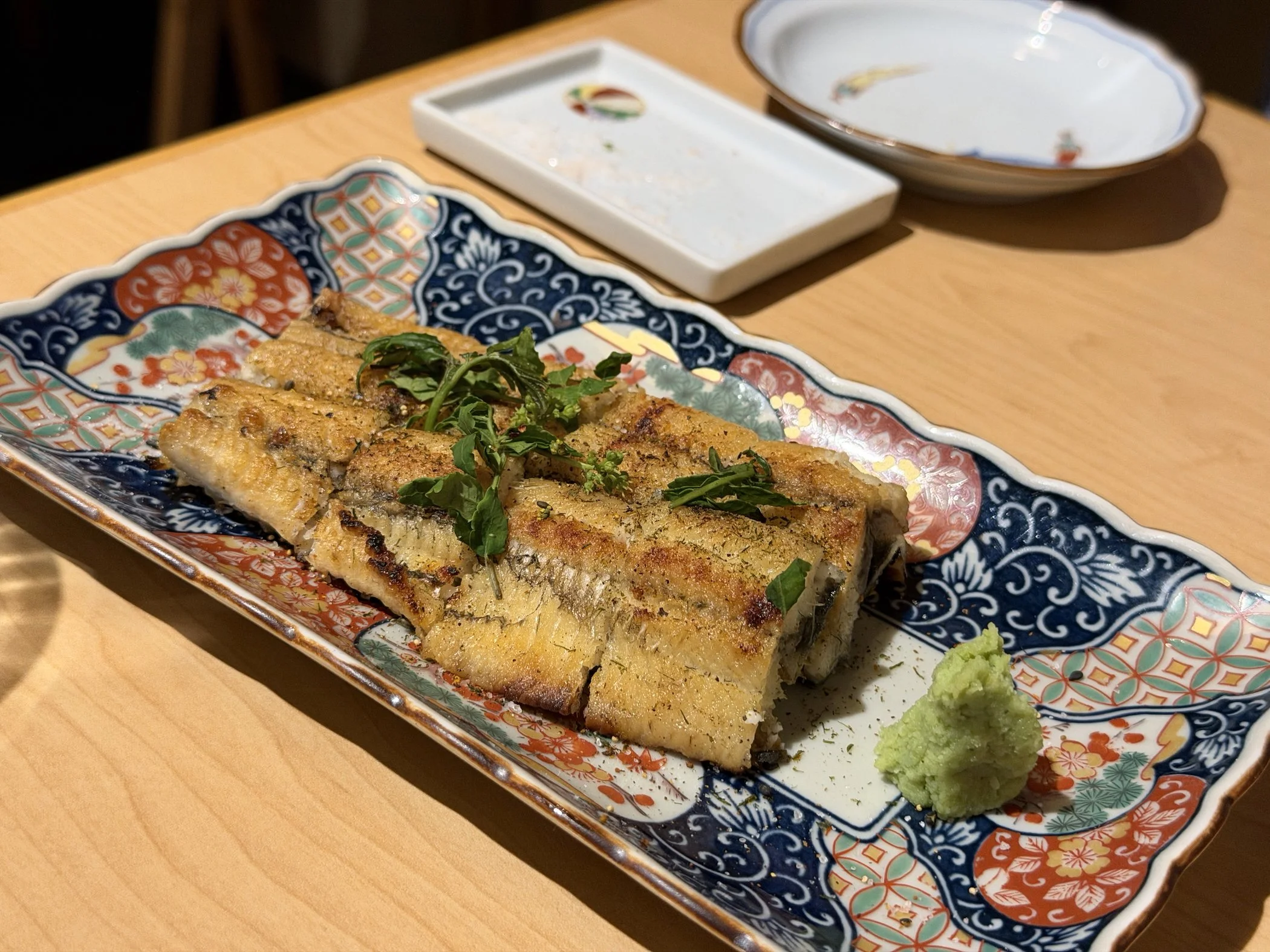
My husband liked the eel in Japan. This one came in a spicy coating.
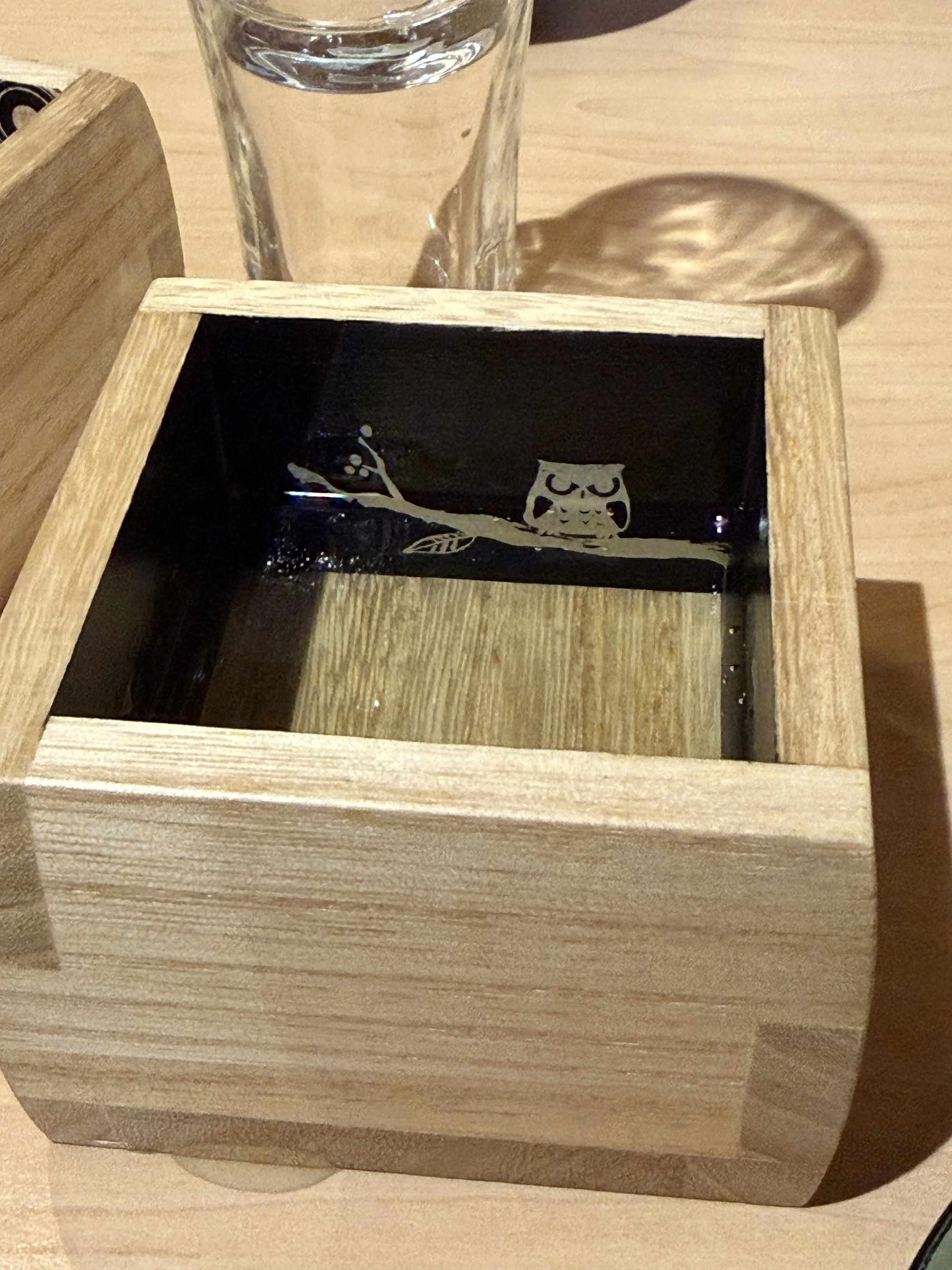
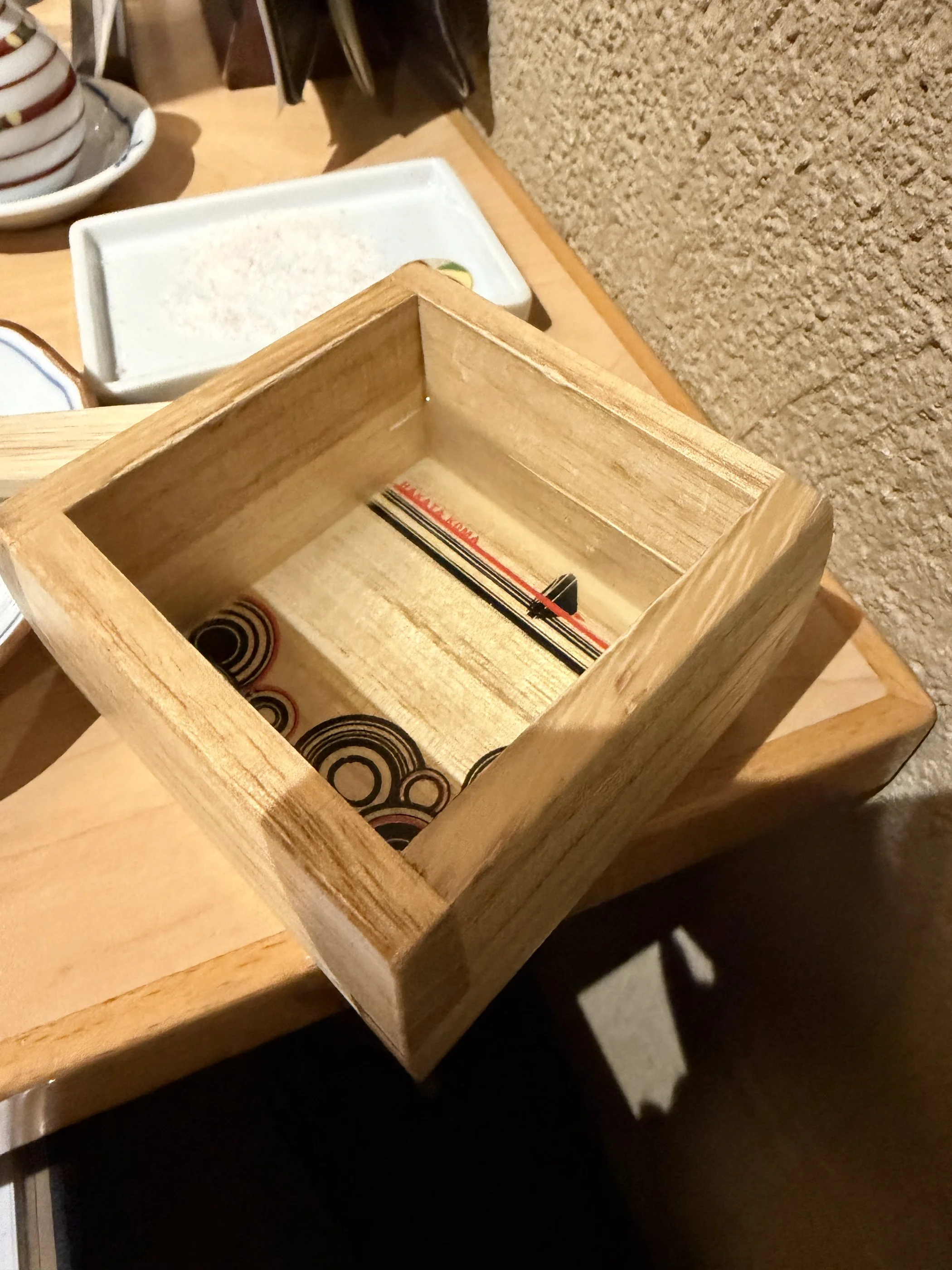
A sake “shooter” was placed in the rice box for overflow. The insides of each box had decorative elements which I thought were charming.
Wagyu Steak Hanasato Gion
At the recommendation of our hotel, we wanted a teppanyaki experience. For us, this was an intimate affair, with just the two us being served by one cook. The star was Yonezawa beef, one type of wagyu. While the whole meal was good, the beef itself was something to be savored. Luckily you could choose a small, medium, or large portion. The wine selection was a bit uneven, offering some low-cost options next to splurge options like a bottle of Opus One from Napa.
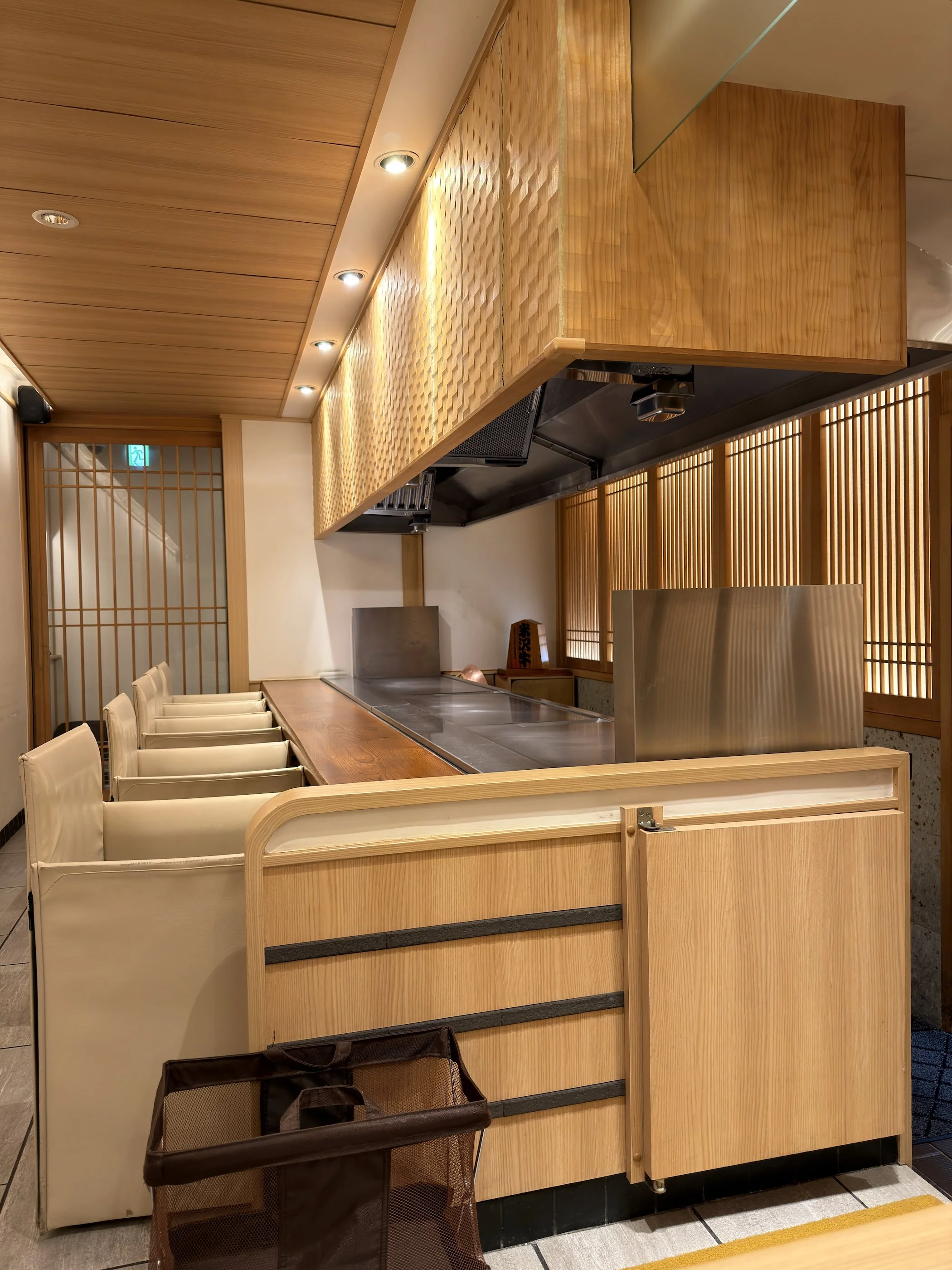
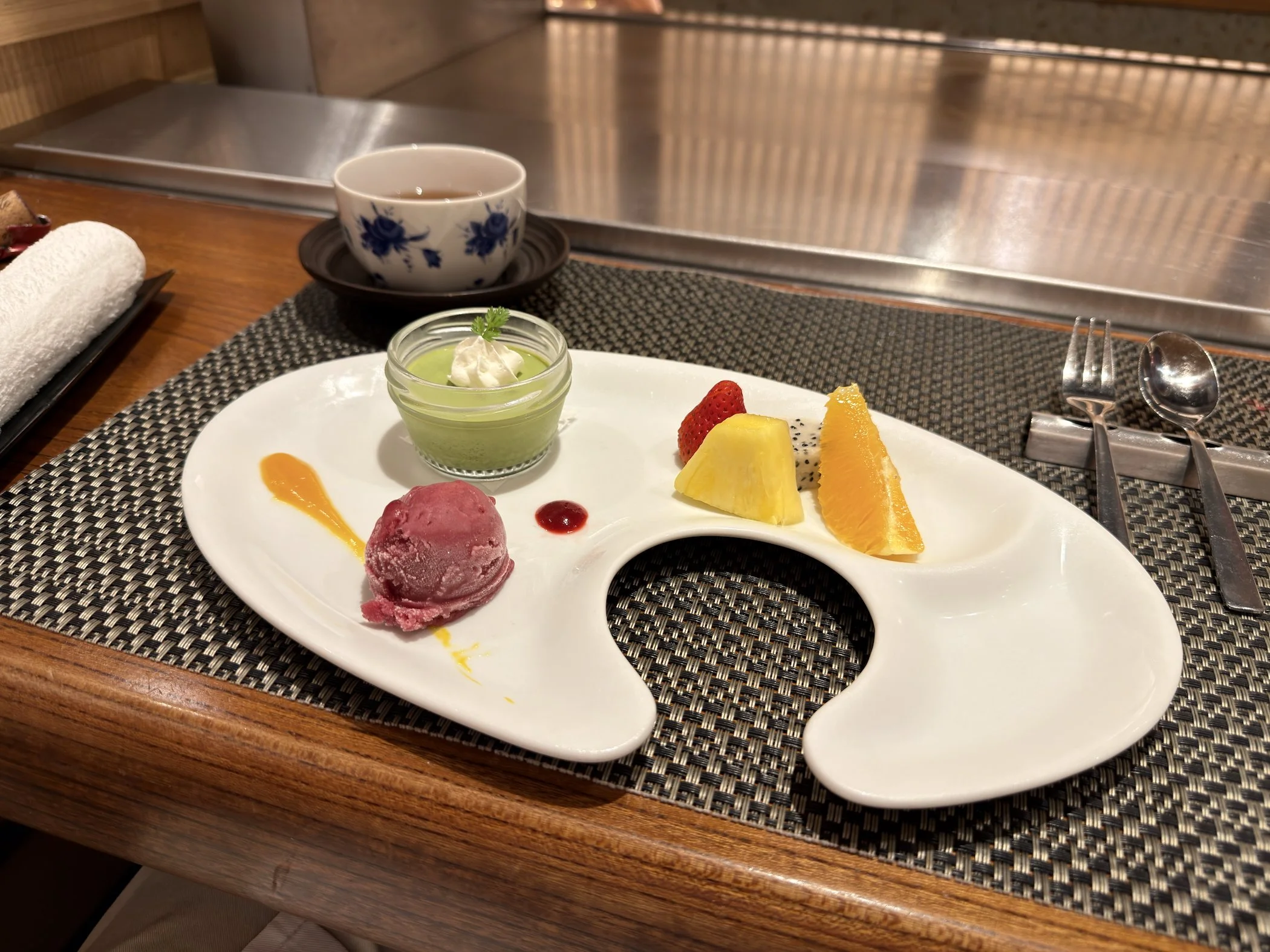
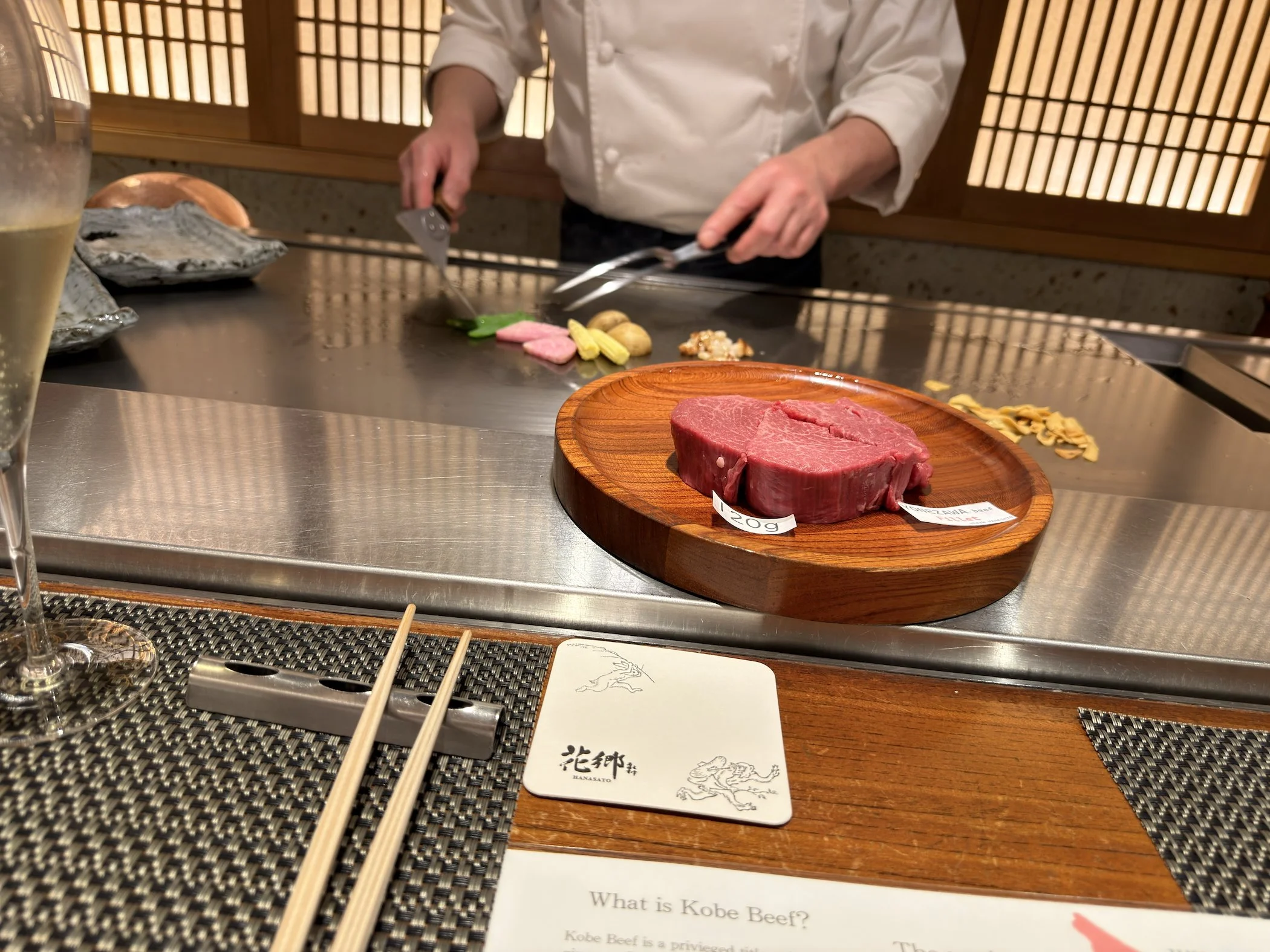
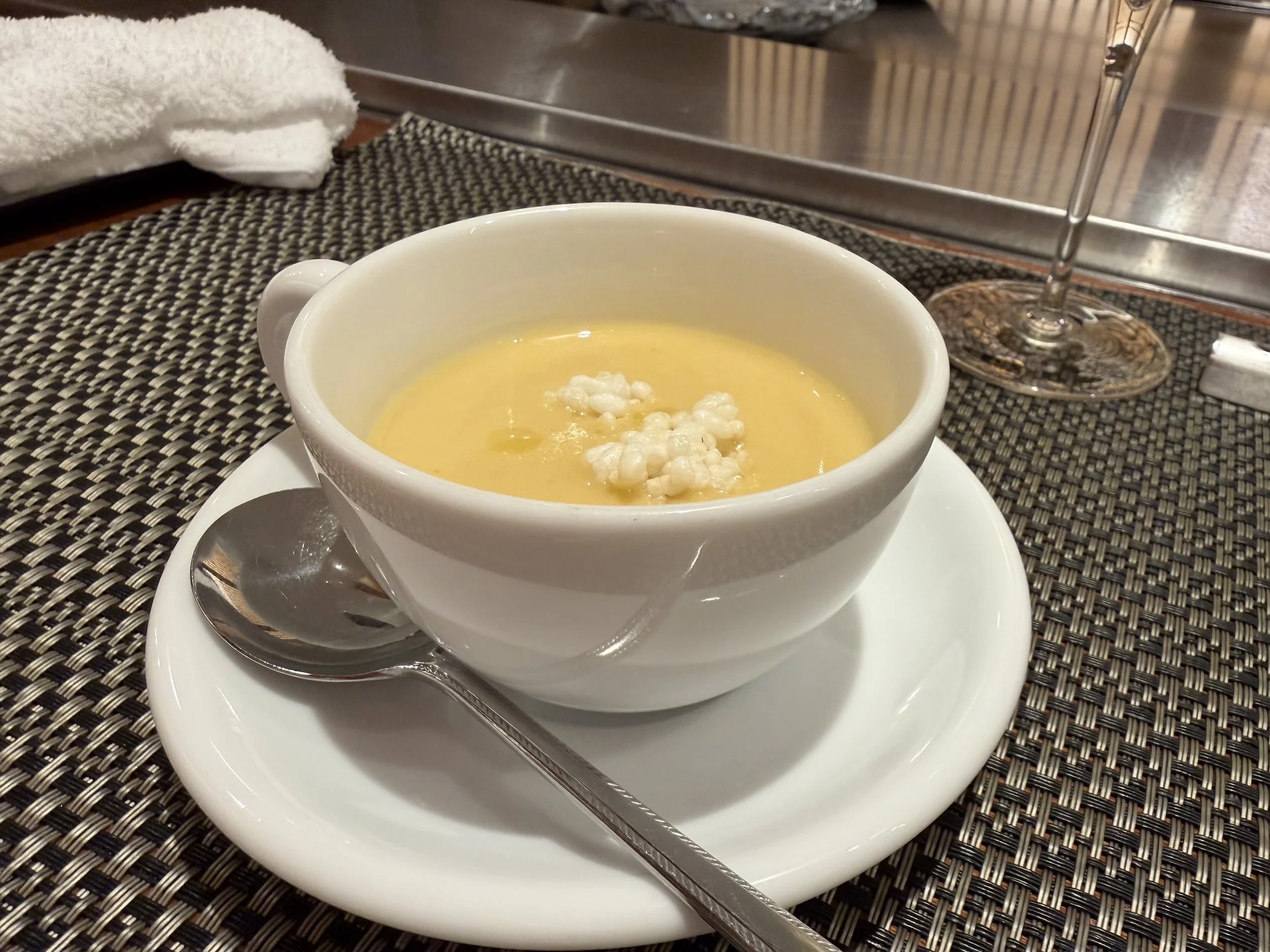
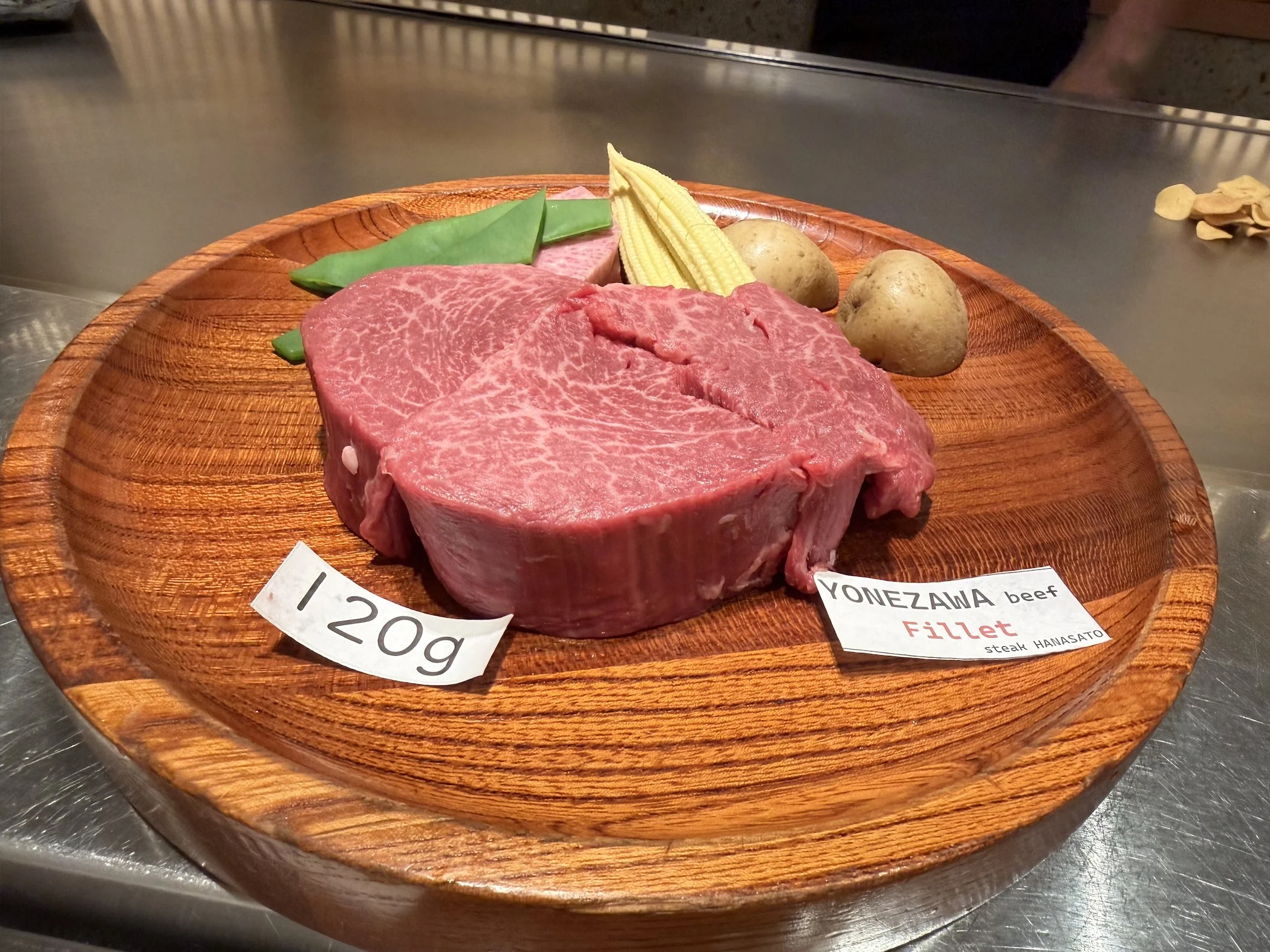
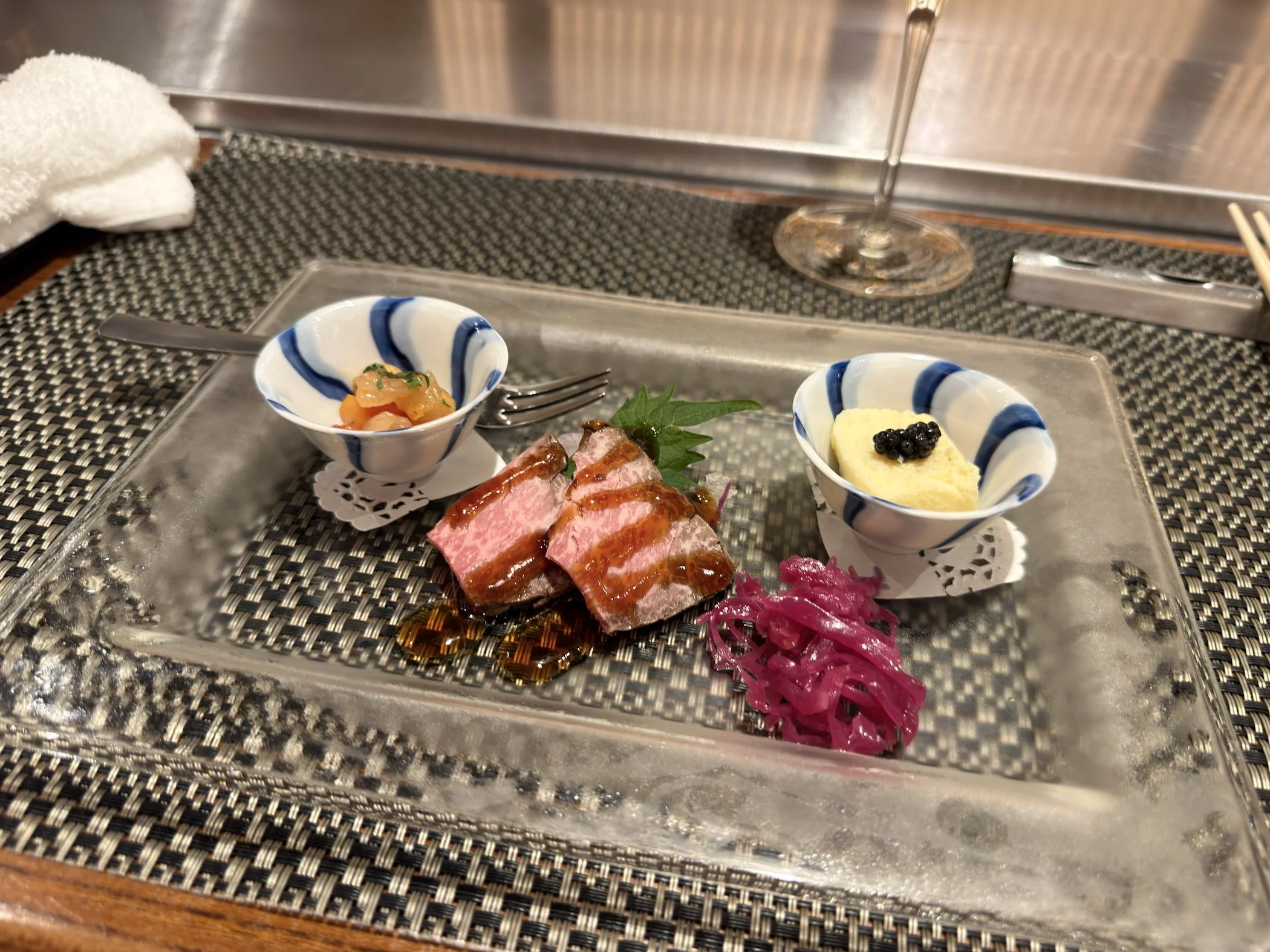
Like other fine steakhouses in the US, they present the raw version of what you’ll eat before they cook it up.
Standup Sushi Omakase at Tachiguisushi Sushi Kawa
(Michelin Bib Gourmande)
So I really wasn’t familiar with a stand-up sushi bar before coming to Japan. This one is obscenely small, with I think about 8 spots to stand. It’s run by a 2-person team. We were the only English-speakers that night so we couldn’t well-converse with the other diners. Some were talkative, some quiet. It was an experience I won’t soon forget and the selections of each piece was delicious. This was our last dinner in Tokyo.
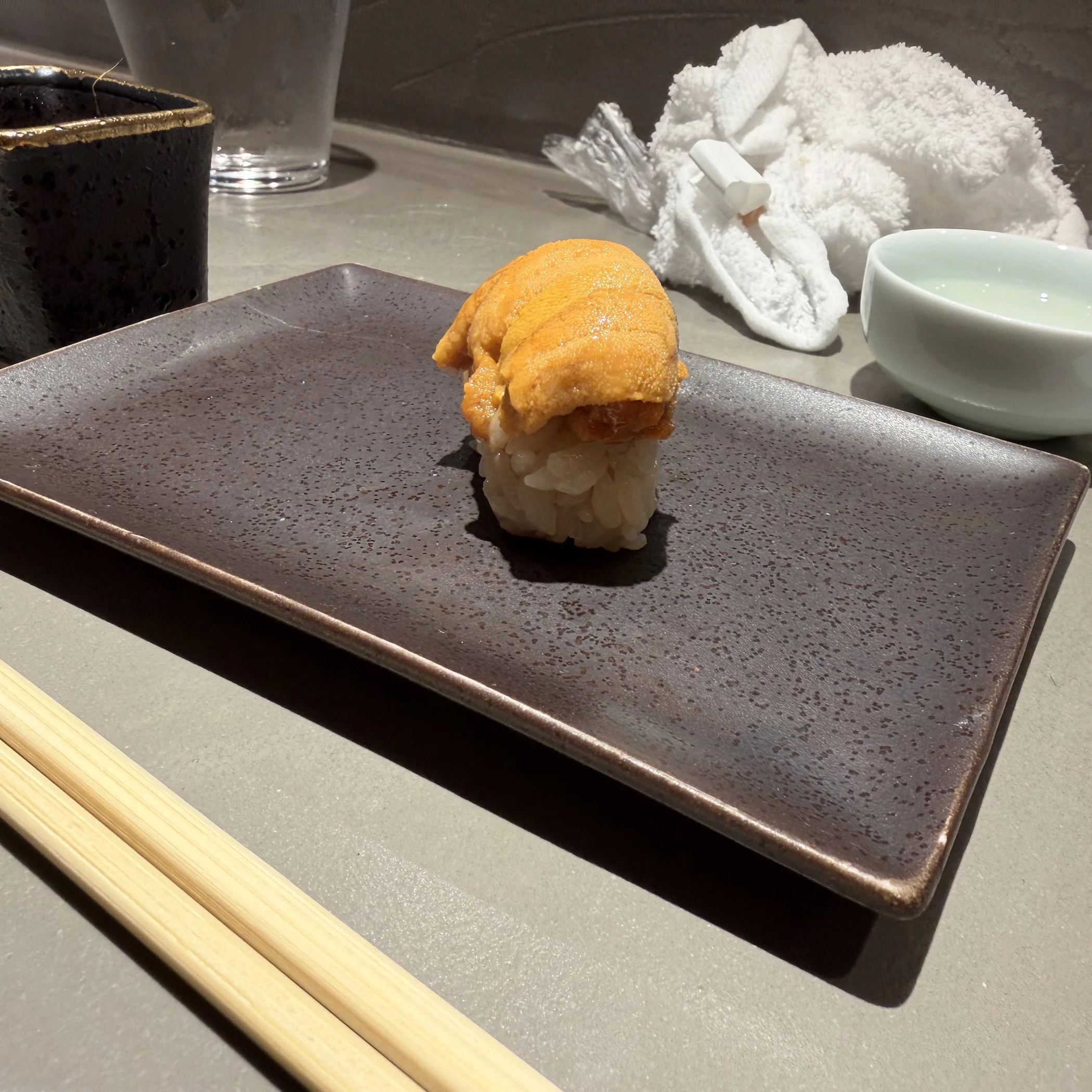
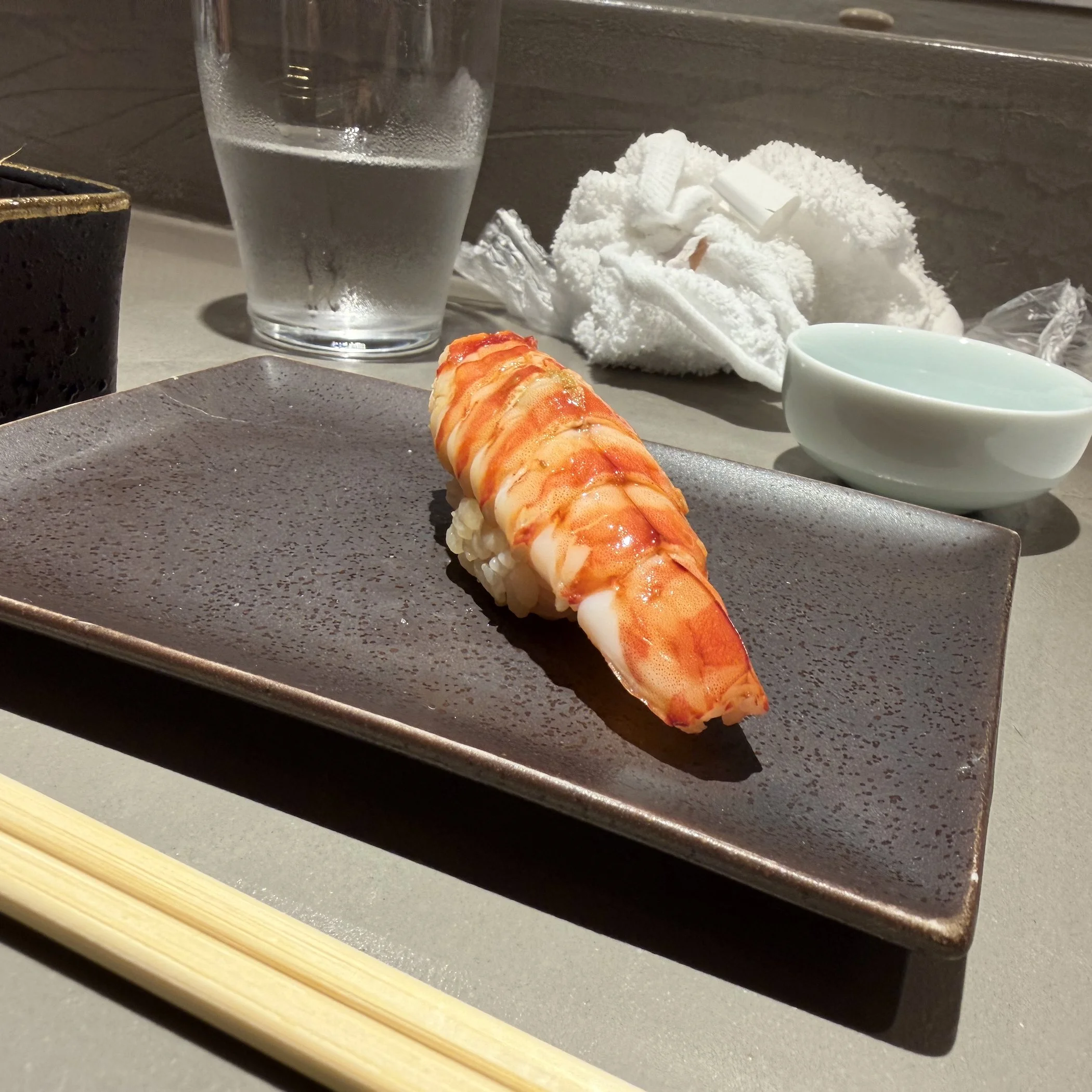
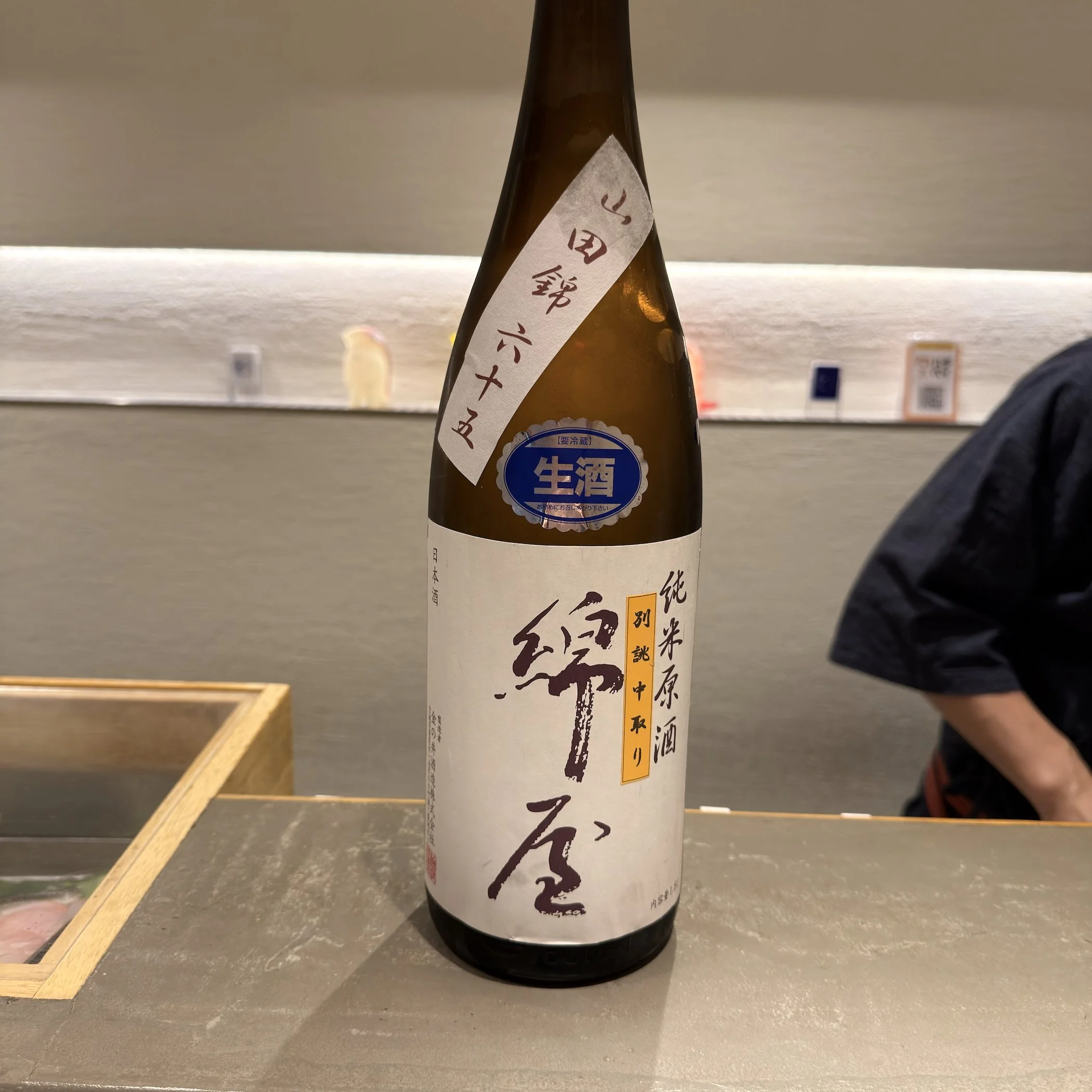
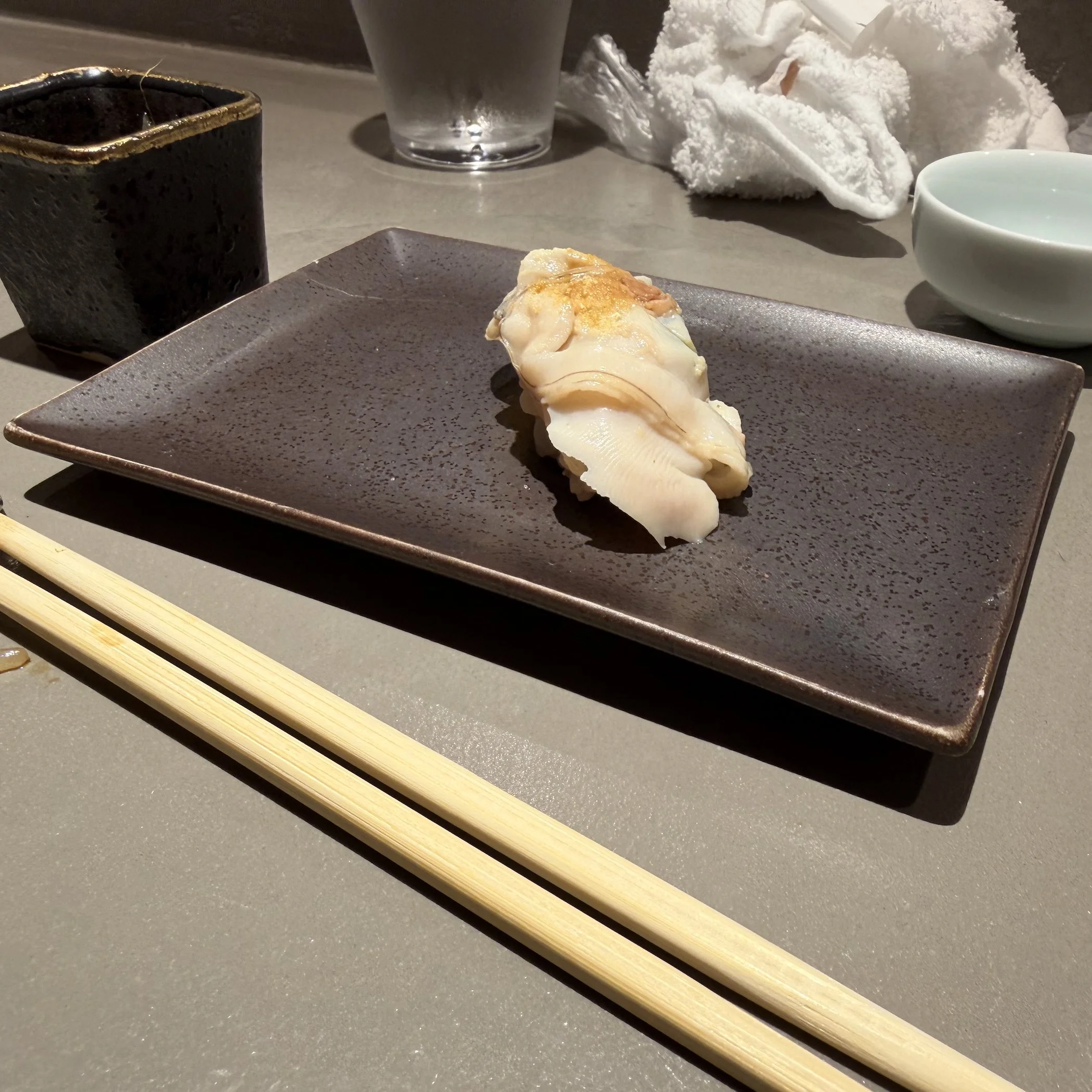
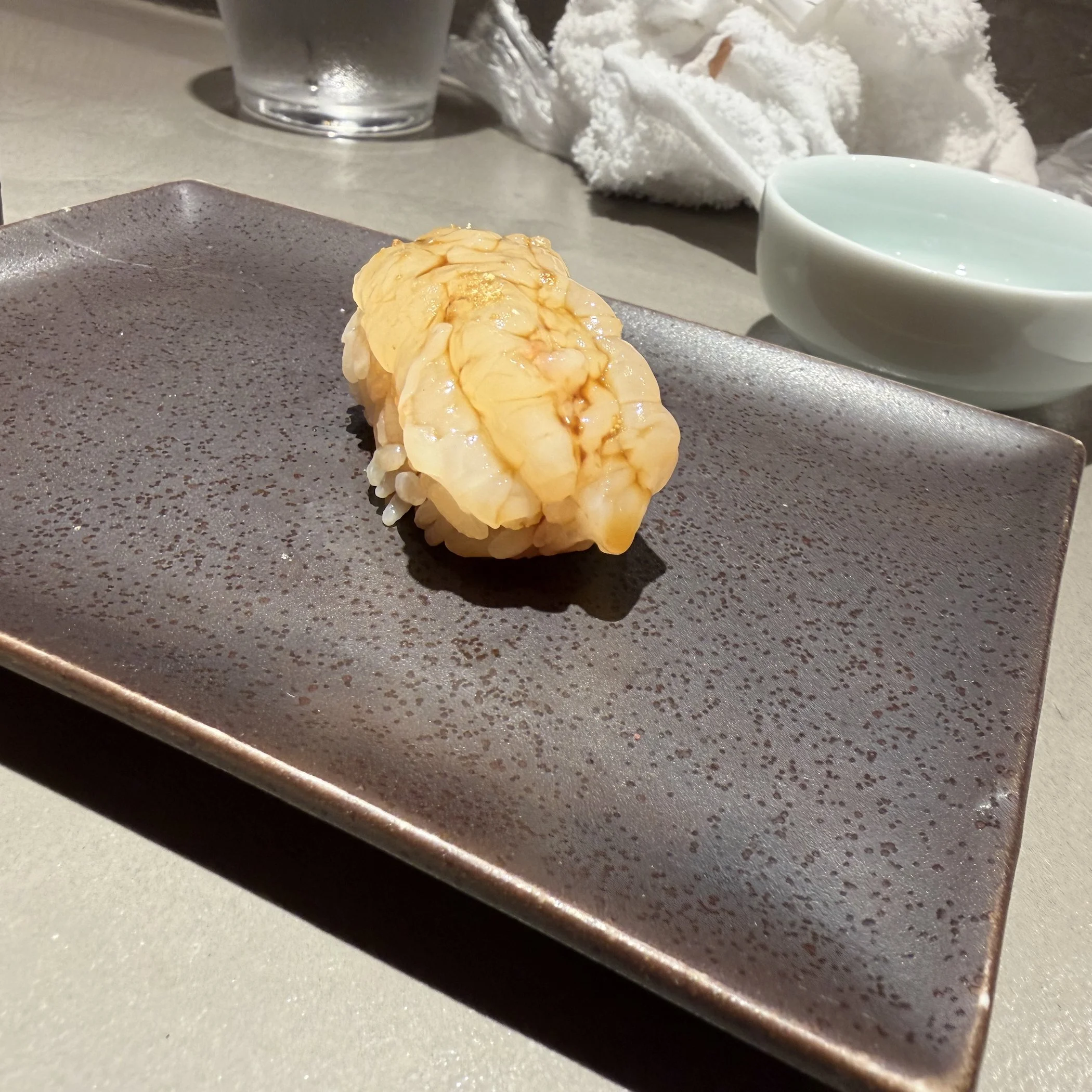
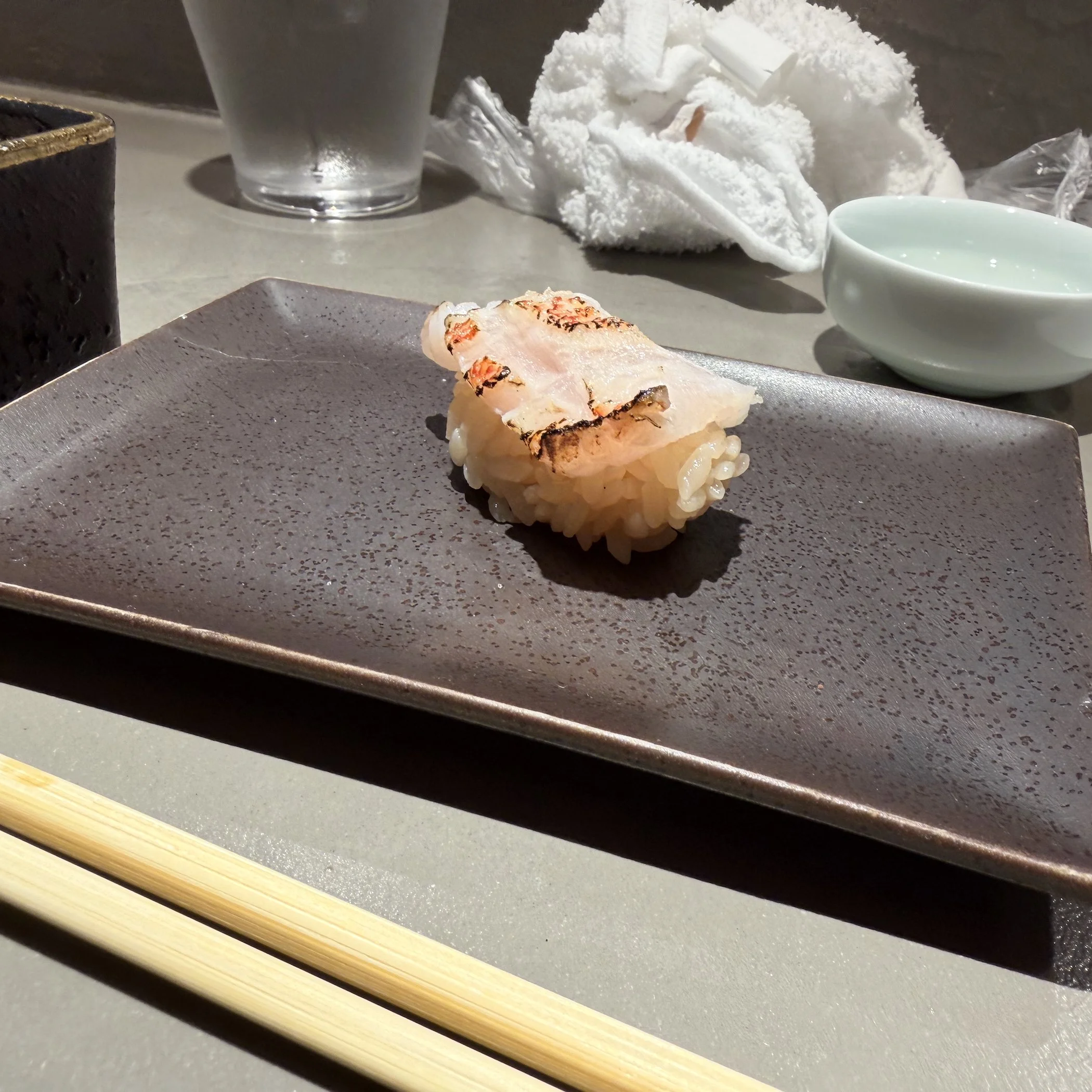
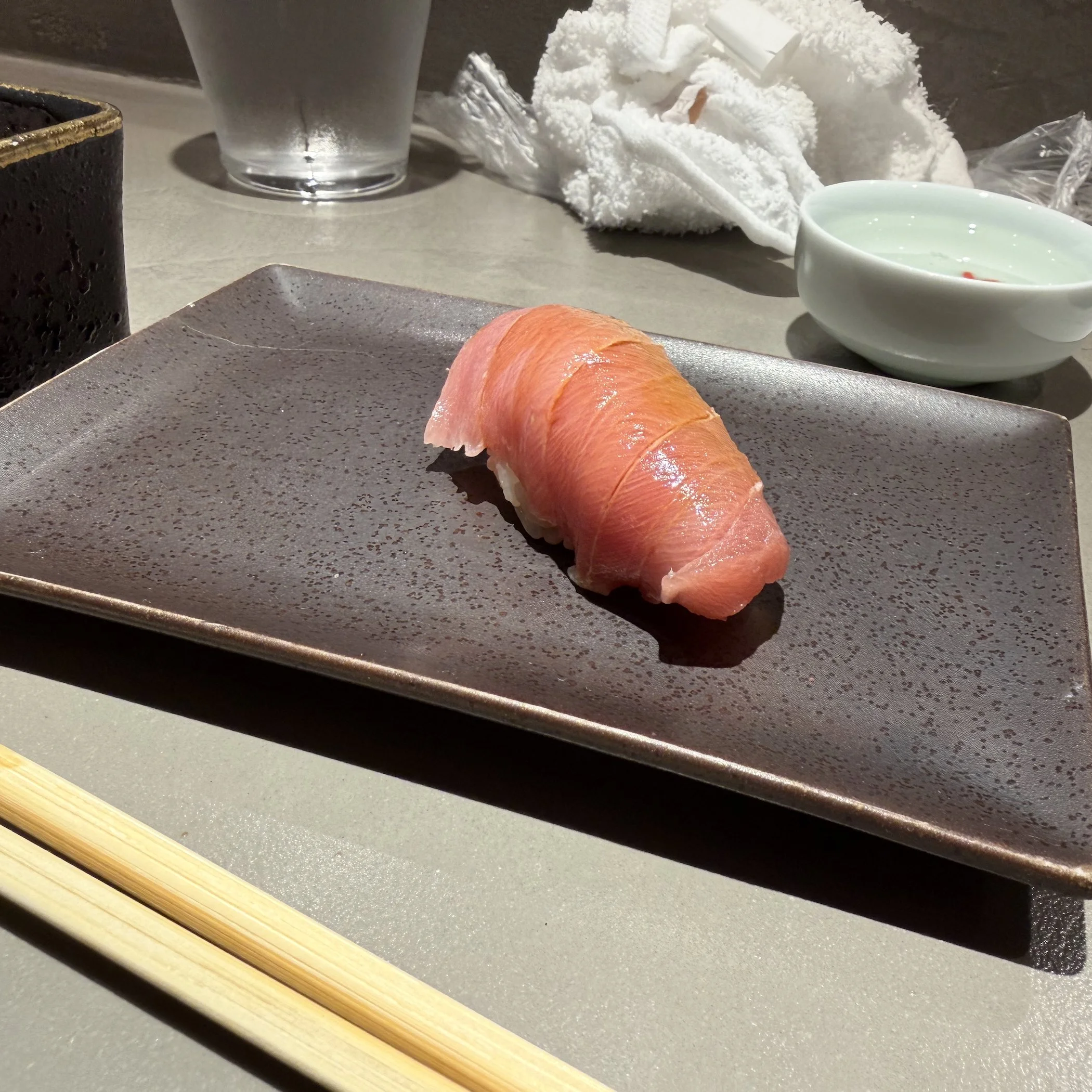
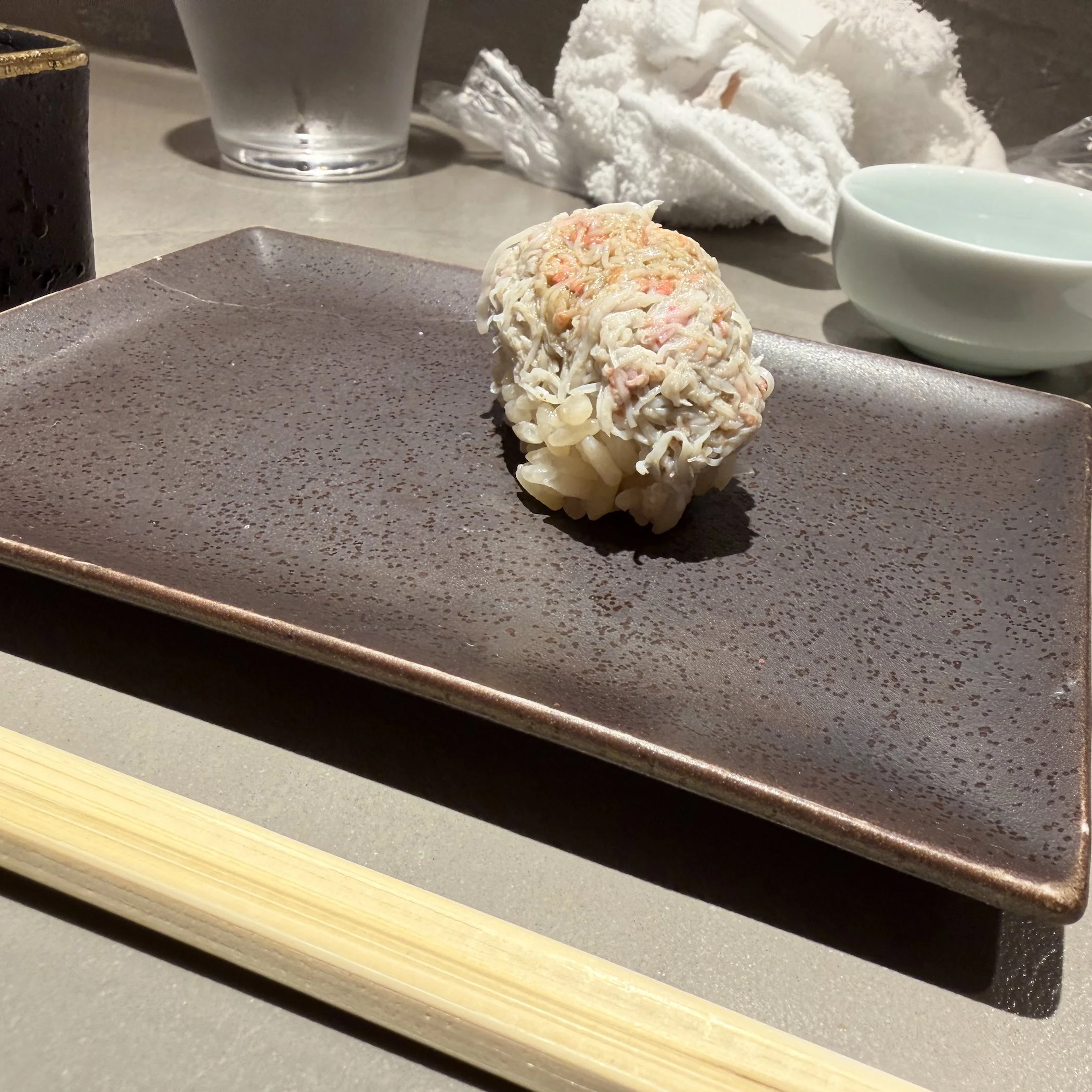
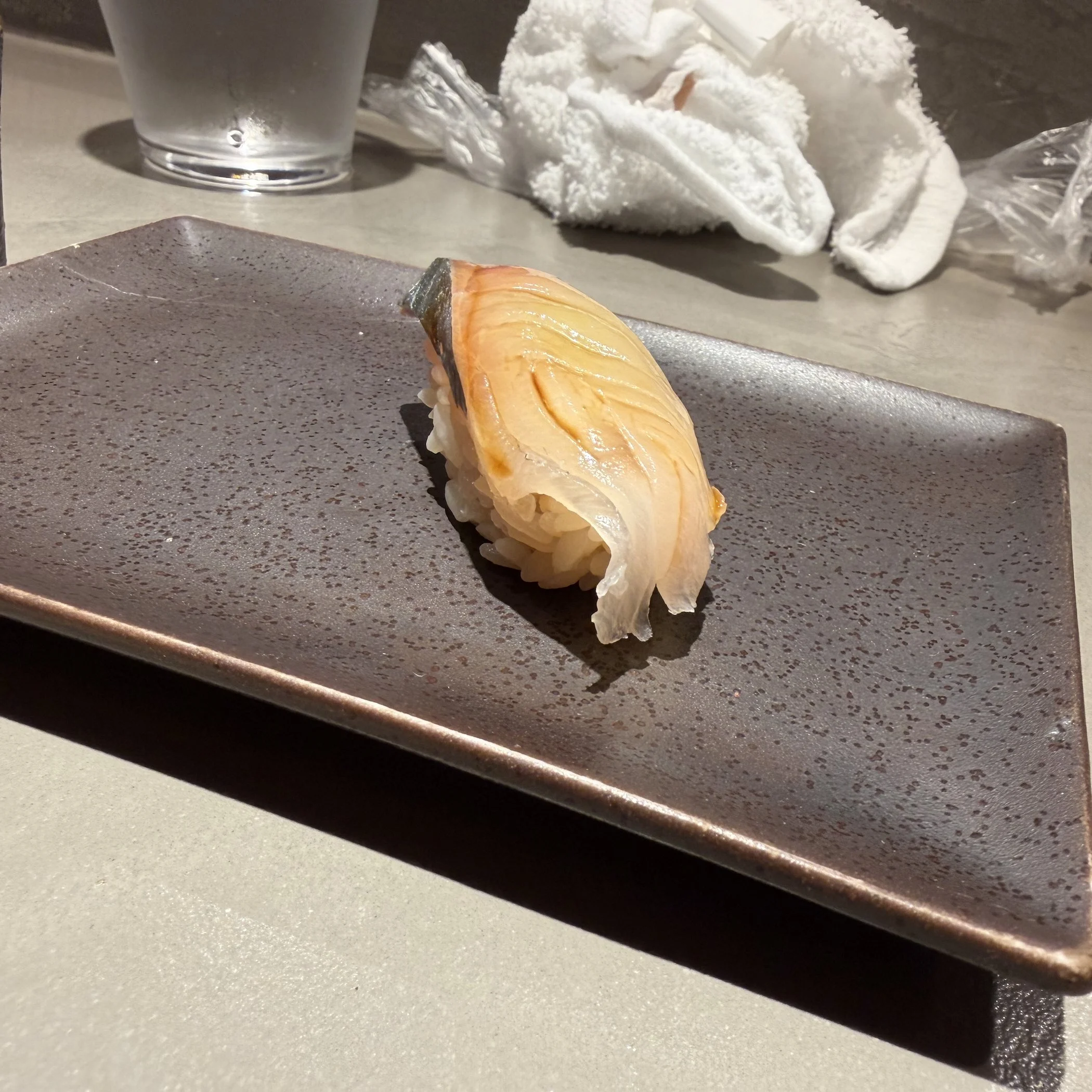
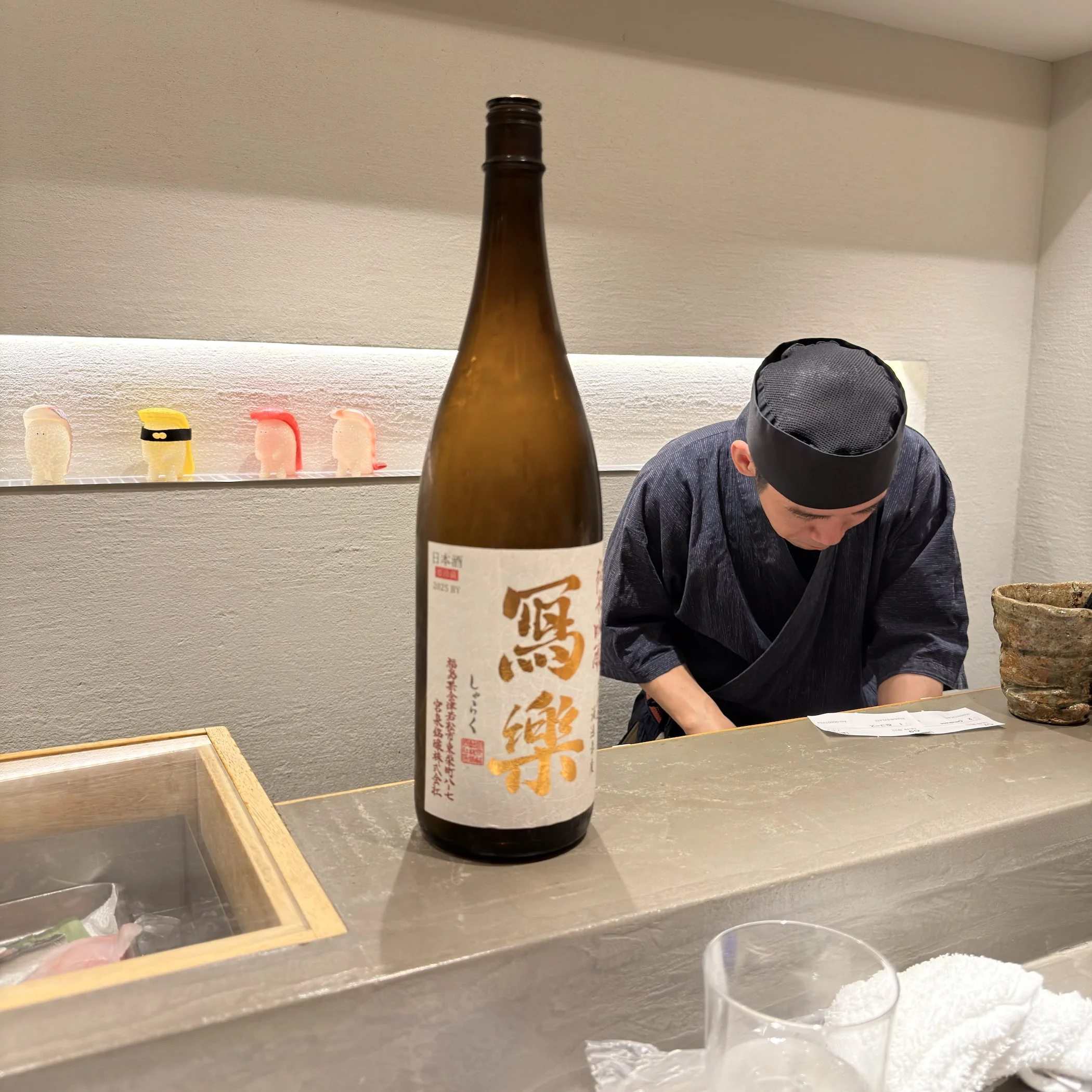
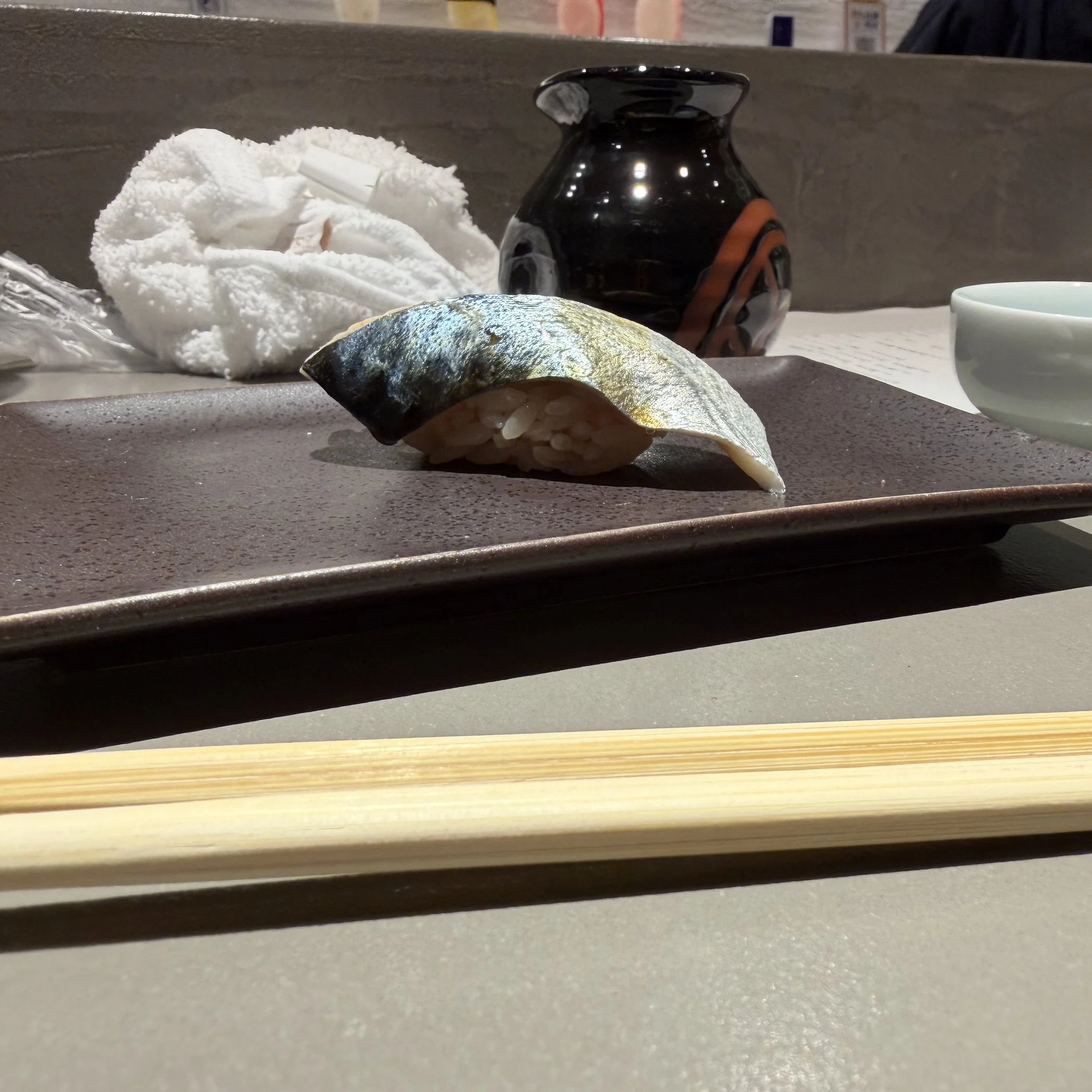
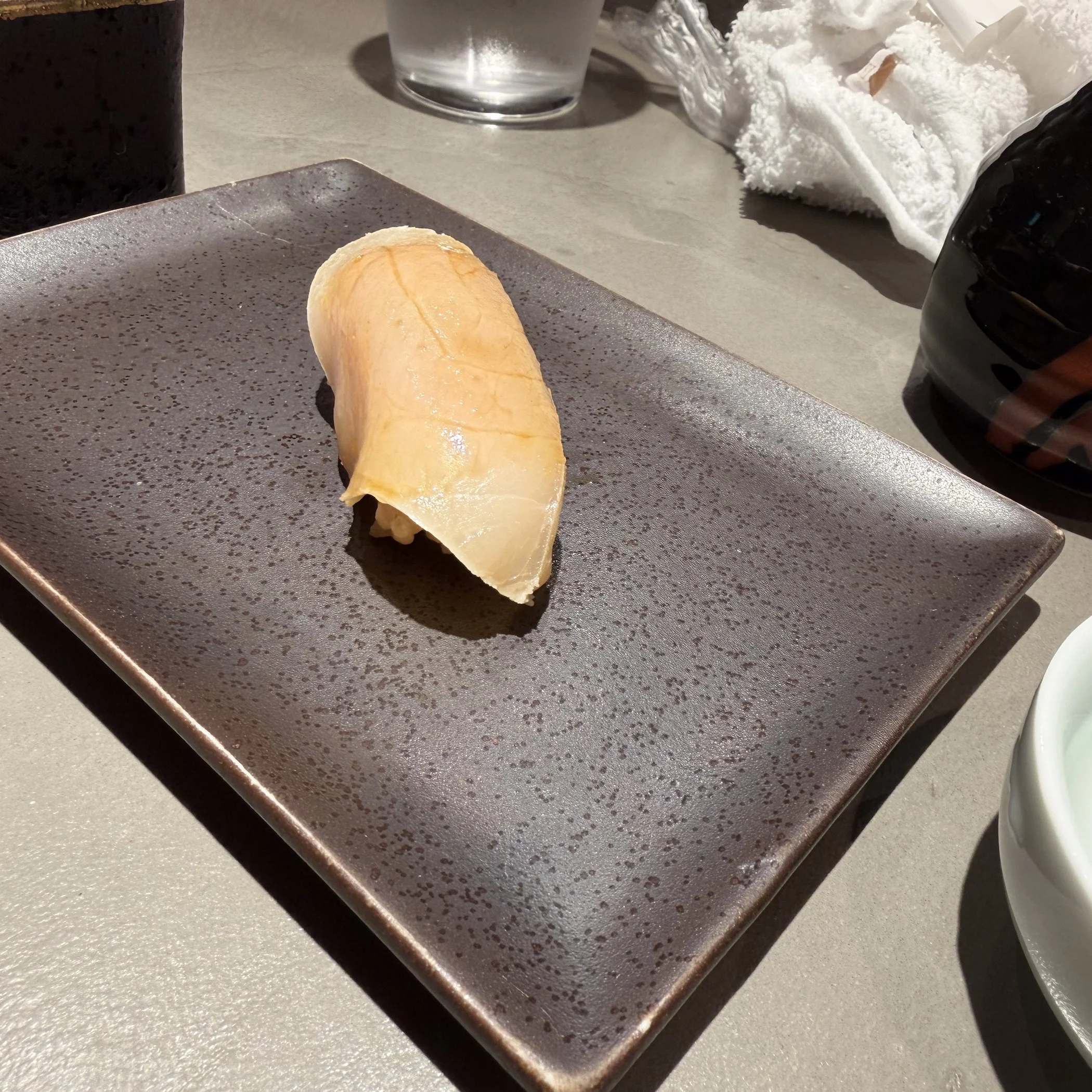
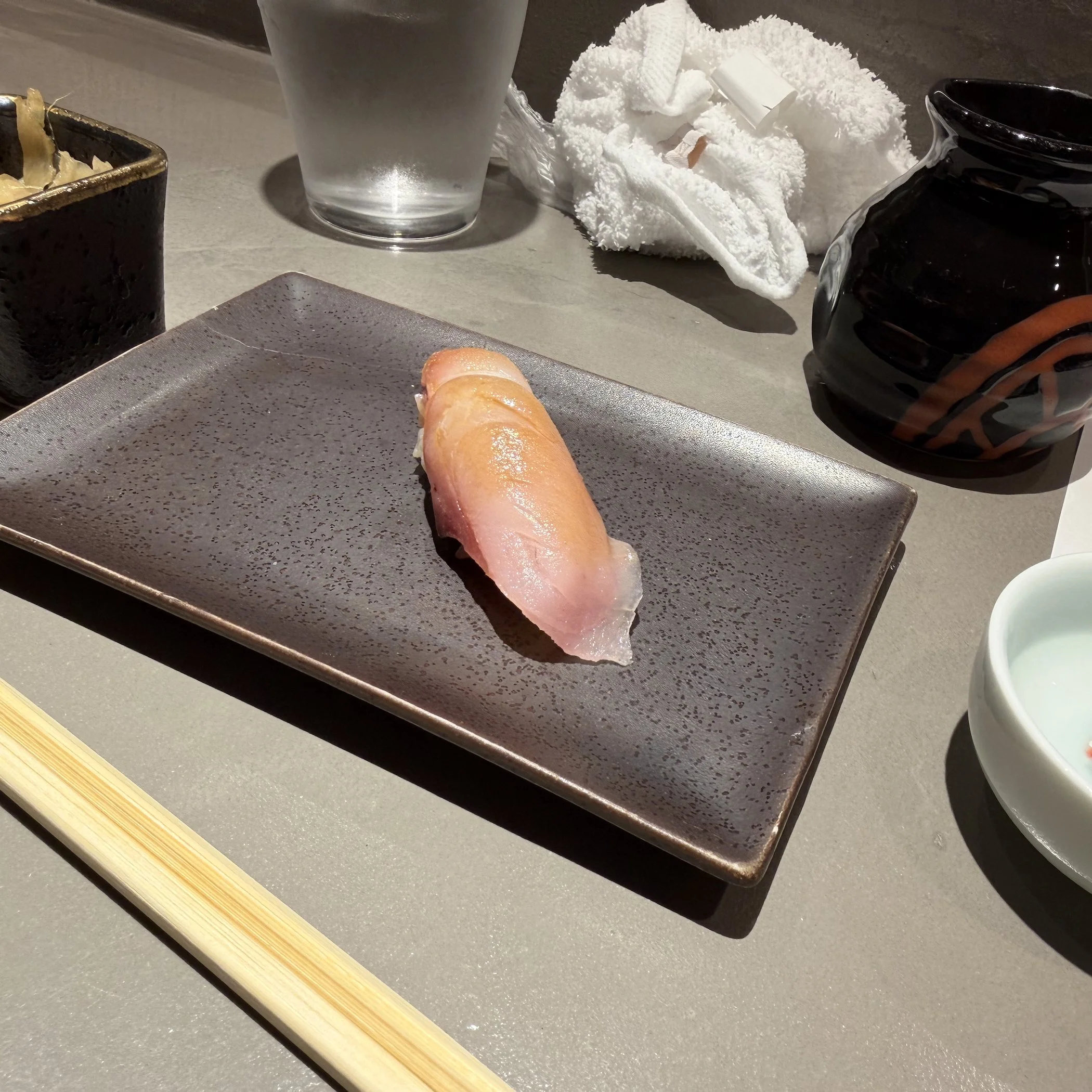
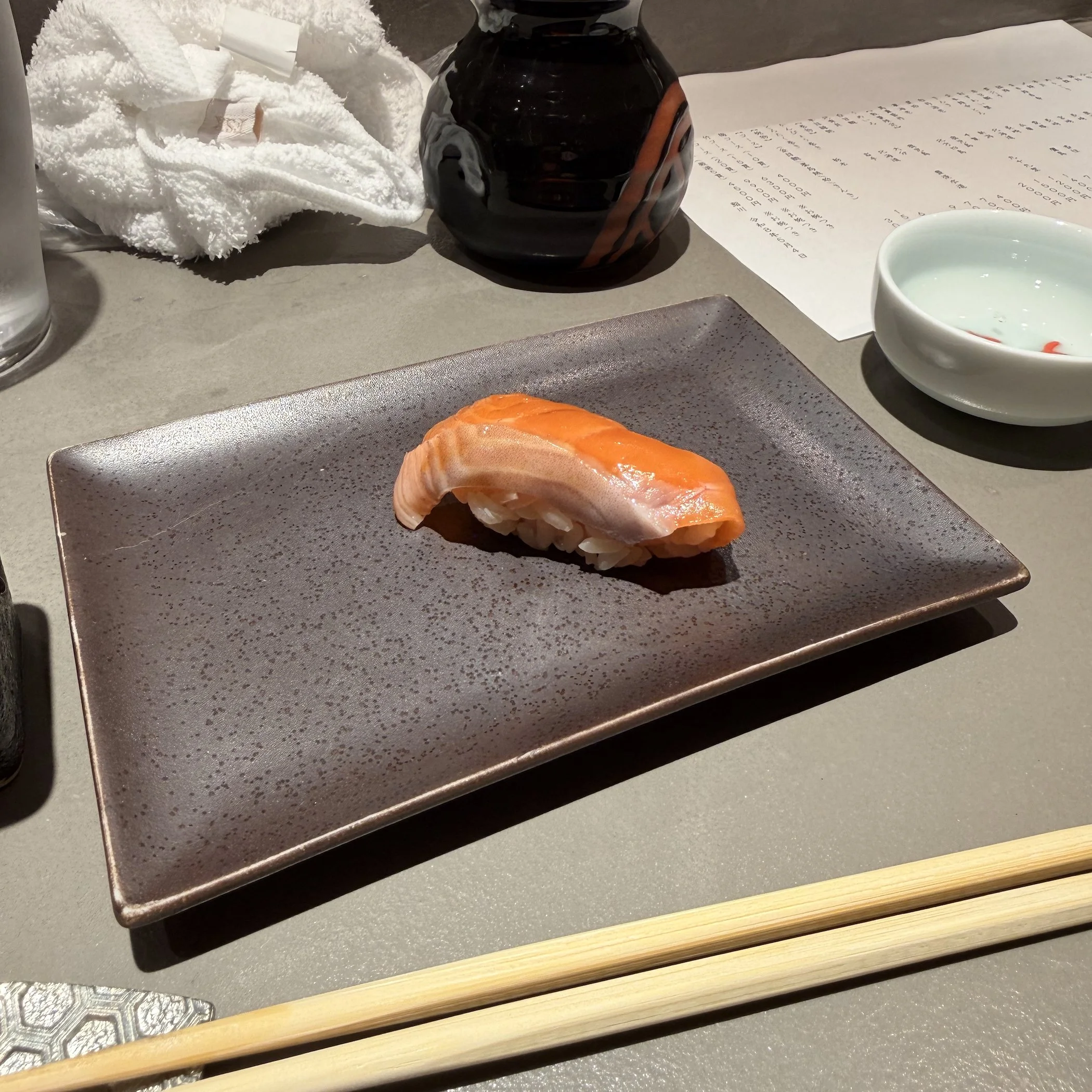
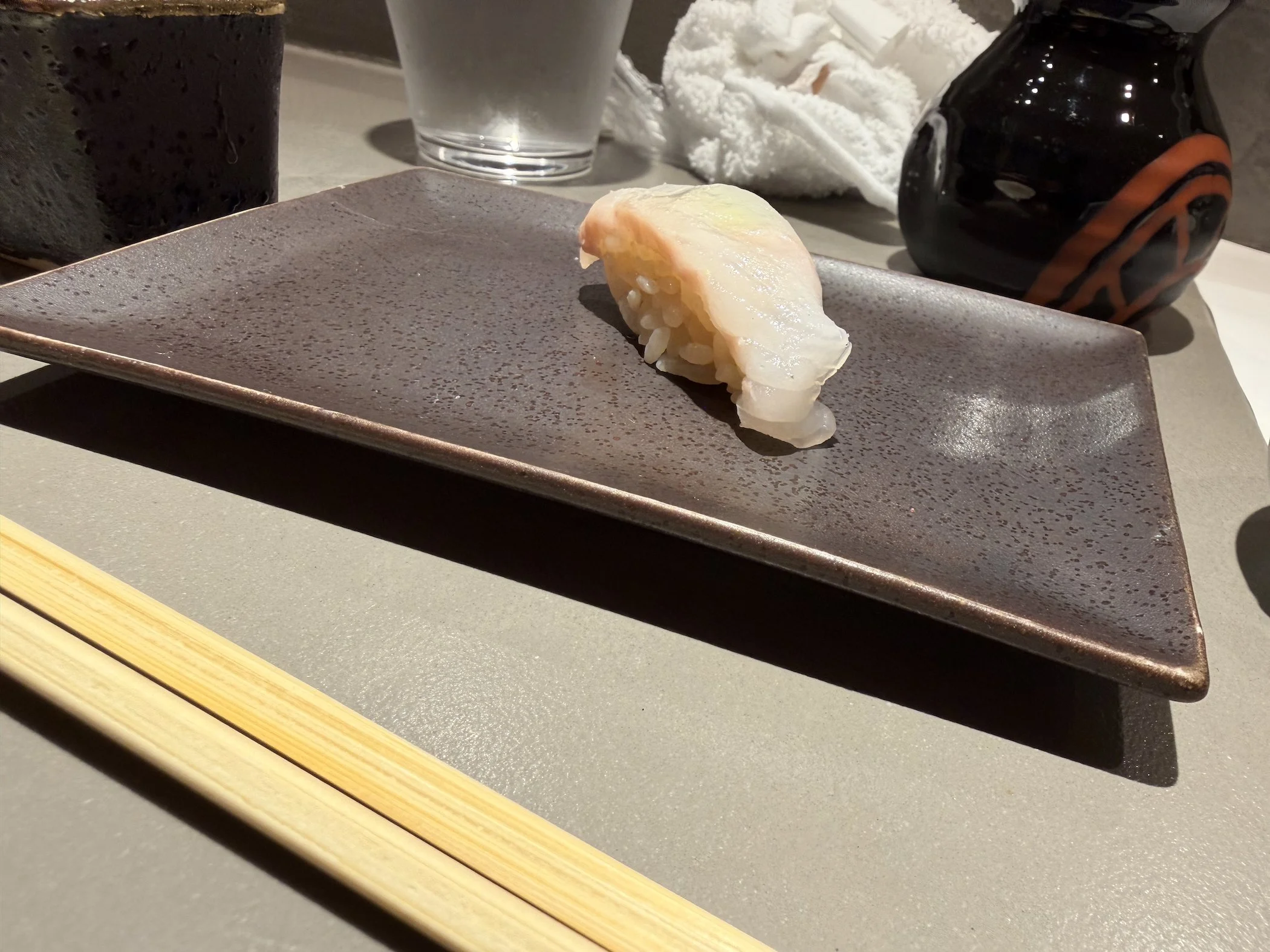
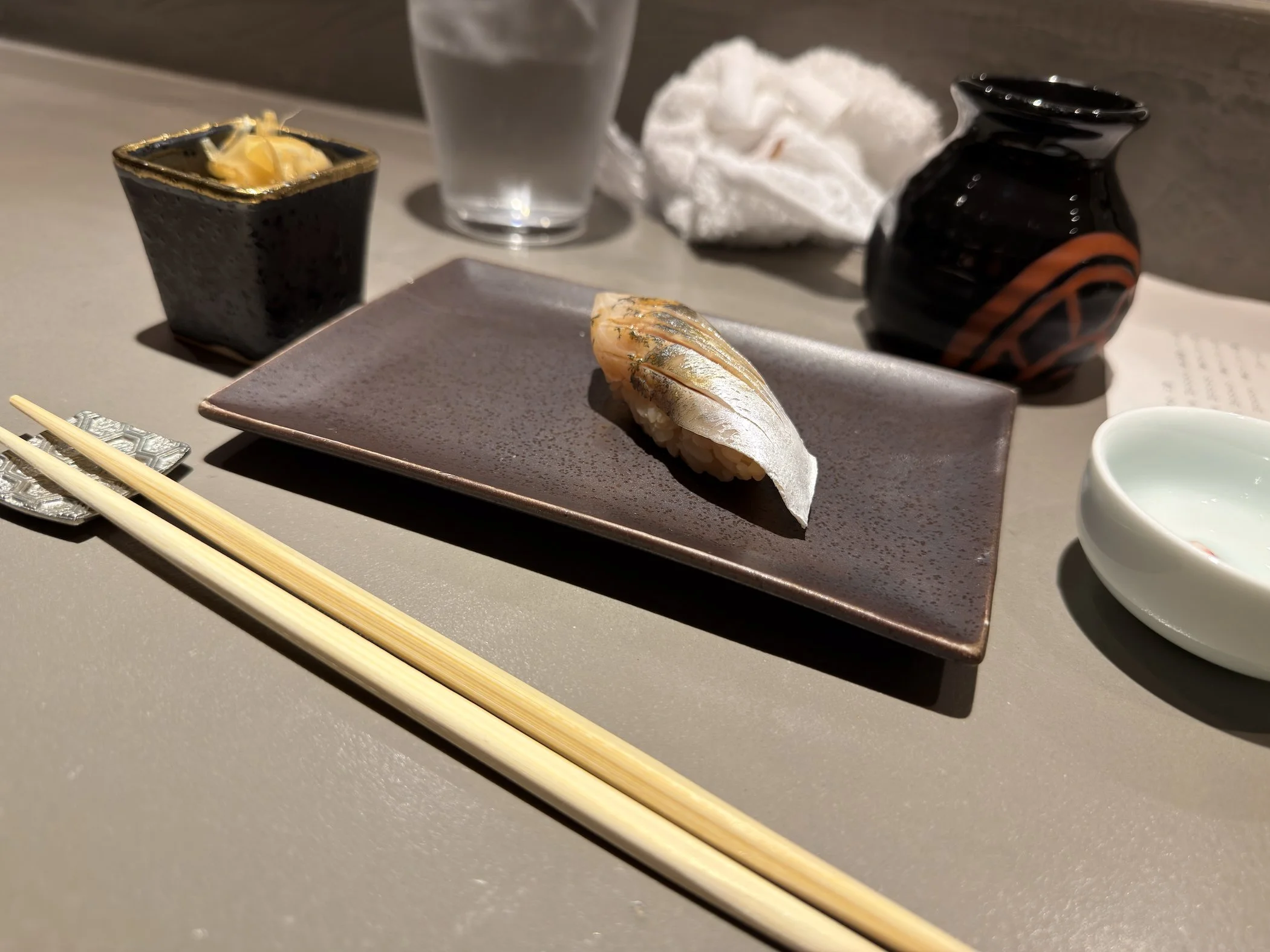
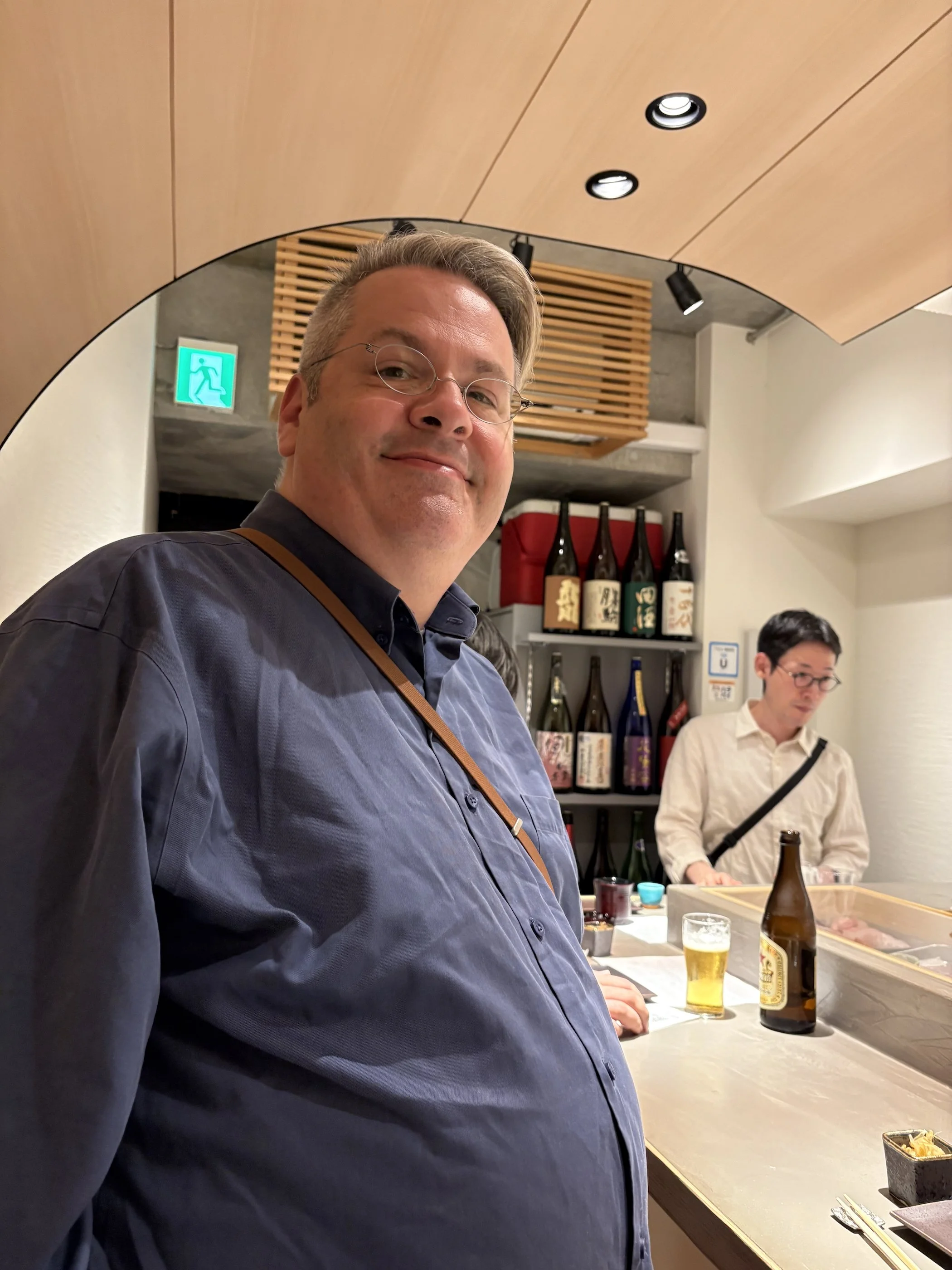
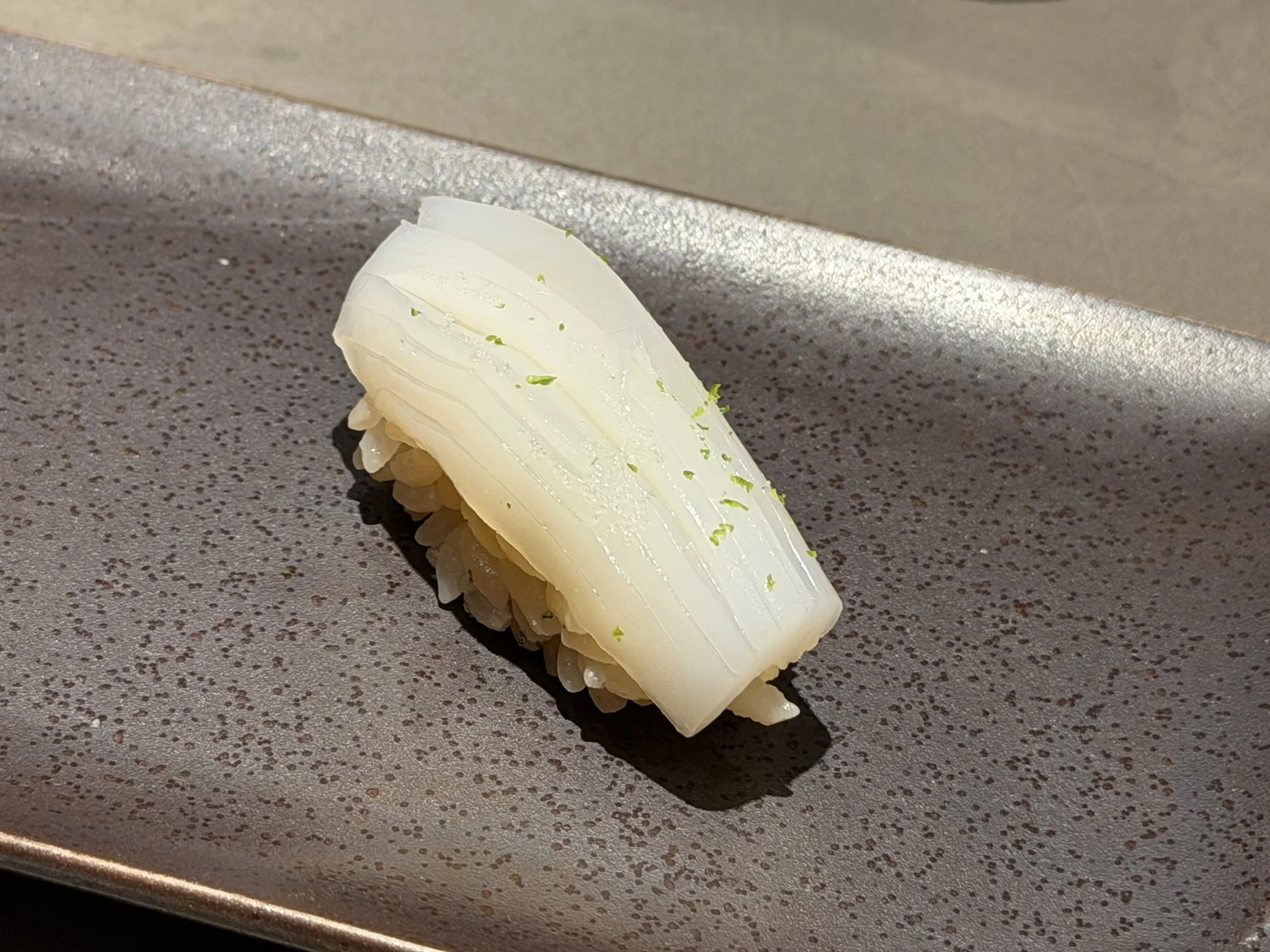
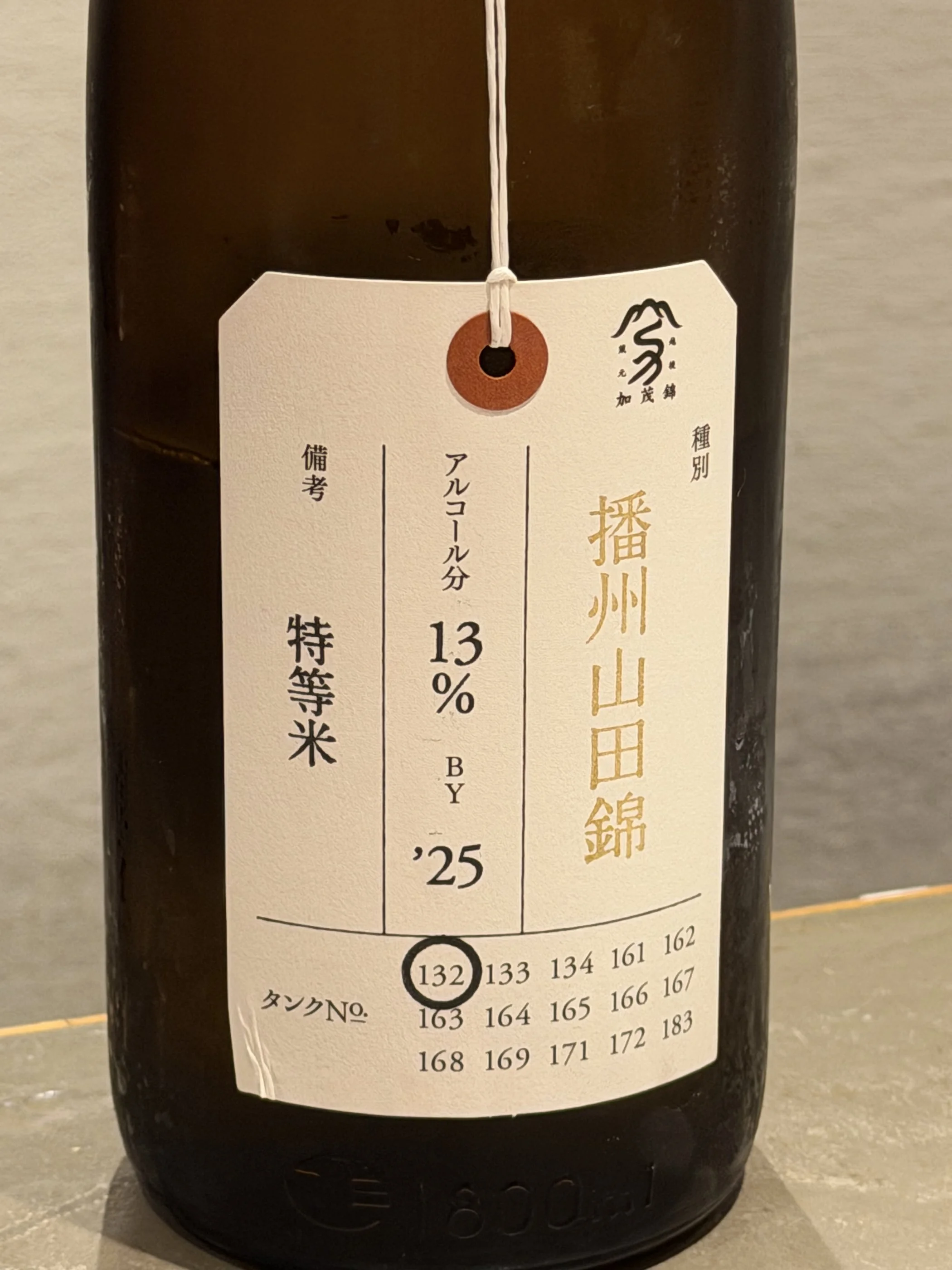
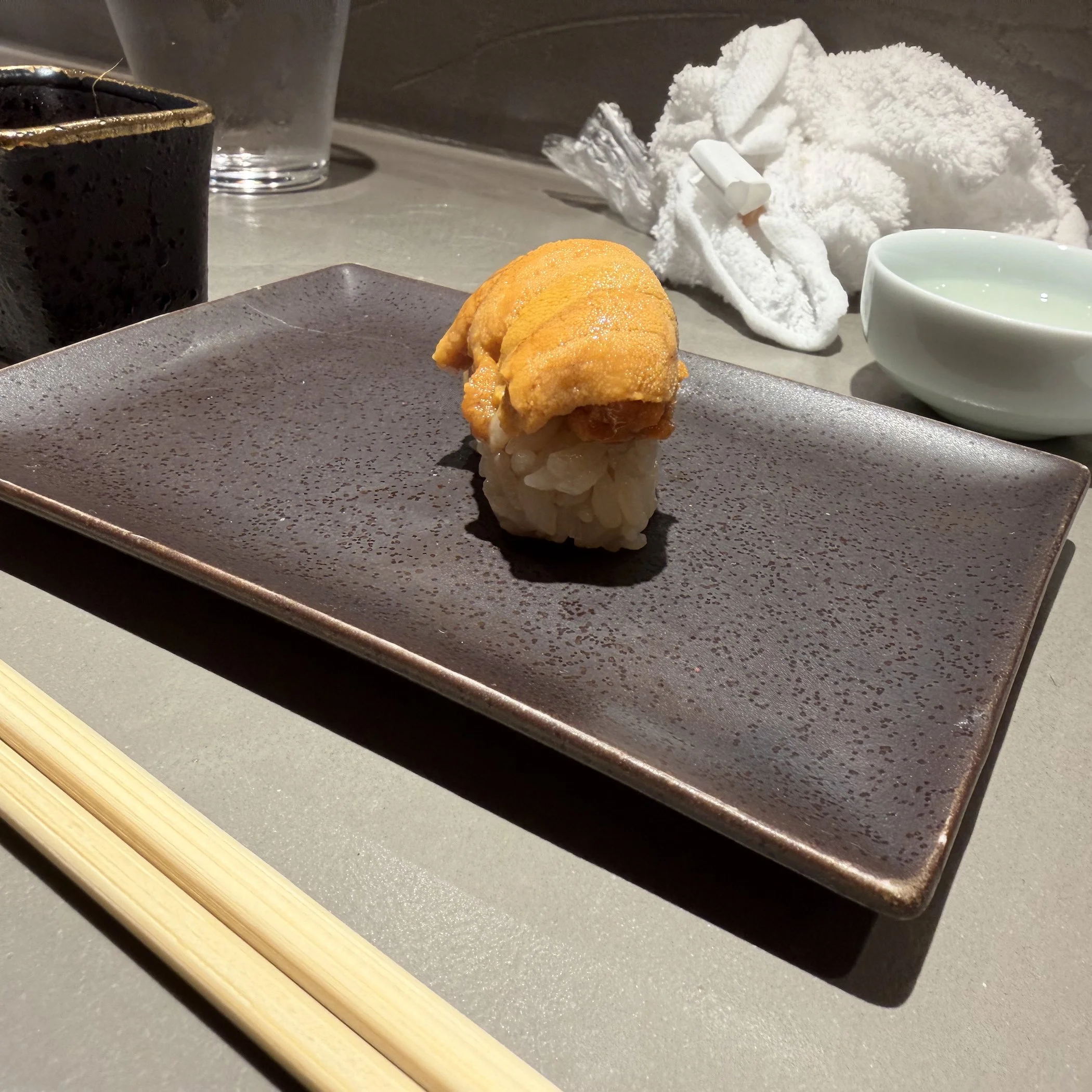
And no—I have no real understanding of which sakes I was drinking—but they kept getting better (and no, it wasn’t the alcohol talking). Some of the options were recognizable (crab, tuna, flounder, shrimp) while others were not.
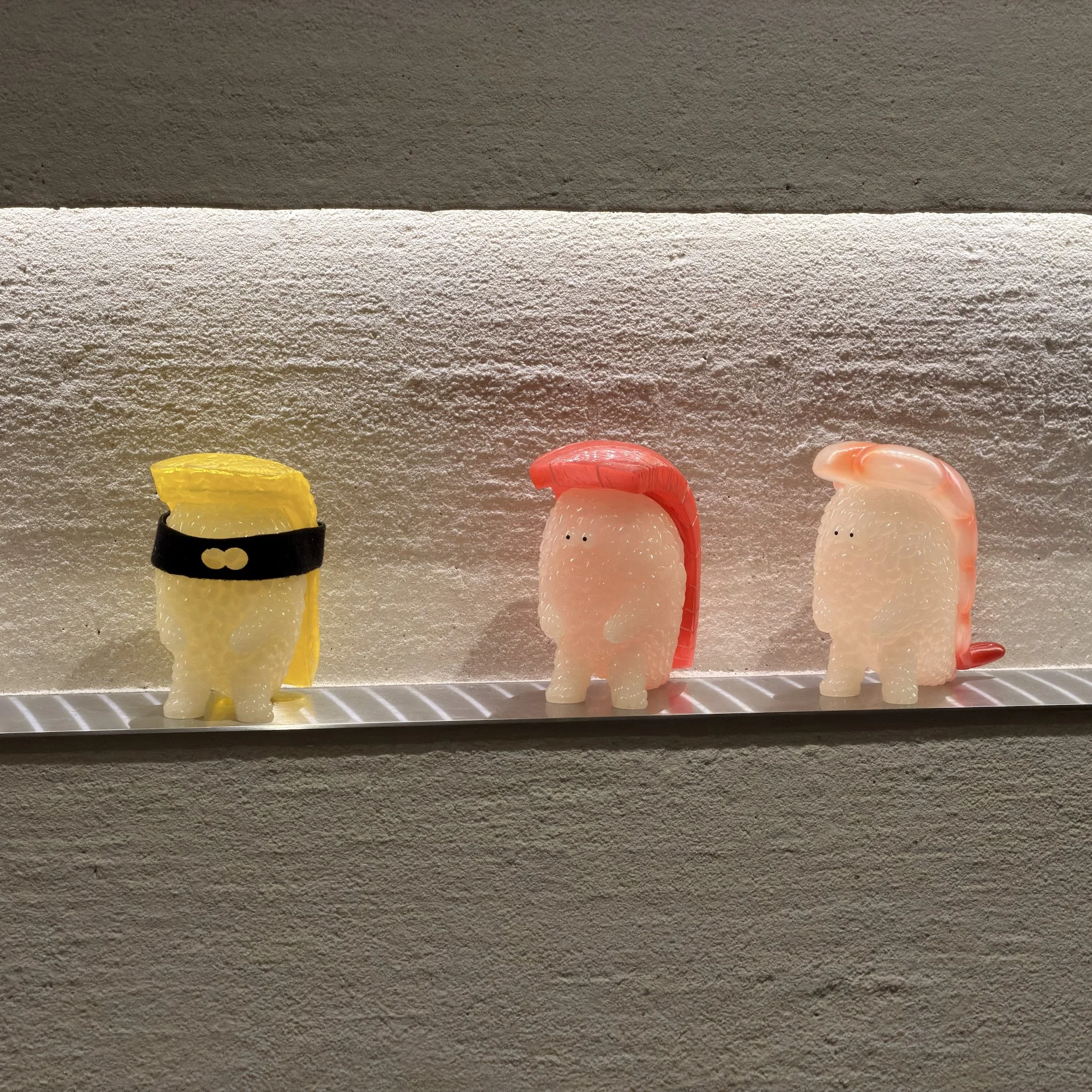
Everyone seemed enamored by these little figures that flanked the back wall.
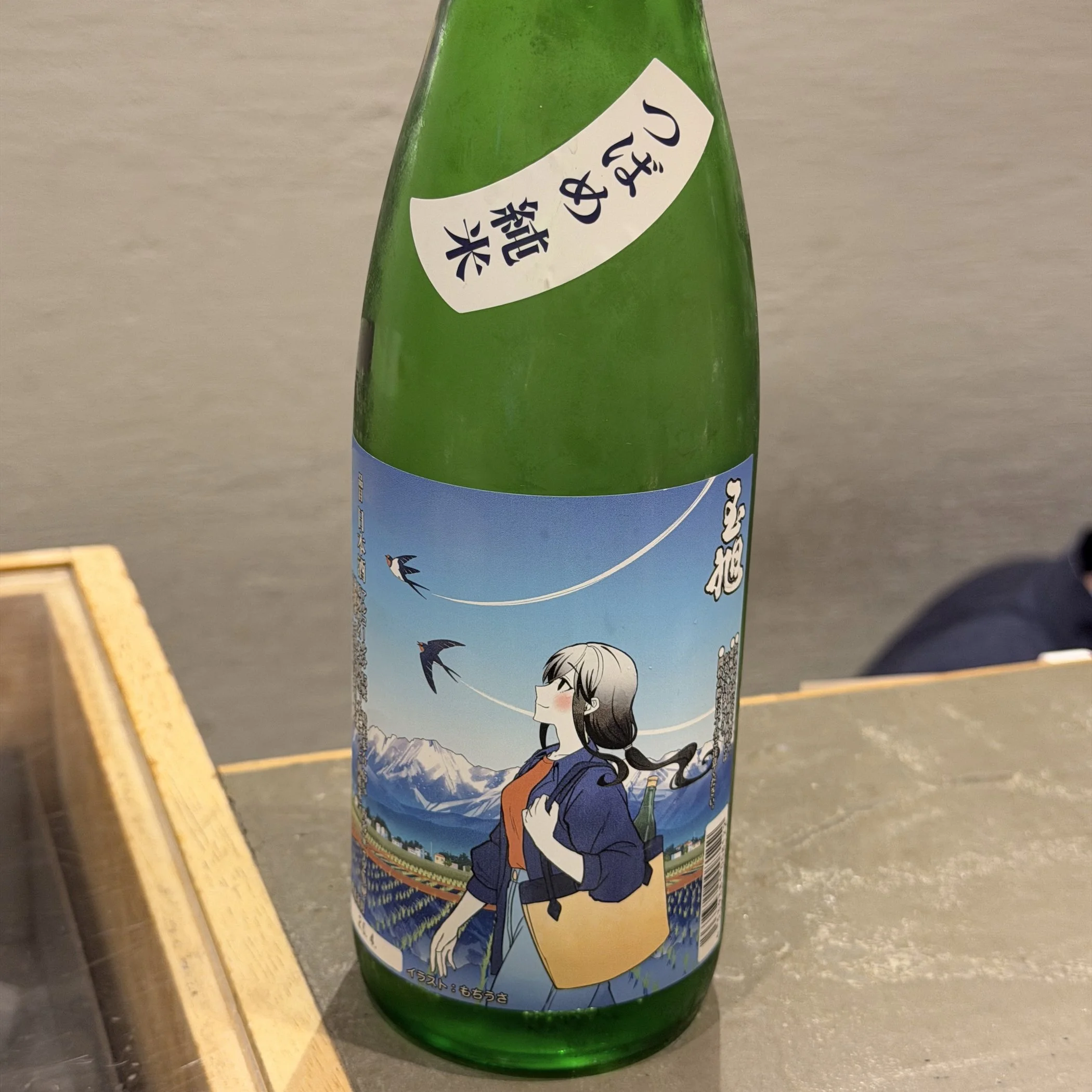
This sake had to be my favorite. Cool label to boot.
This was the second of our two sushi experiences.
Tsukiji Suzutomi Ginza Six
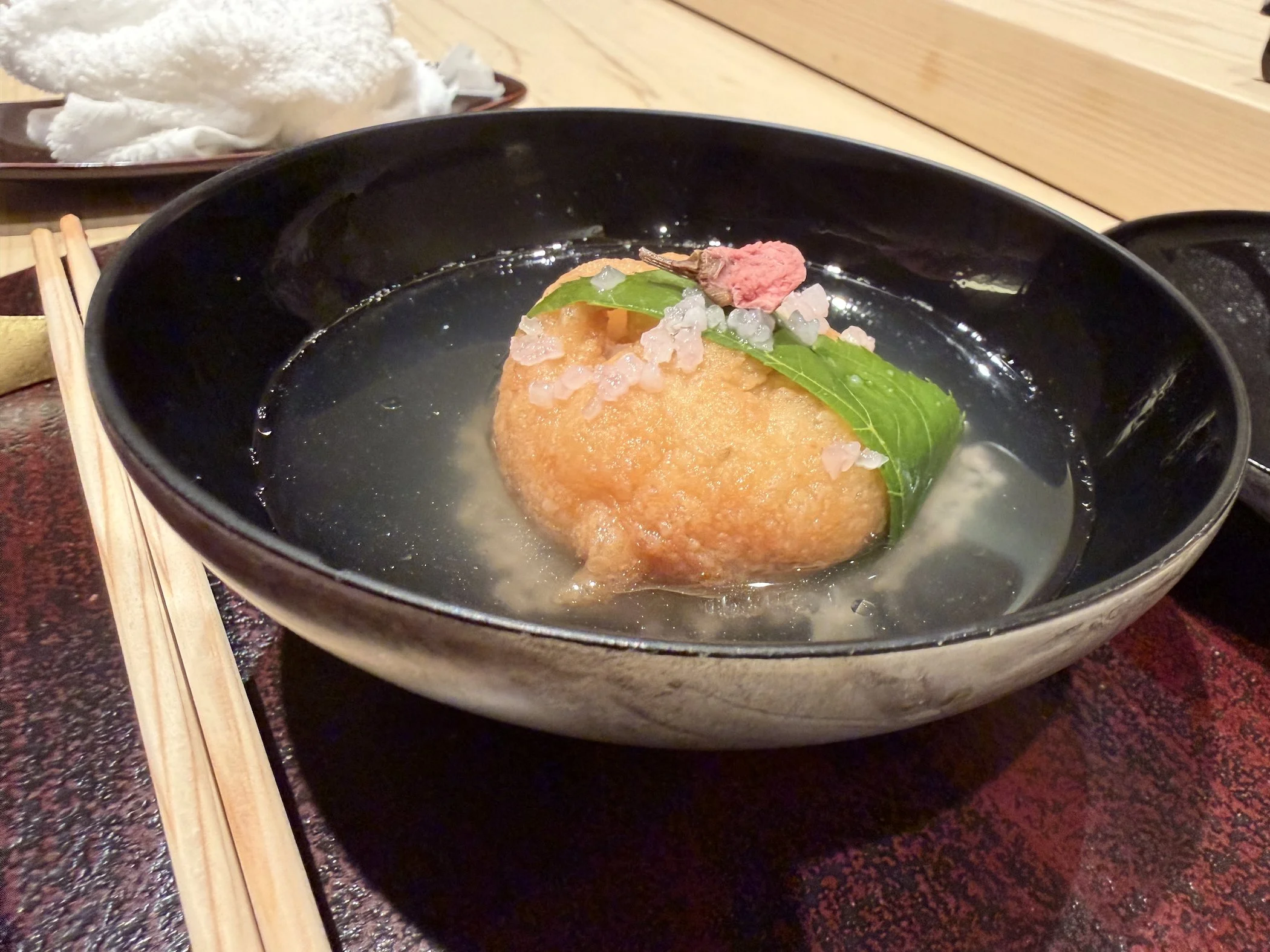
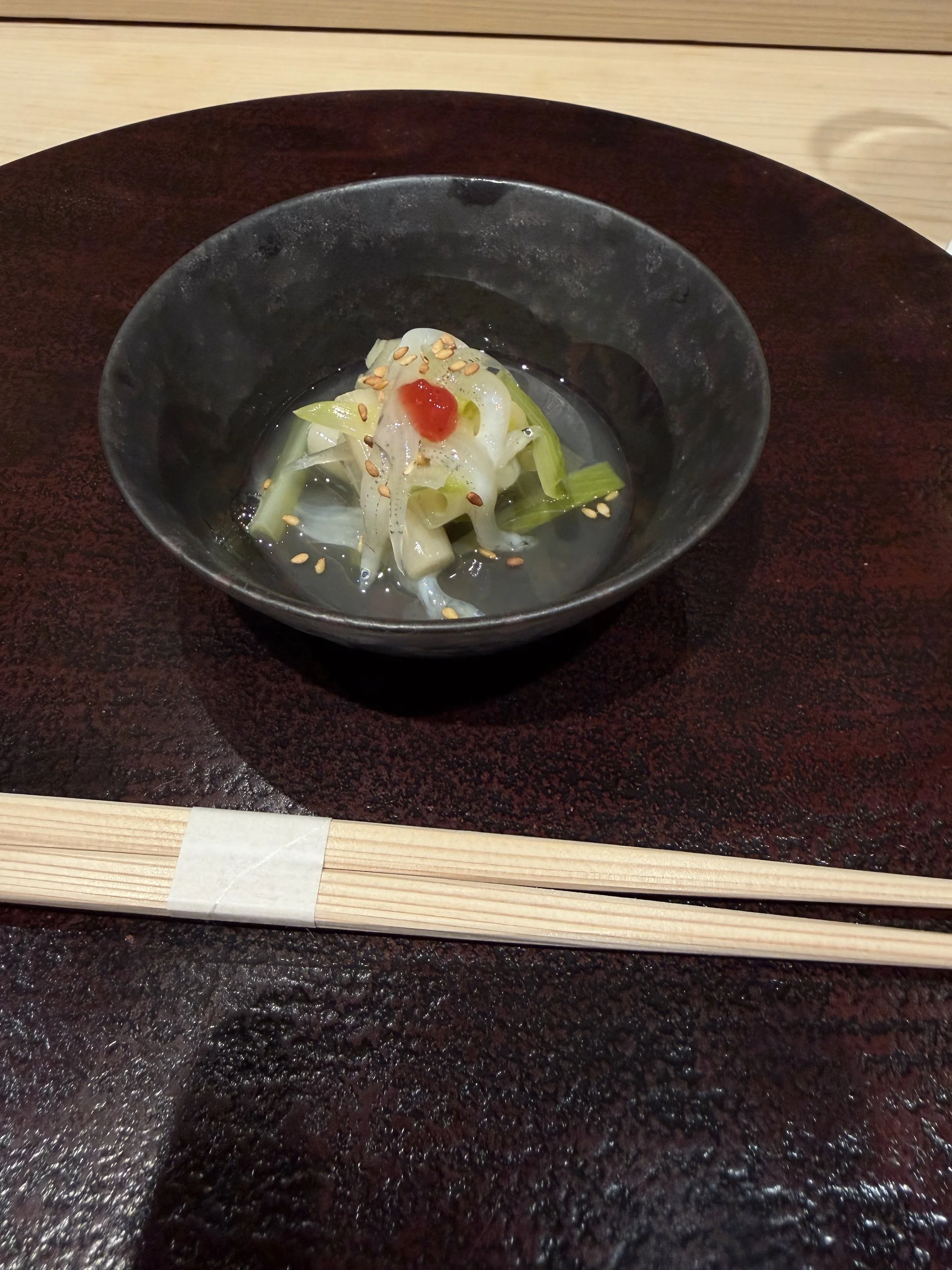
The first sushi experience, in Tokyo, was presented in a private room with the sushi chef who told us he’d been at it for over 20 years, using the knife he’d started with. He showed us a new knife to compare, and it was remarkable how much steel had been removed over time to keep it sharp.
As was the case in the stand-up place, all the fish is kept on the counter, kind of pre-prepared. Then the chef grates fresh wasabi and then cuts each piece in front of you. As part of the meal, appetizers are served before the fish; then at the conclusion before dessert, miso soup and rice are presented, many times with pickles.
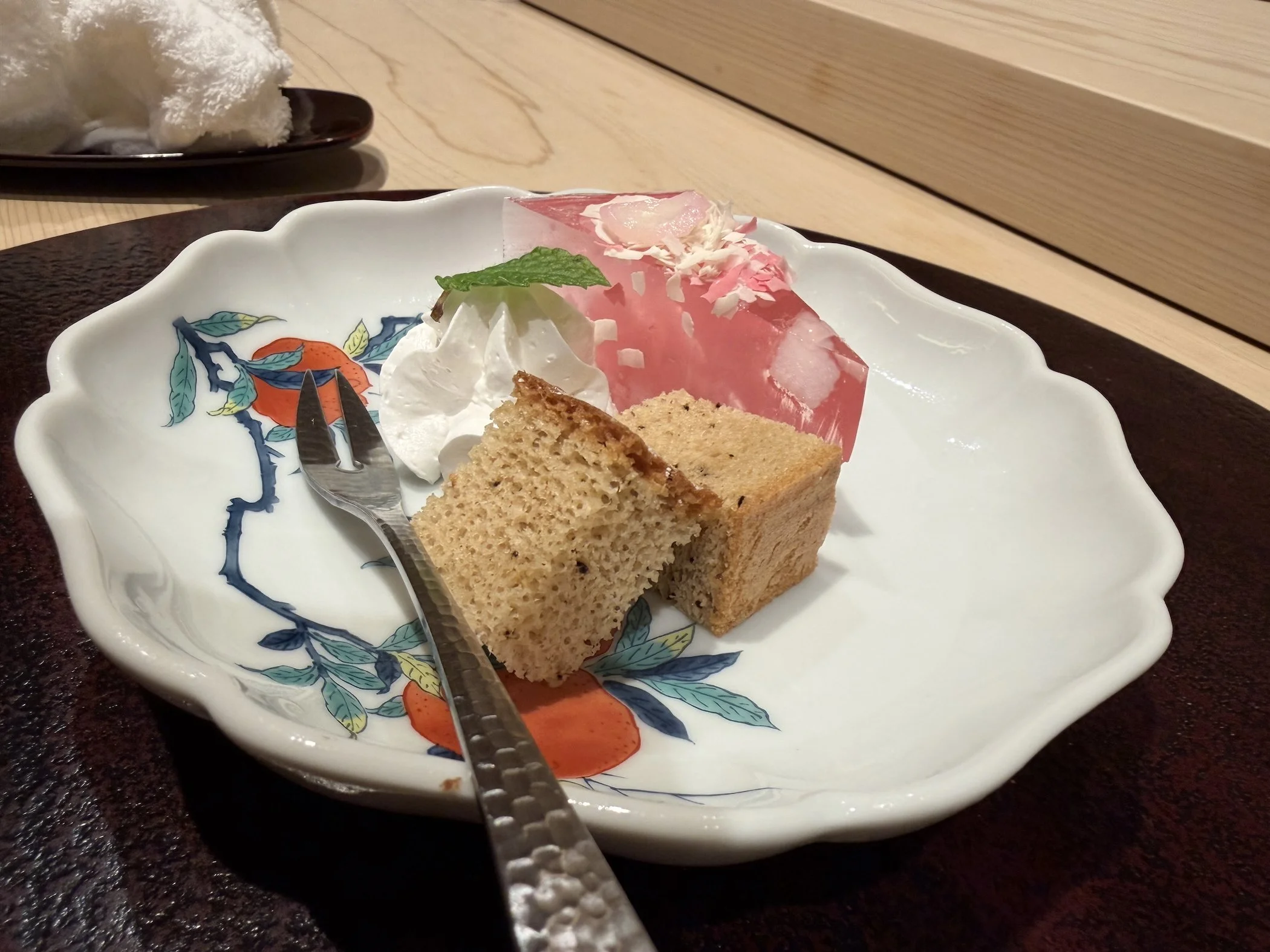
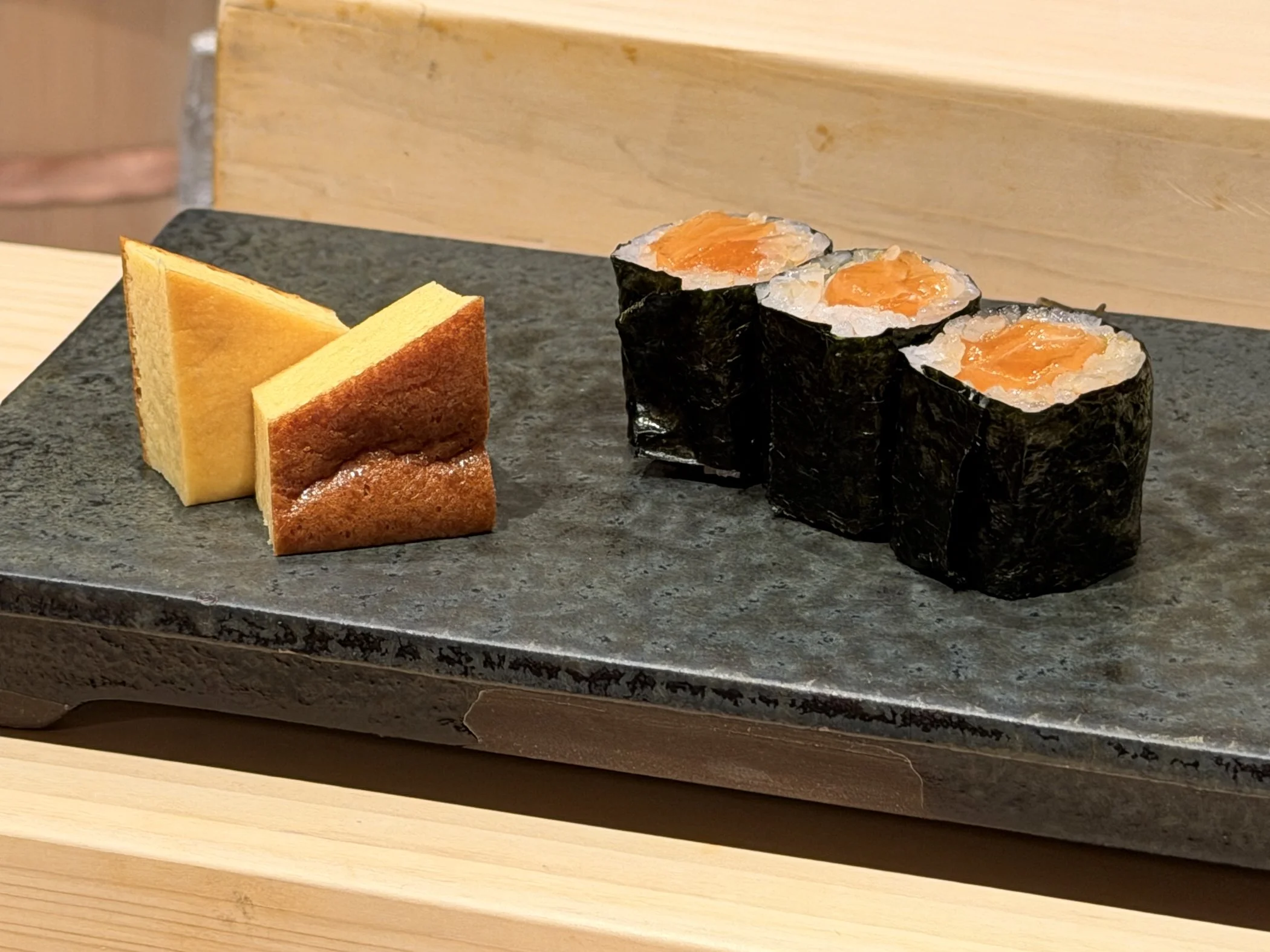
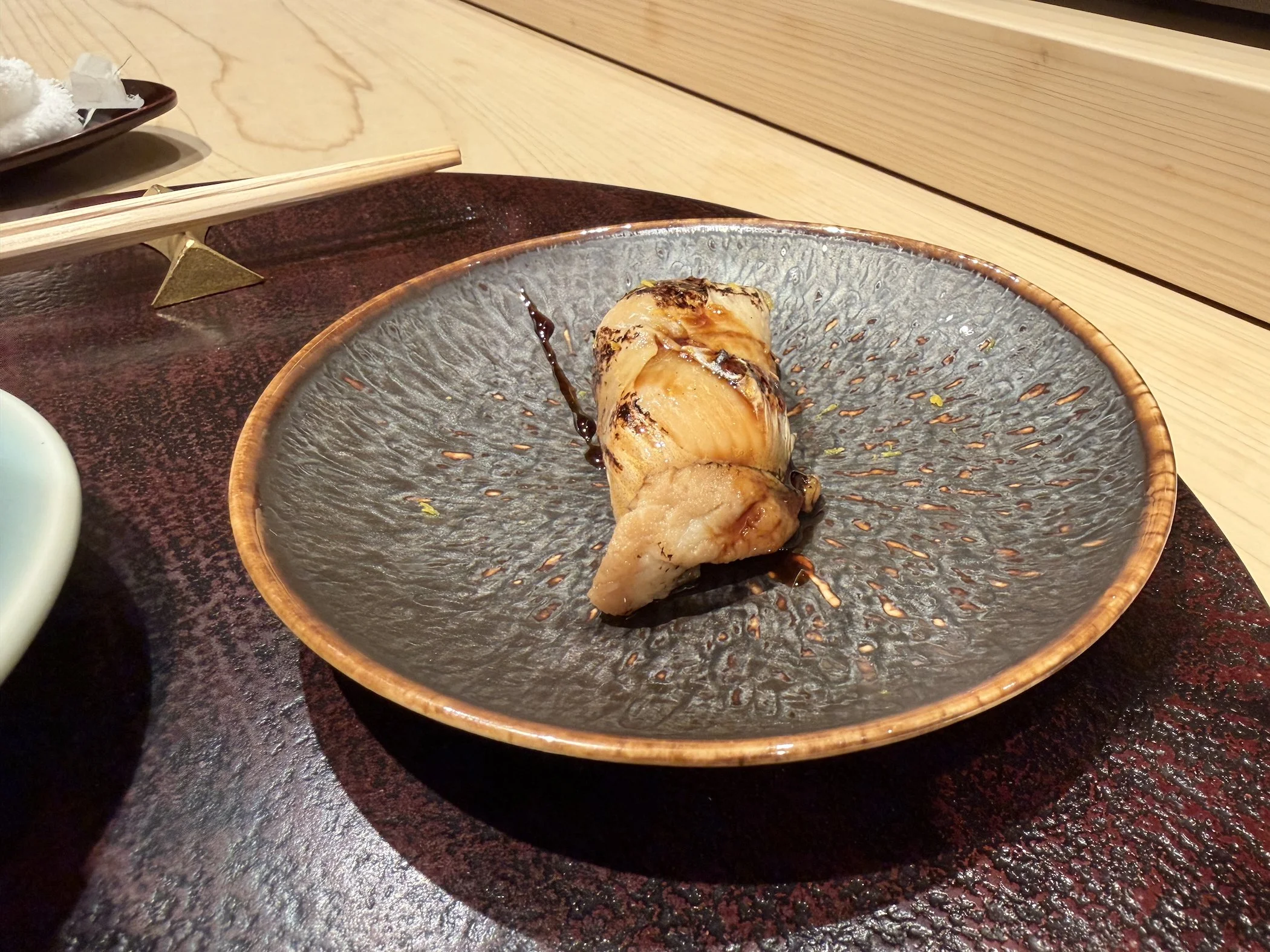
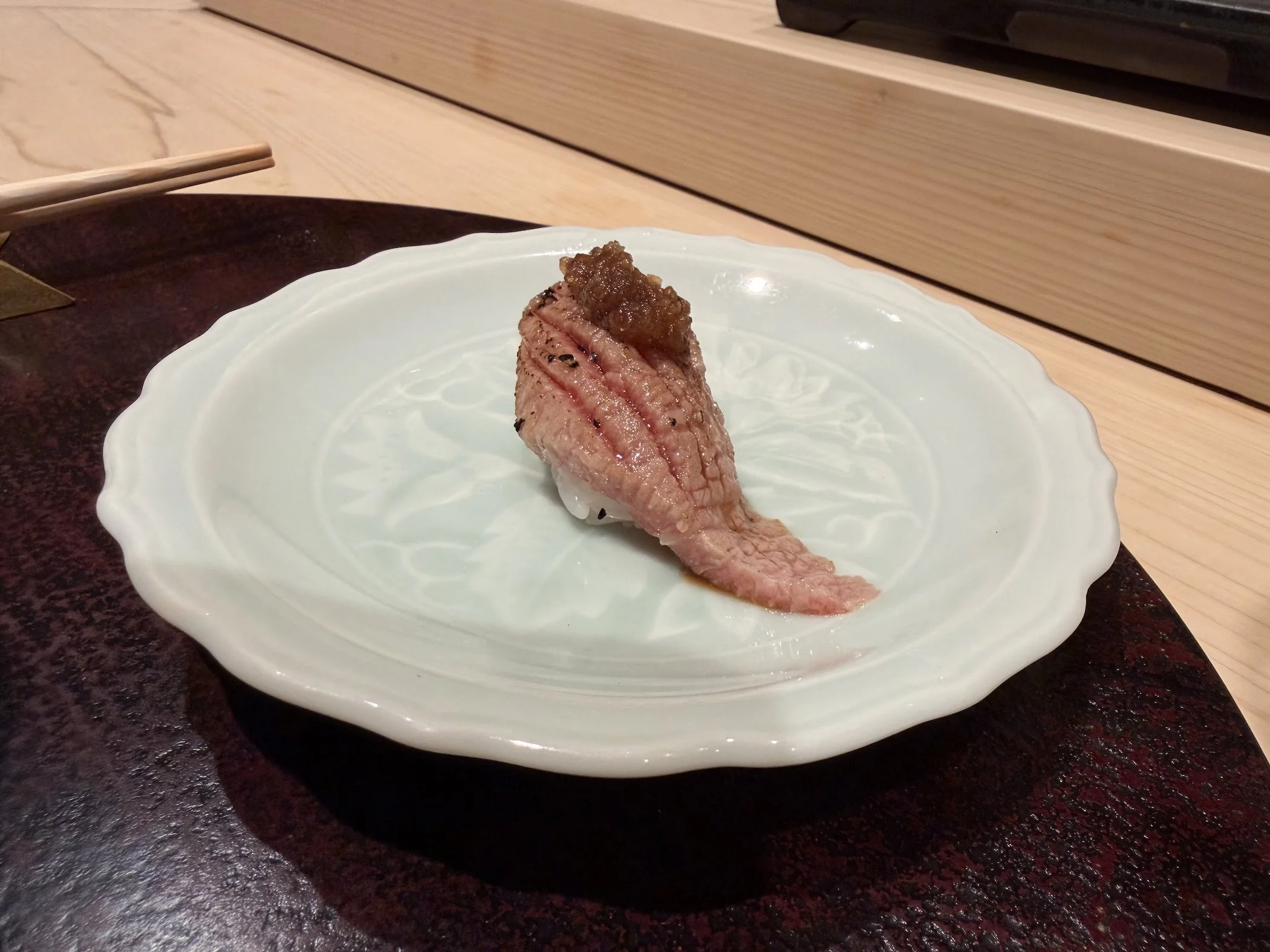
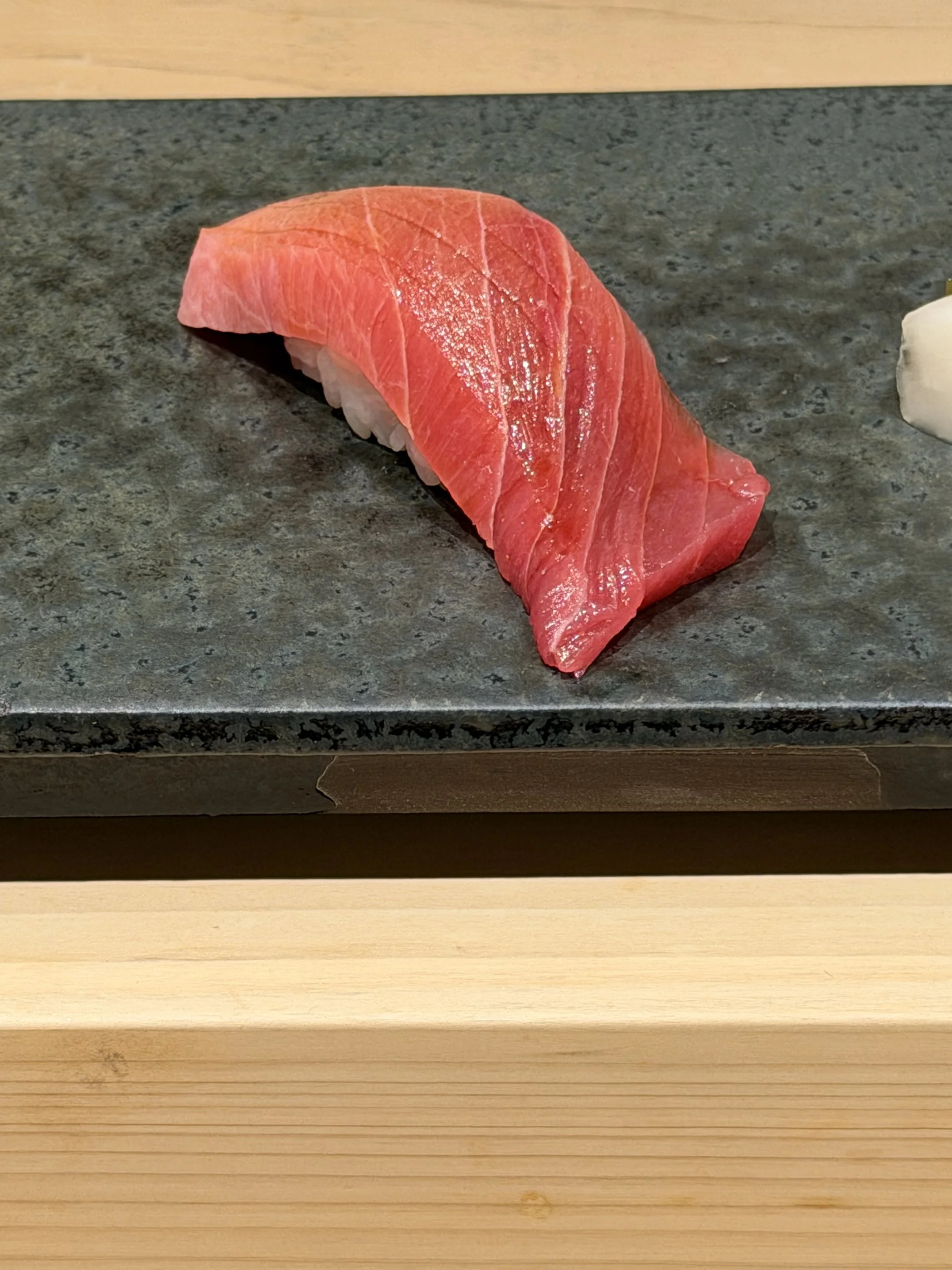
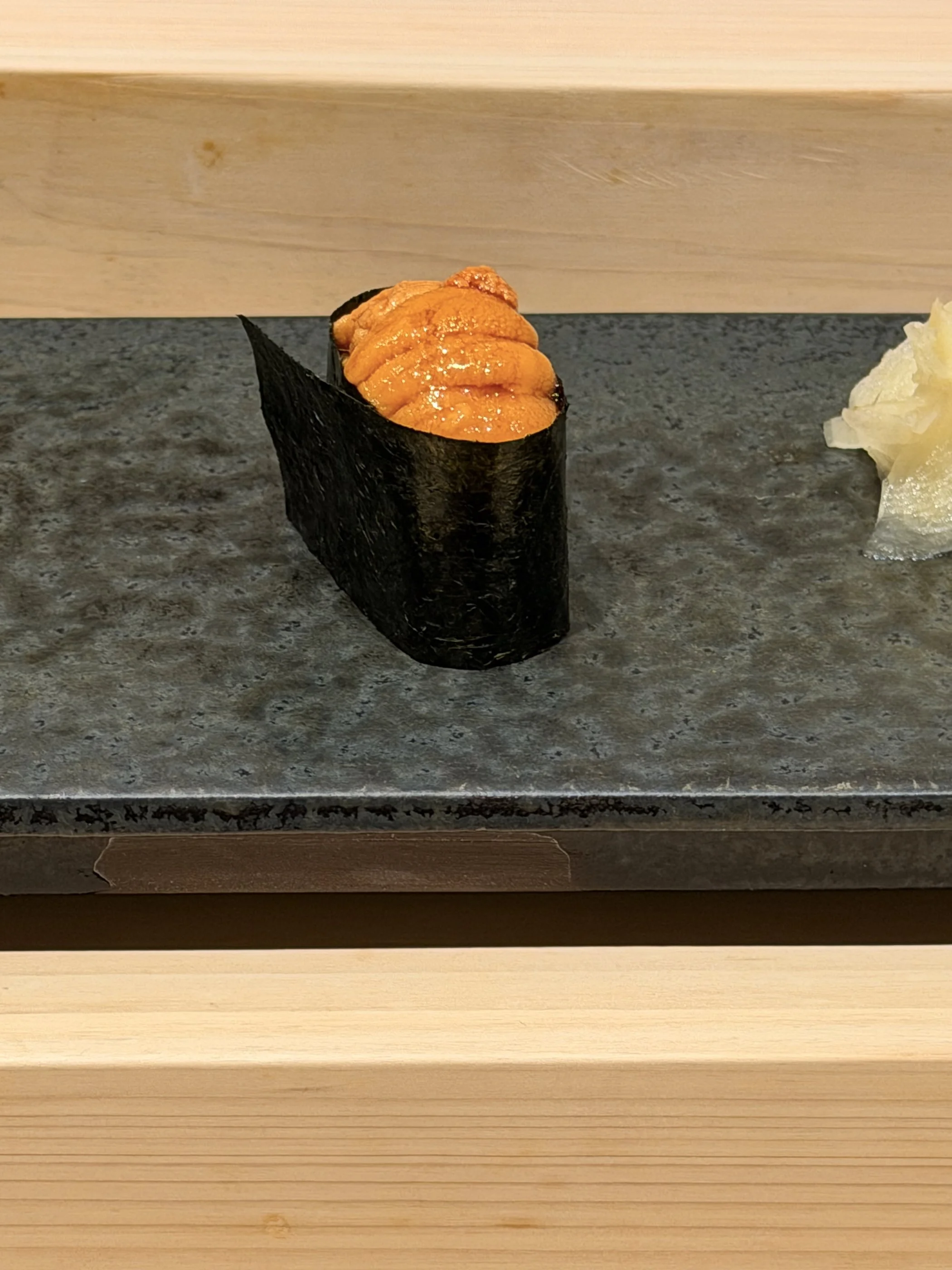
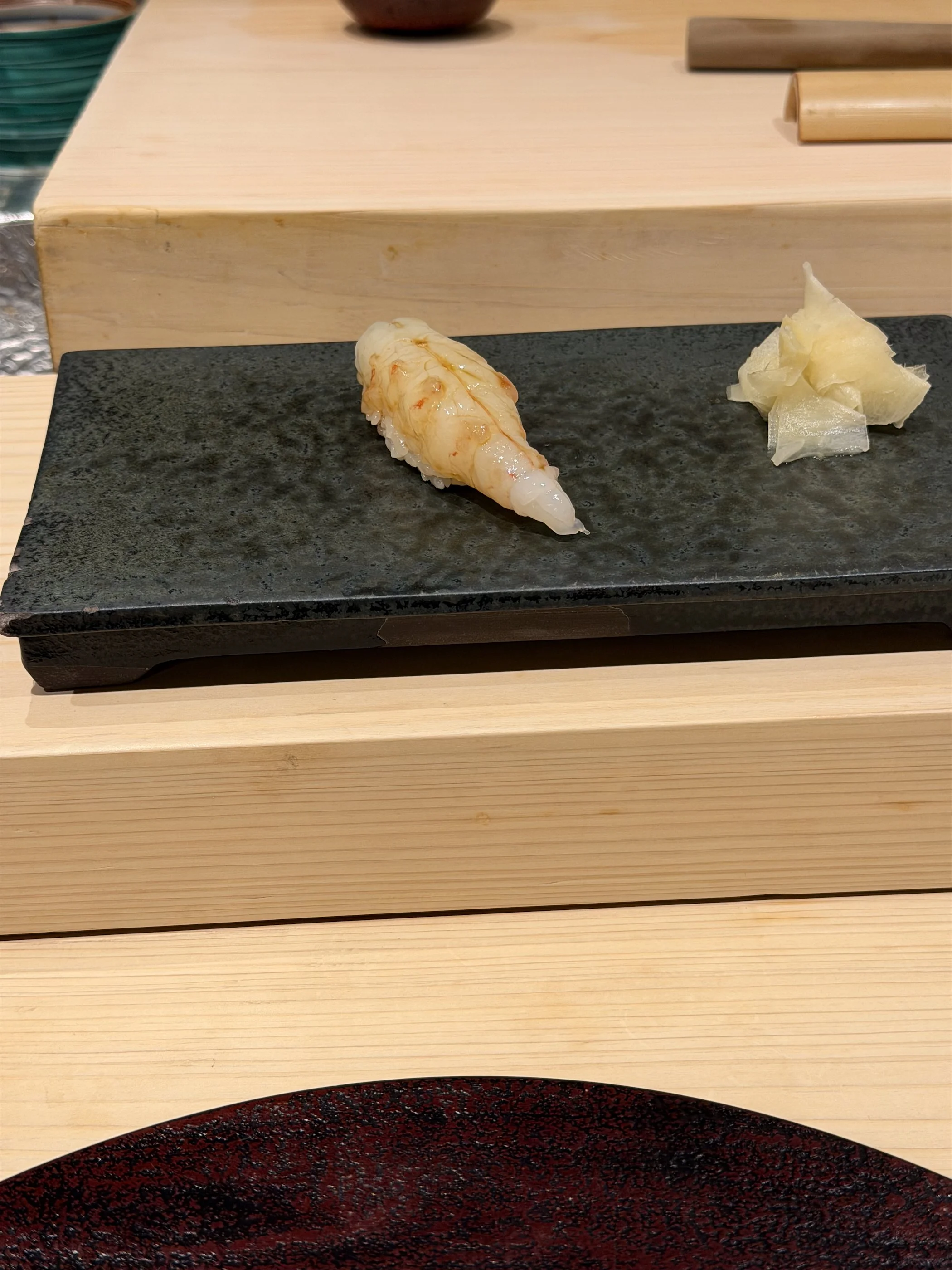
The most identifiable: tomago (egg) and salmon roll.
Final Thoughts
I tried to hit a few iconic styles or types of cuisine: tempura, sushi, ramen, etc. I also tried a yakatori restaurant without cool visuals, just to round-out my experiences. There is so much more that I didn’t get to experience, including street foods. We did walk through the Tsukiji fish market area which I mistook for the Toyosu market, which replaced Tsukiji. Although I had not organized a tour, etc., I might like to do that upon a return trip.
For those who aren’t used to Japanese cuisine, there are many western options across the city of Tokyo. Even in Kyoto, you could enjoy Mexican, pizza, etc.
While I do like food and in my life away from music am a pretty decent cook, there were a few meals/encounters that confronted my biases with food. I kept an open mind and tried them. I’d encourage anyone to do the same.
For those who are attracted to the options chronicled by the Michelin Guide, Japan has a huge number of Michelin-rated spots. Many in the 2- and 3-star categories all seem fixed upon multi-course journeys that I can no longer comfortably endure. While some of the meals featured above were arranged by our hotel concierges, others were booked online. Some resources for finding places and booking include:
Be sure to check your email, as many will try and confirm with you the day before.