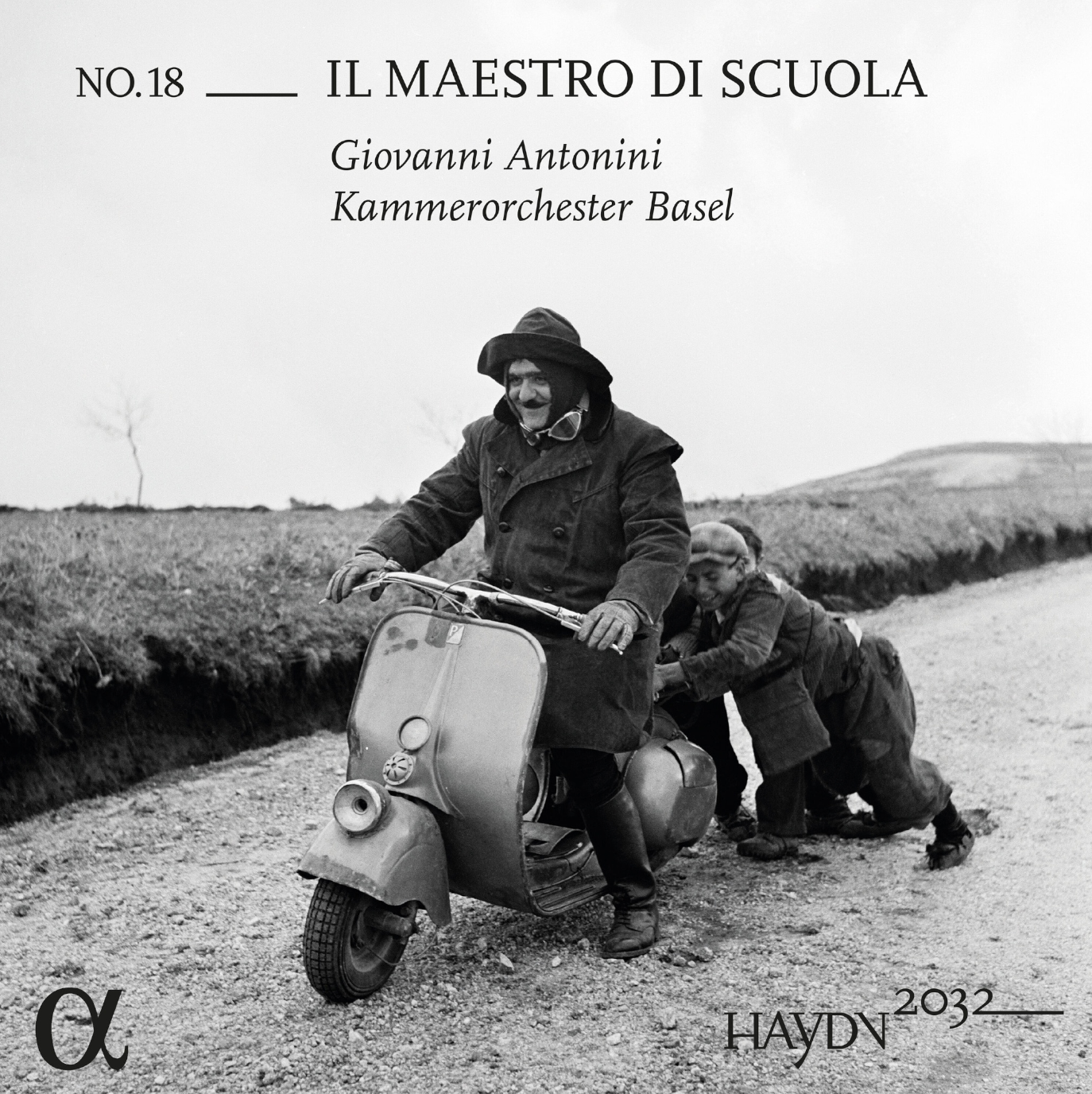
Haydn: Haydn 2032 - Volume 18 "Maestro di scuola" • Antonini
Symphonies Nos. 29, 55 (The Schoolmaster), and 56 belong to the late 1760s and early 1770s, a period when Joseph Haydn was firmly established as Kapellmeister to the Esterházy court and increasingly confident in his orchestral voice. Written for performance by the court’s resident orchestra—first at Eisenstadt and soon after at the newly built palace of Eszterháza Palace—these symphonies were intended for court concerts and theatrical occasions, heard by a small but musically sophisticated aristocratic audience. Their scale and scoring reflect practical realities of court life, yet they also reveal Haydn’s growing ambition: sharply characterized themes, heightened contrasts, and a willingness to play with expectation and wit. These works stand at a crossroads in Haydn’s development, balancing their original function as court entertainment with a stylistic boldness that points toward the mature symphonic language he would later bring to a broader public.
I always like to think about the context for pieces written in the past, and how the function of music then is different from how it’s presented now—through live performances in large concert halls with the lights down, or in our living rooms through loudspeakers, or… yes, on a portable player attached to your head as you walk through town.
From what I recall, these symphonies would have been for private entertainment, enjoyed by a small group of very musically literate listeners, who would have been in close proximity to the performers. They were very used to Haydn’s music and his style. It was only later in Haydn’s career, that his symphonies would have been performed for larger audiences.
As such, I’ll wear my true feelings on my sleeve: I find some of Haydn’s symphonies boring. Take the Andante from no. 29 (track 6): it’s not that the music’s bad. The melody seems to suggest a dance to me, I could see it supporting one or two dancers. But alone? It’s why (I know, I know) I often skip past his slower movements, even after giving them a try.
Antonini does an excellent job at restraining the mood for the aforementioned track.
The outer movements, however for me, are always the exciting parts that I tolerate quite well. I often think I know how things will go with Haydn, but he can also surprise. And this was likely well-tolerated for the audience assembled, he was always playing a game of meeting expectations while also seeking for ways to freshen things, introducing surprises, as it were.
The nickname for the 55th symphony likely refers to the qualities of the second or final movements, a title that was applied later by those who admired the work. The interesting portion for me is the emergence of horn and winds that here is played without peer.
The opening of the recording features the C-major centered no. 56, which features trumpets and drums, signifying a special occasion? The use of the trumpets and timpani were likely additions to his orchestra for a special event or visiting elites. The style is unmistakably Haydn. It’s a festive style that I’d say was likely admired by Mozart.
The recording ends with a single movement in G minor by the composer Franciszek Lessel. He came from Poland to study with Haydn, and as the liner notes point out, he was a favorite pupil of Haydn. His style is all Stürm und Drang, and the connection to this recording is made by Haydn’s own presentation of symphony no. 56 to the student, at the conclusion of his apprenticeship with Haydn.
As ever, Antonini’s traversal of Haydn’s symphonies with both the Kammerorchester Basel and Il Giardino Armonico set a very high bar for the performance of Haydn’s music. I often find Antonini’s sharp attention to detail and dynamics benefits Haydn’s music. Precision is one of the hallmarks he achieves with both ensembles.
This effort is no less impressive. And for me—turning my nose at times to Haydn’s adagios and andantes—he even manages to craft strong phrasing from the melodic material. The commitment is strong. If you compare effort from Hogwood and the AAM in their eighth volume of Haydn symphonies, the Adagio, ma semplicemente from the Schoolmaster symphony feels to me that it might actually stop in a few places. While there are other options out there, I like Antonini’s approach from a historical perspective (like Hogwood’s), but feel he’s a superior interpreter.
I can imagine some will want to purchase the Haydn 2032 set once it’s complete; for those who use streaming, they can enjoy this release right away.