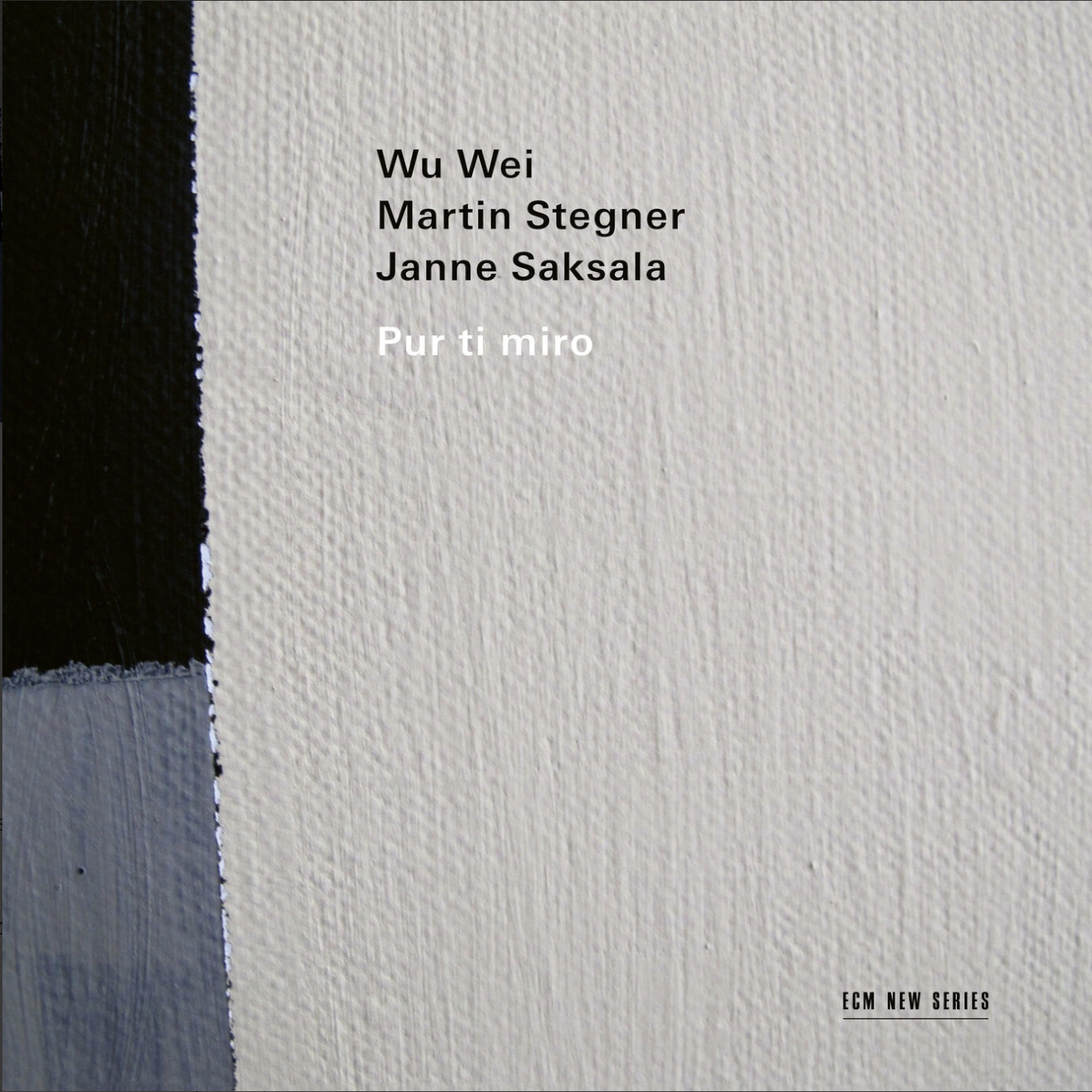
Pur ti miro
This album—albeit short at 39 minutes—is worth your time, bringing together viola, double bass, and sheng. For those who just blinked, the sheng is a traditional Chinese instrument, here played by Wu Wei. You might correctly think of it as a mouth organ, upon seeing one. The one used here has been constructed for the performance of western music.
The music is baroque in conception: Bach, Monteverdi, Vivaldi, and the final piece is a traditional Norwegian tune. Don’t expect an HIPP performance, although the style employed definitely speaks to historical standards.
Vivaldi is represented by his Folia variations, RV 63. The piece shows off Saksala’s dexterity as a double-bassist. The sound of the sheng mixes so effortlessly with the viola and double-bass. The point at which the sheng blasts out chords during the busy bass line, just… yes. This was meant to be. Then the reverie with a high melodic line? So careful, so well-articulated and blended. The viola comes out of the woodwork to a near-oboxious degree by the end, which I think was just perfect.
ECM’s recording is wet, but I was impressed with the bass presence. The album was well-engineered to sound great.
The opening for me was an immediately recognizable piece; Si dolce è il tormento from Monteverdi’s ninth book. The vocal line is started on the viola, which sings above the chordal support offered by the sheng. It’s an opening that prepares you for a new sound world, one that seems naturally fitting, one that should be and has always been, even if we know better. When the sheng takes over and plays against the double bass, it’s bliss. The sheng’s timbre is played without vibrato for the most part which aligns with an historical perspective, even if the viola lays it on, for effect.
The trio offers us both BWV 525 and a bonus movement from BWV 528, the trio sonatas for organ. I have no real idea of how difficult it is to play the sheng, but it’s done expertly here.
The title of the album aligns to the 6th track, the famous aria from Monteverdi’s L’incoronazione di Poppea which won’t be new to most listeners. The trio performs in much the same way; the viola, expressive, adding vibrato at times; the sheng, piercing by also blending with the other instruments; the bass providing great foundational support.
This album is bizarre find, for sure; it’s a true east-west fusion type of experience, one focused on music in three parts, most of the material coming from the baroque era. The playing from everyone is of a high technical standard, the ensemble many times breathing and coming across as one. The timbres are the odd thing, and the result speaks for itself. I want more!