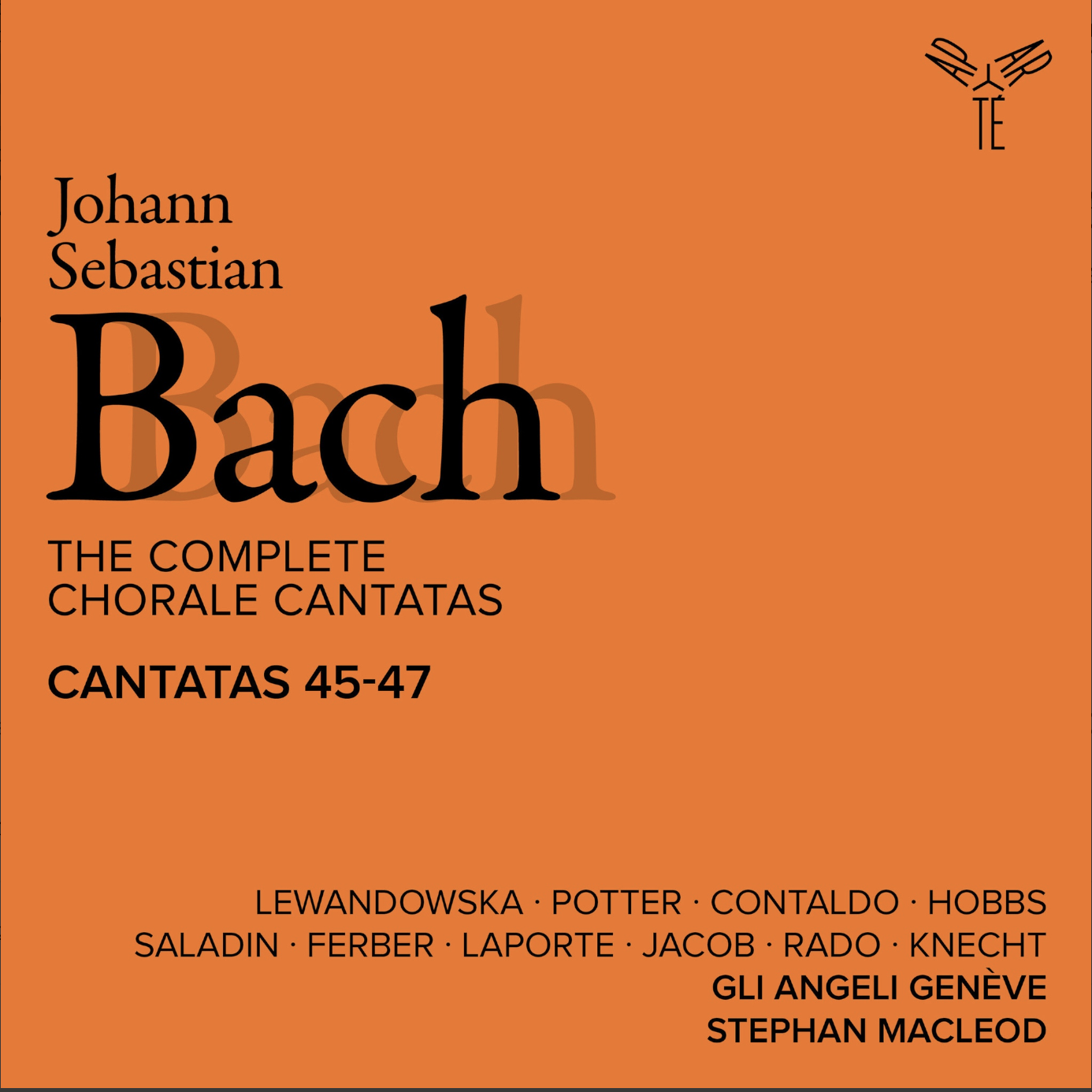
Bach: Complete Chorale Cantatas • Gli Angeli Genève
Introduction
Stephan Macleod’s Geneva-based ensemble recently released a Bach cantata project, one that took over six years to record. The project includes a series of videos, and the 50+ cantatas are available as a box set with a booklet that discusses the pieces for €200.
I’ve been enjoying the set via Qobuz at 96kHz; I may well order the set to get access to the booklets.
The approach here was to not repeat Gardiner’s “pilgrimage” (which King Charles, a backer of that project, loosely references, speaking of pilgrimages in a general sense from his 2025 Christmas message) but to present Bach’s first year of Leipzig chorale-based cantatas, meaning he takes the well-recognized tunes from the Lutheran faith and embeds the theme into the cantata, many times presenting the chorale at some point. This is enhanced with organ pieces based upon the same theme, something Bach himself did, pragmatic of him, as these would have been used in services.
This approach gets us a bit closer to the concept of a liturgical presentation, but not for the purposes of re-creating those services, but instead, to help us appreciate the connective musical thread Bach and other composers of his time saw important to use to link music to function in the context of worship.
Gli Angeli, an HIPP ensemble, were founded in 2005 and have already recorded a number of Bach’s major works involving choral forces. This new project was done with Aparté. The sound across the albums is well-captured, providing us immediacy to the instrumental ensemble, with good balance from the solo singers. The recording delivers well the atmosphere of a church without losing the details; I’d say the result is nearly ideal for this repertoire. Across the set, the amount of detail (of instrumental soloists and especially vocal soloists) isn’t all consistent, but more of the recordings than not offer us this idealized sound.
Performances
The opening recording features O Ewigkeit, du Donnerwort, presented in an organ fantasia, then with the melody alone. This is followed by Bach’s large-scale, 12-movement chorale known by the same melody name, BWV 20. I don’t have details about the size of Macleod’s chorus, but it sounds appropriately sized in the opening choral movement, indicating a performance decision against 1-per-part, but still historically authentic as we’d expect from this group. The phrasing from the upper strings lacks sharp focus, but the blend of ensemble and voices is good.
The tenor aria (track 5, BWV 20) is a challenging one, for Bach isn’t generous for places to breathe. It opens with a dramatic, minor-moded opening. I wanted a bit more drama from the ensemble. Here’s where I preferred ultimately John Eliot Gardiner’s performance, although his speed provides another challenge for the singer when the faster runs come. His ability to pump-up the drama is one of his strengths, (although at times I think he goes too far), and it’s that drama I prefer for this aria.
The performance of the first aria from BWV 2 (track 18), featuring Alex Potter as countertenor, is altogether a stronger effort, both with attention to the style of the music and balance between ensemble and soloist.
One of my all-time favorite arias from Bach’s cantatas is recorded here (track 27, BWV 7) featuring two violins. The voice is in plenty of focus, the violins by comparison are a bit thin; I found these balance issues disappeared as we get deeper into this set.
Within the Cantatas 7-9 set we get a performance of BWV 9, Es ist das Heil uns kommen her. Not unlike other examples in this collection, it’s kind of amazing to think about how Bach opens these works, with something that may have induced toe-tapping from those assembled, while gently setting the stage with the familiar chorale melody with the inclusion of his singers. He manages to combine the new, attractive, and familiar all in one package. The same cantata features a duet aria, combining oboe d’amore and flute, which here has a very sensual presentation, with both singers and wind players stretching to be heard amid the reverb. This recording would have benefitted from closer miking, which was used in the later recordings. The issue kind of disappears if you opt to turn up the volume or use headphones. Without a comparison of other performances I might not even mention this, as the result here, despite me wanting to be a bit closer to the singers, is so well done. Between the soloists, the balance is ideal.
BWV 5 is the first cantata in the set featuring Cantatas 22-24 and the 1630’s tune Wo soll ich fliehen hin. This cantata is scored for a trumpet da tirasi. The first aria (track 5) features a solo viola part, the voice is tenor, a nice match (it may have been for cello piccolo, and is sometimes realized on violin). One wonders if this part would have been played by the Cantor? The subject—being washed by Christ’s blood—is a curious theme for this aria, with both the viola part and figures for the voice giving the sense of “washing.”
The second aria features the trumpet part with bass voice. The closeness I feel we are to both soloists is immediate and the balance with the ensemble, set back, works well.
The last cantata on this disc is BWV 38, and features solo voices in the “Aria Terzetto” (track 25). The trio of voices itself is well-balanced; the number includes a solo part for the organ which for me could have been more up-front. Altogether, I enjoyed this, for how similar the soloists present their lines.
The Cantatas 31-33 volume includes one of my favorite settings by Bach of a chorale tune, BWV 659 Num komm der Heiden Heiland. It opens the disc with a performance by Francis Jacob. This is followed by BWV 62, which the ensemble tightly attacks with a fast opening choral opening. The phrasing of the double reeds right before the singers enter is a nice touch. All around, this was well done, with an excellent tempo.
The second aria (track 6) carries the opening energy in a solo for bass. Gli Angeli plays again very tightly, The unison writing makes a big impression. The singer keeps pace with strong articulation. The balance is ideal for us at home; can’t say we’d get the same treatment in a live setting.
A similar energy is palpable in the performance of the second aria in BWV121 Christum wir sollen loben schon, again for bass (track 22). I am guessing recording may have been made at a different location or time, the tightness of the ensemble isn’t quite as dry and focused as in the earlier cantata; this comment reflects I think the way things were captured, not on the performers themselves. The singing is just as strong.
In the set dedicated to Cantatas 37-39, Francis Jacob sets the stage with a heavily ornamented rendition of Herr Jesu Christ mein’s Lebens Licht. The aria from BWV 58 (track 5) Ich bin vergnüngt in meinem Leiden pits a solo violin against the soprano; the balance is well-done, however the soprano doesn’t have quite the presence that the bass does in the opening number.
An improvisation on Liebster Immanuel, Herzog der Frommen is presented by François Saint-Yves on the organ. The extended piece is followed by a sung version of the melody; it forms the basis for the next cantata, BWV 123. Not a simple melody, I appreciated hearing it like this to see how Bach treats the melody within the cantata, which is a richly-scored one.
The organ solo that prefaces the last cantata, BWV 124, is composed by Johann Ludwig Krebs (KWV 536), a talented musician who had been sent to Leipzig to study with Bach. Its performance is fiery and virtuosic. It’s a great contrast to the almost dance-like opening to Meinen Jesum lass ich nicht, featuring what I’m guessing is oboe da caccia.
The quality of Macleod’s soloists is continued in the performance of the duet aria (track 22) of BWV 124, alto and soprano. The use of a harpsichord in the continuo helps bring bite to the basso continuo, especially at the tempo chosen here.
From the Cantatas 40-42 set, the bass aria (track 5, BWV 3) is deftly performed, with a good tempo; the accompaniment is simple with just a basso continuo line, enhanced with a fuller-sounding organ that is typically used in these recordings. The duet that follows (track 7, Wenn Sorgen auf mich dringen) between soprano and male alto is divine in the way both musicians sing without strong vibrato, leaning into their parts, harmonizing together above the instrumental support. It puts a smile on your face.
The performance of Was mein Gott will, das g’sheh allzeit by Francis Jacob is satisfying in the way the recording captures the organ sound, with the pedal part filling the room with the warmth of the organ’s lower register. His registration clearly exposes the chorale tune, as we would expect.
The opening of BWV 14, Wär Gott nicht mit uns diese Zeit features the full chorus; the ensemble is well captured with the precision of diction, which is appreciated.
The following aria features an usual horn solo; at first I thought it was a trumpet, but Bach calls for a horn at a high register. The piece’s theme is wrapped around us needing God’s help to find our way. The double aria for two basses is accompanied by two oboes; as with the horn part, the oboes are in good form.
The final chorale’s performance includes interjections from the organ; one could imagine Bach in this element here.
Conclusions
Performing Bach’s cantatas like this over a multi-year period makes sense for an audience—the high quality of Bach’s writing should be exposed to more music lovers. This recording surprised me in so far of the already saturated availability of recordings of Bach’s cantatas. And if you are a collector, you may already have the likes of these pieces from the previous efforts of Harnoncourt/Leonhardt, Koopman, Gardiner, or Suzuki.
That said—there is room for more interpretations. I found these as a set to have some benefits over some of Suzuki’s and Koopman’s in terms of the sonic presence these recordings offer. Be warned, however, that the entire series doesn’t offer these sonic benefits, although I can’t say any of the recordings were deficient. Just some better than others.
I can’t speak to the utility of the box set and what comes with it, as I haven’t yet purchased it myself; but based on my traversal of the project through what’s now available at least at high-resolution on Qobuz, this is an attractive set. I say this because I value the organ performances that accompany each disc; you may not want to hear the performance of each chorale melody each time, but these can be programmed-out.
Overall, this a well-performed set that benefits from strong tempo choices, a consistent, and well-matched set of soloists, and when instrumental solos come to the forefront, they were each done with excellence.
If I was a collector just getting into Bach’s cantatas, this set offers a more feasible number of works that other complete sets may do well to overwhelm the newcomer. There may be examples you’ll find where you find preference in other recordings, and while I mentioned some of the big names with completeness in mind, there are of course other collections of Bach’s cantatas, smaller in scope, that also provide counterpoint, whether its from Herreweghe, Belder, Spering, or the project by the J.S. Bach-Stiftung.
I’d very much have liked to have participated in this ensemble’s live concerts in and around Geneva. Alas, for those of us that don’t live there, there’s now this set. I will continue to dive into these recordings, but based upon the examples provided here, there are far more strengths than weaknesses and some of these are in the high-quality recordings that grace many of the volumes in this set.
For those who can’t get enough of J.S. Bach, the choice, I think, is easy. This new set offers value in the combination of organ pieces that align to each cantata, many excellent recordings in terms of balance and transparency, and the strong consistency of soloists.
Finally, for those who are clearly interested in the use of chorale tunes, the videos that are available on the orchestra's website are a value-add, and enhance our understanding of Bach's use of these melodies within his compositional framework.
Update
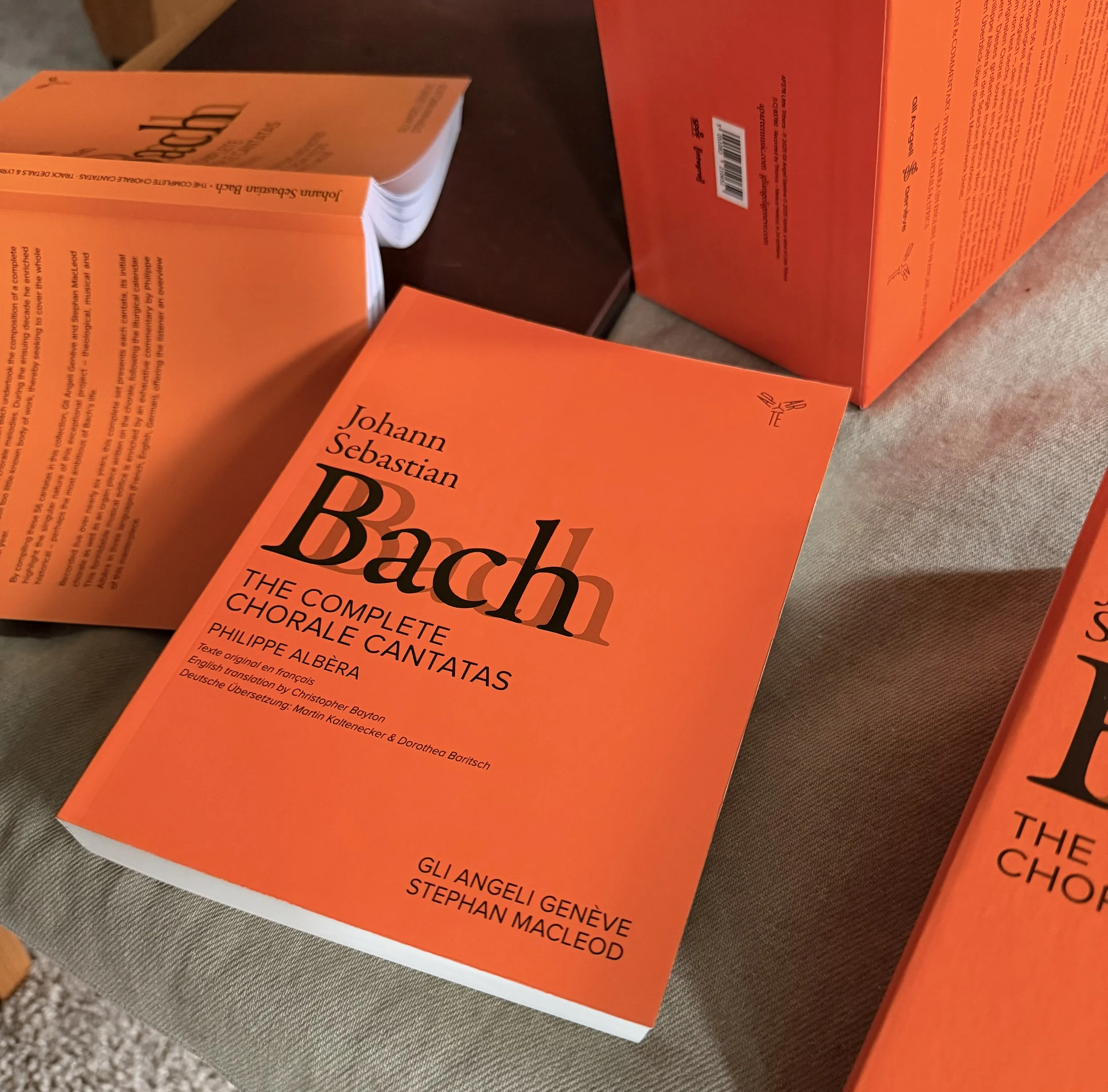
I found a slighgly better price for this set from JPC, the German music retailer. The commentary in the larger book is great, providing background to each of the cantatas and the context for which they were written. The other book is a bit less useful for me (an English speaker), with the cantata texts only provided in German with a French translation. The book notes that English is available through their website. Up to this point, I've been making my way through the German and depending upon my limited French to get through.
For those interested, the translations are not provided as a PDF or on the web, but embedded alongside the videos for each cantata (see an example here). This makes sense for considering the publication as videos as they've done; the videos become a great learning resource. But I don't really want to watch the videos, I want to listen via Qobuz in high resolution.
Had I understood that the translations weren't going to be in the box set, I would not have ordered it. While having the CDs is nice, I'll primarily choose to listen to these recordings via streaming. English-speaking buyers beware: for access to the texts, we only have their website (and for how long?). But the box set will net you the commentary. The binding on the books and quality is good now; I can't say how they'll hold up after repeated listening sessions.