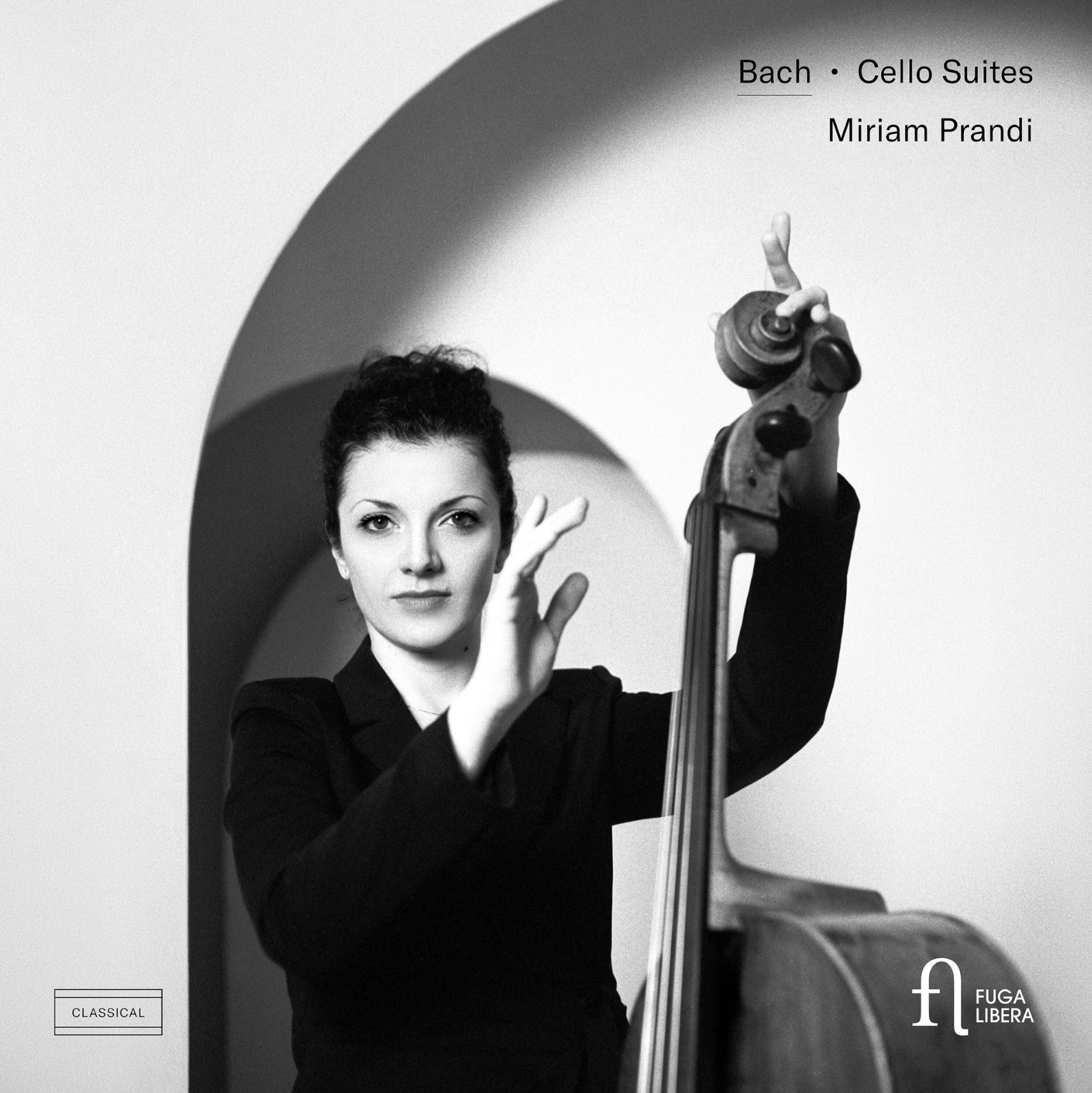
Bach’s Cello Suites • Prandi
I recently saw that Yo-Yo Ma made an appearance on Colbert’s Late Show, performing the opening prelude to BWV 1007 and also performing Over the Rainbow. Maybe not his strongest performance of the Bach, but the part that resonated with me came in the YouTube comments. These didn’t come from the types that probably read these reviews, but represent a more randomized group of the general, if not left-leaning American public. I lost count easily as I scrolled down on my phone, at the number of people who admitted the performance brought people to tears.
Ma is how I came to know the Bach cello suites. Credit goes to my eighth grade English teacher, Mr. Bascone, for engaging me in discussion about Ma’s recording, which he admitted he listened to on his Walkman while working out on the elliptical machine at his gym. I’d purchased the 1984 CBS Masterworks version on CD for myself, when few period performances were available at large.
This recording, like Ma’s 1984 edition, is played on a modern setup on a baroque-era instrument. I felt a strong impact of Ma’s exploration of period style in his second release of the Bach suites; I detect the same here with the performance of Miriam Prandi. She probably plays with more rubato than a period cellist may feel is appropriate, but if you’ve read my review of Gordis’ recent Bach album, I am a fan of using rubato in Bach’s music. The Courante from the first suite is as good a place as any to take note of her approach. Her Gigue from the same suite, for me at least, shows some influence of period style with her articulation.
Within the liner notes Elizabeth Wilson writes:
In all this Miriam has also developed a very free approach to the rhythmic aspect of Bach’s music, allowing phrases to stretch into long lines, and where harmonic emphasis gives reason for rubato. Yet in all this she never forgets the underlying structure, where polyphony is implied but never becomes dense, where virtuosity is always secondary to the narrative. Her interpretation may put us in mind of certain of Bach’s arias and recitatives in his great choral works, or equally of the figuration of his keyboard works.
Listen to the Allemande from the second suite, BWV 1008, and the effect is nearly effortless, she seems to capture the shape of the phrases perfectly, leaning into the music with confidence, leaving us in a place where the affect of the music feels maximized. I wanted more bite and articulation in the Courante, but speed and energy is on point for me. I know no movement better than the second suite’s Sarabande, and in this movement, I think Prandi’s tempo is perfect, her respect for the mood of this piece palpable. Within the Gigue she does some interesting things with dynamics, and while I don’t naturally hear it this way, the result for me works musically. The use of rubato done again with the intent to maximize the impact for us.
As I have no doubt mentioned in earlier reviews of Bach’s cello suites, I take special care to examine how cellists perform the Gavottes from the sixth suite. The pair has a particular sound when played upon a four-stringed cello which I think lend them a tragic vibe; Prandi’s use of rubato alongside her slower tempo make for an interesting interpretation. It dips into getting a bit romantic for my taste, but I like the creativity she applies nevertheless.
If Bach had a mean or angry side, it comes out in the C minor suite, BWV 1011. Prandi makes use of her acoustic environment to blend things in the performance of the suite’s Courante. This dance showcases some of her creative touches; listen to how she ends phrases here, clever! I also really like her phrasing, maybe not “period” in style, but it works for me in the Gavottes.
I let this album play multiple times as I was engaged in preparing for a dinner party this weekend and came to really enjoy it. Clearly Prandi is master of her own style, but it’s always in service to the music, which I can respect. While I likely won’t put this ahead of my favorite recording by Pieter Wispelwey, this one offers many fine details, played with great technical and emotional skill, that I think many will find pleasurable.