Electric Counterpoint • Redžepagić
One of the central ideas explored in Steve Reich’s music has been to ask a performer to play with themselves, using tape. If you’ve used a digital sequencer (software, or earlier, when they were stand-alone devices), the idea doesn’t seem that interesting. One of Reich’s ideas was to take the same music and to push it out of phase. Hence, we have pieces like Piano Phase where the mismatch of the same phrase combines in a curious way.
These conceptual pieces focused on phase—while interesting—I never found to be ultimately satisfying as music. In other words, the concept doesn’t scale at the same satisfying way in larger forms. You could say that other composers long before Reich had explored this, through augmentation or diminution.
In Electric Counterpoint, first performed by Pat Metheny, Reich composed a piece for multiple voices, a solo guitarist joined by themselves on tape. This piece has been as popular as it has, I think, for two reasons: it features an instrument that a lot of people enjoy, even out of “classical” circles, and that it starts with good invention. Bach’s own 2-part inventions are only successful and enduring because he chose good source material. His fugues are much the same, they’re good not only because of his ability with counterpoint, but because he chose good themes as their subjects.
Reich organizes the piece into three movements: Fast, slow, fast. Among the three, for me, the last is the superlative effort. Part of the reason is how his different themes come to change harmony over time. It’s the perfect example of taking something that’s on the surface is very simple, but once combined, takes on special complexity. All the while, however, the recognition of the repeated figures helps orient us in a perpetual journey forward.
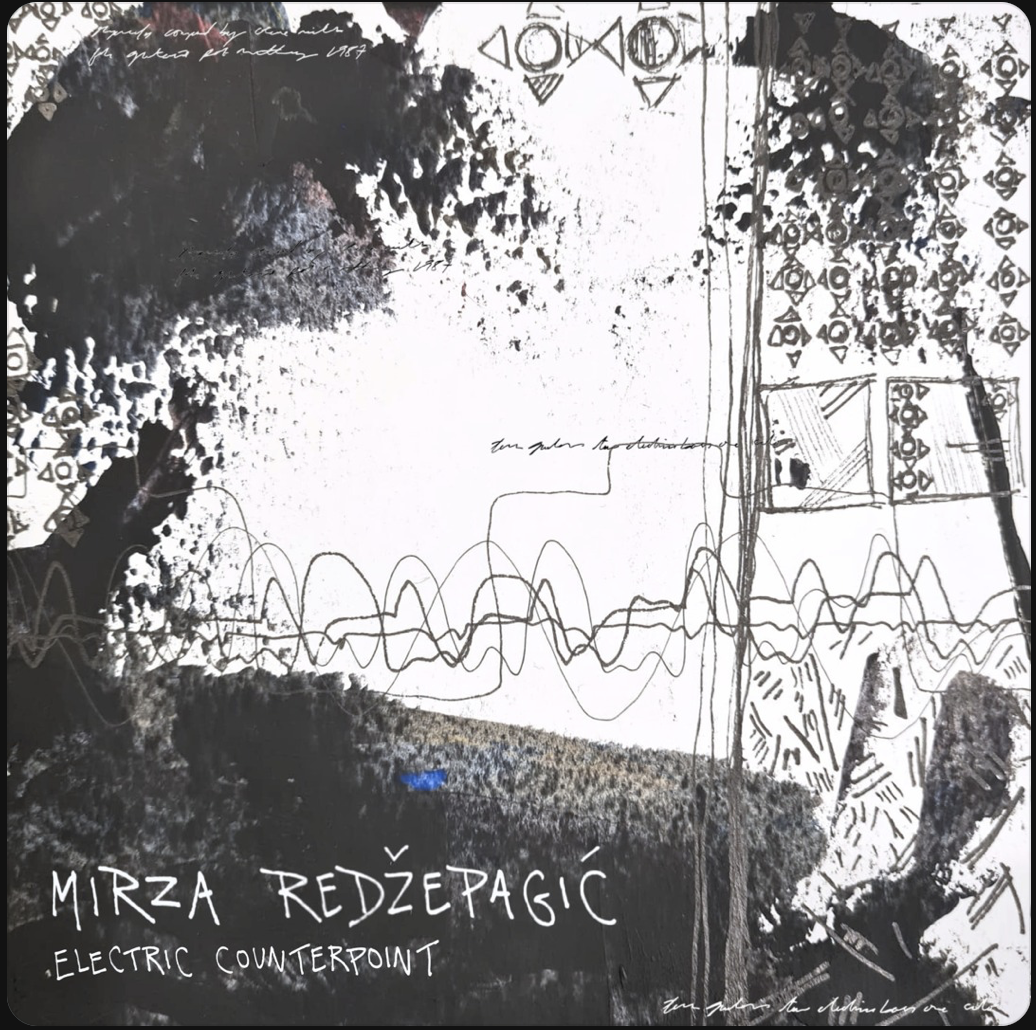
Mriza Redžepagić has recently recorded the work on Rekord and will be released this January. While I will always have an affinity for the original recording by Metheny, I have enjoyed seeing how other performers have approached this piece, varying the sound, or even performing on different instruments for more tonal variety as the piece builds. One of the effects in doing so is to introduce slight mis-tuning, which gives the resulting harmonies special color. I can’t say if that’s what I’m experiencing in Redžepagić’s recording, or if it’s chorus, but by the end of the third track the detune effect is quite interesting.
The piece opens with repeated figures that give a sense of texture; these come back in the other movements. The visual that comes to mind to me is a big drill that oscillates as it punches a hole into the ground, it requires a kind of crescendo to decrescendo effect, which Redžepagić handles well.
The higher part in the middle movement, which repeats the same sequence of chords, has a lightness to it that I liked in this performance. The piece seems to me best suited as background music, set at helping us gain perspectives as the world moves around us. Redžepagić does well to keep that vibe going.
Altogether, this is a strong effort from a young artist who has already established himself on multiple instruments, having started at age 8 on classical guitar. Among his specialties is flamenco. This release showcases his versatility and stands aligned to Reich’s strengths, in alignment with those recordings that have come before it.