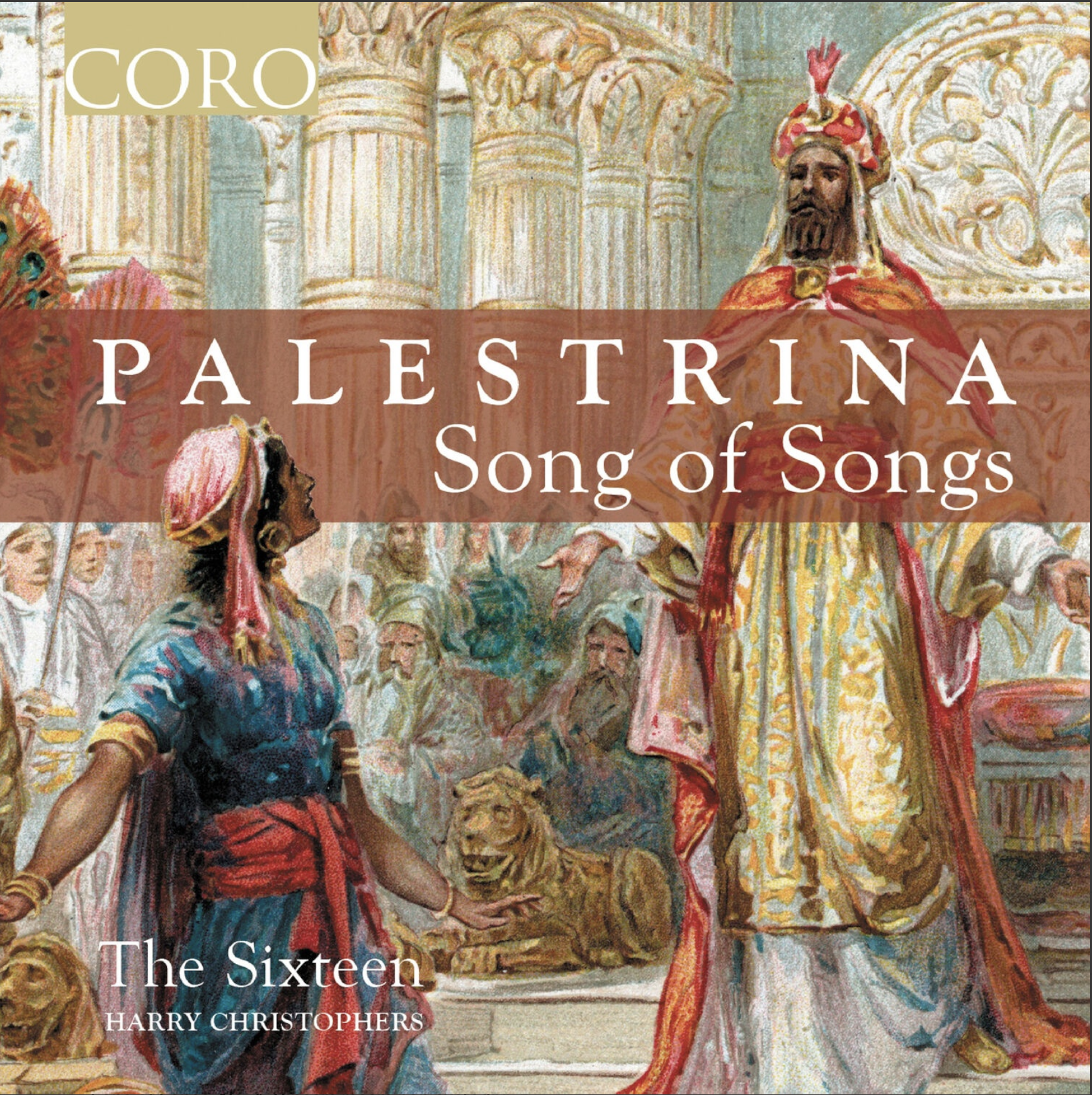
Palestrina: Song of Songs • The Sixteen
Giovanni Pierluigi da Palestrina's fourth book of motets (1584) sets poetry from the Old Testament as five-voice works, SSATB, SATTB, and SAATB. Also known as the Canticum Canticorum, the poetry is thought to be an allegorical representation of the relationship between God and the faithful as husband and wife (Wikipedia). Palestrina represents the Roman school of late Renaissance music, remembered primarily, through Fux, for his style of counterpoint.
During the composer's time, motets such as these were likely sung by smaller all-male choirs, featuring boys in the soprano parts. The music would be performed by multiple people using a shared book. Modern performance practice, especially with historical approaches, has embraced a one-voice-per-part texture; as beautiful as that can be, it isn't historical, at least for Palestrina's known practice. However, there is debate about the performance of these works and we cannot fully eliminate the possibility of these being sung one-per-part. (Isn’t performance practice an interesting science!)
This album by The Sixteen, a choir made up of females and males, combines performances from earlier recordings made between 2011 and 2025. Most were made at St. Alban the Martyr in Holborn, with St. Augustine's Church in Kilburn and All Hallows' Church at Gospel Oak, London, rounding out the collection. Harry Christophers leads, with the ensemble's usual finely balanced sound.
The recordings give us a realistic impression of the churches, with just enough detail while clearly emphasizing the acoustic environment. The liner notes mention the use of performing editions prepared by Bruno Turner, who conducted Pro Cantione Antiqua (PCA) in a recording of the works for Hyperion, released in 1994. The all-male ensemble, headlined by James Bowman, conveys a very different sound from this newly curated edition by The Sixteen. I can't say I enjoyed the Turner recording as much, with the strident, vibrating sound of the countertenors.
My introduction to the collection came by way of the Hilliard Ensemble's recording on Virgin Veritas, in a second release in the 1990s. The intense singing style that PCA used is gone in the Hilliard's recording, with the distinctive high register led by David James, whose voice I enjoy, alongside female singers who join the usually all-male ensemble. While very clean, both of these recordings lack the fuller choir approach known to the composer.
For my taste, the edition released by Akadêmia (Pierre Verany) brings instrumental support, a one-per-part texture, and female sopranos. Their approach is sonically rewarding, although they don't cover all 29 motets. I also can’t verify their approach with instrumental support is historically authentic, although for some listeners, they may see this, along with the clear vocal style a real advantage.
My other go-to ensemble when studying Palestrina's works in college was the Tallis Scholars, whom I got to hear live many years ago at the University of Richmond. While their numbers vary, their sound to me has been a bit thinner than that of The Sixteen. Except for the use of female performers, The Sixteen, while very much entrenched in a British choral tradition, might most closely approach the sound known to Palestrina, at least in the number of performers. Alas, the Tallis-named ensemble hasn’t released this collection on their Gimell label.
For me, Palestrina, and especially this set, is best enjoyed two different ways. First, in terms of texture and the pure style of modality that was typical for this period. However, taking the music at its sonically interesting face value ignores the treatment of the texts and his famous style of writing in counterpoint. For that level of detail I'd get a score and spend time with a few of these to better appreciate the way he composes against the opening line.
Even despite the use of different locations and the curation across many years of recordings, The Sixteen is consistently well blended and succeeds at the first way of hearing the music. For those who want to dive deeper into the composer's treatment of the text, this recording will be more challenging, although headphones can help.
For those of you who don't already have one or more recordings of these works, this may be one of the better on the market. Though it isn't historically authentic, I still enjoy going back to my Hilliard copy, which is not only clearer for recognizing the text, but somewhat nostalgic, given the number of years I've owned it.