Telemann: Double Concertos and Ino • Florilegium
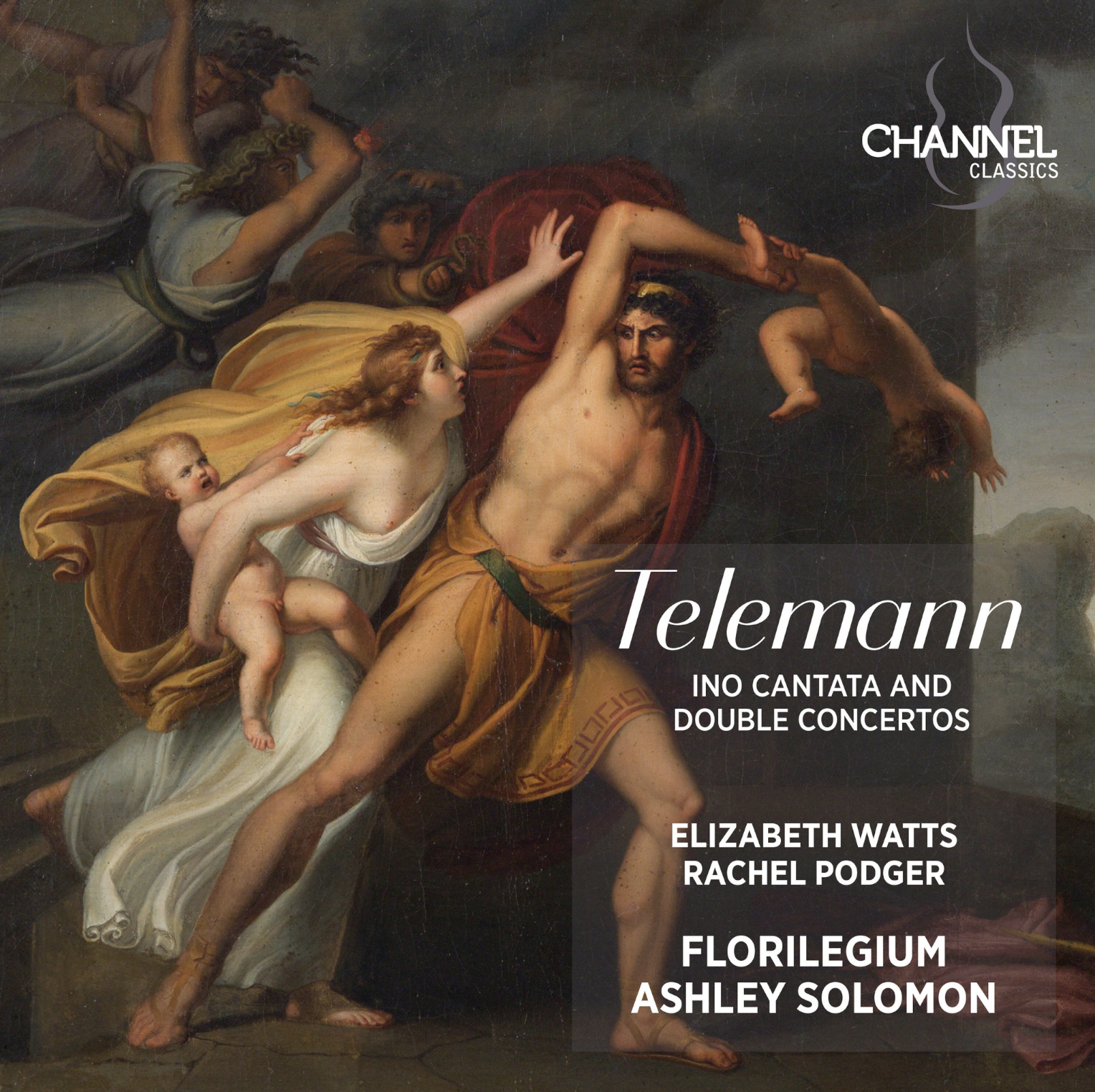
In this album, Rachel Podger re-joins Florilegium to record concertos and the dramatic cantata Ino with director Ashley Solomon. Elizabeth Watts is the soprano soloist for the cantata.
The concerto that opens the recording is the famous E minor one for flute and violin which we heard recently on two other releases. TWV 52:E3 is the catalog number, it’s presented in five movements.
The concerto is nearly as dramatic as the cantata. There’s a real chamber feel to it, with close miking to Podger on violin, not to mention the harpsichord, played by James Johnstone. The ensemble is very tight, with good rhythmic vitality. There’s some aspects to Podger’s approach, which I think has evolved over time, to appeal to those who like edgier playing, that makes the collaboration with Solomon feel a bit mismatched. The final Allegro is where some of this comes out, given Solomon’s long held notes. He’s not seemingly interested in trying any special tonal effects, special dynamics, wherein the group as a whole doesn’t quite feel as dated. It may be unfair to him, as he is the director, but overall, I found this concerto, despite that comment, to be at the forefront of where I’ll return when it’s time to re-hear this concerto. It’s nicely done and the best piece on the recording.
The piece for “recorder and violin” from Telemann’s chamber collection called the “Getreue Music-Meister,” TWV 40:111 dates from the 1720s and feels a world away from the cantata. Its rendered here with just the two soloists, the recorder part handled on transverse flute by Solomon. It’s appropriate for this recital, given the artists reunion here. Podger shines again with her sensitive playing and gorgeous tone.
The final concerto is another well-worn one by Telemann, this for recorder, flute, and strings, again in the key of E minor. Channel Classics did well to capture the ensemble this tightly in the church acoustic. There are many fine performances of this work, and while some to my memory feature more extroverted playing by the soloists, this rendition feels contemporary and sharply played.
I first became aware of Telemann’s late dramatic cantata through the recording by Goebel (1990, DG Archiv), sung by Barbara Schlick. I don’t have inside information, but I felt that Goebel’s recordings of vocal numbers were always hit or miss, seeming to me that he gave little instruction to the singers. Schlick’s performance doesn’t exactly command a strong following on that album, which today sounds thin and brittle.
I had the occasion to hear this cantata live at the Boston Early Music Festival, who also had recorded it with Amanda Forsythe. The ensemble in that album isn’t nearly as tight and quick as Goebel’s MAK. However, there’s a lot to admire in Forsythe’s singing. Some years earlier, La Stagione Frankfurt also recorded the work, featuring Ana Maria Labin. They bring that MAK energy. Labin is a far bigger vibrator than Forsythe. To my own taste, I can only take so much of her voice.
The work is drawn from Ovid's Metamorphoses, and its dramatic arc is genuinely harrowing. Ino, a mortal queen, has been driven to madness by Juno as punishment for sheltering the infant Dionysus, and the work finds her mid-breakdown: she has already, in her frenzy, unwittingly caused the death of her son Melicertes, and she arrives at the sea cliff carrying his body. The action turns on grief curdling into derangement, then a kind of terrible clarity, before the gods intervene—Jupiter, taking pity, transforms her and the dead child into sea deities, Leucothea and Palaemon, granting them immortality as a form of mercy. What makes Ino remarkable dramatically is that Telemann doesn't soften the psychological extremity: the anguish is portrayed with real intensity before the divine resolution arrives, and the dea ex machina ending registers less as tidy mythology and more as the only exit from an unbearable situation. It's one of the most psychologically concentrated pieces in the late Baroque cantata repertoire, and it's striking that Telemann wrote it at 84—the work has none of the diffidence you might expect from a composer winding down.
Florilegium continue the virtues of their instrumental performances here, with tight playing. But the first thing that will hit is how far Watts is from the players, her voice rising into the highest rafters of the performance space, which sits awkwardly against the far closer-miked instruments. I don’t really like this aspect of the performance.
Watts is a dramatic singer; certainly comfortable with operatic genres. As singers go, she offers far more vibrato than I prefer, and given all the examples on mention here, I’d put her performance ahead of Schlick and Labin, but behind Forsythe. However, both the direction by Solomon and tight playing by Florilegium stand out. For those who care, Podger doesn’t lead the string section for the cantata, but sits out. It’s nice to hear how strong a player Gabriella Jones is as their concertmistress.
This release—despite some reservations—does well to give us a musical portrait of Telemann, who during his lifetime was well-revered, and seemed to excel at a number of musical genres. While I have never thought he possessed the extreme genius of Johann Sebastian Bach, whom he knew, this album does well to showcase some of his strengths. As noted, Ino comes late in his career and while not at all “classical” in style, it is remarkable how much he was willing to adjust to matters of taste, wherein Bach stuck to his guns, revering the past.
The instrumental contributions are here all strong, with a special treat coming from Podger’s contributions. The cantata demands a dramatic portrayal, which Watts provides, but my own preference is always for less vibrato than more, which is not her style. The overall production would have been aided by some tighter control on the sound of the Watts’ voice, which on this recording, sounds disjointed from the rest of the musicians. The picture, included in the liner notes, suggests why.