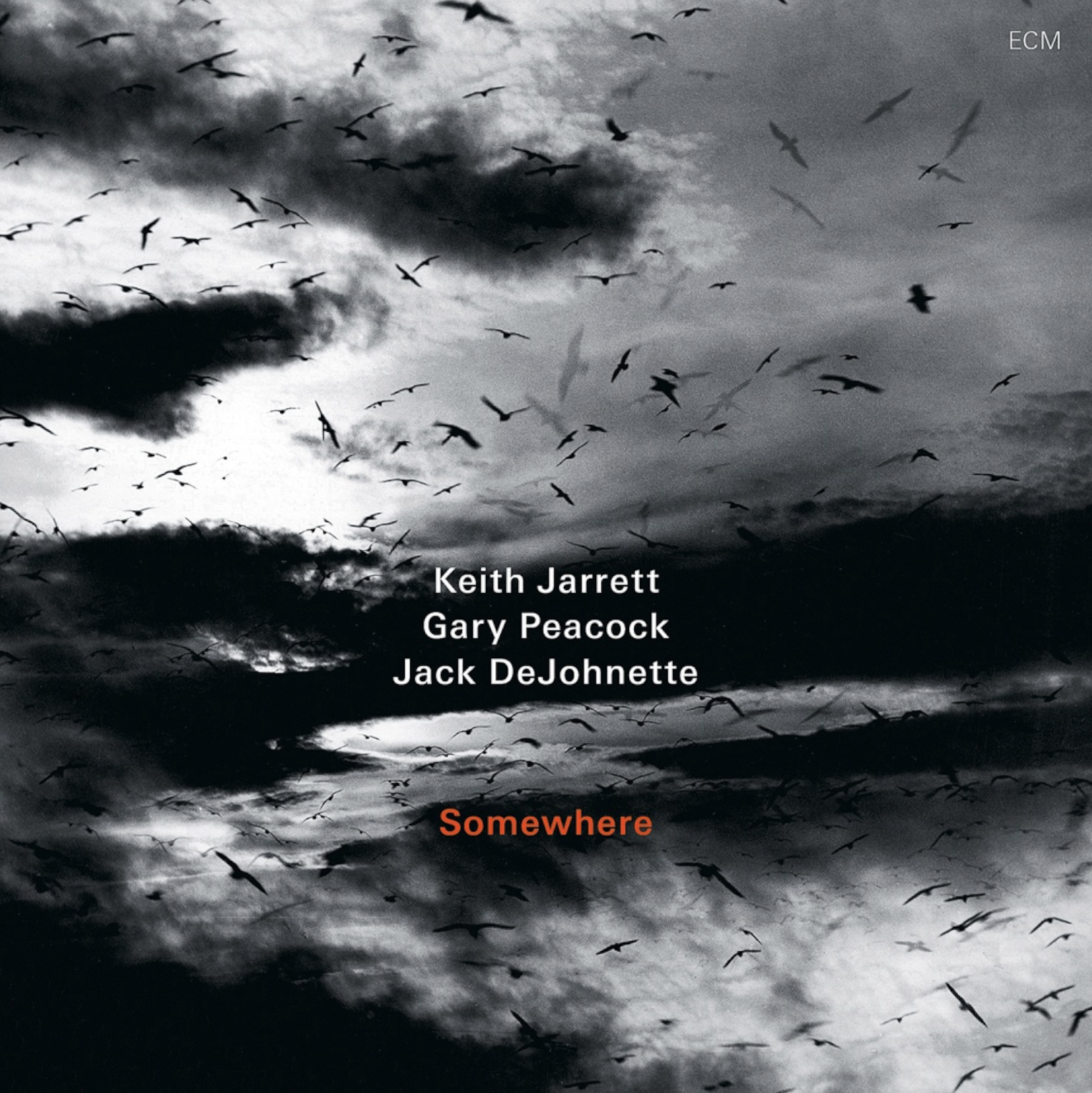
Somewhere: Musical Nourishment
Discovering On Our Own
There are many things I've found affinity toward throughout my life. For the purposes of this essay, I'd like to offer that they fall into two categories: things we are introduced to and things we discover ourselves. For me, as an example of the first, I remember my father taking me to a downtown restaurant that had, he admitted, an incredible dessert. It was a chocolate cake with a crunchy meringue layer. It was really, really good. And while I know he took me back, just for the cake, it was something he'd introduced me to.
However I've often felt that the things I've discovered myself, somehow, feel more special. Maybe it's the agency of deciding to accept that thing, to try it out, and make your own, unbiased interpretation? I can think of movies that have been like this to me, the kind you add in your brain as a lifelong "best hit" film that maybe you even saw yourself. My interest in baroque music, despite learning some pieces from the period through my piano lessons, is tied up in the experience I had during my 8th grade year when I put on headphones and hit play after inserting a borrowed library CD of Bach's harpsichord concertos. The CD had piqued my interest at the library, no doubt, I can't say why. It was the original release with BWV 1052 with Pinnock leading the English Concert. I had no reference that concert was a consort and I'm sure my initial thought was that this recording came from some kind of national concert event.
Going to school to study music broadened my interest in music beyond the late Baroque composers, extending past Mozart into what came before and after. It introduced me to the music that came before Bach. And it introduced me—by way of socialization with other students—access to other worlds I'd never explored, including jazz. It was only because Keith Jarrett had recorded Bach that I came onto his name. I soon found, however, again with the discovery afforded to me at the time (not through streaming, but the public library) that I liked his jazz standards even more. Keep in mind, I did all of this—discovering new music and deciding what I liked and why and why not—on my own. Like an explorer setting out at sea, making determinations of preference about new island foods that might become my new sustenance. Of course, I'm not really comparing myself to an explorer who risks everything to encounter the unknown. But the ability to explore is a privilege. I must acknowledge that everyone doesn't get the opportunity to captain a ship and take off to explore the world. I'm grateful for those opportunities.
The Standards Trio
So in 2009, Jarrett, DeJohnette, and Peacock set to record a concert, the album that became Somewhere. I just put the CD on, even though the CD has been ripped and is sitting on my server, even more easily played through the MU2 via Roon. (If you've joined the convenience of streaming, I am sure it's even easier to conjure the album via your provider of choice.) There's a wonderful simplicity of just three instruments, the warmth of Peacock's bass, the melodic arc of Jarrett's right hand, and the atmosphere and punctuation offered through DeJohnette's stick and brushwork. What makes so many of this trio's albums so profoundly satisfying is how integrated the musicians feel, playing together as one. This album, in particular, sounds great too, especially on headphones. And yeah, I don't think all albums sound equally good on headphones. I've yet to come up with the reasoning, but it's something I'll continue to think about as I explore albums old and new, whether they are spinning or streaming.
Inspired to Discover
Some years ago I read (maybe) a blog post by the Korean-American cookbook author and online cooking personality Eric Kim. He wrote about experiencing depression and traveling on his own. The thought of going out of the house when you're depressed I found scary as hell. I worried for him. I don't know why I felt such empathy for him, but I did, and I held onto each word as he described going to Maine and returning the following year, staying by himself, eating alone, and in so doing, exploring restaurants and people and food all on his own.
When I found myself in Maine, I sought out a coffee shop he'd written about, one he'd discovered. The coffee, he promised, was good, but moreover, if I remember, he spoke about the people who ran it. There I sat, trying to imagine the place on a different, colder morning, a December one where the only customer was Kim. Taking in the experience. Deciding if he liked the place or not. And there I was, reliving his experience. Just as I did when I visited Marseilles in France, imagining where M.F.K. Fisher might have stayed, looking out and seeing boats and fisherman, as she'd written about. This is a different kind of discovery—it's not mine—but it's my own kind of discovery based upon the prior experiences of others I admire or respect.
The difference here is that these kinds of discovery experiences aren't Eric Kim's or M.F.K. Fisher's anymore. They were simply there first, to inspire new discoveries.
Qualifications
Rarely when I've gone to concerts do I talk to other concert-goers, but when I have, I find these conversations interesting. I was once at a concert and overheard someone mentioning they were the producer for the group on stage, that they travel with them on tour and produce their recordings. I asked a few questions, introducing myself. I mentioned that I'd planned to review the concert and wondered if I could reach out with some questions.
Someone in front of us turned, and asked, eventually, how I was qualified to write a review. And why should my opinion matter? I smiled. I can't remember exactly what I said, but it amounted to something akin to "it's my opinion, sure, but it's one I'm willing to share. If others find value in that, then let that be something they can either value or not."
Whatever I said, left the person visibly confused. The producer then leaned over and handed me her card. "Feel free to get in touch. We'll be back in a couple weeks, happy to answer any questions."
The Experience of Others
Just like Eric's retelling of visiting a Maine coffee shop, the reviews published in Gramophone magazine that I used to read in college (again—thanks to libraries), while maybe more formal with attempts to be objective, are similar. They are shared experiences. And these are important to us because we have other stuff to do in life other than explore and discover only on our own. I do value that, I really do. But there's also nothing wrong in capitalizing upon the earlier experiences of others.
I started this website (more specifically, biberfan.com) in the late 1990s as it seemed many my age—in and coming out of college—wanted an online space to share with the world. It sounded like an incredible thing to do. One of my models was Jason Kottke, who along with others at the time, had invented the weblog. I remember going to his site and getting ideas about how to code my own site. There was no back-end, just the challenge of writing in HTML then CSS and exploring Javascript. There was a very technical side of this blogging, as it would be called, that interested me alongside the idea of sharing with the world. My first site was a mishmash of different things, stories, experiences, diary entries, and even the postings from guests.
But the content I found myself drawn to was this strong passion I'd developed for music. I'd already discovered through life that people were many times interested in what I'd fallen strongly for, maybe it was the way I'd describe food, or the way I'd opine on how something was just so good, you had to try it? I just didn't have any fear. I had opinions and I wanted to share them.
The Ethics and Power of Criticism
I've heard so many times that artists don't care about what critics think. I know what they mean: getting critical feedback can be difficult. And defending your position to someone who can't fully understand your own context? It's trying. I remember getting course feedback the first time I'd led a college course. I didn't want to touch that feedback. It took me a whole year before I could open the survey results.
For some time, I got into the restaurant review business, publishing restaurant reviews. It was surreal one day when a guy came up to me in a restaurant, offering a free appetizer. He later admitted he recognized me as "biberfan," and wondered if I'd be writing up a review of their restaurant.
Then with a later review I'd written, which had documented a number of disappointing experiences, the comments filled up, fueled by every employee of the restaurant. The feedback was threatening. One of the comments said "shit like this is going to shut us down, you asshole. Who made you god?"
Maybe it wasn't every employee, but an owner who felt my review wasn't helping an already dire situation?
So I stopped. I didn't fully understand the impact I was having. Or what my ethical standard should be in this pursuit. I wasn't writing to make money. I've never made money by writing these reviews. I do it because I want to share my experiences. And I am hoping my experiences bring you experiences. I know they will not be the same. But if I can show you or anyone else new things that bring you satisfaction, joy, or help you engage more deeply with the music I write about? That makes me feel good. I've felt that way before after reading reviews and I want to return that energy to the world. I could decide to only share recordings here that I like. I don't do that, per se, but when I look back at what I have reviewed, it is true, I like 99% of the recordings I've posted here and would go back to them again. I'm not a major newspaper or hybrid hi-fi/classical magazine. I'm a guy who likes music and I think there's value in sharing my experiences. While I do think I have great taste, be warned: I have opinions and I'm willing to share them but they are just one person's opinions. That's on you when you stop by to read. I'm telling it as I experience it. Your mileage will vary, as they say: you can agree or disagree. If you're taking the time to read these, you will likely care to agree or disagree. That's how this works. We either will have a shared experience or not.
Wine Identification
I went to a fine dining restaurant years ago and opted for the "wine pairing" option. This was an extravagance for me. I had experienced wine before but was very ignorant to it. My parents and friends growing up didn't really drink much wine. And like discovering Bach's concertos, at that meal, a whole new world opened before me that evening.
I learned that wine could appreciably enhance the experience of food. Since then I've been interested in how sommeliers (the men and women who are wine experts in fine dining restaurants) come to understand wine.
I have learned a lot since that meal many years ago about wine, aided by tasting trips, books, movies, and through a lot of emptied wine bottles. There are varietals I like over others. There are flavors I like. But imagine if I started recommending wines. "This one tasted really good. It went down easy."
As a reader, you may reproduce the face of that guy I'd spoken to during the concert intermission. "Why does it go down easy? Why does it taste like this? Is this a good thing? And how might this particular wine enhance the salmon dish you're about to make?" Sommeliers learn about all the different qualities of wine—including how it was made and how that impacts flavor—so they can both objectively judge wine and also better understand how to combine a wine's qualities to enhance the eating of food. We all have opinions, but sommeliers build an objective vocabulary to allow themselves to be very specific about what they experience in their mouths.
Value of Musical Experience
Music criticism works similarly. While I am not a professional musician, I've been interested in music my entire life. I have played, sung, and composed music. I've conducted ensembles. I performed in front of juries and got feedback. I've done score study, analyzed harmony, and I've played music over and over, in the attempt to make my performance even better.
These experiences do come into how I think about musical performances in recordings and those I experience on the stage. Like the vocabulary that enhances a wine expert's ability to talk about, compare, and recommend wine, my musical experiences give me the ability to talk about these performances in ways that go beyond "I like it" or "I don't like it." You'll find that I often talk about prior experiences in my reviews. It's important to me, but it's also a warning that your experience may be different without my shared background.
Having musical training doesn't qualify me to review music; having musical training gives me the tools to look beyond the surface. After all, without this background, a review here might be as boring as this review for pinot noir:
Red wine, sour taste. Smelled like cherries.
Somewhere, everywhere
If you've made it this far, you may well have asked: "What's he writing about? Wine? Jazz? Writing for this site?" "There's a place for us," was a piece I'd be introduced to by my traveling music teacher, Mr. John Silvers. Growing up around Pittsburgh, I came across this guy who would visit your house weekly, giving me songs to learn. He wasn't there to teach me classical repertoire, but instead more "popular" songs. He wrote them out all himself, and each lesson was fixed upon how to fill out the harmony for the song. I learned different styles of playing, based on the period of the piece. Never did he say he was a jazz pianist, but that's what he was.
At the time I'd not seen West Side Story but I had the firsthand experience of exploring this wonderful song at the keyboard. What a piece! Maybe it's why this rendition by the Jarrett Trio is so moving. It feels more impressive now, given that Peacock and DeJohnette have both passed. We won't get this again. If you've never played this piece yourself, or you've not experienced it with a movie or live performance of the musical? It may not touch you the same way. You may not have that reference. The first time I drank red wine I found it off-putting. Sour, the bite of tannins, and not sweet at all like soda. Then I smelled it. And smelled more. A bouquet of perfume that has a secondary tangible experience in the mouth. Alchemy, almost.
But I am not sure you need to have learned this piece in your youth to benefit from it in deeply moving ways today. Find the album already. Track number four. Find some time for yourself, close your eyes, or dim the lights. The dark is great. And let it open up. Let it unfold, from the hopefully familiar to the new. The subtle variations in the drumming… the repetitions at the piano… the omnipresent foundation from the bass… and yes, the very human grunts and outbursts from the pianist? This music will fill you, like pouring the bounty from the vineyard into a chalice. Why does it work? Because these musicians, Jarrett especially, know how to take simple ideas and weave them into more complex ones. They know the power of repetition. They understand dynamics, the impact of familiarity versus the shock of surprise.
I hope for you that if you made it this far you've given yourself twenty minutes of musical nourishment. It's why I listen. The analogy to food and wine is a stretch, for sure, but music does nourish us. It's what I find magical about it. And if I get you to experience this and benefit from it? That's powerful. That's a shared experience you can make your own.
That's why this site exists.