Couperin: Premier livre de pièces de clavecin • Kuwagata
Introduction
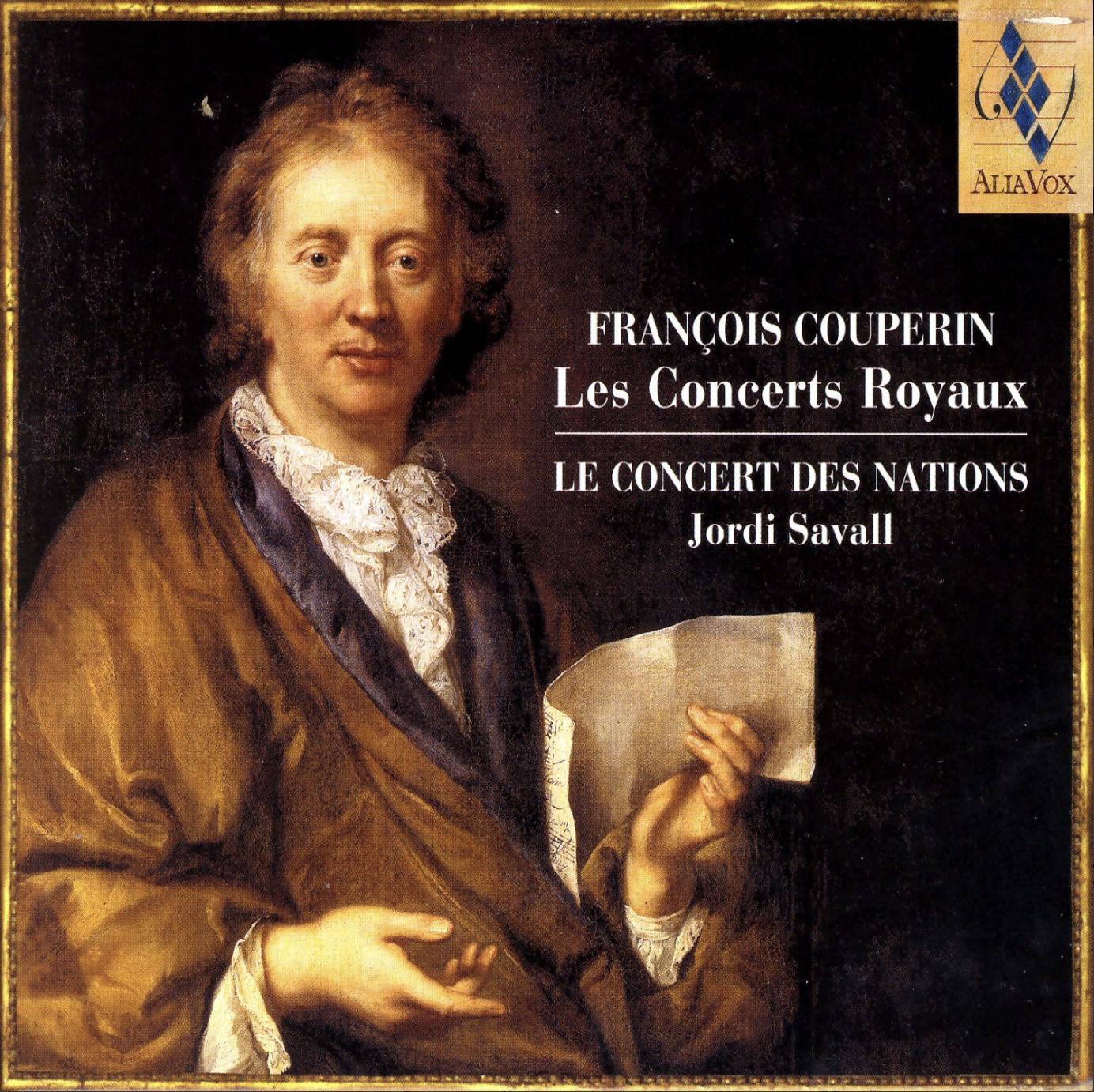
François Couperin "Le Grand" (d. 1733) wrote prolifically for keyboard — unsurprisingly, given his career as both organist and harpsichordist. His instrumental works are also worth exploring: as a Frenchman, he was indebted to Corelli for offering models for new music in France. Among his collections for harpsichord are his four books (livres), comprised of suites he called "ordres." The first book was released in 1713 and is the subject of this recording by Akiko Kuwagata. In total, the five ordres take just over three hours to perform.
My first foray into this music came by the Harmonia Mundi recordings by Christophe Rousset, who had charmed me greatly with his earlier release on L'Oiseau-Lyre of Rameau's harpsichord works. Couperin's movements are composed of familiar dance forms, such as the courante or allemande, but many of them were given titles such as "Les Regrets" or "La Flore" or "L'Angelique." In his later collections, as would Rameau, the titles might take on personalities — people he knew.
I will note that the booklet that accompanies this release is only available in Japanese. Kuwagata studied composition at Tokyo University of the Arts (Geidai), then pursued harpsichord on a German government scholarship at the Hochschule für Musik Detmold and the Hochschule für Musik und Darstellende Kunst Stuttgart. She subsequently moved to Paris, teaching at the Conservatoire à Rayonnement Régional de Cergy and performing across Europe. She also deepened her study of harpsichord and organ in Italy and Spain through a Japan Agency for Cultural Affairs fellowship, and placed in the top ranks at competitions in Paris, Bruges, and Leipzig. She returned to Japan in 2000 and currently teaches at Geidai. Since 2017 she has released hi-res solo albums on her own dream window Tree Label (including this one). Crucially for contextualizing this album, she also published a Japanese annotated translation of Couperin's L'Art de toucher le clavecin in 2017. On this album, the majority of the pieces are performed upon her Katzman instrument, with the fifth ordre performed upon a Franco Barchielli (2018) owned by the Kusatsu International Music Academy. For this recording she uses a new Urtext volume, reflecting the latest scholarship into Couperin's works.
The Recording
Given the recordings available of the first book, I found some apt comparisons to be made in the recording by Moroney (Plectra, 2012). The two recordings are not identical in terms of material, but close enough. Moroney's recording is louder than the one by Kuwagata, which requires us to turn up the volume. I thought these two performers were apt to compare, given the performance of the opening Allemande of the fifth ordre. Rousset takes it faster, but what I am personally looking for in these performances is a feeling of tempo and the grace of a dance. It's pretty clear that these pieces were not used to dance to, but we should feel the dance in the way the music is performed. To do so requires some rubato and emphasis.
The ordres are larger in construction in some ways, if we were to compare these to say, Bach's partitas. The first one is comprised of eighteen pieces! Wherein with Bach we get longer movements, here Couperin provides shorter movements, just more of them, including doubles. What I cannot say with authority is whether or not the expectation would have been to perform all of these as a set, or if it would have been customary to "pick and choose." An exception to this is the fourth suite, which is just four movements, but each are larger in concept.
Among the special pieces in the first ordre is the Sarabande "La Majestueüse." This is a piece, again, that I came to know first through Rousset's excellent performance. I found the one by Tago Mahúgo (CMY Baroque, 2025) to miss the character of the piece completely; I think Kuwagata improves upon Moroney's interpretation, even if I might pull the OG Rousset ahead in terms of "majesty." The pair of opening courantes by Kuwagata, however, were among my favorites. The shape and speed that Moroney takes with the Gavotte I think is superior to Kuwagata's, which ultimately loses something at her tempo. In the first character piece, Les silvains, I go back to preferring Kuwagata's speed and shape. A full play-by-play may not be worth the space — but going through the exercise makes something clear: Kuwagata is operating at a recognized high level, both technically and stylistically.
What I might suggest, if you want to audition Kuwagata's release via streaming, is to check out these particular favorite movements, which I found were especially well-rendered:
- Ordre 1: La nanete
- Ordre 1: Les nonètes
- Ordre 2: Première courante
- Ordre 2: Passepied
- Ordre 2: Rigaudon
- Ordre 2: La Florentine
- Ordre 2: Les papillons
- Ordre 3: Allemande La ténébreuse
- Ordre 3: L'espagnolète
- Ordre 3: La favorite, Chaconne en rondeau
- Ordre 4: La marche des Gris-vêtus
- Ordre 4: Le réveil-matin
- Ordre 5: Courante seconde
- Ordre 5: La bandoline
- Ordre 5: La flore
- Ordre 5: Les vendageuses
Sound
The two instruments used themselves don't sound remarkably different; however, with headphones it's obvious we've had a scene change with the later recording on the Barchielli instrument slightly noisier for the fifth ordre.
In both cases I like engineer Akira Fukada's choice in how much instrument and how much "room" to capture across these recordings, as I think it gives us enough of the instruments' character, while also presenting the music naturally across both headphones and in our listening rooms.
Conclusions
This is, I believe, Kuwagata's latest recording, but she's already recorded other repertoire on her label, including music by J.S. Bach, Louis Couperin, and Froberger. Since discovering her through this recital with pieces by François Couperin, I look forward to exploring more of her earlier output.
The good news for those who like François Couperin's style is that there are a number of strong performances already available; I think this release by Akiko Kuwagata joins them, and in some cases may surpass the level of delight one might experience, at least as I've prescribed in my sampling menu above.
Listeners not interested in approaching his music from the complete-works side will find a very attractive entry point in Bertrand Cuiller's double album L'Alchimiste: Un petit théâtre du monde (Harmonia Mundi, 2018), which offers a wide-ranging sampler of Couperin's works; his performances are especially strong and full of character.
For those already familiar with Moroney and Rousset, I think Kuwagata — like those men who were interested in recording the complete book(s) — offers rival performances, but it would be difficult to name one overall superior. There's little doubt that Kuwagata did considerable research into providing us informed performances. For those unfamiliar with this Japanese artist, I recommend this album warmly.