Bach played as jazz: Bach Jazz
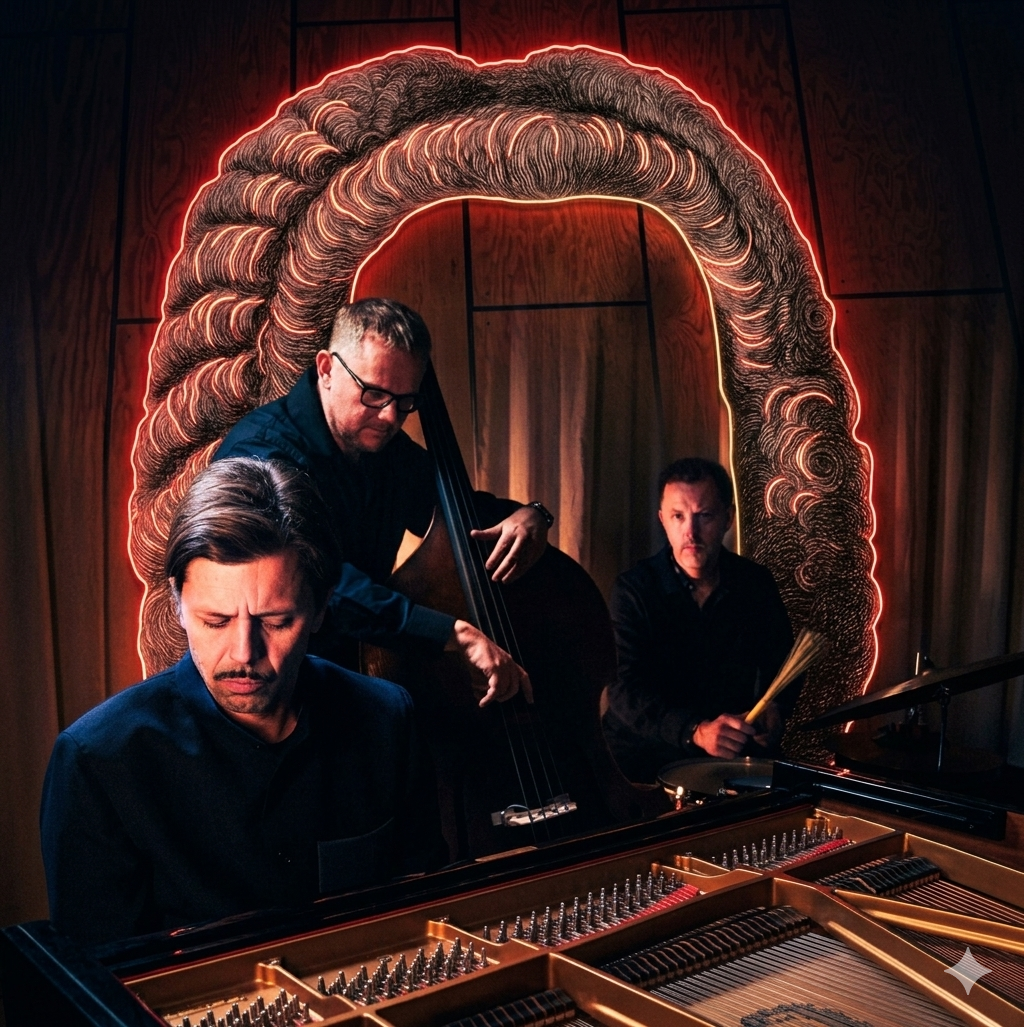
August 13, 2025: The first album, Bach Jazz, showed up in my Qobuz feed without much metadata and no mention of the performers. At 32 minutes it's a short listen, but the cover at least shows us the musicians and their setup — upright piano, drums, double bass. I'd actually seen this album elsewhere, probably in an audio equipment review, without recognizing the cover. Searching for it led me also to Bach ReLoaded by Jenni Molloy, not to mention a third album, Jazzy Bach. There are, it turns out, quite a few albums nodding to Bach through a jazz idiom — the Modern Jazz Quartet, Jacques Loussier and the Swingle Singers being the obvious predecessors.
Now in April 2026 comes Bach Jazz II, with 44 minutes of music. I'm treating both albums as a single release.
- Emil Carlsson Rinstad, piano — trained in both improvisational and church music. He has released several pop records under his own name and has toured in the US, Japan, Uganda, and Germany.
- Magnus Bergström, double bass — in high demand on the Swedish jazz scene, including the Simon Westman Trio, Christian Jormin Trio, and internationally with Mikael Godée & Eve Beuvens Quartet.
- Ola Winkler, drums — without exaggeration one of Sweden's foremost drummers, with credits including Anna Ternheim, Ane Brun, Jonathan Johansson, Lisa Ekdahl, and the Andreas Hourdakis Trio.
Why jazz?
It's often suggested that baroque performance is like jazz — and I understand why. The performance practice of the period required musicians to improvise upon what was written, and in a trio setting, the piano can fill out a bass line in ways that echo the basso continuo. But the analogy has limits: baroque spans 150 years and multiple national styles, and "jazz" is no more a single codified practice than "baroque" is.
Loosely stated, the shared idea is that musicians are open to veer off-script within some agreed framework — and that's where the comparison lives. I’m guessing some of the examples we’ll discuss are played as a chart, others feel more composed. Either way, it’s Bach without the wig, with (his?) our hair down.
The most famous application remains the Jacques Loussier Trio, who I've enjoyed not only in Bach but across the baroque repertoire. More recently, Brad Mehldau has taken to interpreting Bach straight against his own improvisations. The Bach Jazz trio sits closer to Loussier in conception.
Bach Jazz I
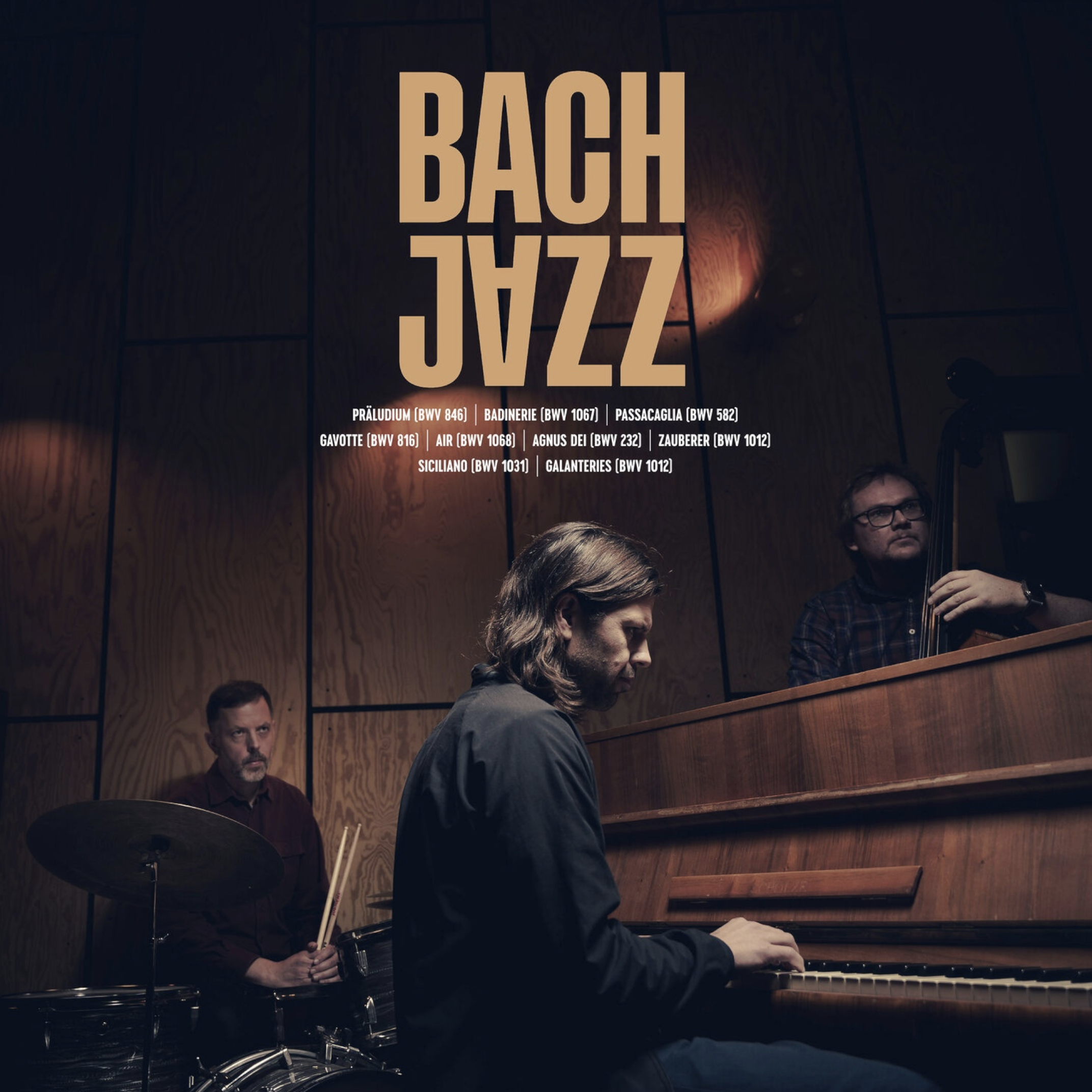
This album, released September 2024, opens with BWV 846's C major prelude — the famous one from the first book of the Well-Tempered Clavier — in a very chill rendering. The double bass riffs off the piano's steady arpeggiation while the drums add atmosphere. It's been arranged many times; my personal favorite comes from a Hong Kong rock group in the 1990s. This one is gentler than most.
The Badinerie from the second orchestral suite gets a similarly unhurried treatment. Once the piano states the familiar melody it's immediately recognizable, but unlike the Loussier trio's approach, it isn't fully rendered — the melody serves as an anchor in a broader conception rather than a subject to develop. Three minutes feels short.
The Passacaglia BWV 582 is one of my desert island pieces — alongside the violin chaconne, one of Bach's unambiguous masterpieces. The mood here isn't far from what surrounds it on the album, and at 3:17 there's only so much of the piece's architecture to explore. What we get, though, is still clearly and affectionately Bach.
The longest track at 5 minutes is the Siciliano from the flute sonata BWV 1031. All three players maintain the reserve that characterizes the album, but that's not a complaint — there's something deliberately considered about this group's restraint. The playing isn't jazz at its most adventurous, but as a vehicle for presenting Bach attractively, it works. I especially like the Latin elements woven into this track.
The album closes with the Galanterien from the cello suite BWV 1012, which begins with a steady kick-drum pulse — on my Sennheiser HD 650s, an unexpectedly gorgeous presentation of low-end audio. The track includes a vocalization, apparently by the three musicians, treated with effects. It's unexpected, but you won't hear anything quite like it elsewhere.
Bach Jazz II
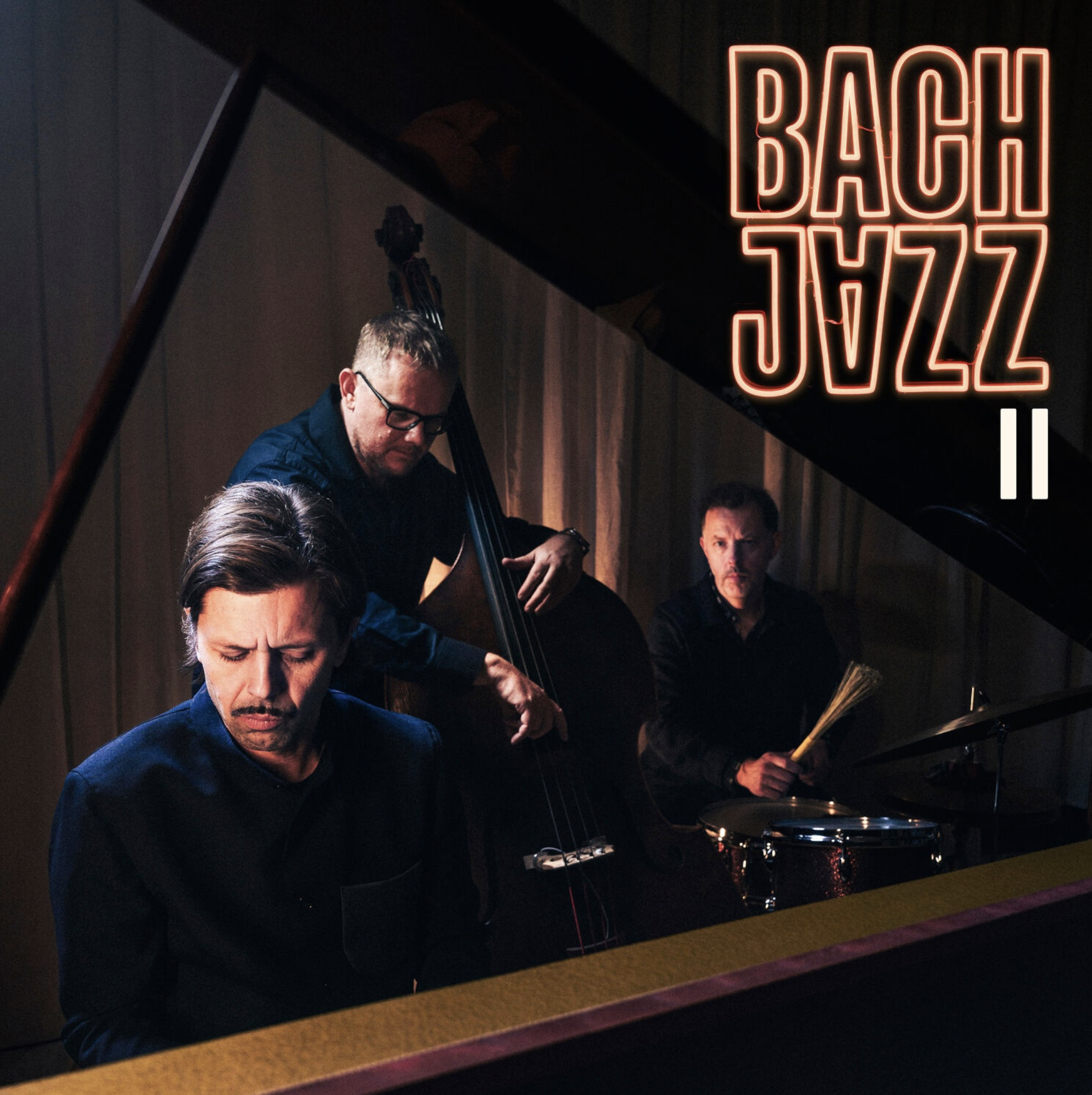
Thirteen tracks, not all complete pieces — a greatest-hits approach, including Sheep may safely graze BWV 208, the Goldberg Aria, Nun komm der Heiden Heiland BWV 659, and Wachet auf BWV 645.
The intimate sound of the first album carries over. Piano and double bass have excellent presence and resolution; the drums sit slightly further back but spread across the stereo field in a way that rewards both speakers and headphones. The double bass tone in the 12th track, an interlude titled Klanverk Interlude, is gorgeous.
Prelude X, BWV 855, with its groovy repeating bass, might put you in mind of "Hit the Road Jack" — though the piano remains laid back throughout, consistent with the group's approach. The Goldberg Aria is preceded by Goldberg Cassette Prelude, a short quote with studio effects mimicking cassette tape. I found it unnecessary — a transition that draws attention to its own cleverness without earning it. The Aria itself is more rewarding: melodic content goes to the piano, the bass line to the double bass, and the drums, using brushes, just barely keep it jazzy before the bass takes the lead. It's a nice interpretation.
I'm a long-standing admirer of the organ work Nun komm der Heiden Heiland BWV 659, having first really come to it through Bruno Cocset's arrangement for cello and continuo (Alpha Classics, 2008), and later through Ensemble Contraste's more straightforward version (La Dolce Vita, 2013). Here, the jazz component is restrained, and while I'd always return to the Cocset, this is genuinely satisfying on its own terms.
Wachet auf BWV 645 recalls the Modern Jazz Quartet's 1973 Blues on Bach, which quotes the same work in its third track, Rise up in the morning. Whether or not this is intentional, both share a similar laid-back ease.
Bach ReLoaded
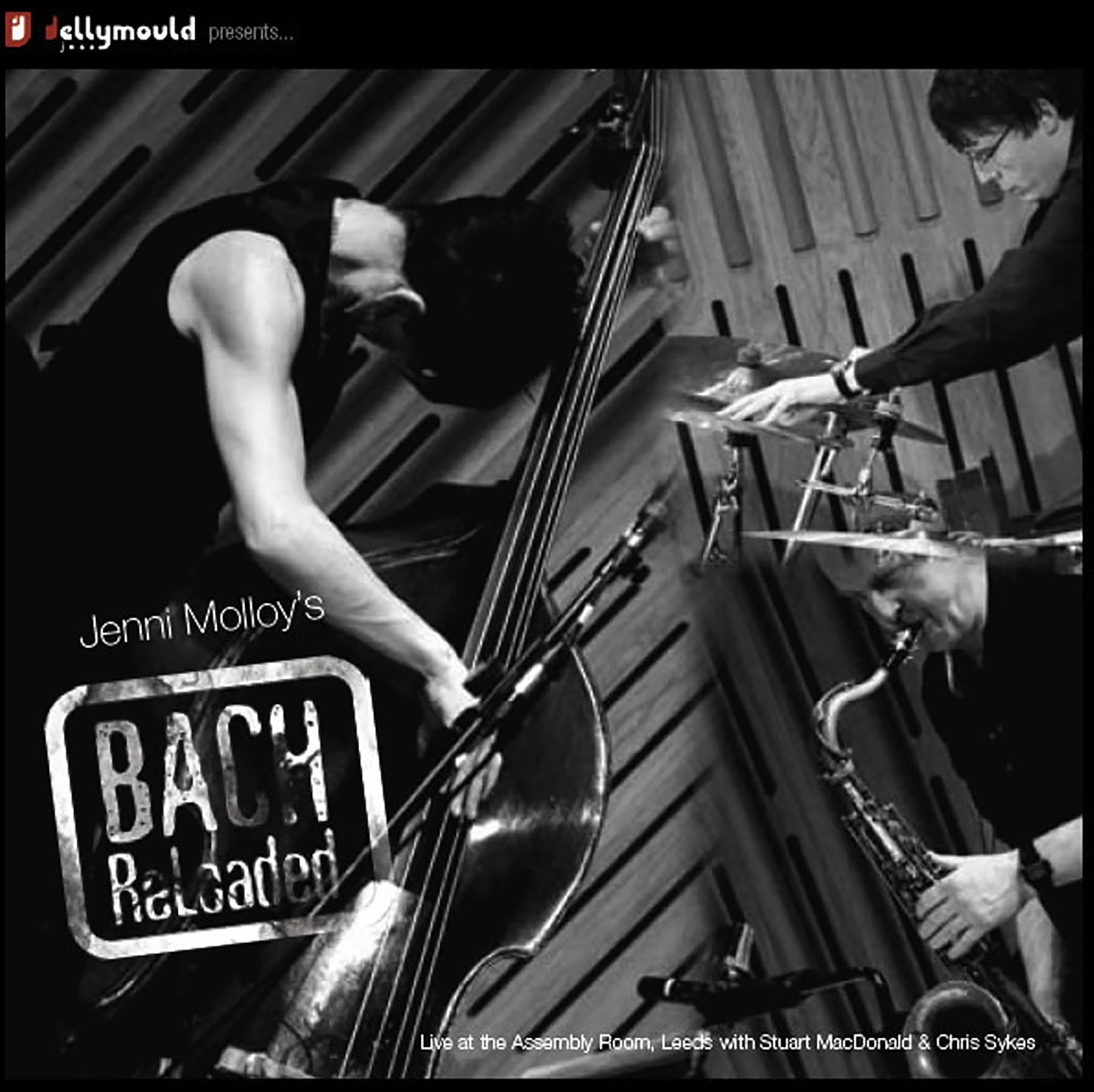
This 2012 album by Jenni Molloy runs 80 minutes across eight tracks, combining sax, bass, and drums in a live recording — audience applause and all. Where the Bach Jazz pair tends toward restraint and intimacy, these pieces are more through-composed and expansive.
The second track, Bird Invention, evokes the sound world of the famous Dave Brubeck album — if Take Five is your thing, the walking bass line here should appeal.
District 6 Revisited opens with a Latin feel and cowbell, follows a loose ABA structure, and midway produces a descending bass that might remind you less of Bach than of Purcell's Dido's Lament. It works. One of the album's better tracks.
Bachsteps Over Miles, nearly eleven minutes, weaves Bach's material into both sax and bass lines as part of a more expansive composition. Rewarding, though I occasionally wanted either less repetition of the quoted material or more Bach wholesale.
The opening Prelude and Piazzolla Tango features bowed double bass, and the sound comparison with the Bach Jazz albums is instructive: the tone here is more metallic and wiry, less pampered. The violin chaconne quote is unmistakable, and the tango is launched with further Bach quotations as the bass switches to pizzicato. Different, but close and involving in its own way.
Jazzy Bach
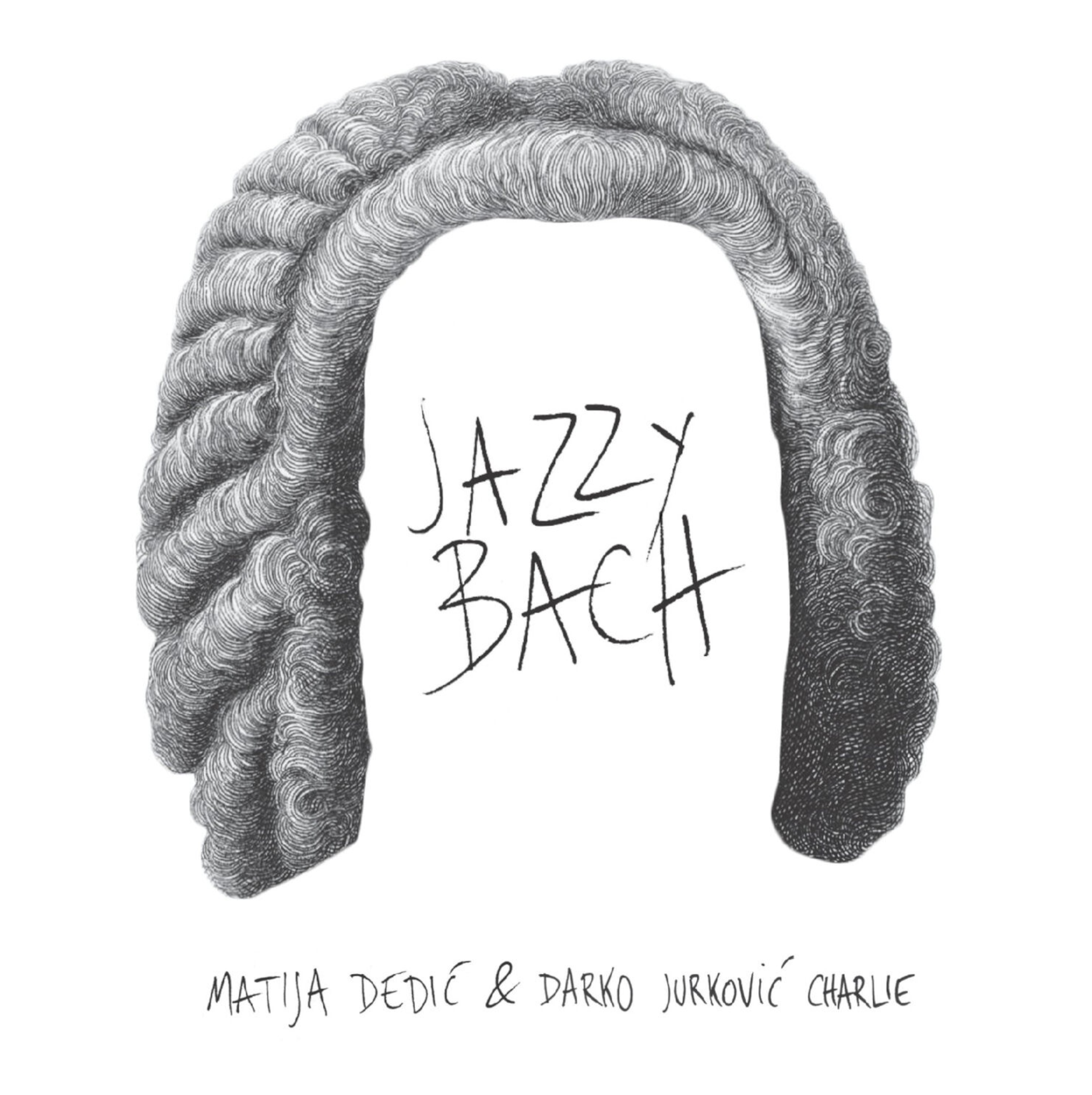
This 2015 release on Croatia Records pairs pianist Matija Dedić and guitarist Charlie Jurković across 46 minutes and eight pieces. Piano and electric jazz guitar is a more direct approach: the repertoire is familiar — the Eighth Invention, concertos BWV 1056 and 1042, and like the Bach Jazz albums, the BWV 1068 Air and the Badinerie from BWV 1067. Some percussion appears, and purists may appreciate how straightforwardly the music is presented. But there's a schmaltzy quality to some of these performances — jazzy in texture, perhaps, but not quite jazz in spirit. A caveat: the opening treatment of the G minor oboe concerto doesn't work for me, but the Siciliano BWV 1031 — which also appears on Bach Jazz I — is played with straightforward honesty and is one of the album's highlights.
Conclusion
Bach's music is compact and rhythmically spiced, with harmonic and contrapuntal structures that invite creative reinterpretation. These three productions apply the jazz idiom — with limited instrumentation — to selections from his canon, some played relatively straight, others as original compositions inspired by the originals.
Bach ReLoaded offers some of the most rewarding examples of what's possible when Bach is used as jazz material rather than simply treated in a jazz style. The Bach Jazz pair earns its distinction through sonic intimacy and consistency of approach — the recordings are a genuine pleasure to listen to on good equipment. My reservation is that the uniformly slow tempos, across both albums, leave you wanting at least a few faster numbers.
Jazzy Bach has its standout moments but sits somewhat outside the spirit of the other two. All three demonstrate there's room beyond what the late Jacques Loussier already mapped. None of them, for me, equal Loussier at his best — but they're worth your time if you want Bach taken differently.