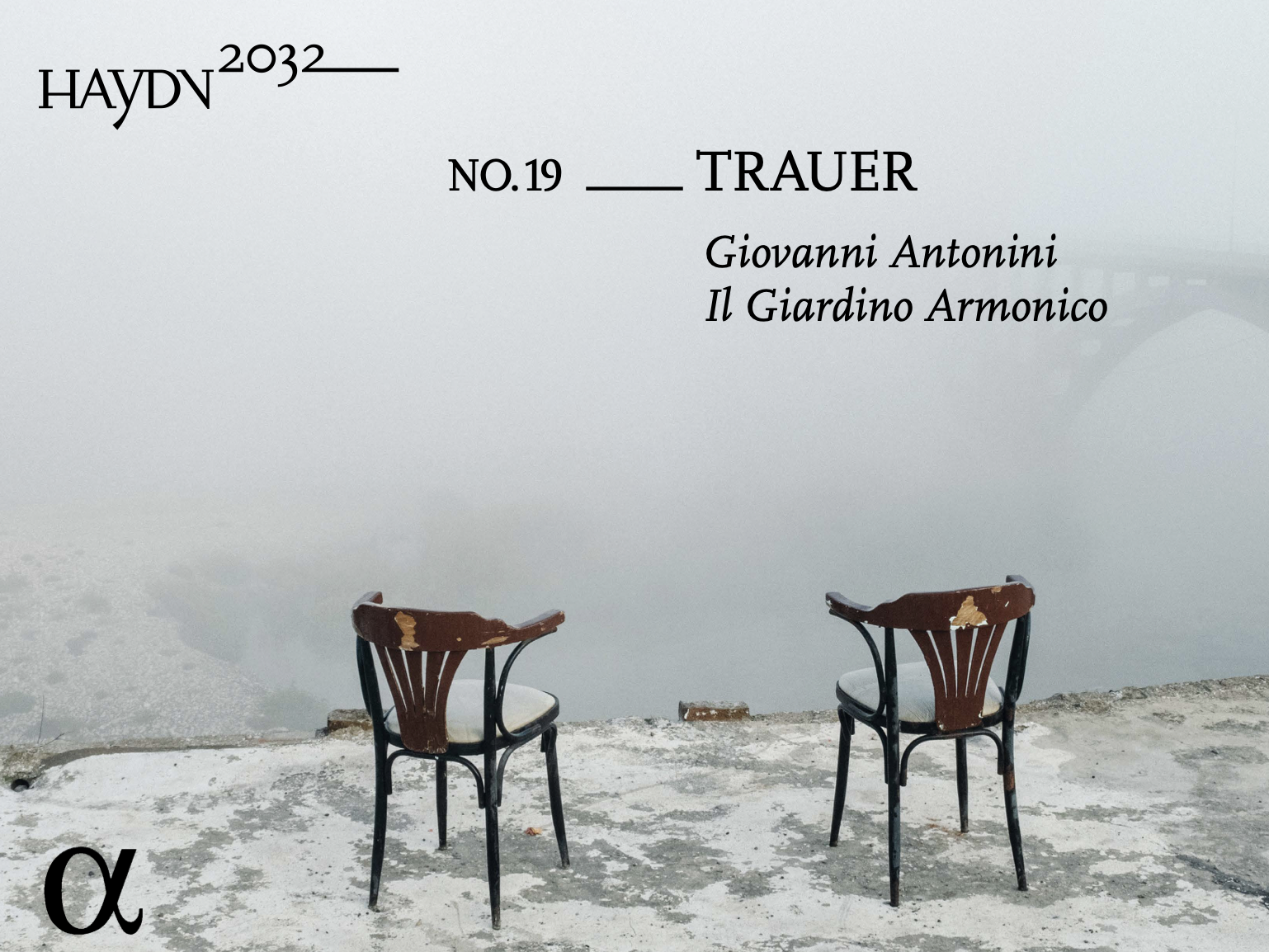
Haydn 2032 - Trauer • Il Giardino Armonico
Readers are likely already familiar with the Alpha Classics project with Giovanni Antonini who is recording all of Haydn’s symphonies by 2032, ping-ponging releases between the Basel Chamber Orchestra and his own Il Giardino Armonico. This release features:
- Symphony no. 52 (1771)
- Symphony no. 44 (1770-71) “Trauer”
- Symphony no. 108 (1762)
- Arvo Pärt: Da pacem domine
- Samuel Scheidt: Paduana dolorosa à 4 voci SSWV 43
The liner notes mention the 40th anniversary of the IGA, how it started as a small chamber ensemble. Many of the names in the booklet are new to me, it’s the not the same ensemble that made the many Vivaldi recordings on Teldec. Their sound is very different here, too, given the larger performance space. Yet, under the same leader, they achieve great musicality here. The notes also mention the inclusion of two different pieces to help push the funeral theme that doesn’t come across as deeply as one might expect in the 44th symphony by Haydn. It is in fact a hallmark of this project to include music by other composers. We might call it filler in the concept of a CD, or in a concert, I think, it’s sometimes more welcome, as it helps provide some context with the works by Haydn.
In my case, I was not familiar with the Scheidt but the piece by Pärt was performed in my recent review by the Cello Octet Amsterdam. This piece, I didn’t know, is dedicated to the memory of the victims of the 2004 Islamic terrorist attack on train passengers in Madrid. Two pieces I think work well together here as a pair, taking under Antonini’s direction a similar mood despite their stylistic differences.
I still admire the first two Haydn symphonies here in the groundbreaking recording by Trevor Pinnock’s English Concert. Those performances tended in the outer movements to push the ensemble at equal tilt throughout. Under Antonini, there’s far more nuance, care around articulation, and phrasing that elevates the music beyond the 1980s release on DG Archiv.
Let’s look at the second movement of the Trauer symphony: Antonini’s dynamics and phrasing elevates the way I hear this music. He takes us out of the Baroque sound world, I think, which Pinnock’s set was clearly anchored in. It’s the details you notice that pull you into this performance. The sound doesn’t always impress me, however: there’s something special about hearing the atmosphere but I also miss that close transparency that comes with a “chamber” recording. Either way, I appreciate how Alpha has managed to allow the bass to come through either way.
The presence is palpable on my system in the same work’s Adagio. For me this music can easily grow dull but I appreciate here how Antonini shapes things with the upper strings.
The same attention of detail comes in the finale. Again, the acoustic loses a bit of grit that the strings might have contributed, but there’s an overall lightness which I found refreshing.
The final symphony, no. 108, doesn’t belong to the same group of “Stürm und Drang” symphonies by Haydn. It’s lighter in flavor, and I was surprised by the date offered in the booklet. It’s also an all around shorter work, clocking in at twelve and a half minutes in total. Of anything on the recording, it carries a whiff of C.P.E. Bach to my ears, at least in the opening Allegro molto.
I was, at the time, looking forward to the AAM Haydn cycle, which sadly never was completed. I am probably in concert with others to suggest that Hogwood’s Haydn’s cycle was not at the same level as his earlier Mozart set. The recordings are clean but the performances lack the musical insight that Antonini is so good at pulling from the scores.
In comparing this symphony, included in Hogwood’s second volume, the comparison with this new recording is like going from black and white to color. The faster tempos help, but it’s more about the phrasing at the macro and micro level. One has personality, where the other seems to be searching for one.
Readers may well want to wait until the completion of this cycle to own one of the more interesting complete recordings of Haydn’s symphonies; in the short term, especially for those with streaming access, this has been for me one of the more enjoyable releases yet, given the ancillary pieces and the 52nd and 44th symphonies.