Beck: Symphonies Op. 4, 4-6 • La Stagione Frankfurt
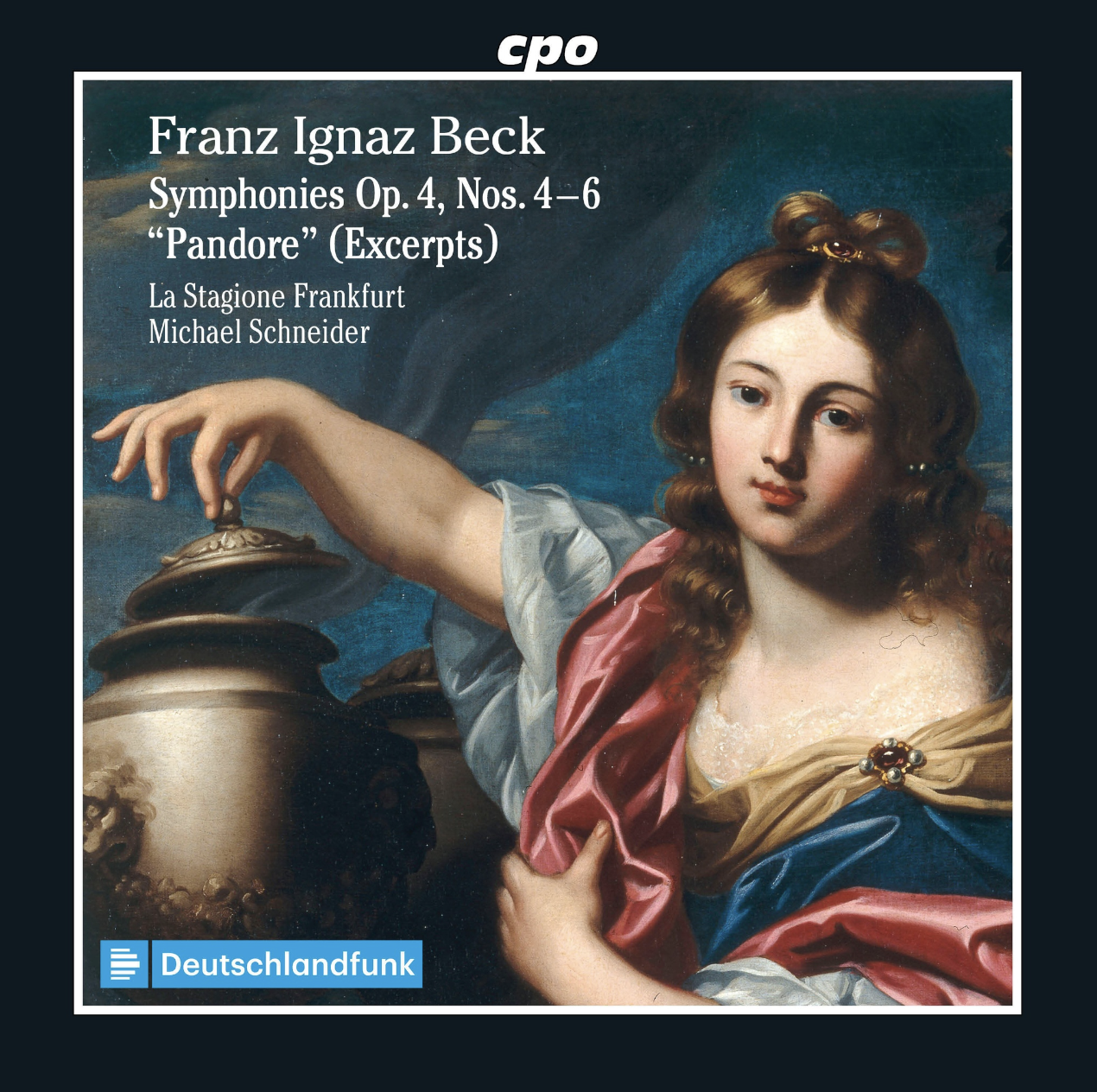
Franz Ignaz Beck lived from 1734-1809 and this ensemble has made several earlier recordings of the composer’s symphonic repertoire. This is my first appraisal of the composer and their project, with this album closing the enterprise. In addition to the three symphonies, they include instrumental numbers from the composer’s melodrama, Pandore, inspired, as director Michael Schneider writes, Benda’s Araidne in 1781.
I found it interesting that conductor Michael Schneider took Rosen’s book, The Classical Style, required reading for me at one point, to question the utility of exploring this music given the author’s highest esteem for Haydn, Mozart, and Beethoven. I found the book a difficult read, honestly, and it was hard not to choke on Rosen’s bias for the high classical ideals. I think, perhaps, Schneider gives the late pianist too much credit.
The concertos included here last between thirteen and a half to nearly eighteen minutes, with three to four movements. The amount of musical material for me seems like a good bit to get into things without losing focus, akin to baroque repertoire.
The performances are articulate and include both strong string and wind players, all around. The sound is also supportive on this release with Schneider’s long collaborator, CPO.
While it wouldn’t be fair to paint Beck as another Haydn, there’s an affinity for Joseph Haydn’s style in the opening to the opus 4, number 5 symphony in G. Maybe a bit of Mozart’s early whimsy. The bass line is carrying a lot there, in its rising figure. I can’t say C.P.E. Bach wrote things nearly this cheery, which is worth a note: Beck for me is revealing himself to be a positive kind of person. One who, I might add, is capable of coming up with some interesting lines for the melody-carrying violins. Not as evenly keened as Mozart, but he can write an attractive melody with enough interest to pull us in.
The selections from Pandore are even more interesting, if I may be so blunt. In some ways, it’s more of the same, attractive melodies, active bass lines, and good orchestration with support from the horns and winds. And for fans of counterpoint? The composer isn’t opposed to making that the focus.
I was entirely unaware of Beck before auditioning this recording, which I found refreshing. No, his music is not profoundly deep, but it’s no less valuable for conveying optimism with vivid color and through sensitive playing.
This release has me wanting to explore the ensemble’s earlier offerings by the same composer. His voice is not entirely foreign, but at the same time is also not familiar. It’s in that confusing nexus that I find offerings here so refreshing. An honest hour of music that I think many will find intriguing, even if it didn’t qualify for deep study by the pianist and author Charles Rosen.