Bach for Two • Lischka & De Cat
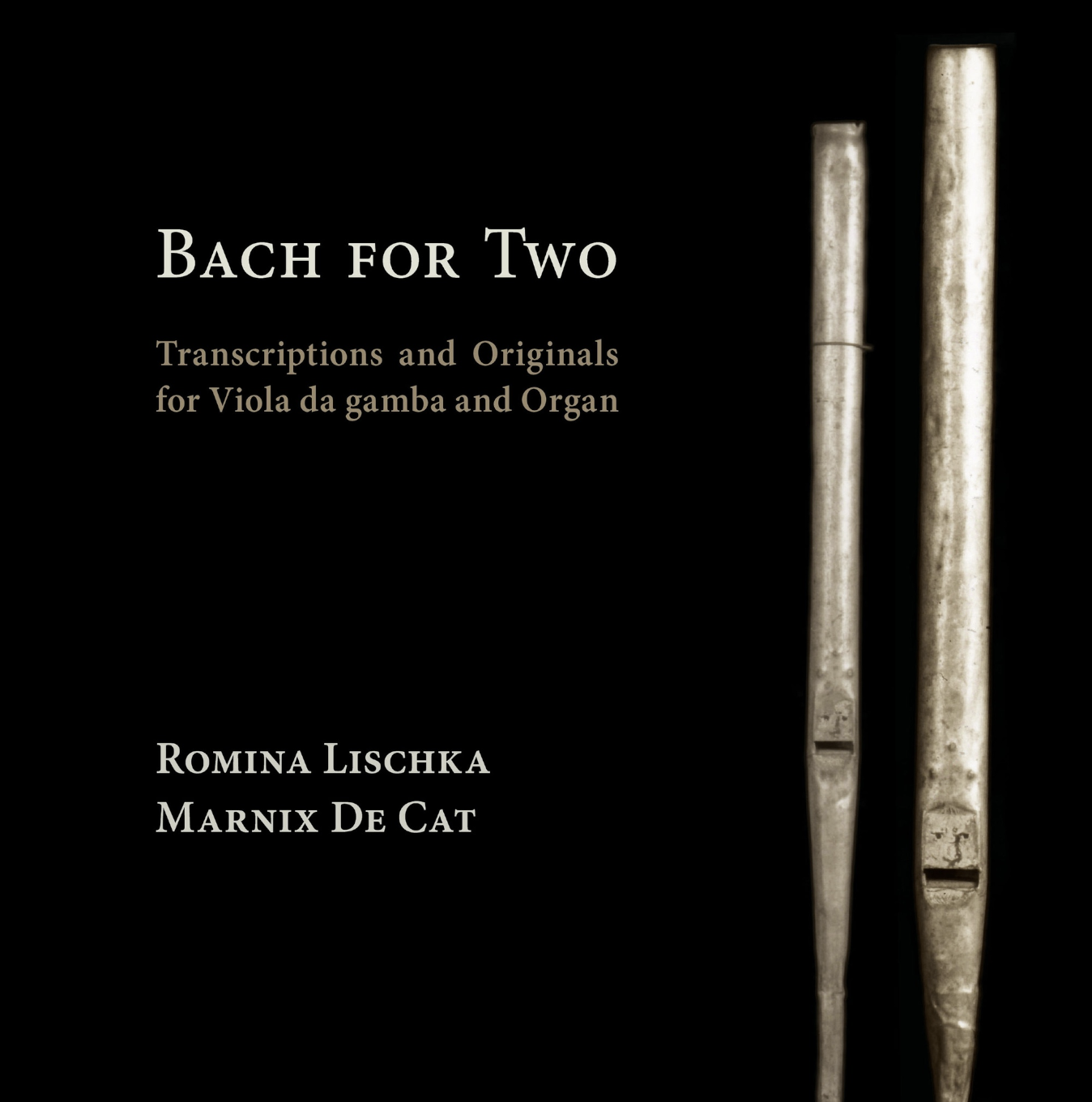
I’d never gotten around to reviewing this album which was released in late 2021, recorded in May of 2019: a collaboration between organist Marnix de Cat and viol player Rominia Lischka. The major pieces tackled in this album are the gamba/keyboard sonata, BWV 1027, the trio sonatas for organ BWV 529 and BWV 528, and the rest are organ pieces, seven in all.
The Ramée release is thankfully blessed with good sound. Lischka plays on a variety of instruments, to fit her role, and the liner notes include a picture of her being seated near her partner, projecting out into the church: Sankt Katharina in Kettenis, Belgium. The program overall is 76:29, a generous program. De Cat’s choices in registration for the organ are very interesting to me, taking on, as they write, a chamber sound, which is enhanced by the smaller church that, as they write, “is both highly articulate and transparent.” This comes across in the recording in spades.
The sound of the viols tends to lean on the piercing, a great foil to the organ. I’ve now heard recordings of baroque violin with organ, which I’ve liked, and this combination for me is another winner.
The choice to give the cantus firmus to the viol, too, is a smart choice, as we get in the chorale-based pieces such as *Allein Gott in der Höh sei Ehr, BWV 662. There’s a timberal richness achieved with this organ and viol together, and one might not immediately realize it is two instruments, given the ability of the organ to produce a sound not totally foreign to what we experience; however the affective nature of Lischka’s playing betrays this idea upon careful listening.
The two trio sonatas, originally left to us for the organ alone, have been re-engineered by musicians for decades. Obviously here one of the leading voices is given to the viol, and in each case, the result is satisfying. There’s again, I need to say it, a real synergistic relationship between the two instruments here. And the balance, always, has been well established by the musicians and recording engineers.
The middle movement of BWV 528, for me, is a sublime experience. It’s the simplicity in the way it’s presented, with great transparency that elevates the music, offering something that nourishes the soul. Bach is certainly the most responsible for this, but these musicians don’t get in the way of his genius.
It’s also refreshing to hear familiar pieces like these coupled with less known numbers like track 13’s Vater unser im Himmelreich, BWV 682. Introducing a new voice and sound to the texture is interesting, I think. It’s a type of musical deconstruction, in so far as we get to hear the complexity of the original in a more transparent way, offering for me, at least, more respect for Bach’s writing.
In my system, the dark patina of the organ, coupled with its reach in the bass frequencies, was reproduced well using the stream from Qobuz at 96kHz. I auditioned this album across two of my systems, my primary system using the Grimm MU2, with awesome bass reach, and my built-in system powered by a Sonos amp in the dining room. In both cases the sonic characteristics of both instruments bloomed into something quite nice.
The album is ultimately so satisfying to take us away from the grind of daily life. Kudos to the musicians for conceiving of this collaboration, and my hope is that we’ll get more from them, with music by Bach in the future.