For the love of baroque and classical music (and somedays, jazz too)…
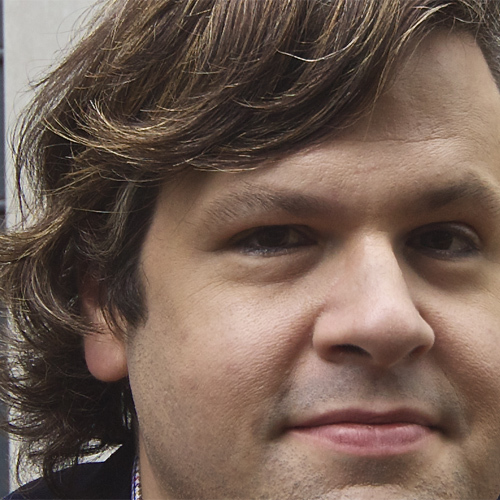
biberfan is a site primarily devoted to the love of baroque and classical music by John Hendron, Ed.D. I grew up with parents who had an interest in music: my mother played organ and my father played a lot of Pink Floyd on the stereo. I took to the organ and they bought me a piano at the age of five when I formally started taking lessons. Find more at my professional website.
A few more details about your resident curator:
- I started formal piano lessons at age 5 and more than playing other people’s music, I realized I enjoyed creating and playing my own. I later took up the trombone in elementary school and studied both with John Silvers in Pittsburgh.
In 1988, I started learning Finale on the MacPlus, which ignited an interest in MIDI and I was purportedly the second purchaser of the notation software in the state of Ohio after Oberlin Conservatory. (I’m also a so-called Apple Fanboi and the background color of this website is aligned with the color of the original Macintosh, circa 1984.)
I attended Avon Lake High School under the baton of Harry Pfingsten, who had inspired Tom Batuik’s comic strip, Funky Winkerbean.
- In high school I joined the prestigious Cleveland Youth Wind Symphony as a trombonist under the direction of Gary Ciepluch.
I studied music at the University of Rochester and the Eastman School of Music; notable pedagogues included Augusta Read Thomas (orchestration), Alfred Mann (Bach), Massimo Ossi (music history), Daniel Harrison (theory), Donald Hunsberger (wind conducting), David Effron (orchestral conducting). That’s where I decided to drop the trombone after studying in the studio of Mark Kellogg and focus on music composition.
At Rochester I was a founding member of the Stingers trombone choir and ended up writing and arranging a lot of music for trombone(s). The premier of my wind ensemble piece Entrance, Passage, and Fugue was premiered by the University of Rochester Symphonic Winds.
For graduate school I returned to Cleveland and earned a masters in music education from Case Western Reserve University where I got to study under Dr. Ciepluch again and focused on wind conducting. During this time I also premiered several original compositions, including keenésa for wind ensemble at Kulas Hall at the Cleveland Institute of Music (CIM).
Despite the focus on trombone, my love had always been baroque music. I continued study with John Seuss in musicology at CWRU. I also preformed with both the Case and CIM wind ensembles.
I started biberfan.com in 1997 as a personal website and part of the content on that site was music-related. In 2027, I plan to celebrate the site’s 30th year. The name “biberfan” was quickly chosen as an alternate handle when creating a secondary UNIX account at the University of Rochester in 1995. A few years prior, I had discovered the music of Heinrich Ignaz Franz von Biber through recordings and figured he was obscure enough to come up with something clever online. The name stuck.
- Outside of music, my skillset includes web design, education leadership, graphic design, and I’m pretty good in the kitchen.
About the website and how to refer to reviews:
- I will accept advance copies of recordings but I reserve the right to not publish a review if I do not have positive contributions to make about the recording.
- Know that my expertise is around music composed between 1600-1800. I’m also a fan of contemporary “minimalist” composers. I may not be the best fit for your repertoire if you’re a living composer.
- I do use album cover art as part of my review as a kind of fair use. If you do not want your album art on this site, drop me a line and I’m happy to remove it.
- If you want to amplify the reach of one of my reviews, you can grab the URL to it and use it to point readers to a review. If you quote my review, I’d prefer to be named as biberfan, all lowercase, which refers to the website and to the reviewer.
- I am a fan of the Historically-informed Performance movement, but I’m open to performances that present older music on modern instruments.
Reviews
I recognized years ago—often with a copy of Gramophone or Early Music in my lap—the value in reviews of music recordings. While they can help to market new recordings with more listens or purchases, they also serve as a commentary the music itself, including what makes the music great and how the approach of the artist(s) aligns with my own preferences with performance.
This is of value not so much to the artists themselves—but those who find they have a similar (or dissimilar) taste to my own.
Many reviewers focus on the musical performance alone. I tend to see recordings as more than just a performance: it’s a collaboration between the composer, the musicians, the environment where the recording is made, and the knowledge about how to make a good recording. In that way, I approach writing about a live performance differently than writing about a recording. My ratings reflect the recording, balancing as best I can, the musical content, the performance, and the sound. I do my best to separate these in my writing.
I do accept the offer to audition recordings of pre-releases from both well-known and emerging artists. Among these recordings, my policy is to not review anything sent to me that I don’t think I can proffer a supporting review. That said, for reviews I seek out on my own, my aim is to always showcase the reason behind why something doesn’t maybe work for me. Some artists don’t read reviews and I get it, I’m just a guy with an opinion. The site becomes of value if you find that I like what you like, and I don’t like what you don’t like. In other words, while we may not always agree on taste, I have a taste and aim to reveal it in each review.
In 2024, I began adding stars to the reviews as a type of objective comparison for readers. However I need to explain what these mean to me.
⭐️ – I do not recommend this recording and cannot see its merit. I hope never to use this rating.
⭐️⭐️ – This album has some merit to it, but over all, it might not be something I will not return to listen, except maybe to compare it to newer albums with the same repertoire
⭐️⭐️⭐️ – This is a solid album. The music is played well, generally. The sound quality is okay, maybe not superb. Thinking of a bell-curve, most of my collection of physical CDs are probably three-stars.
⭐️⭐️⭐️⭐️ – This album is one you should buy (if you collect recordings). The technical aspect of playing is matched by an interesting and moving performance that moves you emotionally.
⭐️⭐️⭐️⭐️⭐️ – This is a so-called desert island album, it’s one you can’t imagine parting with. Everything comes together—music production, sound quality, and extremely engaging playing/singing. Some may consider these their reference-class recordings, the one others get compared to.
Equipment
I listen to music actively in my car, but also at home in multiple environments. My home system started out with ripping CDs and using iTunes, eventually moving content over to iPods. A lot has changed since those days. I’m currently only interested in digital reproduction and I do not collect vinyl. For those interested, my current system consists of:
Backend. I keep digital rips of all my CDs in Apple lossless format on a Synology network-attached storage server (NAS). This server also houses personal files and is backed up over the cloud.
I run a Roon ROCK server attached to my home’s ethernet network. I have several endpoints I use at home.Office desktop. I am using USB to connect to my MacBook Pro for headphone listening in my home office with a Topping DX5.
Office speakers. For my college graduation gift, my parents provided me with a Rotel integrated amp and B&W 600 series bookshelf speakers. The Rotel died some years ago, but the 602s are still going strong. They are joined to an NAD integrated, an Auralic streamer, and a BelCanto DAC 3. I feed the Auralic via Ethernet but also via Toslink from an older AppleTV to stream music from my computer to the speaker setup.
Dining Room/Kitchen. Our home came with built-in speakers powered by a Sonos amplifier. This is Roon compatible and we use this to push music into the kitchen area.
Listening room. The main setup is currently powered by a Classé class A/B stereo amplifier, Avalon Acoustics loudspeakers, and the Grimm Audio MU2.Headphones. I listen on Apple’s AirPods Max, AirPods Pro 2, Sennheiser HD 580, Sennheiser HD650, and Meze Elite cans.
For those interested, a dump of my current music collection (Late 2024 – XLSX).
In August 2026, I took the last year’s worth of website data from Google Analytics and mapped the cities where repeat visitors have originated. These data were cleaned to remove bots and other automated scrapers of the site. Hopefully if you’re a repeat visitor, you’ll see your city represented.
欢迎来自中国的音乐爱好者!
如果你是从中国的社交媒体平台读到我的乐评并来到这里的,请了解:我并不是中文母语者,也不是用中文写作的。非常感谢我的伴侣,帮助我把这些乐评分享给中国的读者。感谢你的来访,希望你喜欢这里的内容!