I recently sat down with a friend to focus on this website and recent changes.
A Place to Listen, a Place to Play
What prompted you to start biberfan in 1997, and what was on the site before music became its focus?
I was in college, learning how to create web pages. I had gotten a job working on web pages for our university. Initially, I was creating graphics while a friend was learning to code HTML.
I saw a lot of people my age creating websites to have a place online. There were bragging rights when you created your own site, with your own code and your own look and feel. Many of the people I followed were web developers themselves, getting into the business of creating corporate websites and other projects.
People were also using their websites as diaries, sharing thoughts with the world. That was a powerful notion: suddenly I could have a voice through the internet, an opportunity that previously seemed to belong to published media.
I was writing stories and talking about music—just about anything that mattered to me, from a restaurant I visited to things that happened with my friends. I still have records of those early posts, although they’re not on the site today. They were experiments. That’s how it started.
As those experiments developed, what drew music to the center? Were you thinking about an audience beyond your friends?
I don’t know that I thought much about an audience beyond friends. It was enough to get reactions from people who knew me, who might visit to see what was new or what I was listening to.
Music had always been an important part of my life. My parents got me a piano when I was five. I don’t know that they were trying to turn me into a prodigy, but they recognized a talent and supported its development. I enjoyed the art of creation. It took me many years to realize that I could be nourished through creation in other ways, too. Today, developing this website is one of those ways. Writing is another. Music is still something I can lean into.
But I felt isolated growing up. In eighth grade, I made a huge discovery. My father had a stereo system, and my mother and I were always challenged to find him a gift. The CD revolution had started, so we bought him a CD player and about four CDs. It was torture because all he wanted to do was play those four CDs!
Over winter break, I went to the public library and checked out some CDs. My father had headphones, and I felt safer listening that way. It wasn’t that I was afraid of classical music; I didn’t know how I would be perceived listening to it. It became a private exploration.
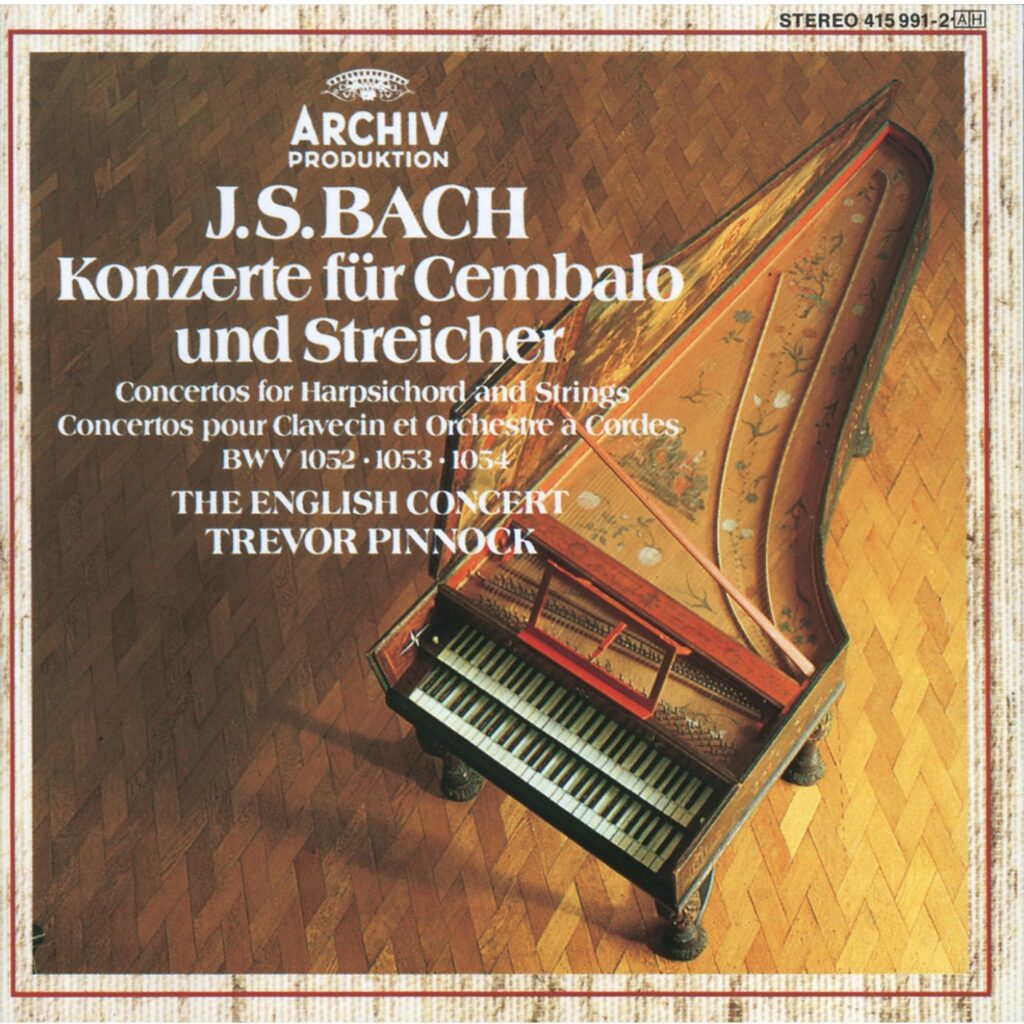
I found a recording of Bach harpsichord concertos by Trevor Pinnock and the English Concert. I can still see the cover: a harpsichord on a wooden floor, photographed from above. I felt as though I had discovered something. Hearing that music overwhelmed me. It made such a connection.
From then on, I wanted to connect with other people around my love of this music. Growing up in the American suburbs, I didn’t have anyone to talk to about it. A few years later, just out of college, I was still hungry for that connection, and music became a frequent topic on the website.
I started emulating the reviews I read in Gramophone. I thought, “I’m probably not qualified to do this yet, but I’m going to try.” I had something to say about the music, and the website gave me that opportunity.
What was it about those harpsichord concertos that overwhelmed you? Does it still explain your love of baroque music?
The funny thing is that I was studying piano and playing music from different periods. I’d played easy Bach pieces, so this wasn’t my first exposure to him.
It was the harmonies, the style, the unusual sound of harpsichord with strings—that percussive quality cutting through the texture. Above all, it was Bach’s way of writing. As I learned later, that style was also cultivated around him. He was a product of his time, and that particular musical flavor caught my attention.
Baroque music can be very accessible. That might have been part of it. I think of going into the Fresh Market, where baroque music seems to be the soundtrack for shopping.
But for me, something simply clicked. It might be like going to a Vietnamese restaurant for the first time and discovering an affinity for fish sauce, lime juice, and fresh herbs. Those flavors wake you up. This music woke me up.
I’d love to say it woke something in my soul—that perhaps I’d been alive during the baroque period and had a role as a musician. That’s speculation, of course. I don’t know how else to explain it. It spoke to me, and I wanted more.
I started looking for more Trevor Pinnock recordings. I discovered Archiv Produktion, the Deutsche Grammophon label specializing in this repertoire, and other labels devoted to baroque music performed on what were then called “authentic instruments.” That launched a lifelong pursuit of understanding baroque music. Later, getting a degree in music opened me to the wider world of Western art music.
When you write today, are you trying to help readers understand a recording, or hoping they’ll have their own version of that moment with the headphones?
I’m trying to write for myself. By that, I mean the earlier version of me. If I’d had access to the internet in 1988, when that album awakened my interest, I would have searched for ensembles and composers, trying to find out what else I could hear.
We didn’t have streaming or even Napster. We had the public library and record stores. As a teenager, I wasn’t going to walk into the classical section and blindly buy CDs or tapes. Even stepping into that section felt unfamiliar.
When I write, I think about someone like that: curious about what makes a good recording, what might pique their interest in a composer, a style, or an ensemble. I try to explain what I’m hearing.
Roughly a third of visitors come through searches, typically for a performer and a work. Recently, after I reviewed a recording of the Goldberg Variations by Lim, people arrived by searching for combinations of those names. They want to know something more about that performance. Perhaps they’ve already put on headphones and started listening.
Recordings come with booklets that provide an artist biography and historical context, but people sometimes want something beyond that. They’re trying to make sense of what they hear and why they’re reacting to it. A review can help someone explore and get more enjoyment from the experience.
It’s a very human thing to want to know what others think about something we’ve encountered. I have a good friend with whom I can talk for hours about a recording or a concert we’ve attended. Some people need that connection but don’t have anyone in their immediate orbit to share it with.
That’s one reason I feel compelled to write reviews. I enjoy finding out what other people hear and experience, and I want to contribute my voice. I have a background, I have insight, and I think I have good taste. The website lets me offer that to anyone who wants to partake.
After years of a consistent review format, what prompted you to make the site more whimsical?
The website has had several incarnations. I started by hand-coding HTML, then realized I was blogging without blogging software. Eventually, I moved to WordPress.
The site was hacked, which devastated me. I didn’t have the technical knowledge to recover it as it was, but I was able to extract the content from the database, have it cleaned up, and move it into Squarespace. I used that for many years.
Readers may remember the grid of album covers. That came from a Squarespace template. It worked well, and adding reviews was easy. I could focus on content without thinking about maintenance and backups.
Still, I felt a little as though I was cheating. I had this technical background. Even with WordPress, I’d never been satisfied simply choosing an off-the-shelf template. More recently, my job brought me back to web design. I redid my professional website and enjoyed it so much that I wanted to bring that creative energy back to biberfan.
I recreated the album grid, but added a row of random reviews. There are more than 800 reviews in the database, and I wanted people to encounter that catalog, rather than focus only on the latest releases.
I also wanted to bring the BachCast podcast forward. It’s been dormant for a few years, and I’d like to return to it. Those episodes take more work than reviews: research, planning, preparing clips, and finding time to record. My goal was to make 100 episodes, each focusing on a Bach work and some favorite recordings. I think I reached about 62.
Then there are the beavers at the top of the page. I don’t explain them. Astute readers will recognize the connection to Heinrich Ignaz Franz von Biber. It’s a playful mascot. If you get it, you get it. If you don’t, perhaps you’ll be curious enough to find out.
If you wait about five seconds, the beaver on the left begins playing his violin, and those on the right clap in adoration. There’s nothing to hear—it’s a silent animation. That was the first whimsical touch.
The albums themselves have become interactive objects. What experience were you trying to create?
Instead of displaying only cover art, I wanted the albums to look like CDs: physical, three-dimensional things you could touch or tap.
On the front page, hovering over a CD turns it around to reveal the rating and other details. On the old site, the rating sat below the cover. Here, you discover it through interaction. Most visitors use desktop computers, so as they move their mouse across the page, they’ll discover pretty quickly that the covers turn.
At the bottom of a review, related albums appear in a different three-dimensional arrangement. They move when you hover, but they don’t flip. It was important to present them differently because, if they looked exactly like the front-page albums, people would expect the same behavior.
Then I had this technical desire to make a CD case open.
I don’t regularly purchase CDs anymore, although I’m still a sucker for used ones. I loved going to Tower Records and thumbing through CDs, finding something new. There was that tactile experience: cutting off the plastic, opening the case, smelling the ink in the booklet. Getting a new CD was an experience, and I wanted to bring some of that to the website.
Now, at the top of a review, you can tap the CD and open it. Inside are links to purchase or stream the album. I use those myself when I’m on my phone and want to hear something I’ve reviewed. They’re search links, which meant I didn’t have to find individual album pages across every service. The solution works pretty well.
What I write is the most important thing, but these details are the whipped cream and cherry on top. I want people to enjoy coming here. If I can help them have a good time through HTML, CSS, and JavaScript, why not?
This past week, you added two mini games. How did biberfan become a place to play?
There were three reasons. First, I wanted to challenge myself technically and explore what was possible.
Second, I’ve been studying gamification in my professional work for several years, particularly for professional learning. Gamification applies game psychology to things that aren’t games. Think of Peloton’s leaderboards, McDonald’s Monopoly promotion, or the rewards and birthday surprises in the Starbucks app. To study gamification, you have to step back and understand the techniques games use.
Third, I’ve been interested in what AI can help us do. I’ve programmed, but I don’t consider myself a programmer. I wanted to see what today’s tools made possible, particularly for games that could help people learn.
These are proof-of-concept projects. Music is the playground I’ve been working in. The games were polished enough that I felt comfortable sharing them, so I embedded them in the website.
I don’t want to hype them. They’re not the core reason people visit. They’re a little frivolous. Some people will laugh, some will ignore them, and that’s fine. Others might think, “This is cool. I wasn’t expecting this.” That surprise is part of the whimsy.
It’s like arriving at a hotel and finding an unexpected benefit: someone has thought about how you’ll feel while you’re there. That’s how I’m thinking about the website.
What are the games?
The first is called Ritornello. I was thinking about a game I played on my Apple II in the late 1980s. It was popular, simple in concept, and a lot of fun. I took what I remembered and made something in which you fence with famous violinists. Naturally, your character is the little beaver from the top of the page.
The second is The Secret Concert, a trivia game that’s a more natural fit for people interested in baroque music. It tests general musical knowledge and details about composers, but also incorporates things I’ve written in reviews, which is fun.
We added another whimsical feature to the BachCast, too. Default web audio players are pretty boring. I’ve experimented with making them prettier, but this time I wanted to gild the lily. The site now has a CD player with a spinning disc. The artwork on the discs features beavers, again because of the name. I hope people subscribe through their podcast service, but there’s something fun for those listening on the website.
Where does AI fit into your creative process, and where do you bring your own judgment?
I’ve become comfortable using AI in my daily work. I see it as a very capable assistant in my pocket. Sometimes it’s a thought partner. I want feedback, even an argumentative partner who will challenge my ideas.
For the games, I dreamed up what I wanted, and the process was almost like hiring a programmer to build it, at a very economical rate with today’s pricing.
With the trivia game, I had ideas about what might be interesting, but I’m not a game designer. I’ve researched games and gamification, yet you don’t internalize that learning until you make something that applies it.
Writing is similar. Reading lots of books doesn’t teach you everything about writing one. You have to write, reflect, rip things up, and start again. You have to do the work.
Much of what you see on the website exists because I learned to program when I was young: BASIC, then assembler, then other languages. Those experiences inform my understanding of what’s possible and what to ask AI to help me do. I see it as a powerful extension of my creative talents.
As biberfan approaches thirty years, what would make its next chapter worthwhile? What do you hope someone carries away?
To get better at writing, coding, or creating games, you have to do it. The site turns thirty next year, and the reviews I’m publishing today are light years ahead of what I wrote before 2000.
Looking through the archives recently, I found reviews with typos that I evidently hadn’t minded publishing. The reviews were short, giving a gloss of the experience. Some magazines still publish that kind of review: a taste that helps you decide whether to explore further.
I’ve also been inspired by more detailed reviews that discuss performance or historical context. My style sits somewhere between. I’m less technical than some reviewers, and I offer a personal opinion. I’ll often describe my history with a work or ensemble, going back to when I first discovered it.
Ultimately, I want reading the site to feel like having a friend you can trust. I want to be a voice people can trust.
I love getting emails saying something resonated. Sometimes people write to argue, to say I’m off or wrong. That’s good, too. You don’t have to agree with me. But if you find value in something I’ve written, that matters, and I’d love to know.
I’ve also created something very old-fashioned: a guest book. It’s not there to harvest or sell email addresses. As you can see, the website isn’t about advertising or making money. It’s a passion project, and it has been for nearly thirty years.
If you’d like to sign the guest book and tell me about your listening habits or why you visit, that would be great. And if you’d rather drop me an email, that’s great, too.
John Hendron is the curator of biberfan and works professionally in the education space, currently in a role focused on marketing and communications.