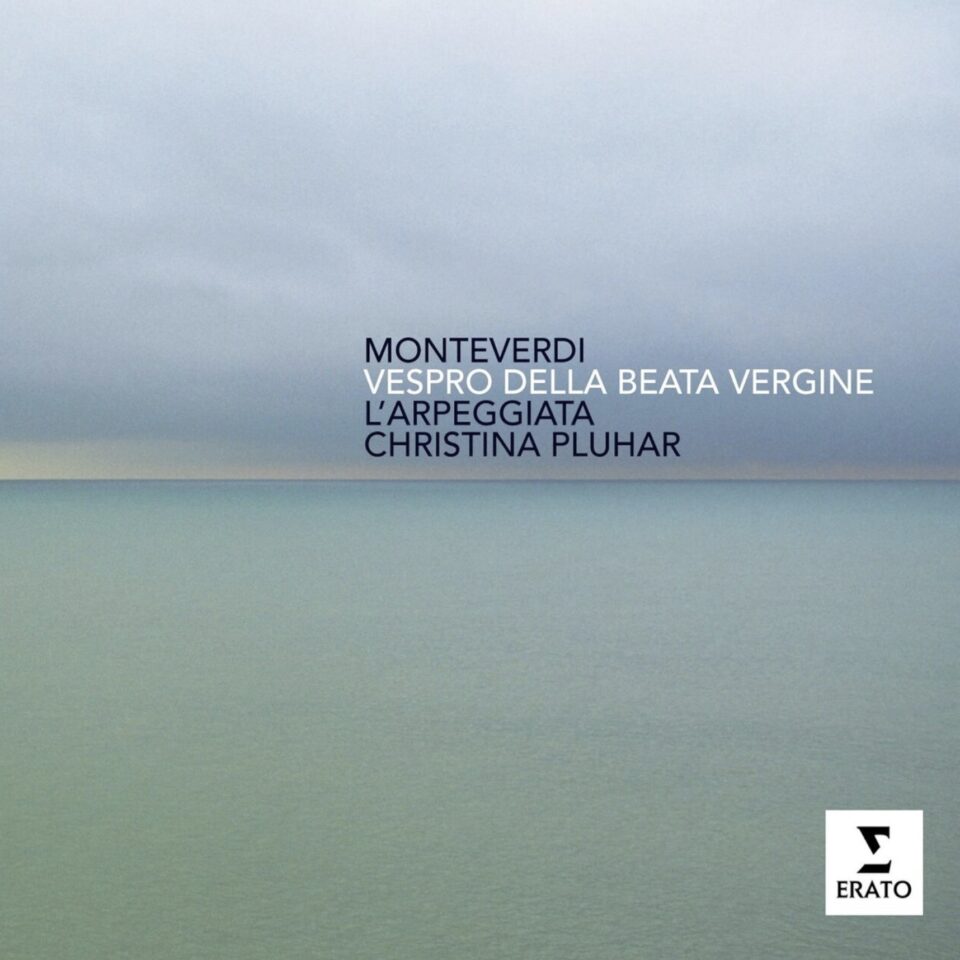
The recording was made at the Arsenal at Metz in France. Despite not being performed in a church like St. Mark’s in Venice, there is reverb present in the recording, which gives us a sense that we’re close to the performers, as opposed to being far away. As a comparison, John Eliot Gardiner’s recording for DG Archiv was recorded in a reverberant church. The soloists for Pluhar seem better matched in tonal style, and we get a far closer listen to their abilities with this recording.
Needless to say, I prefer this new edition to Gardiner’s. In ways, the vocalists remind me more of the German ensemble Cantus Cölln, albeit with even more gifted instrumentalists to back-up the works. (They, incidentally, recorded Vivaldi’s last major vocal masterpiece on Harmonia Mundi.) Monteverdi is believed to have composed this work between 1608-1610, a major project after the completion and composition of his opera, L’Orfeo. In fact, he borrows the introduction, a fanfare of sorts, from Orfeo for this work, and it may have been a work he simply adopted from a piece written for a patron. A calling card, if you will.
Pluhar mentions in the notes she has omitted some of the liturgical texts to improve the concertizing experience, and because she has used smaller forces, she’s able to take faster tempi. Great solutions, I think, to hear this collection in new light. Whether or not you are in a church, listening to this as a major devotion to Mary in sequence, or as a modern listener, outside of the religious context in “chunks” that fit your listening habits, there’s variety to behold in Monteverdi’s work, which is in a weird place, historically. This composer is literally inventing some of the language and context for music like this as he goes along… scoring is minimal, with lots of guesses to be made. L’Apreggiata is ripe for the task, with plenty of interesting continuo forces to tickle our years and to support the vocalists. Imagine looking up in a large church, seeing gold in a dome, reverberated, delicious sound, and the gold seems to be glittering. This is the mood set by their 7th track, Duo Seraphim. The glitter comes from plucked and struck continuo, two well-matched male vocalists make wonderful harmony above that, and we can’t help but gaze upward, to the heavens. Everything is so well done here.
My favorite piece among the set is the Sonata sopra Sancta Maria, ora pro nobis. Fanciful playing by cornetto in concerto is light yet affective, the violins are perfectly in sync, delighting us in the majority of their notes, but then what’s next? That almost-angelic choir of high voices that comes in, then the instruments, fast, fleeting, and upward everything seems to go. Jaroussky did a fabulous job with this one, in his recording pour Mazarin, which I think does better than this one, but that was an arrangement of sorts, where here, we get a more authentic reading from the text. The Magnificat summons the power of Gabrieli in its opening, and where Pluhar gets all of that weight and bass is beyond me; but all forces seem on hand to send a glorious message.
Those used to Handel and Vivaldi may have issues letting this music into their daily lives… it’s early baroque, and on some levels it is simple music, but the emphasis is on the lines, and not the harmonic progressions that drove so much of later baroque music. This is a new, modern approach to Monteverdi with plenty of expertise in looking backwards… historical instruments, singers who adopt an early baroque style devoid of trying vibrato… all in a clear, and glowing sound.
November 2026: What we don’t get, and shouldn’t have, is Pluhar’s arrangements that present music in a quasi jazzy, or contemporary style. The treatment here, however, is still sanitized. What I think this album does is give us a version of this music for those who might not otherwise stomach a fuller 2CD production. The other thing is that everything is up close in a way that many recordings made in churches can’t provide; the sound is clear and transparent but in thinking about the new recording by INAlto, this one disappoints in the effort to make it more palatable for the modern audience. In some ways, the tracks included here may offer real benefit for students of this work who can hear it up close and personal.
When I originally wrote about this album in 2011, I was not rating albums. Today, the rating applied is my reflection of living with this recording for the past decade. In short: the singers offer a lot to admire and the instrumentalists are all fine players. But in this paired-down state, the music loses something that an historical approach offers. Some may really like the swifter tempi.