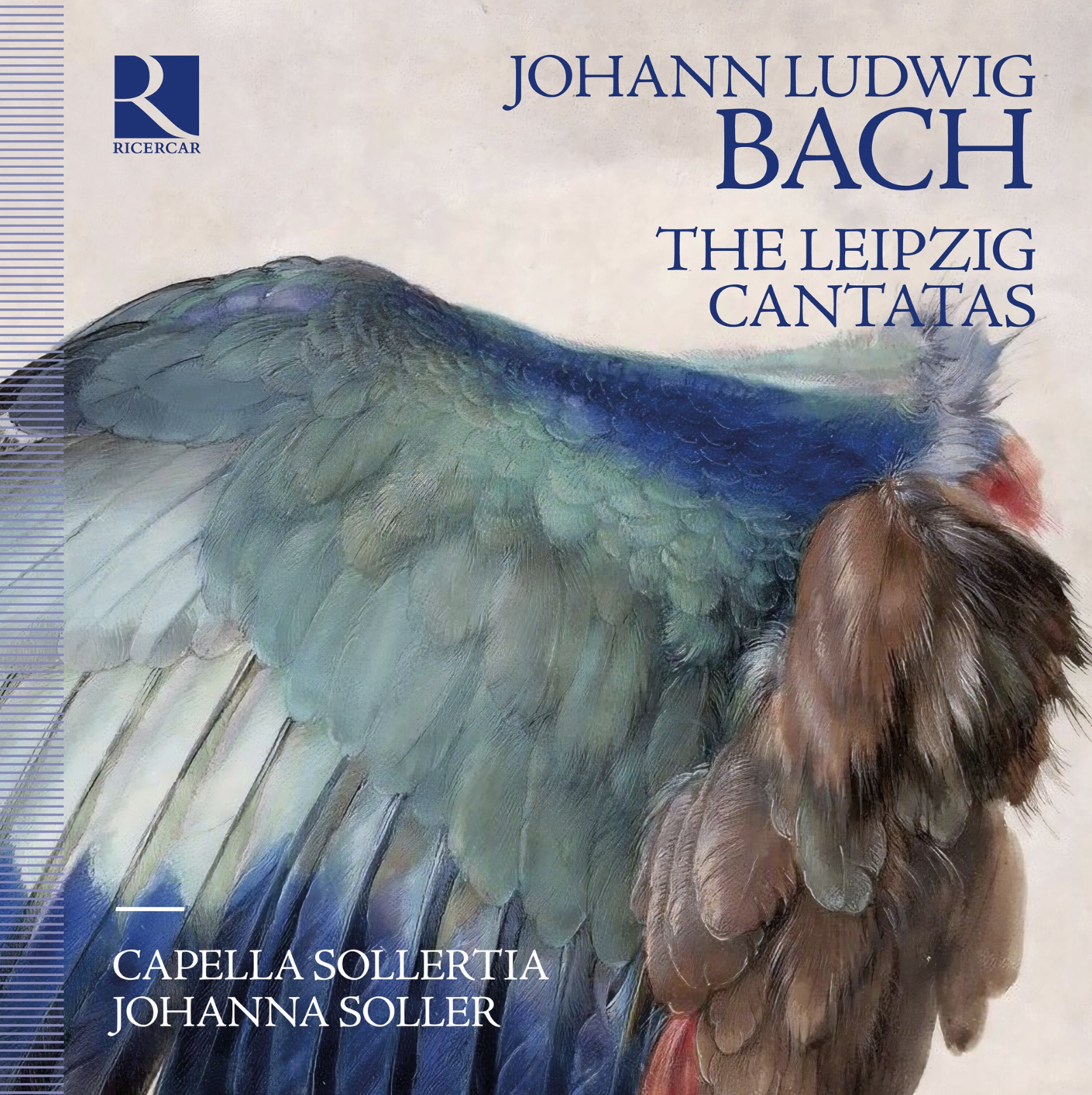
Johann Ludwig Bach: Cantatas
This album reminded me of a point to consider as we look at music and what it means to us, out of the context for how it was written. As a case in point, these pieces were written to aid in worship services and were sold by the composer to supplement his income as a working musician. Today, when we pop this CD into a player or stream the music over the Internet, I’m guessing that is not how the music is being enjoyed. For me, in any case, it is. You may well think that this isn’t a new phenom: we can say the same about J.S. Bach’s cantatas or Handel’s Water Music. The difference is that for modern audiences, “Bach” and “Handel” are big names. We want to explore the mastery of their works.
In this recording, we’re looking at cantatas by one of Bach’s distant cousins, who lived during his time (J.L. wasn’t in the Alt Bach Archiv). You can appreciate these on their own, on their own merit, or as pieces that were, we can assume, admired by J.S. Bach, copied out and used himself in Leipzig, hence the title of this album. Situational-izing these has now been set.
Peter Wollny:
Johann Ludwig Bach’s eighteen cantatas form a treasure trove of excellent music from the early 18th century that has become available to us — and it is scarcely to be believed that it has only now entered the repertoire.
Excellent liner notes from Peter Wollny provided me the context of this album and its music: Johann Ludwig was a distant cousin of Johann Sebastian Bach. He’d published a series of cantatas with great success and Johann Sebastian copied eighteen of these for 1726 performances in Leipzig. The rest have been lost; and this recording is the first to showcase the performance of the collection from J.S. Bach’s hand.
Probably more interesting than these being by another Bach, these works provide a look into Thuringian music culture contemporaneous with J.S. Bach. Beyond the convenience of using these in lieu of original compositions by Johann Sebastian, evidence exists showing C.P.E. Bach’s try at selling the collection after his father’s death to a fellow musician interested in preserving German music traditions.
Capella Sollertia is led by Johann Soller, who was a student of the keyboardist Christine Schornsheim. I think the singers and instrumentalists she has assembled for this project are ideal; while vibrato is used, it’s used carefully, and the voices are each captured clearly against the instrumental ensemble, which includes brass and winds. In JLB 7, Ich will meinen Geist in euch geben, horns are used; the score calls for “Clarini piccoli ò Corni di Silva”. As far as I know, these names weren’t used by J.S. Bach, who more typically called for “tromba” or “corno.”
It’d be interesting to know whether Bach’s Leipzig congregation knew these were composed by his distant cousin or if they detected a difference toward performance. In a few cases we know Bach edited the original choruses of some of these cantatas, offering his own solutions instead. We can only surmise as to why, whether it was a stylistic edit or one tailored to the performers in Leipzig?
There’s no question the style of these works is different from Johann Sebastian’s own style. My own assessment is these works tend to be bit more direct; the third movement of the same JLB 7, a baritone aria speaks directly to us as listeners. The music that follows is likewise approachable, dramatic but not overly so. It made me think of the Leipzig town council complaining that Johann Sebastian’s music was too complex, this faire might just have satisfied their needs.
When I speak of drama, take a listen to the opening of the fourth CD, JLB 9: Mache dich auf, werde licht. Within the first movement we start in a major mode; end with a cadence in the minor, then return with the bass voice to complete the movement. This isn’t high drama as we might expect from an opera; but the use of vocal affect underpinned by the instrumental ensemble sends the appropriate signal.
The aria Mache dich auf from the same cantata for soprano features a nice obbligato part for cello; it showcases that Johann Ludwig, despite a small requirement of instrumental forces, does well to utilize them with élan. It’s enough to heighten our interest, but not so much to interfere with the vocal text. It shows his comfort with Italian style. The sixth movement features a dotted rhythm, with good dialog between the instruments and the alto singer. The melodic themes used throughout, including this example, showcase the composer at ease with strong compositional skill. This movement in particular made me think of Handel; no specific work, but maybe the use of oboes with the strings? Listeners will certainly judge Johann Ludwig perhaps not in anywhere the same league as Handel with his compositional skills, yet there’s no denying he’s got skill. (To be fair to Johann Ludwig, he also wrote opera, comparing Handel’s vocal prowess to these more liturgical works might be unfair.)
The opening of JLB 1 features the chorus; there’s something attractive about hearing the choral focus, backed mostly by basso continuo with some upper string interjections, showcasing the space where this recording was made, the Himmelfahrtskirche in Munich. What follows after this opening is impeccable singing from the soloists, not to mention the energetic, well-played instrumental fury in the cantata’s third movement. The tenor aria (fifth movement) is deftly accompanied by basso continuo including lute. The stereo effect between instruments and the voice is beautifully presented. The text of the last movement speaks of one’s heart, filled with the joy of being close to Christ; the music itself conveys this happy feeling in a profound way.
JLB 10, Er ist aus der Angst und Gericht genommen opens with strings and oboes before the bass voice enters. The Easter Monday text in English begins “He was taken away out of fear and judgment, who will consider the length of his life?” This opening movement acts to set the scene; a soprano recitative and aria follow reflecting on why Jesus had to die. Recorders come in (presumably played by the oboe players from the opening) to join the bass again. The alto/tenor duet is a busy affair “Christ's blood can earn me Praise and glory,” the energy seeming to help make the lesson implicit. The treatment of the two voices in harmony is attractive, as is the instrumental interludes again featuring oboes. Anything to get your attention? The chorus focuses on a religiously pragmatic point, that pagan rites can no longer serve to absolve sinners. The vocal contributions again are clean the duet, especially, given its speed, was nicely done.
With four CDs of music, it took my some time to appraise this collection. The music speaks on its own, but I’m thinking it’s likely to be of interest to those who have already embraced Johann Sebastian’s cantatas. The fact that the Leipzig cantor performed these works after copying them out makes them especially attractive in trying to better understand Bach and his world. I think back to my opening remarks on context, this music can very well speak to us if we ourselves are interested in the original context, looking at this as religious music that, like JLB 10, tells a Biblical story and aims to educate the audience. For those who have leaned into J.S. Bach’s own cantatas, these serve as a kind of bonus supplement. They are not equivalent, I will say again, but from an historical perspective they were preserved by Johann Sebastian and used at the Thomaskirche. And on a purely musical level, I find many of Sebastian’s cantatas interesting, even if I don’t have the text open before me. These work convincingly in this way, given that the approach here is a big more direct. This is no fault of the music or its composer, it’s just how our relationship with music changes over time as the context changes.
However you wish to look at it, these performances are well done.