J.S. Bach: St. John Passion • Pygmalion
Introduction
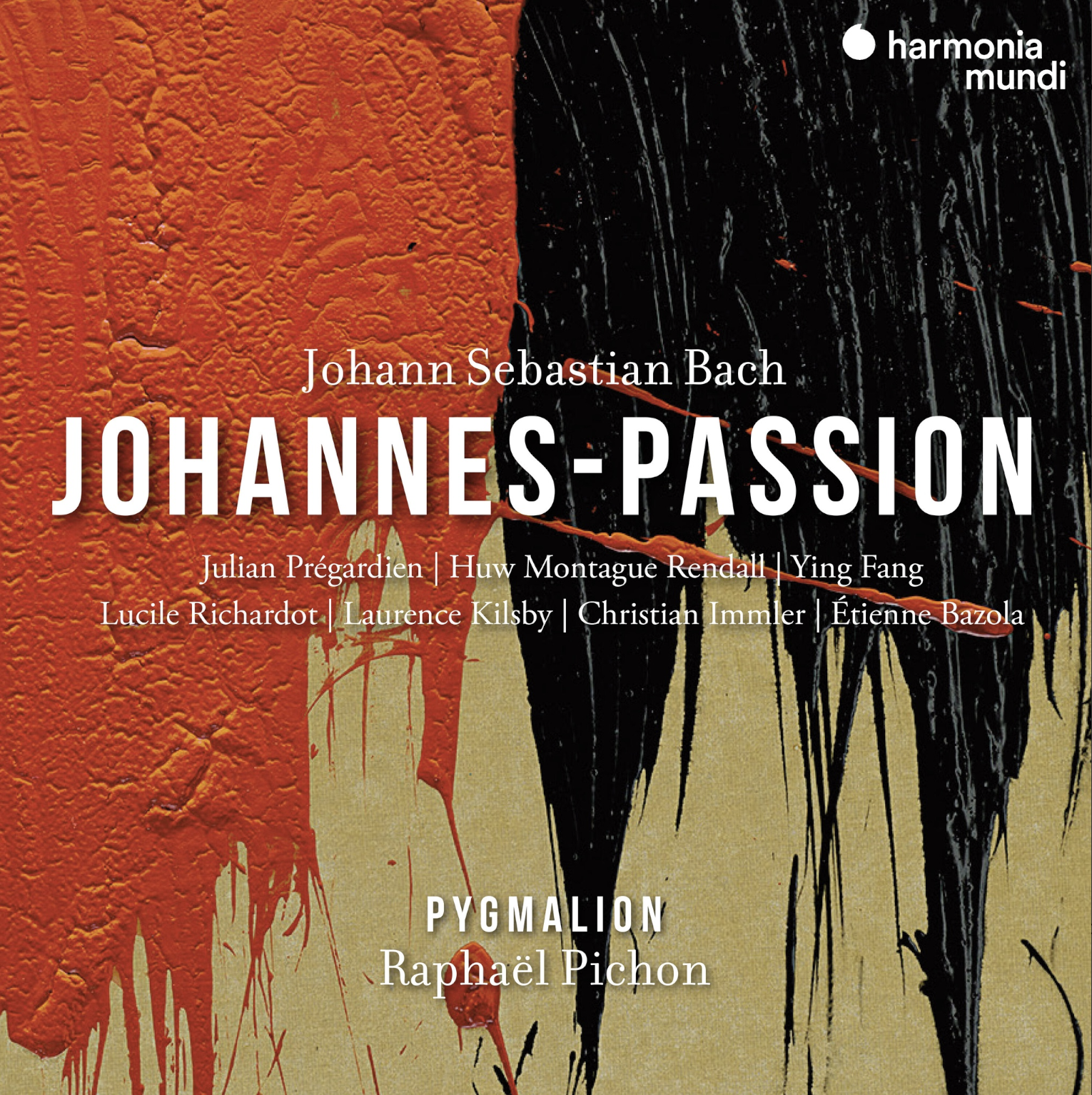
Raphaël Pichon's recordings of late with his Ensemble Pygmalion have turned out, to my ears, to be extremely engaging performances. This new release of BWV 245 (Harmonia Mundi, who continue to produce PDF booklets that use infinitesimally small text) carries a lot of what I'll call bravado and masculine energy. I can think of no bigger, bold Bach than that in some of John Eliot Gardiner's performances, but wouldn't classify Pichon in the same category. His approach many times is leaner, with some delicacy left intact. But I couldn't help but think of Gardiner and Bach's own forces in the opening chorus of this work.
Bach's job in this composition is both to tell the most important Biblical story while helping listeners understand the impact of the death of Christ and what it should mean to practicing Christians. His tools beyond text include color and how he uses instruments to convey some interesting timbres, mode, and rhetorical devices understood by musical artists of his time. While the origin of these devices is lost on us today (unless you're convicted in studying them and call yourself a musicologist), they aren't exactly "secret." These devices are the fodder for good interpreters to bring to light as emotional moments — something we can likely recognize.
Bach was not an opera composer but he was familiar with the techniques opera composers used in telling stories. In this passion we have character singers and the use of a chorus and soloists who can provide omniscient commentary on what's happening. In the case of the story of Christ's death, the story is already known by the audience, just as many classical stories were known by opera-goers. The expectation would be how well the musicians would be able to stir in the audience recognition of the story through sound.
The opening storm
Pichon gives us a clear point of view in this opening, and if you've ever wanted more caffeine with the opening, this is the recording. The chorus here isn't as big sounding as the Monteverdi Choir (or Constellation Choir, whatever it's being called now that Mr. Gardiner has returned to concertizing after his physical assault scandal), which I think to me is perhaps more historically correct. But this opening is so intense that I have a hard time picturing boy sopranos being subjected to this music in Bach's time. The opening is ominous and frightening as any music Bach wrote could be. "Lord, Lord, our Master!" The image that comes to my mind is the fiery mountain in Lord of the Rings. It's quite a sound. There's a palpable texture that comes from his basso continuo, which includes both harpsichord, organ plus theorbo. The singers come across as quite articulate against the noise from the instrumental forces.
This passion opens with passion. My only want is that when the opening repeats there's too much time before the music starts up again: something is lost in not digging in more immediately.
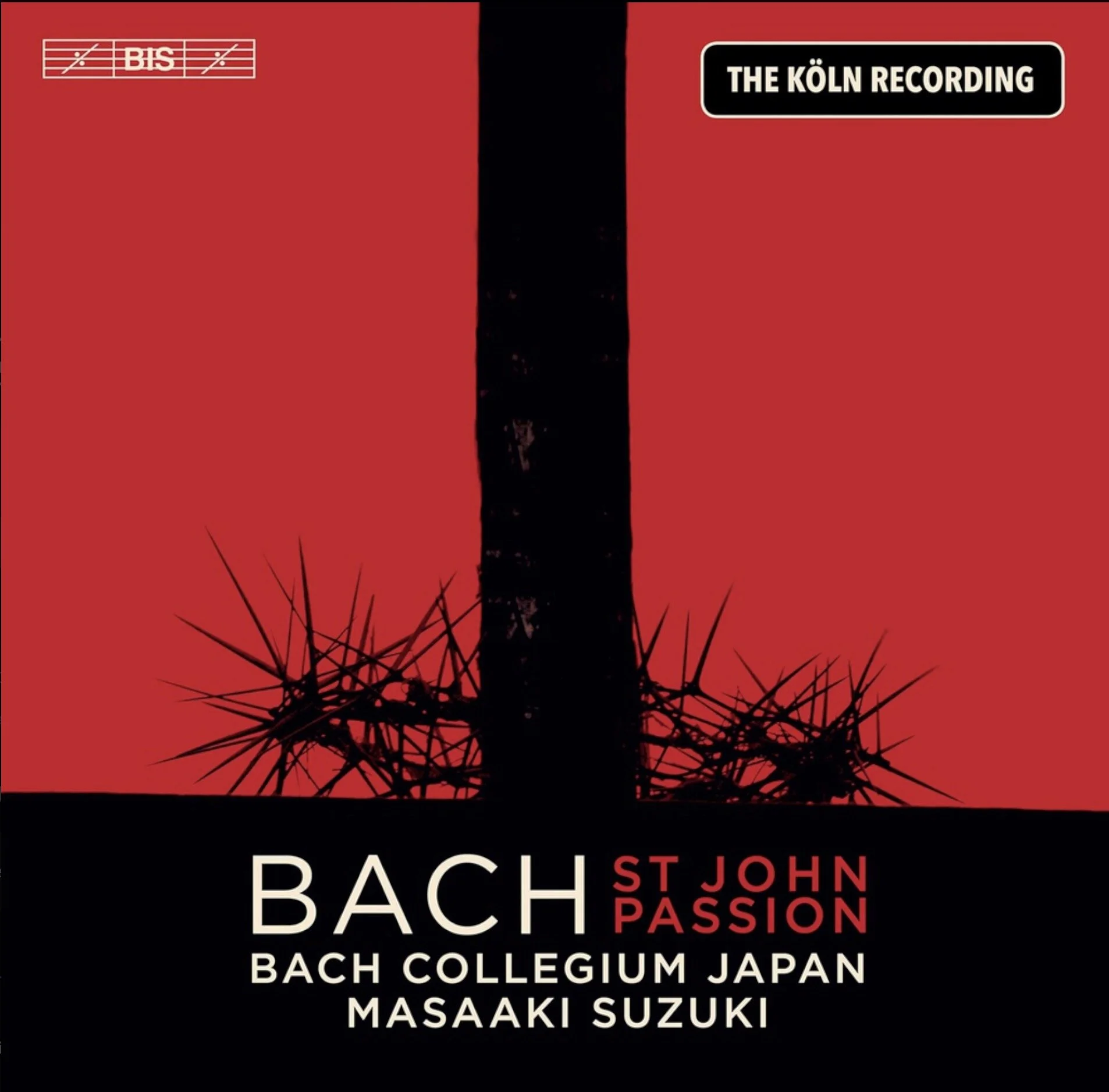
N.B. I pulled up Gardiner's March 2022 live recording on Deutsche Grammophon; the opening takes nine and a half minutes; the sound is to be commended, but the opening for me was far too slow to capture the drama as it's done in this new recording. Those who primarily want to hear the chorus over the instruments, Gardiner does a lot of dynamic differentiation, as if he's crafting the sound in real time with sliders on a computer. But his oboes, while beautiful, blend in as part of the overall sound rather than taking on a character of their own. My favorite Suzuki recording, the one made in 2020 in Cologne, for me has a nice balance in the opening. Suzuki takes 8:18 to get through the opening movement. The third recording by Herreweghe (Phi, 2020) is closer in tempo to Gardiner's, and the recording reveals even more detail in the violins. There is even more transparency with the voices, although the orchestra dominates more so than in Gardiner's recording. Switching back to Pichon? We're closer to the orchestra and he's trucking, finishing up the opening in just 7:48.
Recitative: Die Schar aber und der Oberhauptmann
In this short movement (track 6) that precedes the aria I discuss below, we get to hear Julian Prégardien as the Evangelist. Really like his singing and how clearly he annunciates through recitative.
Aria: Von den Stricken meiner Sünden
This alto aria is famous for how Bach employs the oboes as kind of recurring character. Lucile Richardot is the soloist, and I think she's the right choice. She's worked with Gardiner so she is no doubt familiar with full-blooded singing within an HIPP context. The tempo here is ideal.
Aria: Ich folge dir gleichfalls mit freudigen Schritten
This soprano aria is so much lighter in character; Bach offers light flutes to accompany the voice instead of those menacing oboes. Chinese soprano Ying Fang manages to impress, controlling vibrato to great effect.
Aria: Ach, mein Sinn, wo willst du endlich hin
I'm not as impressed with the vibrato coming from Laurence Kilsby in his aria. The orchestral accompaniment, however, matches his style well. Some will love this performance, with intensity consistent throughout.
Choral: Petrus, der nicht denkt zurück
In this particular setting for the chorus the only basso continuo underlying the vocal texture is from the lute. The transparency in the recording allows this to work, even though the distance between singers and the continuo team is presumably not closely adjacent.
Opening of the Second Part (Evangelista, Turba, Pilatus, Jesus)
Based upon the portion of the story that opens the second part, you might well imagine this being the more interesting portions of the passion. Here Bach is retelling the decision to crucify Christ. The contributions from Huw Montague Rendall as Jesus and Christian Immler as Pilate are both effective. (It's not unusual to see the soloists performing across ensembles; in this case Immler appears as Christ in the Suzuki recording.)
I wanted to review the first portion of the "second part" by the aforementioned recordings; one thing that pops out is the pacing and dramatic flair that Pichon demands. Herreweghe has some excellent A-list singers in his employ, but what stands out for me is the dramatic pacing and urgency Pichon brings to light. We might say one belongs in a church and the other upon a stage. Switching to Gardiner, in his DG recording made in an empty theater, inspired, he writes, by the mob that stormed the U.S. Capitol on January 6, 2021, the dramatic flair goes overboard. I'd go so far to say that Suzuki is less polite than Herreweghe's interpretation, but it lacks the severe bite of Gardiner and the tighter control under Pichon.
Aria & Chorus: Eilt, ihr angefochtnen Seelen
Immler here is exciting and commanding with a dramatic backdrop from the Pygmalion orchestra. Under Pichon's direction the music seems to leave our conception for Bach's writing, to something so moving and direct that it certainly speaks to me today.
Conclusion
The St. John Passion is likely Bach's most dramatic vocal work. Pichon joins J.E. Gardiner, I think, in bringing an operatic point of view to Bach's work. There are clear differences, however, and it seems speed is often on Pichon's side. In my view, Pichon has gathered stronger soloists in this performance. The Pygmalion chorus can't really compete for intensity with Gardiner's group, but my guess is that their numbers aren't equal either. There's clearly more attention placed on diction and dynamic contour from Gardiner, but given the context of this music, I'm drawn to performances that seem appropriate for a church.
The Harmonia Mundi recording is also the cleaner of the two — free of the ambient noise that colors the Gardiner.
Julian Prégardien, each time he appears, puts a smile on my face with his agreeable timbre and the control he exhibits.
This new recording will move to the front of the line for me as the St. John to return to most often. As mentioned, there are many fine recordings already, and while none are perfect, there's an immediacy and drama-forward component to this performance that should appeal to many listeners. One can only wonder if Bach ever heard his work done so well.