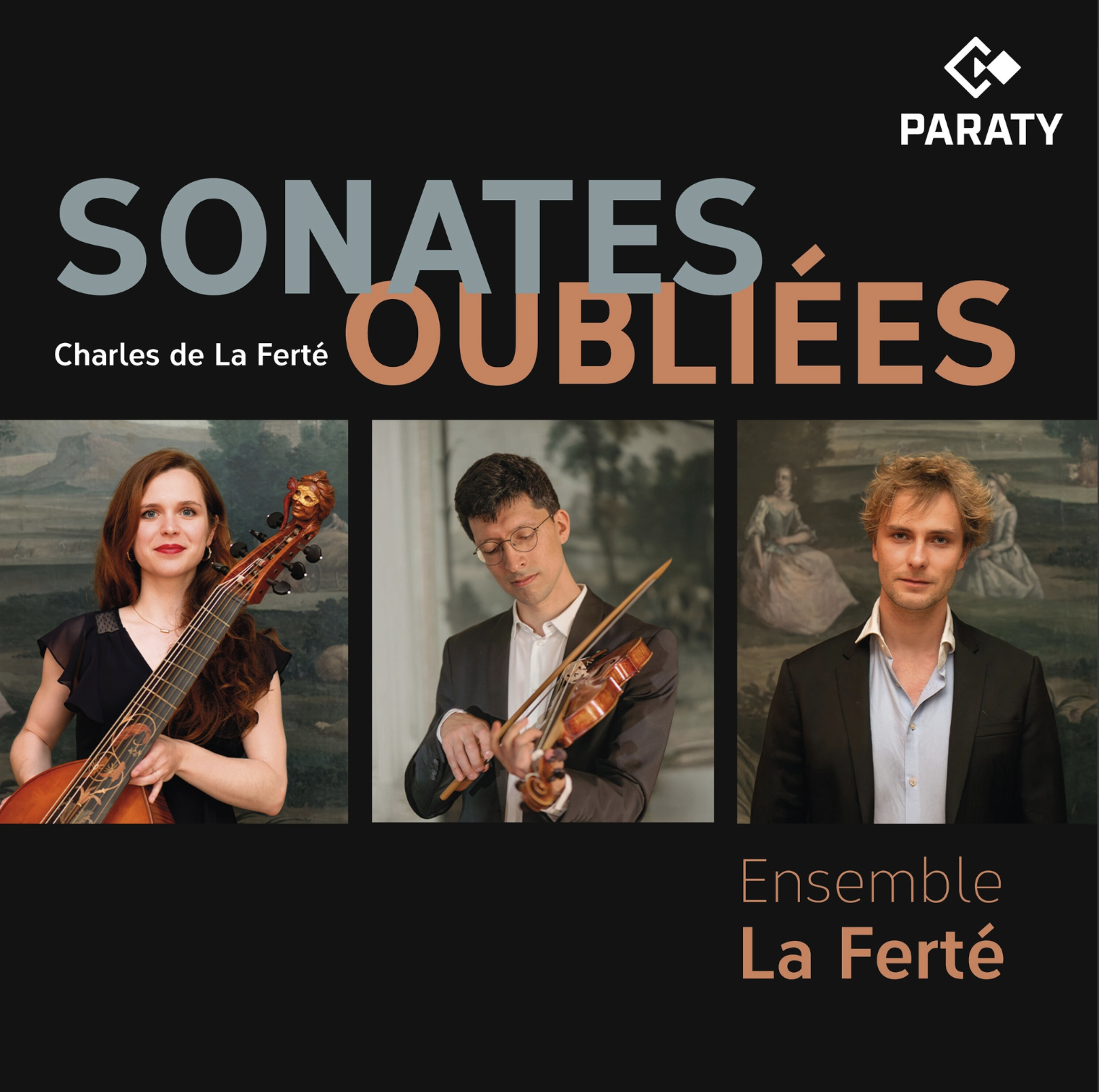
Sonates Oubliées - Charles de la Ferté
The composer Charles-François Grégoire de la Ferté (1666-1746) is a name I’m betting you’re not familiar with; the sonatas recorded here were just discovered in 2022. There are twelve altogether (as we might as well expect), scored for violin, gamba, and harpsichord. The ensemble, taking the composer’s name, consists of Paulo Castrillo on violin, Nicolas Mackowiak on harpsichord and organ, and Manon Chapelle on viole da gamba.
Castrillo’s playing dominates the first sonata, with a very direct style. Between his sound and the writing of la Ferté, it’s hard not to identify the style as deeply French. The composer’s dates would put him in contemporaneous position to François Couperin, who was famous for bringing the Italian style to French music, a controversial affair, in his Les Nations, later to be fully exploited with far more Italian excess by Jean-Marie Leclair.
The promotional videos for the recording reveal the off-the-chest playing on the violin, which was known to be the method used by contemporaries:
The video, although short, does enough to reveal just enough to give readers a flavor of this music, which I found richly affecting. A lot of this has to do with the ornaments realized on the keyboard, and especially those exercised on the violin. The violin playing, for me, makes or breaks these works, and it didn’t take me long to appreciate Castrillo’s style, which is somewhat unique among the current crop of baroque performers.
The album, which appeared today in my Qobuz feed, did not come with a booklet. As such, there’s a novelty to this composer’s music. The collection was published in 1707 and dedicated to the Duc de Orléans, whom I can’t wrestle in my mind from the portrayal in the Canadian television series, Versailles.
This is not, however, the premier recording of these works; La Vertuosa Compagnia de’ musici di Roma was first to that honor, recording the collection across two discs on Da Vinci Classics offered in 2022 and 2024 led by violinist Valerio Losito. This set, collectively, is well done, too capturing that French flavor. The sound from this new recording, combined with the affective and dramatic contributions from all three players, I think, make this a far more enjoyable recital. As a point of comparison, I might suggest the fifth sonata, under this ensemble the piece moves without lingering.
It may well be a big shame that we don’t know more about the composer or have other examples of his art. This collection offers a rich view into the music that played an important role to court life in the time at the end of Louis XIV’s reign. While mention of the composer speaks to the Italian style, the only things I can point to are the harmonic progressions, which may look toward Corelli’s; the other is the domination of the violin as a solo instrument. The style, however, again, I think, well-interpreted by this ensemble, are unmistakably French.
I enjoyed becoming re-acquainted with this pieces again and have no reservations in the way this music has been presented with beaucoup energy.