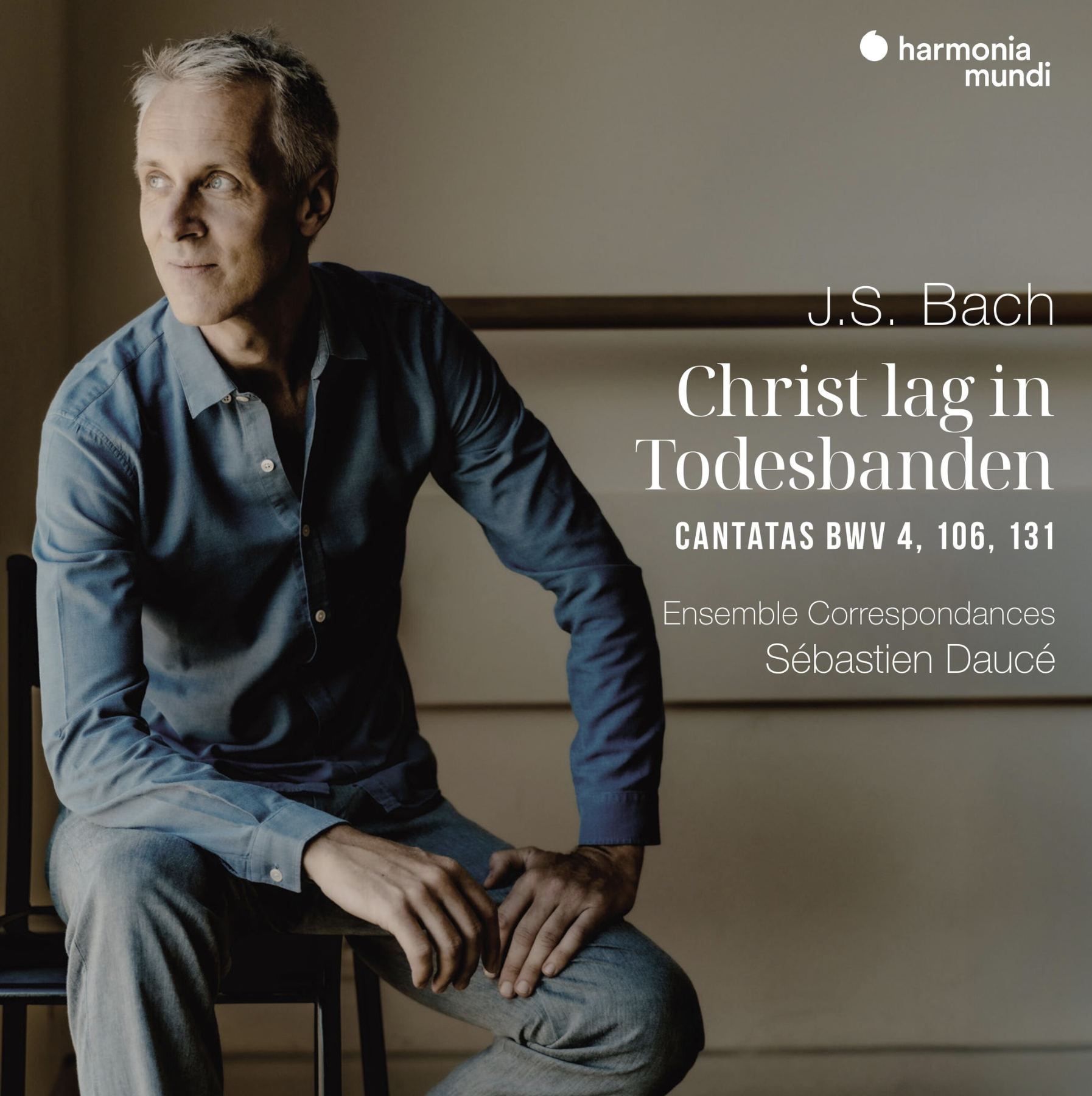
Bach: Christ lag in Todesbanden • Ensemble Correspondances
Bach’s early cantatas have attracted consistently strong recordings, perhaps because they’re inherently accessible. Of the three works here—BWV 4, 106, and 131—BWV 4 has always been a favorite of mine. I still remember hearing it in Alfred Mann’s “J.S. Bach” seminar during my senior year. He leaned against the built-in console, dropped the needle on a slightly scratchy LP, and let the slow, stately performance unfold. It wasn’t as brisk as the Ton Koopman interpretation I knew, but Mann’s insight into the structure and text setting made the piece feel like a code being revealed. That sense of discovery stayed with me.
Ensemble Correspondances, founded in 2009 and led by Sébastien Daucé, is best known for French early music. Their turn to Bach isn’t surprising, though one imagines Harmonia Mundi weighing whether the world needed another set of early cantatas so soon after standout recordings by Ricercar Consort, Vox Luminis, and Cantus Cölln. My hope was simply that Daucé would bring something comparably compelling—and he does.
The album opens with BWV 106, the Actus Tragicus. The pastoral Sonatina, with its pair of recorders, is a movement I sometimes gloss over, but focusing on the interplay here is rewarding. Daucé shapes it with a gentle lift, and the transition into the fuller choral sonority immediately signals the ensemble’s priorities: voices forward, instruments in clear but supportive relief. The chorus numbers thirteen, with soloists drawn from within—a welcome choice in an era when many recordings go one-to-a-part. The instrumental and vocal forces feel proportionate and breathable, allowing the counterpoint in these early works to register cleanly.
Recorded in the Chapelle Corneille in Rouen, the acoustic might seem large for this repertoire, but the engineering keeps everything intimate. Caroline Weynants’s soprano in Es ist der alte Bund uses vibrato selectively and expressively, and the ending of the movement is haunting without being indulgent. Lucile Richardot matches her warmth in the alto solos. Tenor Raphael Höhn vibrates more freely but articulates with admirable clarity, especially in Heute wirst du mit mir. The sense of unified direction across the ensemble is strong.
BWV 131 features a prominent oboe—an unforgettable presence in the Ricercar Consort version. Here the winds aren’t quite as forward, but the opening Sinfonia still makes its mark. The pleasure of this recording is the ability to hear the individual choral lines without losing blend; the singers feel present as people, not as a generalized block of sound. When the tempo lifts in track 9, Daucé finds a buoyancy that hints at Bach’s love of dance.
The next movement, So du willst, Herr, Sünde zurechnen, gives bass Sebastian Myrus ample room to shine. Like the other soloists, he uses vibrato as a color rather than a constant. His phrasing is supple, and the interplay with oboe and violins above him is finely judged—the ensemble keeps its textural hierarchy intact even when voices aren’t the focus.
BWV 4 begins quite differently from a Gardiner-led performance I once heard at Versailles, where larger forces and a sharper dynamic profile gave the opening movement significant bite. Daucé favors intimacy over grandeur, and it suits this cantata well. The first verse has breadth without heaviness, and the equilibrium between voices and instruments is exemplary. On headphones, the placement of every line feels deliberate.
In Versus 3 I wanted a bit more violin presence, but the rhythmic energy is invigorating. Daucé’s pacing throughout the cantata emphasizes Bach’s cheerful, almost playful side—something that would be difficult to project with a larger chorus and orchestra. The chapel’s resonance is present but never blurs articulation.
By the end of the program, it’s clear why Harmonia Mundi embraced this project. It doesn’t replace the finest versions already in circulation, but it stands confidently alongside them. Some listeners may find a few tempos on the quick side; I found them consistently spirited and well within the ensemble’s technical and expressive reach. The soloists never veer into operatic territory, and the ensemble’s internal proportions remain assured throughout.
These cantatas reward varied interpretation, and Ensemble Correspondances offers one well worth hearing. Even if you already own multiple versions, this release earns its place for its refined shaping, articulate singing, and the clarity with which it reveals Bach’s early genius.