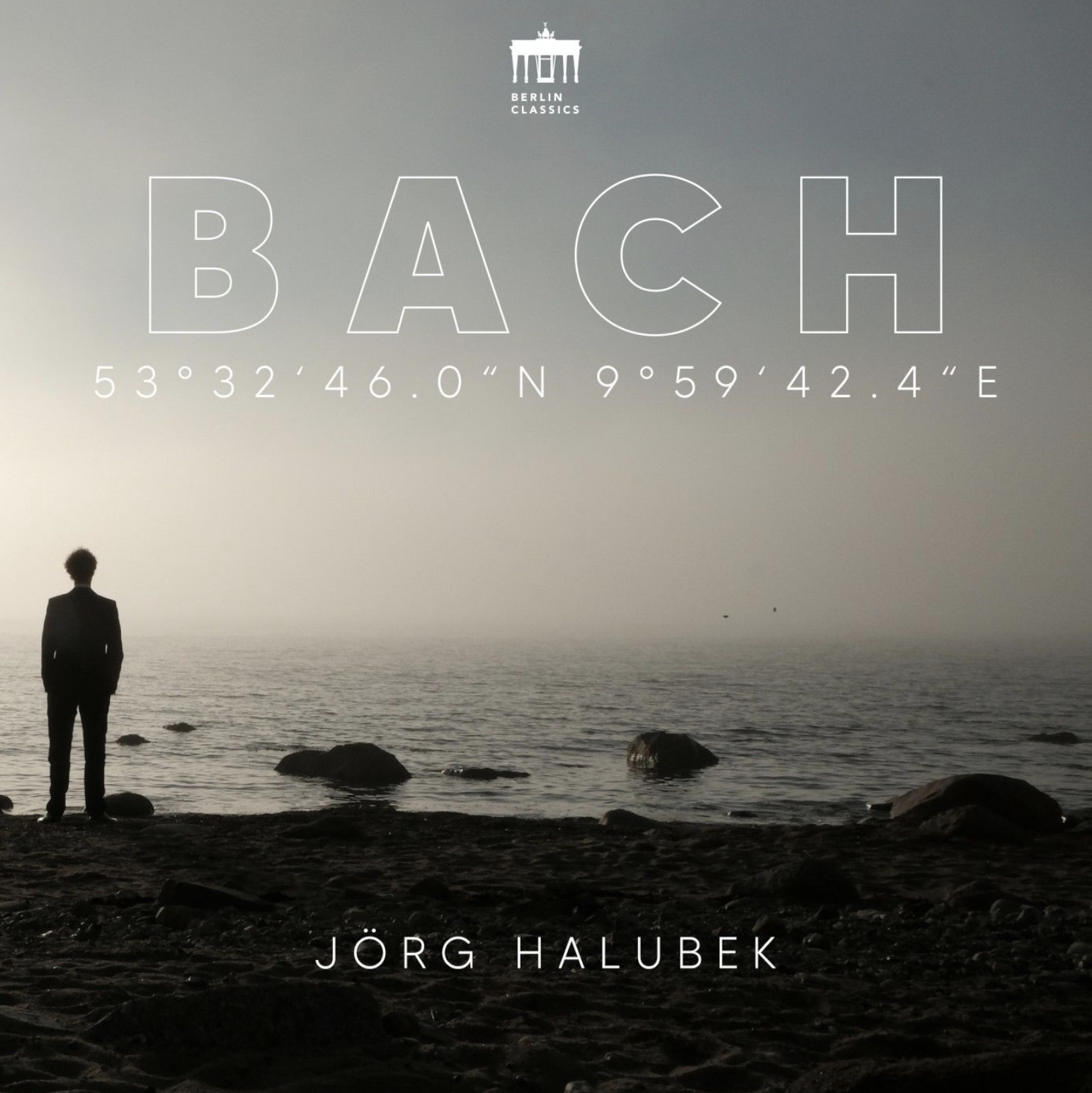
Bach 53°32’46.0”N 9°59’42.4”E • Halubek
This release continues the “Bach Organ Landscapes” series, which documents Bach’s organ works on historically significant instruments. The title’s map coordinates place us at St. Catherine Church in Hamburg—though I still wonder why “Hauptkirche St. Katharinen” wasn’t simply added to the cover. Unwieldy naming aside, we’re given a substantial 2-CD program performed on an organ that Bach himself once played.
Halubek frames the album with two major works: the Toccata, Adagio, and Fugue in C, BWV 564, and the Prelude and Fugue in C, BWV 531. Between these bookends sit early pieces (those with post-1080 BWV numbers) and a handful of chorale preludes from the Neumeister Collection, discovered in 1984.
Berlin Classics captures the St. Catherine acoustic with impressive realism. We’re placed at a natural listening distance, surrounded by the church’s vast reflections. This benefits the sense of space but demands a playback system with enough clarity to handle the organ’s sheer breadth. My laptop speakers—good as they are—struggled with pedal-generated distortion in BWV 564’s opening. My 2-channel system restored order, and the dynamic range of the recording deepened the sense of being physically in the nave.
The fugue of BWV 564 is a good example of how tempo choices work—or don’t—in this space. Halubek pushes what feels like the maximum feasible speed before the lines begin to smear in the reverberation. The effect, while impressionistic, has a charm of its own; one could compare it to listening to the same music on harpsichord in a small room, where detail dominates rather than atmosphere.
The Chorale Preludes
Several chorale preludes here draw from the Neumeister manuscripts. These short works, built around Lutheran hymn tunes, originally introduced congregational singing. Bach typically places the hymn melody plainly—often in long notes—while surrounding it with contrapuntal or figurative elaboration. Ton Koopman famously included sung chorales in his complete cycle to restore a sense of their liturgical function. It fits: these pieces let the organist build something intricate atop familiar material, showcasing technique while preparing the congregation to enter in song.
Halubek’s registrations in these chorale settings are varied and sensitive, highlighting the Hamburg organ’s color palette without overwhelming the core melodic line.
Other Early Works
The Capriccio BWV 993—likely from 1707 and possibly dedicated to Johann Christoph Bach—stands out for its harmonic wanderings and virtuosic flair. Stylistically, it feels far from the Bach of the Leipzig years: more youthful bravado than architectural rigor, but still very much the work of a prodigious composer eager to impress.
In the Fugue BWV 575, Bach begins with three statements of the subject before the second voice enters. Halubek shapes the piece from an understated opening toward a fuller, more imposing middle section before letting the sound thin out again. The use of a tremulant is unexpected in Bach but reveals yet another of the instrument’s expressive weapons.
The surprise entry on this album is the Toccata BWV 912a, better known as a harpsichord work. On organ, its sectional contrasts and harmonic boldness gain a new dramatic scale. While we have no guidance from Bach on registration, Halubek’s choices feel structurally informed and musically persuasive—this is an interpretation that reframes a familiar piece without distorting it.
BWV 531 likely dates from Bach’s Arnstadt years (1705–1707), opening with an unusual solo pedal flourish. While I admired Halubek’s overall approach, I found the fugue’s registration a bit too opaque for its brisk tempo—clarity is harder to maintain here than in BWV 955a, whose texture is better suited to fast-moving counterpoint.
The Album as a Whole
Though I haven’t followed every installment of Halubek’s geographically themed Bach journey, this volume makes the project’s aims clear: to pair Bach’s organ writing with the living character of the instruments he knew or might have known. Here, the result is especially compelling. The recording not only documents the organ’s tone but recreates a broader sense of inhabiting St. Catherine’s. That authenticity comes with pros and cons. The softest passages may prompt you to raise the volume; yet the fuller power of the organ used later may make you regret it. But that variability is part of the picture—it’s an honest rendering of what this instrument can do.
All told, it’s a fascinating document: technically strong, interpretively thoughtful, and attentive to the distinctive voice of the Hamburg organ.