Notable Recordings of 2025
This year has seen considerable growth for the website, which is likely a result of me kicking my own butt to try and process more recordings this year for review. While I wouldn’t call biberfan a community, per se, I see enough of the logs from the website to know I have some regular visitors from a wide variety of locations across the world. In some small way, it’s satisfying to know I am creating content that resonates with other fans of music.
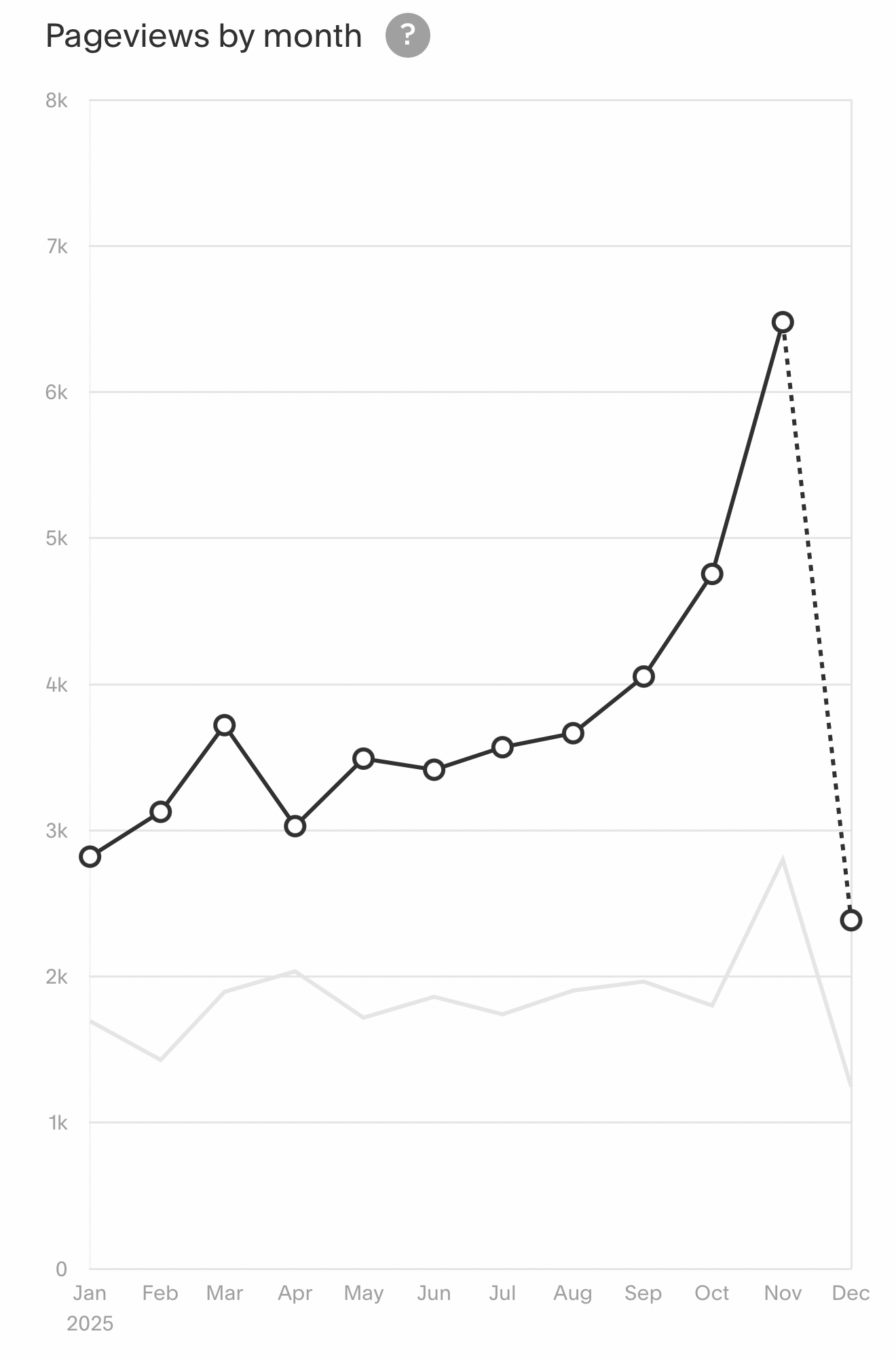
Pageview statistics for biberfan.org for 2025
I wanted to highlight a few albums that I came across this year that are in regular rotation at Chez Biberfan.
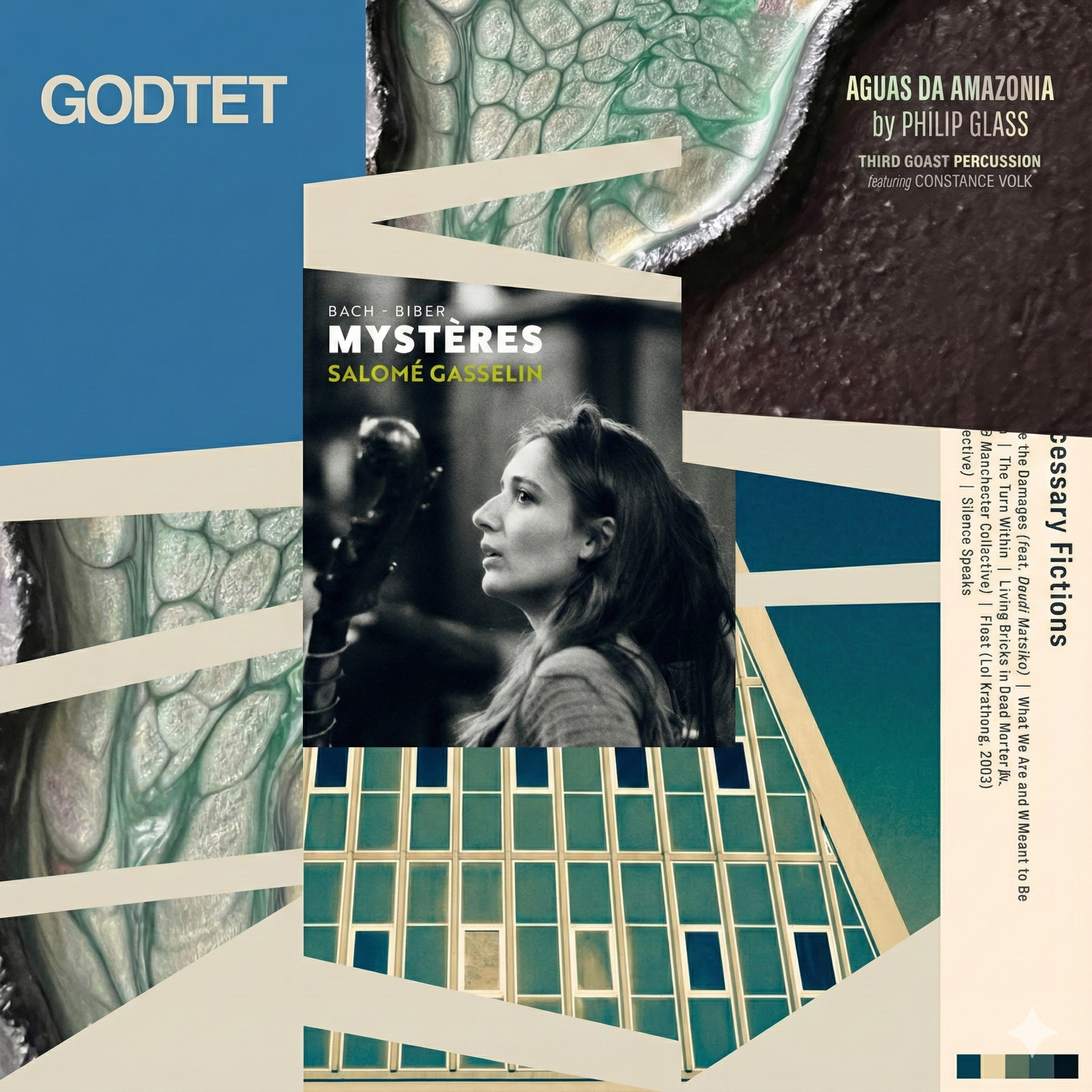
Mystères • Salomé Gasselin
This Mirare release from March of this year came across the Sonos-based system while cooking the other evening and stopped me cold. The emotional depth of this album, even when played in the environs of my kitchen, made me stop. The music dominating this album is by J.S. Bach, a few anonymous tracks, and H.I.F. Biber. The playing is sublime as when I first encountered it, and yes, maybe it was the mood I was in? But I teared up. This is an album I should buy up by the dozen and give out as Christmas gifts.
GODTET + Sydney Symphony Orchestra
I have not been familiar with Novak Manojlovic’s work before this album, but this one came across my radar and I found it was both interesting and an audiophile-worthy recording, leaning quite atmospheric. The album lasts 40 minutes and could likely work as a soundtrack. Stepper, the second track, puts the percussion out front alongside guitar, and the kick drum slams hard and ripe. The last track, Always Bright opens with a cello solo, far right channel, further helping to confirm for me that this album was conceived by a painter who works in sound.
This album, for me, was fresh, electric, and the perfect length for playing out as an “album.”
Just Biber • Rachel Podger & Brecon Baroque
This album for me was well-recorded, even if the levels seem a bit low. I enjoyed this so much that I purchased the DSD 256 master from Native DSD, in my attempt to compare the Qobuz 192kHz version with the DSD, framing my belief that DSD is a superior format than PCM.
While the jury is out on the PCM vs DSD issue, as I need more time to do a comparative review, I was happy with another excuse to “spin” this album. I think Podger does well to address Biber’s music with adequate affect, without gilding things to excess. The dry recording makes no pretense, it’s just a small group of experts doing what they do well, combining strong technical playing with good taste.
I think any fan of Biber should relish this one.
N.B. I changed DACs this summer in my system and with my old DAC, I found that the few DSD recordings I had from ripping SACDs had a smoother presentation, which I really admired. With the new DAC, I don’t hear as drastic a difference between formats.
Bach: The 7 Toccatas • Francesco Tristano Schlimé
The foremost reason I keep going back to this album is the recorded sound of the Yamaha piano used; it’s a close-miked sound, with warmth present as the lower portion of piano’s gamut is traversed.
The other aspect I liked about this recording was Tristano’s consistent, dry touch which allows him to escape any notion of applying a romantic style to the resulting performances; they are, in their own way, unique, and while I think there are many legit ways to play Bach, I think in this album the artist hit the high mark in exercising that style.
While I know his pianistic approach won’t appeal to everyone, for me this is an extraordinary recording.
True Electric • Röyksopp
I know this isn’t the first time I’ve written about this duo, and yes, I’m fully aware this is classified as either euro-dance or trip-hop music, exploring remixes of the duo’s music debuted on their True Electric tour.
You’d never find me in the environment in which this music was debuted, but as a studio album, I appreciate hearing some past favorites by the group, re-engineered here with decent audiophile results.
If this music isn’t your style, at least try The Girl and the Robot, a piece I frankly can’t get enough of. Sordid Affair isn’t bad either.
The Art of the Quartet • Koppel, Werner, Colley, and DeJohnette
I was sad this year to see the passing of jazz legend, drummer Jack DeJohnette. The start of Bells of Beliefs does well to showcase the commitment to the quality of the recording. The original recording appeared in 2020, but in my own search for more DeJohnette recordings, I came across this re-issue, Part 1, from this May.
The consistent sax sound across these four tracks is a real stand-out aspect to the flavor of the quartet. While the Jarrett Trio will always be my go-to for enjoying DeJohnette’s contributions, there’s so much more to his career to explore. While this album is only 42 minutes, it’s worth an audition.
Night • Nils Frahm
An even shorter album at 29 minutes, Frahm’s May release may not break any new ground from this interesting pianist, but what he’s already known for is again done here to a high technical detail.
I especially enjoyed this album with the lights down. Twenty-nine minutes is just about right to have an experience that demands your focus.
Like the Tristano album, this one too has a special quality about it in terms of the amount of bass present, which is ultimately satisfying if you’re up for amplifying things just a tad.
A Garden of Black Flowers • Astrophil & Stella
This album is back on the home turf of early music, but singing is exchanged here for instrumental arrangements; the textures and sonorities aren’t terribly far from the Frahm music, in terms of focusing on the timbres as much as the melodic and rhythmic material. The acoustic captured on this album is a dry but still wide.
If you’ve still got the lights out and an hour to spare, this one might surprise you with its variety.
Shostakovich: Complete String Quartets, volume 2 • Cuarteto Casals
I’d first heard this group with their recording of Bach’s Kunst der Fuga. No, I am not an expert on Shostakovich’s music, but this album does contain his famous “autobiographical” quartet, no. 8 in C minor, op. 110. And it’s with this piece that I spent many listens, enjoying the sonic character of each of the quartet’s members, achieving I think in concert with the Harmonia Mundi engineers what many quartets would like to have in terms of transparency with each player’s individual character.
This piece was important to me as a teenager. For me, music was the ultimate companion to help me manage my emotions. I remember being in awe of the harmonic language of this composer, eager to get a score.
While all the pieces collected here to scratch my itch as strongly as no. 8, I feel Casals responds equally well to the faster passages as it does to the brooding, slower moments.
Necessary Fictions • GoGo Penguin
This jazz-rock group writes good music. The opening track Umbra I might guess is from them; they like patterns and them patterns are good!
I appreciate the acoustic nature of their instruments and that palpable quality they give to us. The recording, as I’ve found with some of their earlier efforts, is superb, an audiophile treat.
For those that liked what Frahm offered, in terms of small little details in the piano sound, a track like Background Hiss Reminds Me of Rain will satisfy, even if it’s not much as music as soundscape.
Naga Ghost satisfies again in their combining of electronic and acoustic; that keyboard timbre is just so chewy. Love it.
Mystery of Love (Demo) • Sufjan Stevens
I often like to explore “demo” takes of famous pieces; there’s one by Michael Jackson that I’ve entertained quite a few times. This was an unexpected find (thank you, Qobuz). While perhaps not as polished as what we got to hear on the soundtrack of Call Me by Your Name, I loved revisiting this haunting song.
This one hits just right despite the quality of the recording and absence of supporting instruments. It’s raw. That’s what a good demo should be.
L’entropia • Lina Tur Bonet & Jadran Duncumb
I selected this one just because I thought the album across 70 minutes did a nice overview of earlier baroque pieces for violin. I am also smitten with the idea of supporting the violin here with just lute.
Like the Podger Biber recording, there’s some similarity too in the sound here, which is on the dyer side; I’d give Podger’s the edge in sound overall, but although I’m familiar with some of these pieces already, I found Tur Bonet to have her own artistic solutions, which ultimately were satisfying.
Looking Back • Richard Baratta
Listening to track 6, California Dreamin’ with jazz flute? It immediately had me tripping for the soundtrack to the movie Sideways, one of my all-time favorite movies.
This isn’t a terribly serious record, but if you’re in the mood for some good cruising music (especially if you’re headed to the Santa Ynez valley), this might make a nice distraction.
Glass: Aguas da Amazonia • Third Coast Percussion
In my review of this album, I lamented the fact that Third Coast had come to Richmond, my hometown, and performed this. I was downright pissed I’d missed it.
I got onto the Modlin Center website and found out that, whoops, I hadn’t. I made the concert, featuring the Twyla Tharp dancers.
Unfortunately, the musicians were put into the pit, with only the dancers visible on stage.
While I still think their earlier recording on Cedille had some sonic benefits (playing just a few of these pieces alongside other water-themed pieces), the contribution here of Constance Volk on flute makes this a real treat. And the recording, yes, it’s still a special one. This album benefits if you can crank it up. Still, I think one of Glass’s true masterworks.