Simply Mozart: Sinfonia concertante, Overture, and Symphony
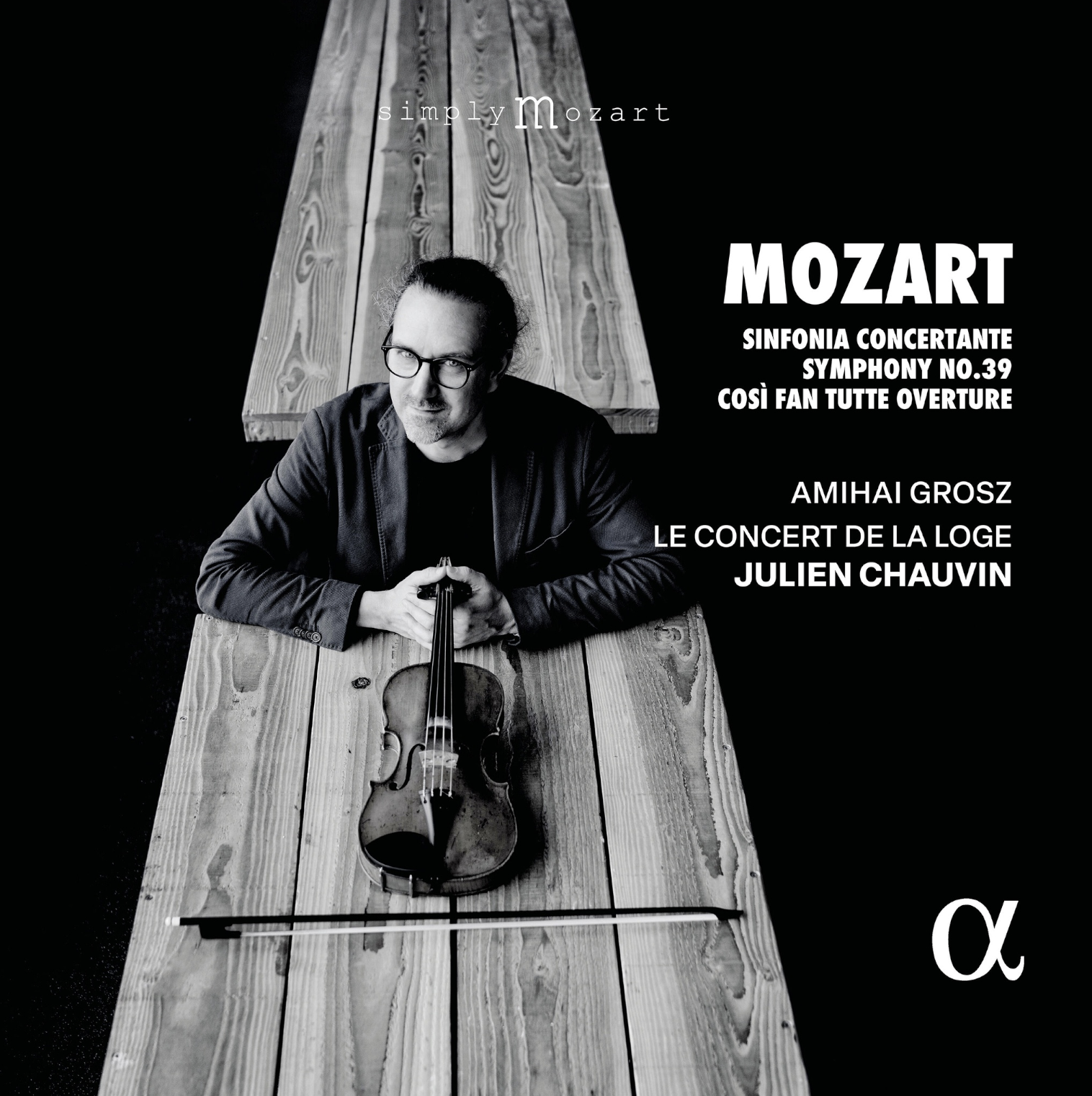
Le Concert de la Loge, directed from the violin by Julien Chauvin, offers us their final installment of the project surrounding Mozart’s final symphonies. This album features no. 39, which they have deemed to call “The Dawn.”
I found my appraisal of the first CD to be very strong. Compared to the Onofri recording just reviewed, this one stands out with a bit less rustic character, aided in sound especially in the overture to Così fan tutte and the 39th symphony by the acoustics of the Louvre in Paris.
Sinfonia concertante
The Sinfonia concertante for violin, viola, and orchestra in E-flat K. 364 occupies 30 minutes of the recording’s hour of music; for what it’s worth, the piece, written in three movements, is larger in scale than the symphony that follows it in this program.
The recording, made at the Cité de musique in Paris, bathes the viola and violin in great sound; the orchestral forces are not quite as sharp, and in the opening movement, the orchestra’s energy doesn’t occupy perfect transparency. I think the trade off is okay, the two soloists have such a good balance and focus that I wouldn’t want to give that up. Chauvin, on violin, is joined by Amihai Grosz. The two blend well together.
The middle movement highlights what I think is good taste in playing between the two soloists; as in the outer movements, they don’t shy away from vibrato, but they use it sensitively to support the music, leaning in and out of it. The last movement benefits from a quick tempo and good dynamic inflections.
Overture Kv 588
This piece amounts to short tease, lasting less than five minutes. It’s likely less familiar to listeners than the Marriage of Figaro overture. But it provides the same type of excitement for what’s to come in the concert program as the overture does to set the stage for the opera. I really like the sound here, there’s more transparency for the orchestra, which supports well all the little cameos Mozart gives the winds.
Symphony K. 543
The last six of Mozart’s symphonies have a special place in my heart as I needed to study them deeply as part of my music theory coursework. It was one of those deals where we were expected to know each movement of each symphony, as we’d be tested with a “drop the needle” test. I remember the recordings I’d purchased to keep up in my dorm were those by Hogwood and John Eliot Gardiner. I therefore will admit, I grew up with these pieces through the HIPP lens.
As good as those recordings were, the sound here, combined with the expressive potential that Chauvin brings makes this performance all the more enjoyable. The opening slow-fast movement (one of the telltales to identify this one, he he!) is well judged in terms of tempo. The dynamics and overall energy in the Allegro portion is so well done.
The Andante con moto benefits from the violin sound, I think; the group plays together well in good intonation. It’s a level of polish that stands out.
I don’t know why, but the third movement for me is the “chicken” movement. The menuet’s theme reminded me of chickens happily laying eggs in their hen house. The separation here and articulation from the orchestra is well done.
The finale is quick; the speed isn’t too much, the orchestra showing good cohesion and control. When they’re loud, acoustics again support them, the exposure of winds is thankfully just as transparent as in the opening.
Conclusion
I am not sure what one might want that’s not in this recording. It’s detailed and dynamic, and in terms of the recording, it offers us amazing transparency, especially so in the symphony and the opening overture. For those who may already have copies of Mozart’s symphonies, this recording joins two earlier ones focusing on the final trio of Mozart’s symphonies. They are worth seeking out, this is among the best there is.