A Handel Celebration • Tafelmusik
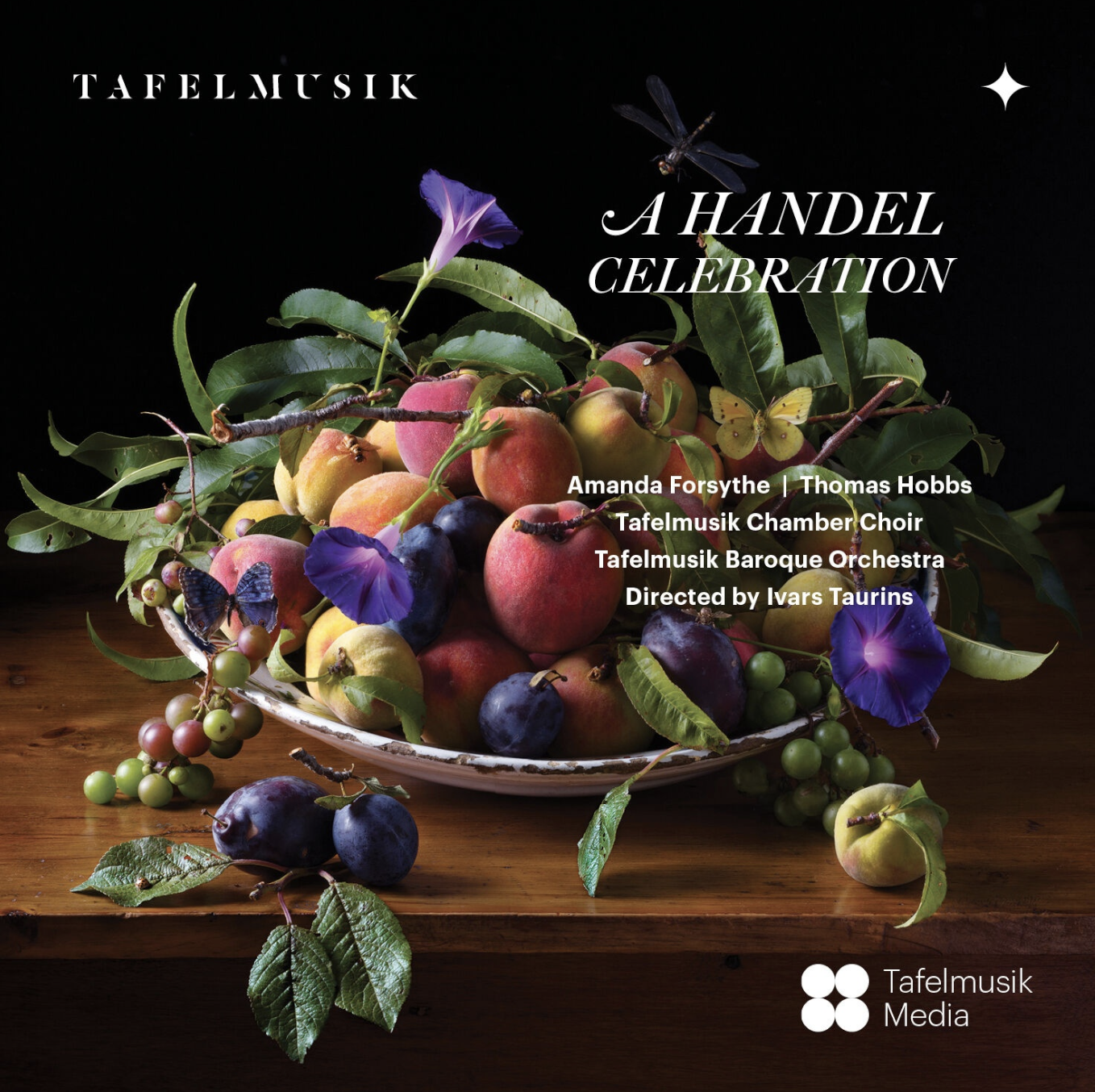
I am expecting that Tafelmusik, their choir, and soloists Amanda Forsythe and Thomas Hobbs recorded this album after their late spring public performances back in 2024. As advertised, the double album features arias, duets, and choruses from Handel oratorios: Solomon, Esther, L’Allegro, Judas Maccabeus, Deborah, Alexander Balus, Joseph & His Brethren, Semele, Hercules, and Athalia. The performances, however, I learned are in fact live performances. This makes this release of special import to those who may have experienced Tafelmusik live, or for folks like me, equal measure for not having been present during the concerts.
This album I’m guessing is ideal for those who find sitting through an entire Handel oratorio challenging and simply really go for the “good arias,” with an opportunity to focus on the abilities of a soloist or a duo. Finally, if you’re new to Handel’s oratorios, it may serve as a tasty appetizer to not only sample his arias, but some of his choral numbers, such as track 12’s “Sun, moon and stars” from Alexander Balus. Which is to also say, a compilation of numbers may not be of the same interest to those who have collected his oratorios or even revel in comparing multiple productions. (I'm not taking sides here—sometimes I like a best hits type program.)
Director Ivars Taurins writes:
I created this Handel Celebration by sifting through his many oratorios and odes, compiling some of his “best” airs and choruses to create a musical whole. This technique, known as 'pasticcio' (derived from the Italian culinary word for a kind of filled pie made of many ingredients), was very popular in the 18th century. It was, if you will, a musical medley of various ingredients borrowed from other pre-existing works. I hope that my Handel pasticcio gives you something of the flavour of the grandeur, pathos, drama, intimacy, and joy to be found in Handel’s English dramatic works.
The environment supports Forsythe’s highest register at full volume, and her peer Hobbs comes across clear. The orchestra themselves don’t fare quite as well in the mix, sounding as if they are well behind the singers. Headphone listening reveals more of them, but when listening in my secondary two-channel system, I wanted to be closer to the orchestra, even if they were assembled in chamber strength.
Here lies the challenges of making live recordings, especially those that combine two independent groups, each with their own needs in recording. For close listeners, this may be an issue, others may not find these issues that problematic.
I’ve heard Ms. Forsythe now twice at the Boston Early Music Festival. As a representative example, she has a strong performance in “Prophetic raptures” from Joseph and his Brethren, track 14 (disc 1). She presents music with authority, hitting the highest notes with sharp precision. In her solo she demonstrates great dexterity. The amount of vibrato, however, is one or two levels above my own preferred taste. There are moments where it fits the music better than others, a good example is the Sweet Bird aria on track 3. It's the perfect consideration when a songbird is the subject of the aria.
The Tafelmusik Chamber Choir is featured across the album; they take stage in the opening to disc 2. Their style in “Jealousy, infernal pest” from Hercules is characterized by very clean diction. I can’t remember hearing a chorus of late that is so precise in their articulation and releases. I might go so far to say the effect is too pronounced, but if does offer especial clarity. The opening orchestral contribution on this track was a little disappointing, given the dark and moody vibe Handel paints.
Among the most famous solo arias on the disc is “Where’er you walk” from Semele, featuring here Thomas Hobbs. He applies a pretty continuous vibrato. The tempo for me sagged a bit; his solo air “Hateful Man” (track 8, disc 1) is a bit different in flavor; Hobbs’ voice is more up-front and present. He does an admirable job at the faster passages.
The soloists’ duet “Who calls my parting soul” from Esther is featured on the second disc. I like how Forsythe comes into the piece, holding back on vibrato. The piece shows us that Forsythe is a more able singer, in terms of shaping the timbre and dynamics of her voice. When Hobbs gets into the shallower dynamics his voice is a bit easier to lose. The blending of their voices, I thought, worked well.
I was less impressed with the duet from L’Allegro, il Penseroso ed il Moderato, given both singers use of vibrato. Again, I’d ask anyone to listen to the oboe which plays an obligato part with the singers, and how its style is continuous, while the voices vibrate. I think this is a stylistic decision the singers have made; both in this case demonstrate that they can pull back if they want.
Given how I’ve framed this album, it may well be something you’ll enjoy. The performances from the chorus, singers, and orchestra are all well-done. I felt the orchestra specifically could have benefitted from a bolder approach with dynamics and dramatic flair. The final chorus, complete with trumpets and timpani, brings a celebratory flair to the album which ends strong.
While Handel’s oratorios aren’t my everyday fair, this double CD set offers a nice sampling from his non-operatic vocal works. I’d probably like to get into these individually and would benefit from recordings of each by themselves. As presented, this album works, especially for those not super interested in following each production’s stories and even following the words.