Antimelancholicus - Bach Cantatas
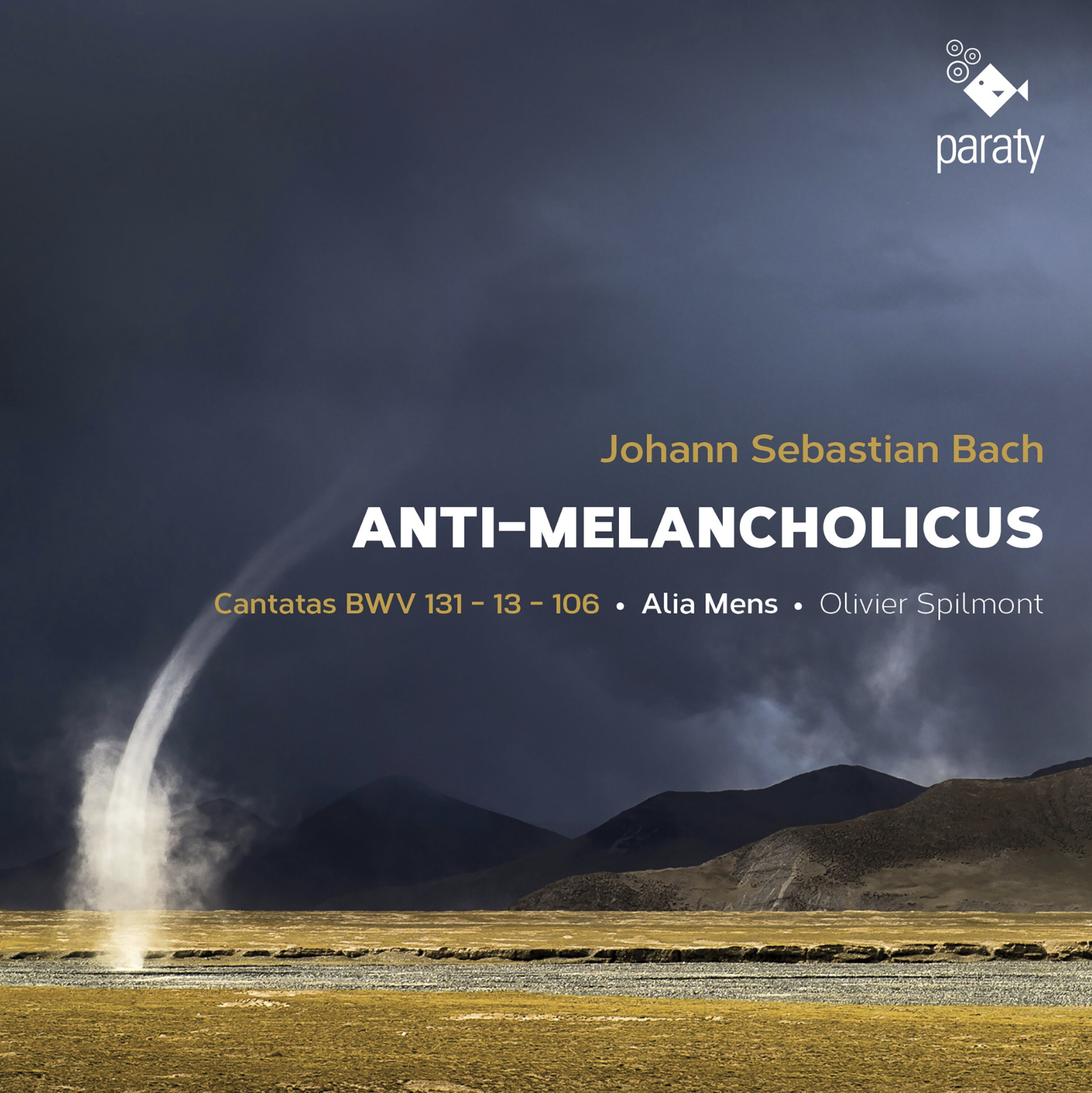
Olivier Spilmont directs this recording of Bach cantatas with Alia Mens, following an earlier release from 2017. The title refers to a volume in Bach’s library, advocating against Calvinism. This is one of those performances that might draw criticism (or praise) for using one voice per part; not only among the orchestra, but also among those singing. The assumption of Bach using a choir—with many voices—has been challenged by those looking at existing parts. I remember some years ago Koopman arguing in the most formal of ways—through academic journals, if I’m correct—against the ideas set forth by Joshua Rifkin for how many singers make an ideal Bach choir.
Both Koopman and Suzuki set out to record their cantata cycles with a period choir—one that was nowhere the size of the Mormon Tabernacle Choir, but was not also composed only of soloists. While I personally think Bach did use a choir of probably around 18 performers, with the leads in each section taking the solo roles, I have found great joy in recordings adopting the one per part approach. If we get out of trying to reproduce the sound Bach may have had in Leipzig, his music works on this smaller scale, offering the listener far more transparency and clarity. And don’t even get me started on the use of all boys—clearly this was part of the Leipzig musical culture that, while explored by some, is largely ignored. The liner notes include this quote: “This reduced ensemble induces a climate of intimacy and mediation, imprinted with gentleness.” That’s what’s on offer here. “May this Anti-Melancholicus, to borrow an image from Edgar Morin, be like an island upon which to seek fresh provisions in this ocean of uncertainty.”
Two of Bach’s early cantatas are included: BWV 131 and BWV 106, Actus tragicus. In the center of the program is BWV 13, Meine Seufzer, meine Tränen. The clarity I spoke of above is on display in the second track of 106. After a very instrumental-forward presentation featuring the piece’s presence of gambas, I think a good case can be made for using solo voices. The singers do employ vibrato, but not continuously, which I think is appropriate. The bass aria, accompanied by recorders, has a good pulse. The alto aria for me betters the tenor arioso, at least in terms of vocal style. The organ playing is clean and up front.
When listening to the final chorus, one is inclined to wonder what kind of forces Bach might have been composing for when this was written; it could well be that he had access to four singers. I think the case is well made here.
My favorite recording of BWV 131 for some time has been the one from another French ensemble, Akadêmia. This recording is even clearer, like the difference between a sun baked cassette and a CD, if I attempt at being dramatic. As is their singing, annunciation seems heightened with drama; I am no expert at German pronunciation, but the effect does make you take notice.
The first track, if anything, signals an anti-melancholy style that gets infused in so many of Bach’s cantatas; the dance-inspired section that follows the introduction showcases someone who we presume loved life. One often points to the number of Bach’s children and his bills for beer to make this point. But it’s obvious in his music as well. And Alia Mens makes this effortless clear to us as listeners.
BWV 13 comes from Bach’s Leipzig years, offering us a bass aria that dares to paint for us a melancholy character, Ächzen und erbärmlich Weinen. What’s interesting is Bach’s orchestration, pairing recorders together with strings. As ever Bach is expert at word painting with the voice, offering as counterpoint an uplifting instrumental foil.
This album for me was quite enjoyable: it offers great dynamic range and both singers and instrumentalists are up front and clear. Performance wise, while the singers aren’t all exactly on the same page with the use of vibrato, they do blend well in Bach’s chorale settings. Among my current traversal of the MacLeod cantatas and re-visiting Suzuki’s cycle, this recording from 2022 stands out and deserves a careful listen.