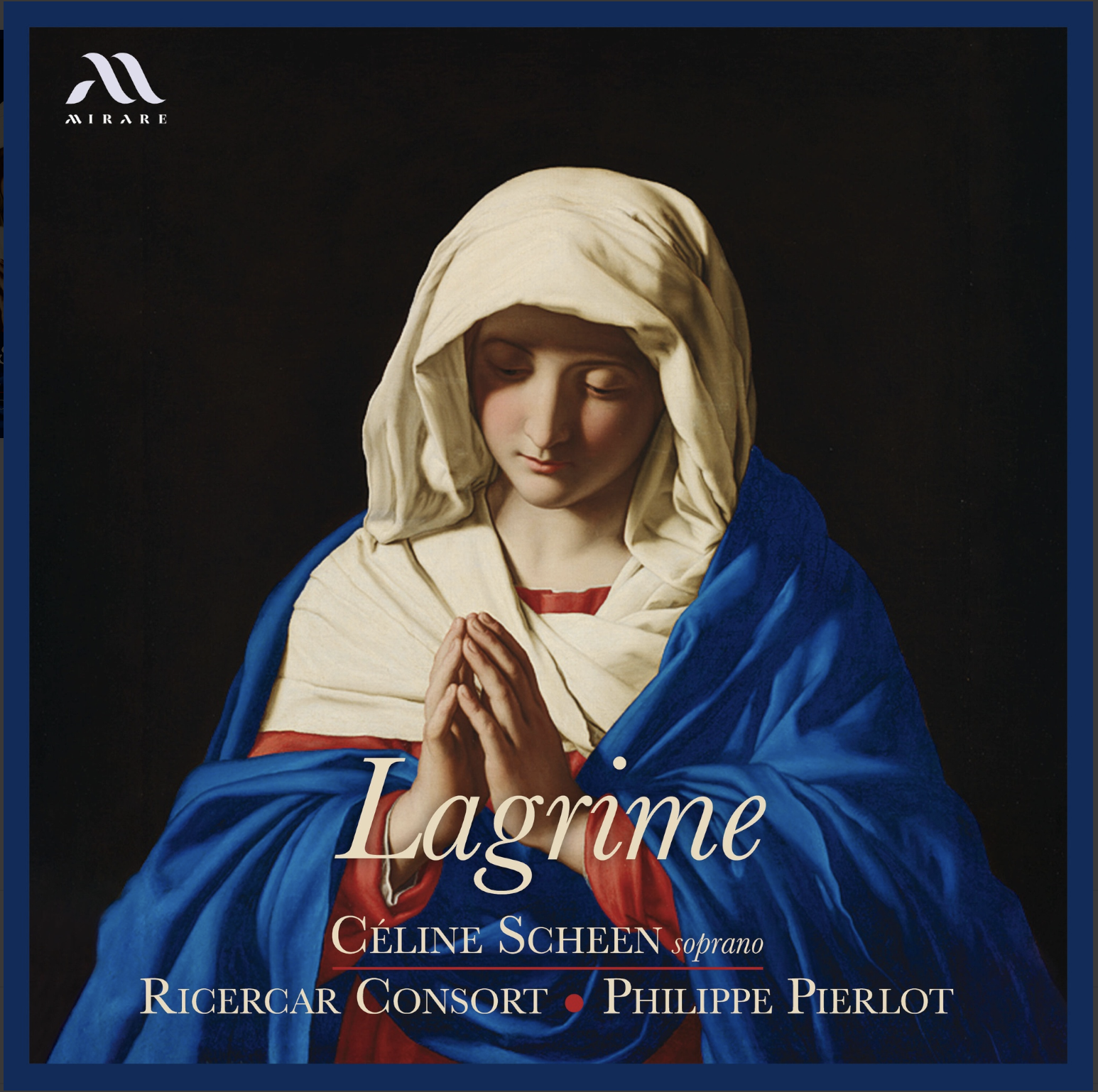
Lagrime - Les Larmes de la Vierge • Ricercar Consort & Céline Scheen
This album, save for a few instrumental numbers, celebrates through a solo voice the role the Virgin Mary has in our lives. The composers represented include Monteverdi, Sances, Purcell, Goussot, Kempis, Mazzocchi, and Merula. I am familiar with Ms. Scheen from her work with L’Apreggiata, having heard her live once. She’s an artist I can really get behind for having a great voice and showing us that you can be a dramatic singer without the constant use of vibrato.
The contributions from the Ricercar musicians is no less clean and affective as they’ve been in previous albums. The Mirare production also benefits from a nice floor with support from the lower frequencies, enhanced here with a basse de viole and organ.
The album opens with a piece I remember studying in grad school: Marini’s Passacalio op. 22. I think of it as a piece for the latest Italian instruments, but here it gets fair treatment from viols. From the same collection, track 3, we hear the Sonata sopra Fuggie dolente core from Marini. It’s affectively played, even if I want to hear it with two violins.
Cima’s Sonata à 3 too works well with this ensemble. Kempis’ Pavana Dolorosa I think is more at home with viols. Salamone Rossi’s Sonata detta la Moderna might be calling for cornetto or violin, but together, all these various instrumental numbers add variety to the vocal program. The ensemble plays nearly as one person, which is no small feat.
To get a sense of how strong Scheen is, and in concert with the instrumentalists, try the last track (#12) featuring Monteverdi’s O stellae coruscantes. The composer well-combines the effects for voice over to the instruments. The balance isn’t quite as good in the first Monteverdi piece, Maria quid ploras, unless the opening was intentionally supposed to sound like an ensemble in close consort.
For sure, Merlua’s Alla nanna is bit more colorful under the directorship of Christina Pluhar, but the piece is no less affective in the version heard here (track 4). I love how the lute comes out, played by Daniel Zapico. Further support is provided by Giovanna Pessi on harp.
Probably the surprise of the album for me came from Giovanni Felice Sances’ Stabat Mater. It includes a decent instrumental introduction, in a style not far removed from that of Monteverdi. Beautiful piece of music! Again—strong correlation to the vocal effects back to the instrumentalists. This gave me the feeling each piece performed here was carefully considered.
Another piece that I felt worked well in terms of a direct style was the seventh track’s La Maddalena ricorre alle lagrime by Domenico Mazzocchi. Scheen responds sympathetically to the text, and the ensemble provides a sonorous backdrop through its continuo support.
I really like Scheen’s singing. While some of these works may have been foreseen on slightly different instruments, you’d never think the solutions on offer here are second-rate. This is an affective recital, bringing together a diverse collection of music that sits well under the fingers and voice of the Ricercar Consort.