Bach: Sonatas & Partitas for Solo Violin • Stefano Montanari
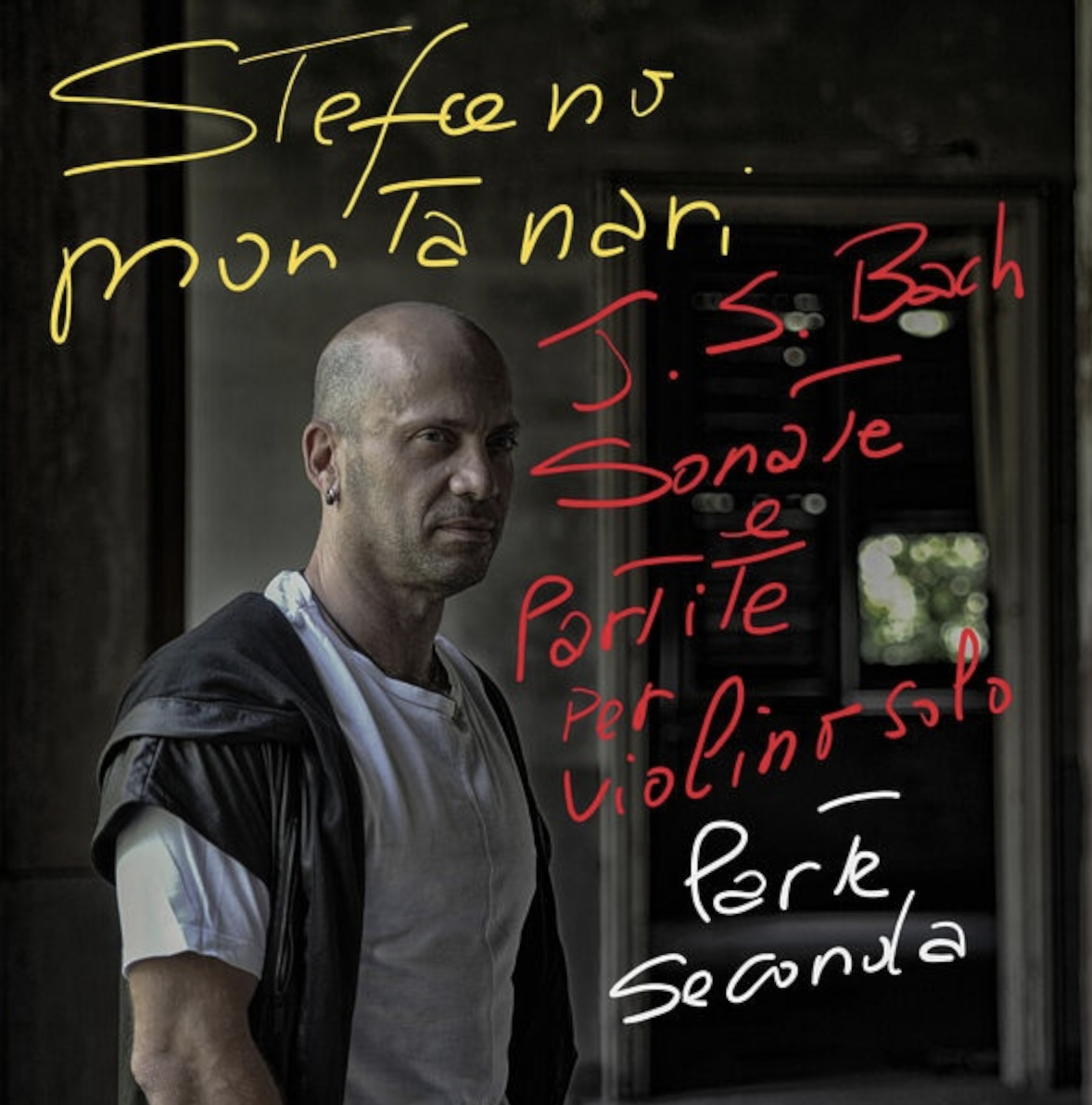
Before us is Stefano Montanari's recording of BWV 1001–1006, released this past November across two releases on his own label. For many years, Montanari led the Accademia Bizantina as lead violin. He has published a guide on baroque violin playing (Metodo di violino barocco) and currently serves as director of the Orchestra del Teatro Petruzzelli in Bari.
A personal highlight for me was his recording of Corelli's sonatas (opus 5). He also recorded Bach's sonatas for keyboard and violin with Christophe Rousset.
This appears to be his second recording of these works; the timings differ from his 2016 Cantus Records release, which featured a recording made in 2011.
I often approach writing about albums by first acquainting myself with the album's sound, looking for what might set it apart from others. I don't write notes or anything — I let the music wash over me. It became very clear at this early stage with the Parte seconda release that the artist is out to give us a personal account of these pieces. In my own practice, I find that leaving the music behind and playing from memory allows me to explore, over many performances, my own favorite spots, the things I want to change or alter. In effect, it's an exploration of how to make the music my own.
Something of that spirit seems at work here: this is the playing of someone who has lived with this music, eager to share how he hears it.
It is not unusual for artists recording a work a second or third time to want to show us how they have evolved with it. Montanari is clearly attempting to present his own voice, and that desire comes across as both interesting and daring. Whether some of his solutions grow tiring after repeated listenings is a fair question — one I'll return to.
I recently published a review of Bach played by Elfa Rún Kristinsdóttir and she, for the most part, took a different path. What I took away from that recording was an effort to present the music in a clean, articulate, and dynamically interesting way — without leaning on rubato, dynamic surprises, or note alterations for novelty. That approach can fall flat, but in her recording it worked well. Another point of reference worth naming early is the one-disc selection by Enrico Onofri, whose approach to tempo and phrasing diverged sharply from the mainstream. Something of that spirit is alive in this second Montanari recording.
The Partitas
There are a lot of creative touches in Montanari's performances. The opening of the Preludio from BWV 1006 is as good an example as any: rather than treating the piece, as has become standard, as a study in perpetual motion, he breaks it into shorter phrases differentiated by dynamics and a good deal of rubato — in speed, in tone. The fits and starts give the performance an interesting edge. Both the Bourrée and Gigue from the same partita show strong differentiation between opening phrases and those that follow, made clear through dynamic contrasts that function as a kind of echo or call and response.
The Loure from the third partita is interesting for the unequal weight he gives to the melodic over the harmonic portions of the writing. His ornamentation in the repeat is something I'm always listening for in binary-form music — and it is, frankly, unusual in performances of this repertoire.
The D minor Partita's Gigue is handled with more restraint than is typical, which makes good sense: holding back here reserves the dynamic range for the Ciaccona that follows. The repeats are treated with extra care, with Montanari adding double stops for variety. He doesn't overdo these embellishments — they act instead to freshen the piece, offering the ear something to compete with its own memory.
Montanari's Ciaccona clocks in at 14:24, within the broad mainstream range of 14–15 minutes. From the opening bars it is clear he is making this his own. The extreme rubato, on top of ornamental flair, is just enough to hold our attention — especially appropriate for those who know these works well. He is far more creative with dynamics than most, relying at times on the clear, silvery upper end of his instrument to carry the music forward. His technique is entirely equal to the demands. Whether some of these choices lose their freshness on repeated listening is a legitimate concern, but on first and second hearings they make good musical sense.
Elfa Rún's Ciaccona is of course faster — she is not content to linger and milk the music. Both recordings reward attention, even as they approach the movement from opposite ends of the expressive spectrum. Montanari is, in this case, the more mainstream of the two in his willingness to stretch time and push dynamics.
The first disc brings us the first partita in B minor (BWV 1002). The Allemande shows that Montanari is willing to use vibrato as an ornamental effect rather than as a constant companion to his bow. This opening movement is full of rhetorical gestures, though the overall effect is somewhat rough around the edges. The first Double reveals a rather gorgeous sound from his instrument — perhaps a function of the reduced volume and bow intensity relative to the opening movement. A few surprise ornaments appear along the way, each one earning a small smile.
The Courante Double doesn't pursue the evenness we heard in Kristinsdóttir's performance. Under Montanari's bow we get broad strokes, phrasing broken up in ways that make analytical sense — taking smaller phrase groups as a baroque interpreter would naturally have done. Those who admire the technical feat of maintaining a perpetual evenness may not warm to this approach. It brought to mind Monica Huggett's recording on Virgin Veritas.
The Sonatas
Bach's violin sonatas are more regular in design — four movements each, slow-fast, slow-fast. Bach clearly understood the challenge of writing counterpoint for a solo stringed instrument, as did those who came before and alongside him. For the virtuosos arguably at the center of his thinking, the ability to render independent contrapuntal lines across strings would have been both an aspiration and a point of pride.
The first sonata offers an early taste of this, even in the opening Adagio. Hearing the G minor fugue that follows, I'm struck by its affinity with Bach's duo sonata in the same key, BWV 1026 for violin and keyboard — very likely an earlier composition, possibly a fragment of something larger, its original context unknown. By comparison, the BWV 1001 fugue feels more fully realized: self-contained, complete without the support of an accompanying instrument. Montanari doesn't rush the Allegro, nor does he make the double-stopped chords sound labored — there is effort, but lightness follows it. Rather than anchoring to a metronome, he treats the movement as rhetorical presentation. A more perpetual energy arrives in the sonata's final movement, where he successfully melds the declarative character of the fugue with the demands of a continuously running texture. The second sonata takes nearly twenty-five minutes — at the longer end of a wide performance range (18–26 minutes is not unusual), with most of the extra time given to the fugue. The opening Grave sounds, under his hands, like a new piece; his additions and phrasing genuinely reframe the movement. The Andante is among the more difficult movements in these works to bring off convincingly, requiring a clean separation between the melodic line and its harmonic background. Montanari delivers with exquisite control.
The opening of the C major sonata (BWV 1005) presents its own challenges, and despite the tempo chosen, Montanari has a clear and musically coherent concept for how the movement should be heard. The C major fugue takes twelve and a half minutes: an intensity builds out of the deceptively simple theme, and he sustains it without allowing the performance to become labored.
Conclusions
Twenty years ago, HIPP recordings of these works were rare; today, even "traditional" performers show its influence, whether or not they are playing a baroque setup with period bow and gut strings. Many would point to Rachel Podger's Channel Classics recording as a HIPP reference — authoritative, committed, grounded. Montanari pushes further, toward something less about stylistic suggestion and more about leaning in hard and deep with a personal voice.
Montanari has long been among the more extroverted and flamboyant baroque violinists. Despite his recent energies flowing toward conducting and opera, we are fortunate he returned to commit these works to disc again.
I'd place this ahead of Biondi and well beyond the more neutral von der Goltz. The recording that keeps coming into focus as a companion piece is the partitas-only album by Elfa Rún Kristinsdóttir: her recording sits closer to the Podger tradition — technically brilliant, serving the text — while Montanari belongs in a different grouping alongside the Onofri single disc and the more recent Biondi double CD. The sound worlds are different as well: her recording places the microphones closer, with fine detail and modest ambiance; his offers more air around the instrument, with his instrument's strong upper register the dominant timbral signature against the richer midrange presence of hers. Neither is superior; they are simply different instruments, different rooms, different relationships to the music.
This recording kept bringing to mind Gidon Kremer's ECM account — not as an equal in every detail, but as a similarly daring attempt to find something personal and urgent in music that is too often handled reverently. Montanari may not match that recording's singular authority, but he offers something fresh and genuinely satisfying that few others in the HIPP world have attempted. His strong interpretive voice will not connect with every listener, but his technical command is sufficient to warrant a serious audition even from those who already have settled allegiances. Those who come to this music looking to be surprised rather than confirmed will find a great deal to reward them here.