Introduction
Haydn was forty when he wrote this set of six string quartets, the third set he’d written while at the Eszterháza palace. They take their name from a rising sun pictured on an early published edition, not the composer’s doing. Musicologists see the changing ideas of the period as potential influences on Haydn’s writing; of special note is how Haydn looked backward by including fugal finales in three of the quartets. They are important works for helping to establish the four-movement form that many composers would imitate.
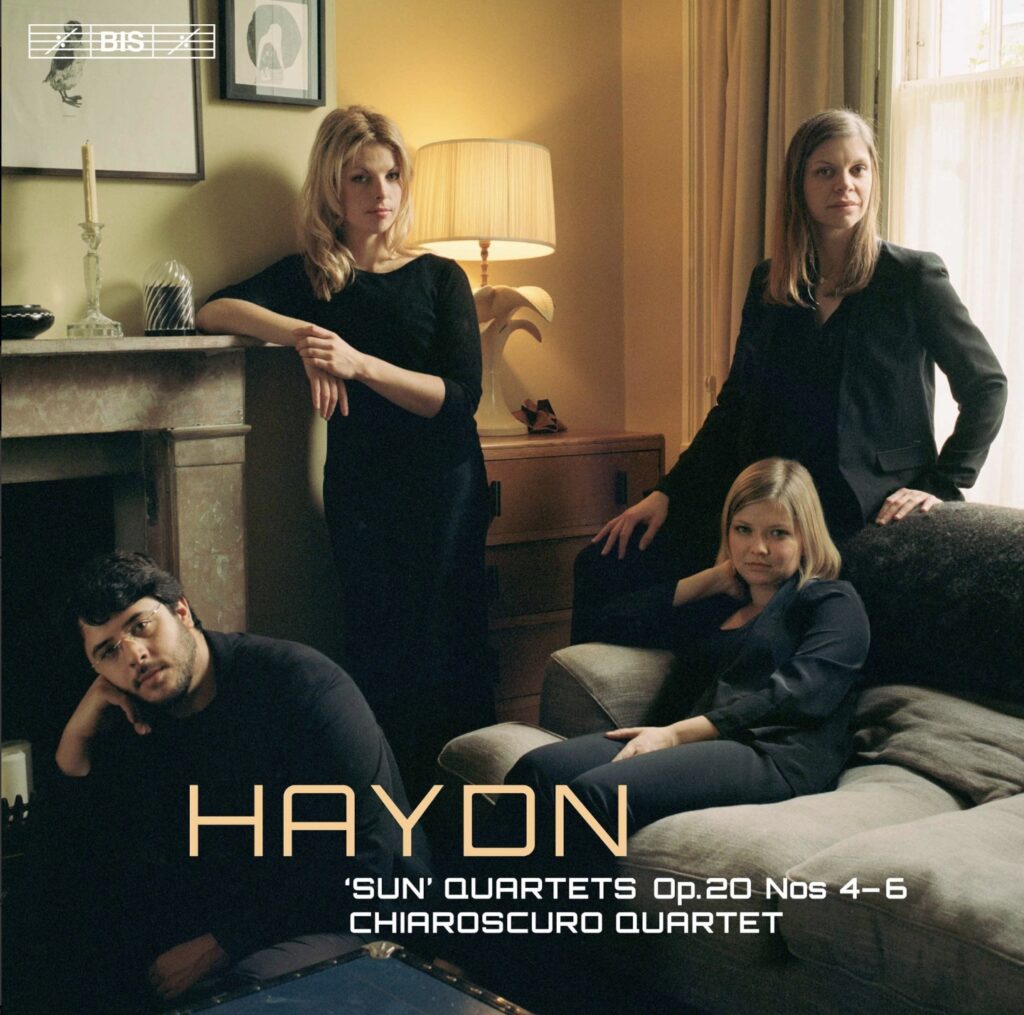
I found pleasure in studying these works in college, literally forced to listen to them and analyze the composer’s harmonies and formal structures. As a baroque fan, getting to those fugal finales was like catnip. In this write-up I look at three HIP ensembles and tease out which may speak to you as a listener.
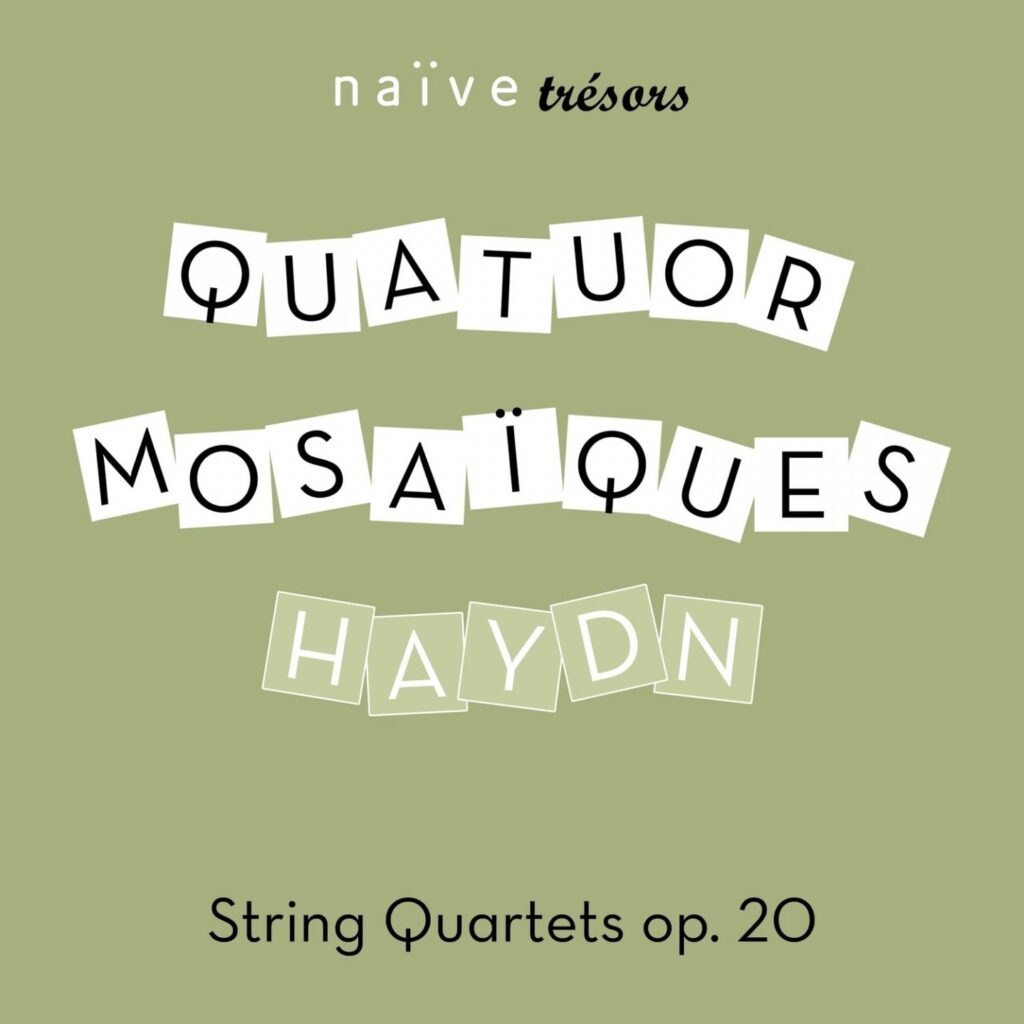
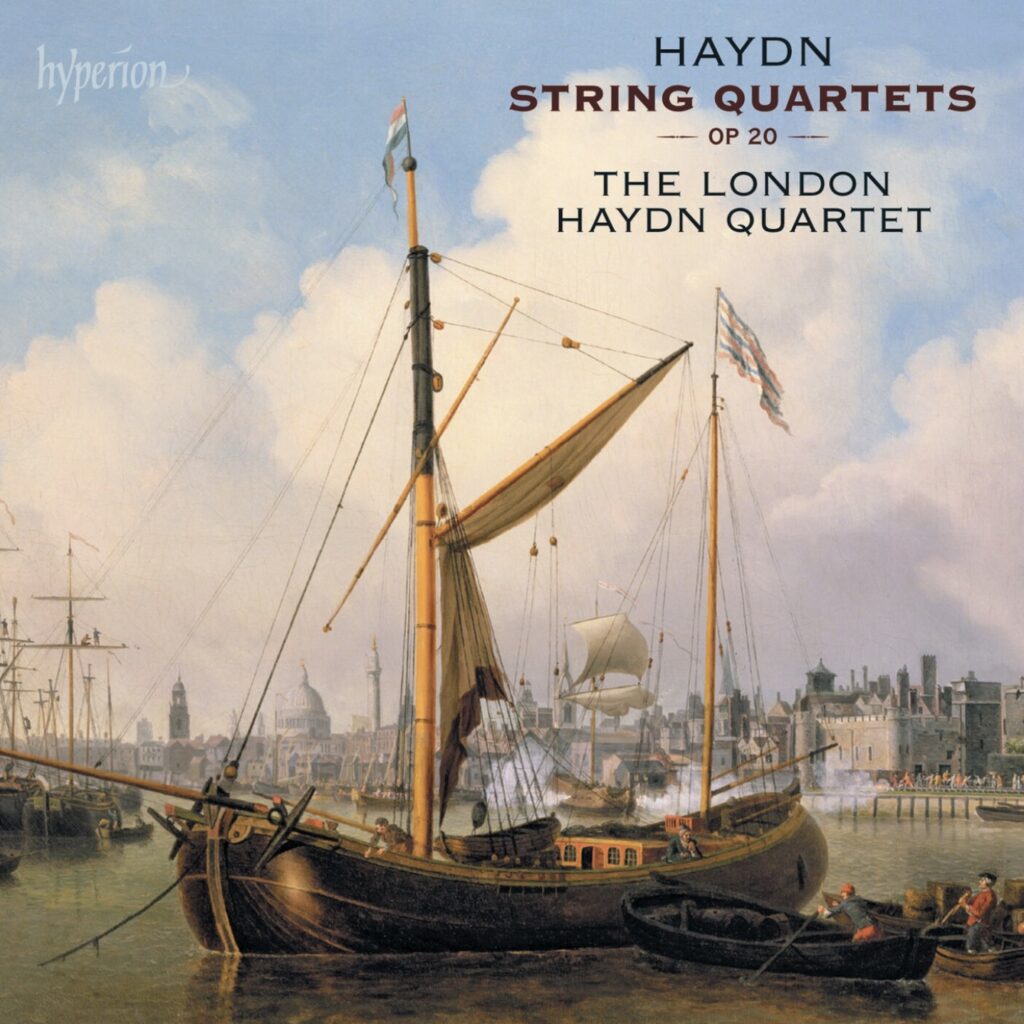
- The London Haydn Quartet (LHQ): complete set, September 2011, Hyperion
- Chiaroscuro Quartet (CQ): Nos. 1-3, July 2016, BIS
- Chiaroscuro Quartet (CQ): Nos. 4-6, June 2017, BIS
- Quatuor Mosaïques (QM): complete set, recorded 1990-92, Naïve reissue
I grew up with the Salomon Quartet’s readings on Hyperion, led by English Concert concertmaster Simon Standage. I was purposeful in choosing recordings with which I wasn’t intimately already familiar.
For this exercise I am listening to a subset of the six quartets:
- Quartet in C, no. 2
- Quartet in D, no. 4
- Quartet in F minor, no. 5
Period Practices
The period around which these works were composed saw a transition from a rococo aesthetic to what we would later label the classical style. That refers to how composers were writing music. But how were musicians then playing the music? What did their equipment look like? And how were they trained?
If we think about the musicians playing Haydn’s quartets, they would have been born as late as, say, 1750, and as early as 1730. Haydn himself was born in the baroque, in 1732. Instrument design wouldn’t have changed, and they would still have been using pure sheep gut for the strings. The lowest string may have been wrapped in silver wire. Compared to a modern instrument, the string tension was lower, and the pitch would have been south of today’s a=440 or 442 standard. Violins and violas lacked chin rests, and the instrument would have been held against the collarbone or chest. Cellists at this point still weren’t using endpins, so just as in the baroque, they supported the instrument with their legs. In short, these were still baroque setups. What changed were the bows.
A transitional type, the Cramer bow with its axe-shaped head, was coming into use around this time. Players held the bow higher up the stick, for better balance, not down at the frog where players hold it today. Bowing style was influenced by rhetoric, meaning the music should imitate the cadences, inflections, and articulations of the voice. Remember, the baroque idea was that instruments imitated the voice. Each note should have a clear initiation, a core, and a natural decay. That is very different from the seamless, smooth bowing that dominates later music and carries on into modern style. Players would also separate fast notes with spiccato or détaché technique, offering a crisp sound.
Finally, vibrato. The sources aren’t unanimous, and Geminiani (1751) is the more liberal voice. But Leopold Mozart’s treatise (1756) treats vibrato as an ornament, and using it continuously was discouraged, as it muddied the natural resonances of the instrument.
Quartet no. 2, Hob. III:32
The longest movement is the opening Moderato. It gives the theme to the cello, high in its register, before passing it on to the other voices, a great way to introduce the players. In the restatement of the theme, the cello gets a little action, with more movement in support of the harmonic foundation. The playing by the LHQ is very rhetorical, with breaks in the phrases and a lot of space for that strong speech-like approach; the faster notes in the cello are detached. QM apply vibrato, in contrast to LHQ. There is still detachment, but their concept of phrasing is longer, with far more connectedness and less of a rhetorical approach. Their vibrato isn’t strong or continual, but it’s not ornamental either; I’d call it light but continually applied. There’s also a palpable smoothness to their sound. Like the LHQ, it’s up close, but there’s far more atmosphere in this recording.
The CQ recording is not as close; picture us in the fourth row of a concert hall. Their string sound is perhaps a compromise between LHQ and QM: shorter phrase lengths within a rhetorical approach, vibrato largely eschewed, but a silkier, smoother sound than the LHQ, which may be somewhat earned by not placing the microphones so close. They also sail through the opening movement fastest (9:16), with the LHQ taking the longest at 11:35. CQ’s speed doesn’t feel Moderato to me, although I found QM’s tempo just about right, in Goldilocks parameters.
The second movement is marked Capriccio, with an iconic opening line in unison from the quartet, a powerful compositional idea. QM offer a rich timbre in the opening, the cello solo is smooth, and the approach not too quick. Their tempo feels a bit slow; the LHQ shave about 20 seconds off. The unison integration isn’t quite as tight with LHQ, and the cello solo is smoothly played there too. What happens afterward doesn’t come off quite as musical. I like the speech-like approach to their phrasing, but I wanted a bit more shape from the upper strings. CQ cut nearly two minutes from QM’s timing. Their cello solo is probably the most rhetorical of the bunch, and I think they most successfully navigate what happens next, getting there by way of some vibrato, rubato, and hard-leaning dynamic contrasts.
Under the CQ’s command, the final fugue opens light and nearly playful, not academic. They clock in at around four minutes, with plenty of separation in their phrasing style, and they use dynamics to bring the music to life. QM choose an identical tempo, although their approach is very different in phrasing and articulation; all are tidy players, but the mild vibrato distinguishes QM’s sound. They too apply dynamics in the falling line offered by Haydn, but the effect is a bit more hurried, not as light as the CQ. The LHQ push the tempo even harder, and while there are dynamic contrasts, there is a far more present taste of restraint in their approach. The space between notes is the biggest difference between them and QM.
Verdict: All three performances offer beautiful moments. The approach by the LHQ is exceptional in the way they dig into rhetorical playing. Dynamically, they come alive, to my surprise, in the final movement, which for me is exceptionally satisfying. Overall, I think the CQ offer a kind of compromise in terms of sound, and their biggest asset is their ability to convey lightness.
Quartet no. 4, Hob. III:34
This quartet follows a more classical model, with an Allegro, Adagio, Menuetto, and a closing Presto scherzando. The opening by the LHQ is technically sure and tight, and the texture of the first violin is, for me, gorgeous. Of the three ensembles, the LHQ have the most “gut string” timbre. The CQ opening feels a tad less precise and cohesive in the unison speech. The “outbursts” that follow come off more successfully, perhaps because of their sound environment: the effect is less dry, and there’s more sweetness in the first violin’s timbre. Vibrato creeps in for effect, which also helps sweeten things a bit.
There’s something to hear in the QM opening: the vibrato helps separate the voices in the unison speech, and there’s far more dynamic contrast in their playing. The sound engineering on the Naïve recording is nice too, with good spatial separation among the players; I feel we’re in the front row of a small chamber. Like the CQ, the breaks in phrases are opportunities to hear the ensemble’s harmonic qualities in reflection, which is nice.
The atmosphere comes alive in an important way in the final movement, which leans heavily on the talents of the first violin. QM close in 5:05, with plenty of dramatic tension and excellent coordination between the two violins. CQ breathe a bit more, closing at 7:47. It’s not so much a tempo difference; they lean into rubato and do some interesting things between phrases. The overall sound isn’t as cohesive or tight as QM’s. There’s definitely virtuosity on display from the first violin, and here I preferred hearing the distinction between the players in QM, which I credit to the recording engineers. Yet the rubato applied by CQ is musically more interesting. The LHQ close at 6:32, somewhere between the other two. Like CQ, they play with rubato, but at a far quicker pace than CQ finds. The effect of the speed is exciting; all at once it would be too much, but they temper it by breathing between phrases. They are certainly embracing the scherzando direction!
Verdict: I expected to hear much of the same from the earlier quartet, but the LHQ surprised me with the breakneck speed of this finale. I found QM’s vibrato less bothersome in this quartet, and in some cases it offered an advantage. The QM sound is perhaps the best, but all three ensembles have strengths to offer, and I found none lacking. The rubato helped two of the ensembles convey something emotionally satisfying in the finale, in line with that rhetorical approach to playing.
Quartet no. 5, Hob. III:35
This quartet opens with an Allegro moderato, followed by a Menuetto, Adagio, and Fuga a 2 soggetti. The LHQ’s opening is slower than I remember my Salomon recording being. The effect isn’t detrimental, given the character of Haydn’s writing, and the phrasing, with all the space, is kind of refreshing, helping me hear the movement anew. With the CQ there’s a far more interesting effect to the dynamics and rubato. They too use space, but with larger phrase groups and more independence among the players in dynamics. QM approach this first movement faster than the LHQ. I feel at home with their tempo; like the CQ, they infuse more shape into the melodic lines and use dynamics without restraint as an affective tool. I’m less impressed again by the vibrato, but it does give their ensemble a warm sound.
QM perform the Menuetto in 5:07, the CQ in 4:24, and the LHQ in 5:48. With quite a bit of difference between them, I think all three ensembles make their chosen tempo work. The CQ’s tempo might be a bit quick to dance to, but the strong three-feel is there, and the effect leans romantic for me. Here QM might have the edge on a rhetorical approach; I also think their median tempo offers the strongest suggestion of dance.
Among the Adagios I preferred the CQ far and above the other two. Their tempo was ideal for me.
The F minor fugue is among my favorite movements from the Sun set. The LHQ approach it sneakily, playing down the dynamics at the outset. As a familiar piece, their slower tempo works for me, offering a contrast to how I’ve heard it in the past. They treat the entire movement as a giant crescendo, which I liked. When they get loud, though, oh, a little vibrato would have been perfect, but they don’t offer it. CQ also start low in volume, but each instrument’s entrance is clearer, with each voice on its own dynamic agenda. I think listeners will appreciate this approach over the LHQ’s. Like the LHQ, they get louder over time, but far more quickly, and then sustain a mf-f level as an ensemble. QM choose the quickest tempo of the three: instead of doing something dynamically as an ensemble, they keep a mellow approach throughout, and, as the recording has afforded them all along, we get good stereo separation. Their use of vibrato in the fugue is restrained.
Verdict: For this quartet, I feel QM and CQ offer a few advantages in tempo and dynamic phrasing. Again, none of the ensembles disappoint, with one exception: the slow Adagio from the LHQ. Their opening, the slowest of the three, didn’t rob the music of its charm.
Conclusions
In my essay on performance practices, I point to a Classics Today review by David Hurwitz that called the LHQ’s Haydn one of its so-called CDs from Hell. (This points to another of his reviews, albeit some of Haydn’s later quartets than those listened to here.) I’d seen their recording but had not really dug into it. And seeing on another site a favorable review of the CQ’s Beethoven, I wanted to do a little personal investigation of HIP approaches in classical repertoire.
My purchase many years ago of the Salomon Quartet offered me a very dry and austere reading of Haydn compared to other recordings I’d sampled from the university library, performed by “mainstream” quartets. I found that period style refreshing, but I could also understand why listeners would lean into the more polished, smooth veneer of those performances. As far as my studies went, the Salomon served me well. But it’s time to revisit these quartets, which I think still hold special charms.
The three ensembles represented here use so-called period instruments, but it’s very clear that they do not all apply the same lessons from a musicological perspective. I found great pleasure in all three recordings, although if I were guiding a friend on which one to buy, I’d place them along a continuum. At one end, the LHQ favor above all else a very rhetorical approach to phrasing and eliminate vibrato from the menu. In the center I’d place the CQ, who feel flexible but are still aware of projecting a rhetorical, speech-like phrasing style, while also entertaining dynamic contrasts and some longer phrasing ideas. At the other end are QM, who favor a more mainstream sound, warmed by vibrato; they seem the least inspired by rhetorical phrasing, although it isn’t wholly absent from their arsenal of tricks.
On top of that, QM offer probably the best overall sound quality, while I also really enjoyed being so close to the LHQ, and I think some will like the amount of reverb in the CQ’s recordings. As noted, our ability to hear the individual players is easier in some recordings than in others.
I’m here to say I don’t agree with Mr. Hurwitz that the LHQ’s Haydn is a CD “from hell.” I can certainly understand that he does not like their phrasing, and he likely would enjoy some vibrato added for warmth. But as I started, these quartets come at a time when performance practices were still very grounded in a changing, but still baroque aesthetic, and the historical clues we have support leaving vibrato behind and using shorter phrase lengths. Whether we like that is up to us.
These recordings offer different interpretations in terms of historical understandings. Neither of them I found wholesale disappointing.
Which is to say I see great value across all three recordings. If I could only choose one, I may well suggest the Chiaroscuro Quartet’s offering on BIS. The lively recorded sound, the tempos that err on the quicker side, and their command of dynamic shaping make a compelling choice for owning just one set.