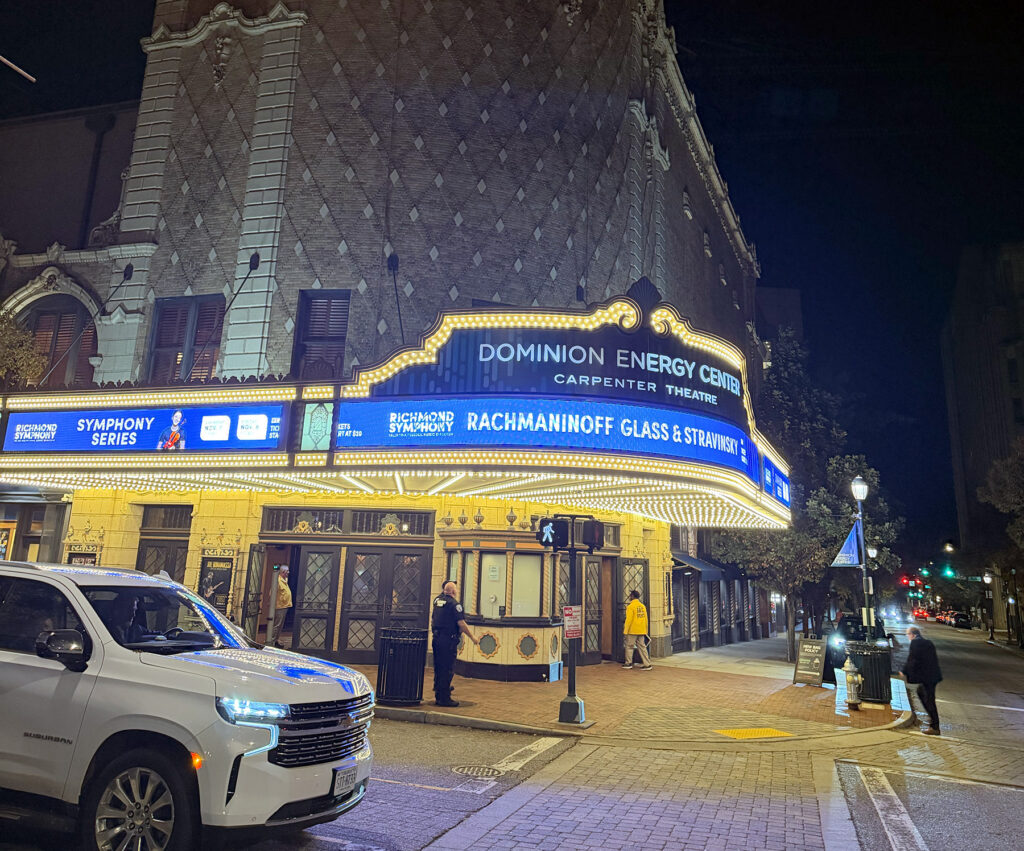
I attended the Richmond Symphony’s concert today, directed by Valentina Peleggi. On offer were Stravinsky’s 1919 Firebird concert suite, Glass’s first violin concerto, and Rachmaninoff’s Symphonic Dances, op. 45. The program was built around America’s 250th anniversary, and it also marked the 40th anniversary of Glass’s concerto and the composer’s own 90th birthday. As readers might suspect, I came to hear the Glass, played by Julian Rhee, a New England Conservatory graduate and prizewinner who currently plays a 1699 Strad. The concerto was programmed second, after the Stravinsky.
Dominion Energy’s Carpenter Theatre is an interesting venue, at least visually. It’s not overly large, and given its relative depth it has significant width for a concert hall. The last time I was there, to see Conrad Tao, I sat in the first level above the orchestra level and found the position perfect. This time I sat in row H, dead center, on the floor. What holds the concert back, and I’d say the Richmond Symphony itself, is the hall’s acoustics. The brass and woodwinds project far better than the strings. Both the Stravinsky and the Rachmaninoff offer moments of fire and power that let the ensemble shine.
Speaking of the strings, my favorite section is the double basses. I counted six from my position, and their sound reaches the center of the hall with all the richness and depth it needs. They’re set, obviously, far right, and I think far enough back to project well. In the Rachmaninoff, concertmaster Daisuke Yamamoto had no trouble projecting in a small solo. My guess is that he’s used to the hall and what it takes to rise above the other musicians.
The Stravinsky opened with palpable strength from the double basses, but as the winds and eventually all the strings entered, the balance was unclear. Somewhere between the Variation of the Firebird and the Round Dance, the ensemble’s issues dissipated and they found their sound. The arrival of the Infernal Dance shocked everyone in the audience, I think, given how little weight the strings generally carry. But add the brass and percussion? I’m not a regular concertgoer at the Carpenter, but the orchestra’s sound and presence were impressive.
Having reviewed the 2012 Reference Recordings release of the Stravinsky, with the Minnesota Orchestra under Oue, I wish the Richmond Symphony could play in an auditorium like Minnesota’s. With the right acoustics, I think Richmond could make the magic work under Peleggi’s direction.
This is the first time I’ve seen Peleggi conduct, to my recollection. As someone who studied conducting, I’d say she does more time-beating than interpreting, but it was fun to watch her lead the ensemble into the louder portions of the Stravinsky and Rachmaninoff. The Symphonic Dances was the right piece for Richmond, showcasing strong contributions from multiple players and sections. It felt like the piece most comfortable for both the ensemble and their director. The work was composed in the U.S., and is the composer’s last composition. The smile plastered across Peleggi’s face at the conclusion told me she was pleased with the performance, and I thought it was well deserved.
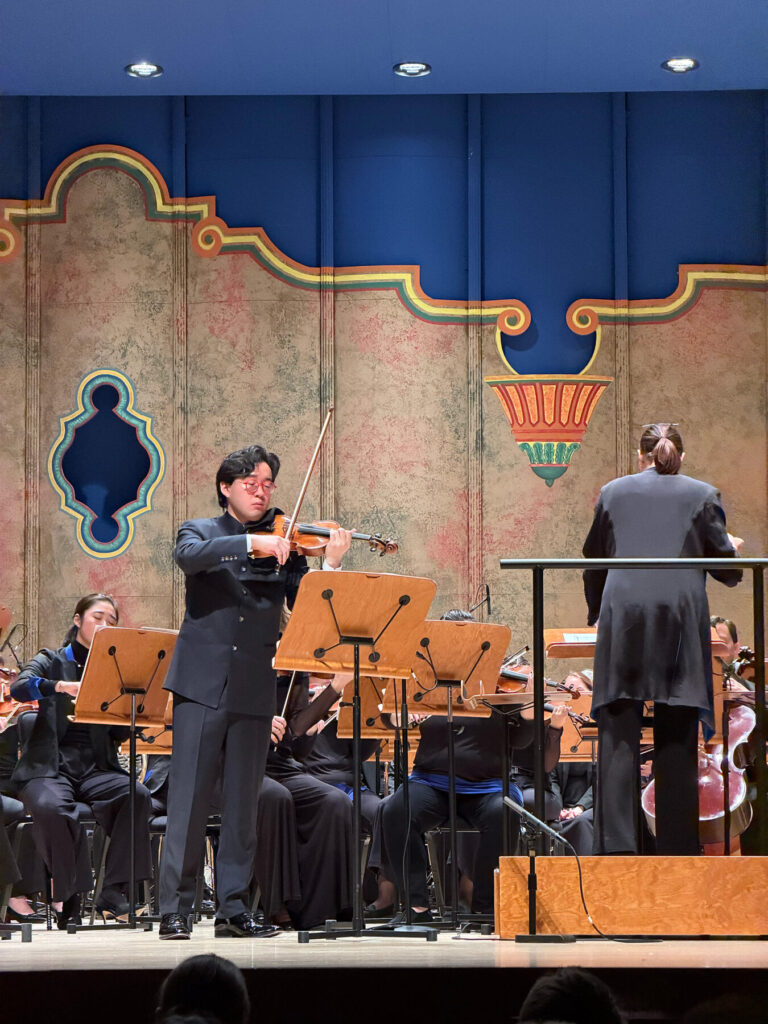
Glass’s violin concerto got an introduction from Peleggi that I thought was unneeded. As if the audience weren’t ready for Glass’s music, she almost seemed apologetic, giving guidance on how to approach it, to let it “wash over you.” She compared Glass’s music to the ocean or a Chuck Close painting. Having made that comparison, it would have been opportune to project a Close painting of Glass, or reproduce one in the program. Alas, I am sure doing so would have incurred extra costs.
But I understood what she was saying. Close and Glass have been friends and I’ve enjoyed visiting more than one museum to see one of Close’s portraits of Philip.
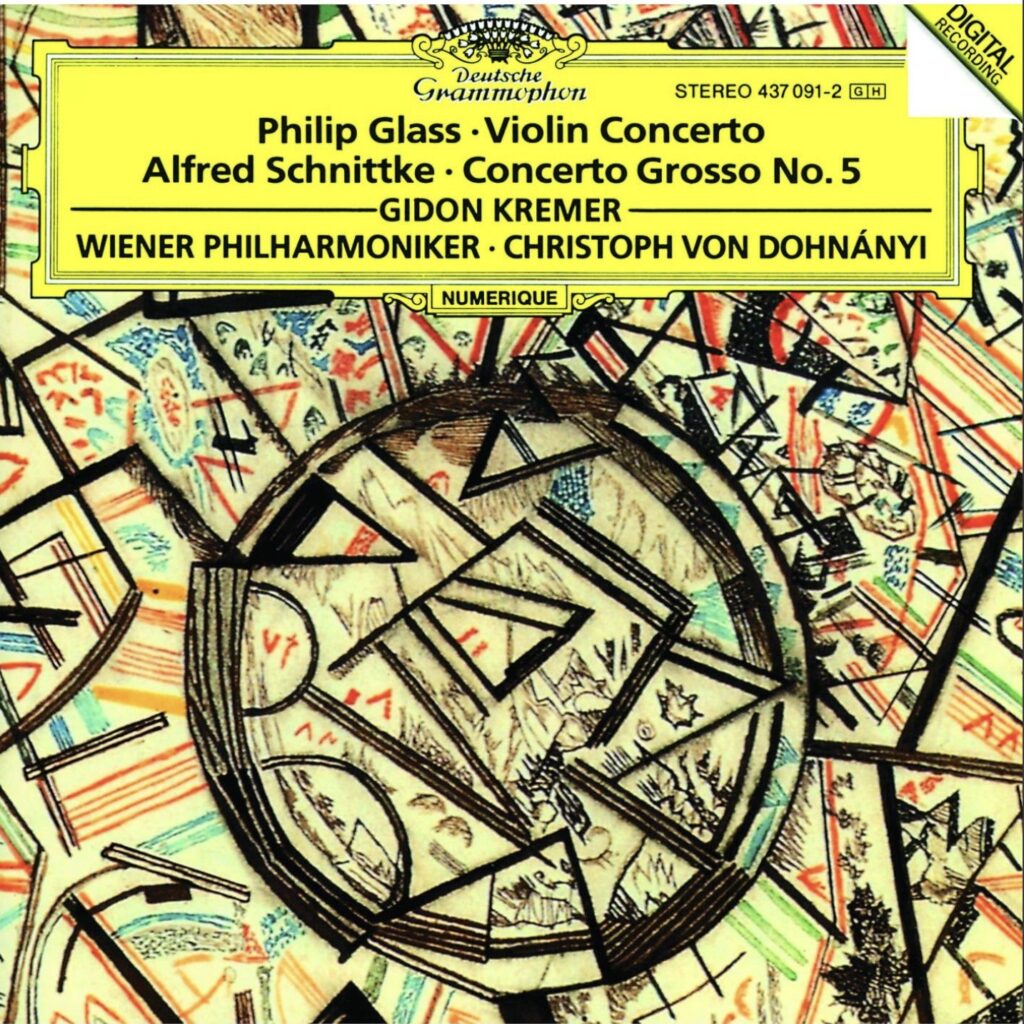
I’d heard Glass’s second concerto previously, played by Robert McDuffie. This first concerto strikes me as both difficult and easy: the difficult passages don’t necessarily let the violin stand out, while the simpler ones bring focus to the soloist. There are several recordings available, but my reference is the 1993 Gidon Kremer recording on DG, directed by Christoph von Dohnányi (with Vienna, not Cleveland).
It may be unfair to compare a recording, which can be miked to perfect balance, to a live performance, but there was a balance issue with Rhee’s projection. It’s why I mentioned Yamamoto’s solo earlier; his fast bow speed was indication enough. While it would be easy to blame Rhee, he’s pushed out onto the edge of the stage with no overhead help for acoustic projection.
Those matters aside, the Richmond Symphony did well in their part of the production. The DG recording benefits from clarity for Kremer, Vienna’s acoustics, and fine control and balance in the percussion. The first movement nearly ends with some icy double stops for the violin that sparkle on the recording, and Rhee’s execution was no less impressive.
The opening of the second movement offers some entrances for the double basses, and again I sat in disbelief at how real and palpable that section of the Richmond Symphony sounded. What I appreciated from Rhee here was his use of vibrato. He has a really nice sound, and from his YouTube videos I know he vibrates a lot. Here, though, he mixed things up, pulling some notes straight and applying vibrato on subsequent bowings. I don’t have the Glass score, so I can’t say how much of that was marked. The differentiation was nice.
The triangle in the third movement was a bit loud at the concert, as were some of the other percussion entrances. Kremer’s fast entrance has the right volume to compete with the ensemble; Rhee’s bow wasn’t nearly fast enough to match it. His execution of the double stops that followed was on point.
Rhee’s playing, while at times folding into the orchestral sound, was very much in sync with Peleggi’s conducting and the ensemble behind him. He seemed to come alive in the third movement and made an impressive contribution, especially in the passages that took him to the upper reaches of his instrument. There was little doubt of his technical command.
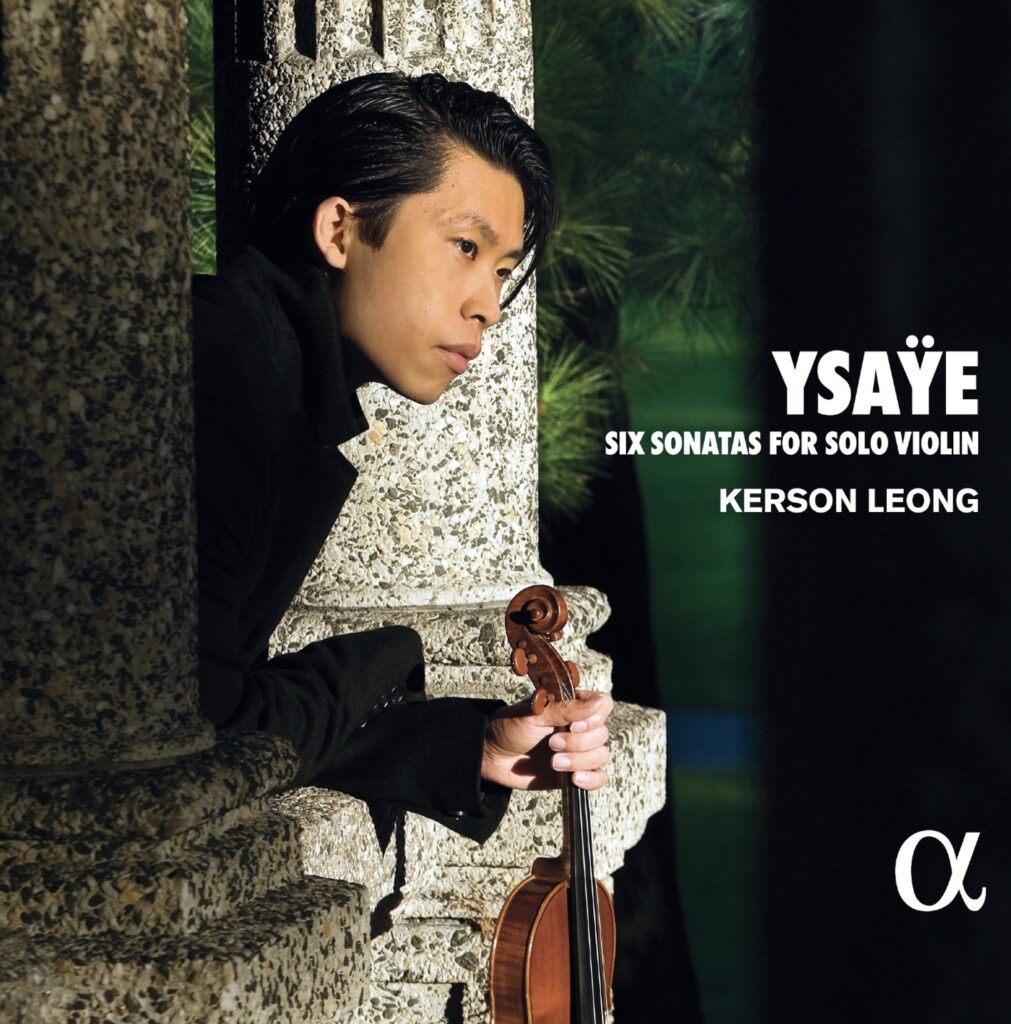
He followed the concerto with a solo encore of Ysaÿe’s third solo sonata. I’d point readers to Canadian Kerson Leong’s 2021 recording on Alpha of Ysaÿe’s Op. 27 set of six sonatas. Rhee had the audience’s full attention. The music is an adventurous ride, and by the end it’s clear how difficult it is to execute cleanly, clearly, and with good intonation. His performance was commendable. It lacks the atmosphere of Leong’s recording, but it got many to rise out of their seats.
Rhee has a busy concertizing schedule, with multiple stops in the next year between Florida, New York, and Chicago. It was a real pleasure to hear this young and promising violinist in person.
Leaving the auditorium, I overheard someone say the concert was really good. “I mean, did you hear that sound? Richmond Symphony honestly sounds a hell of a lot better, no?”
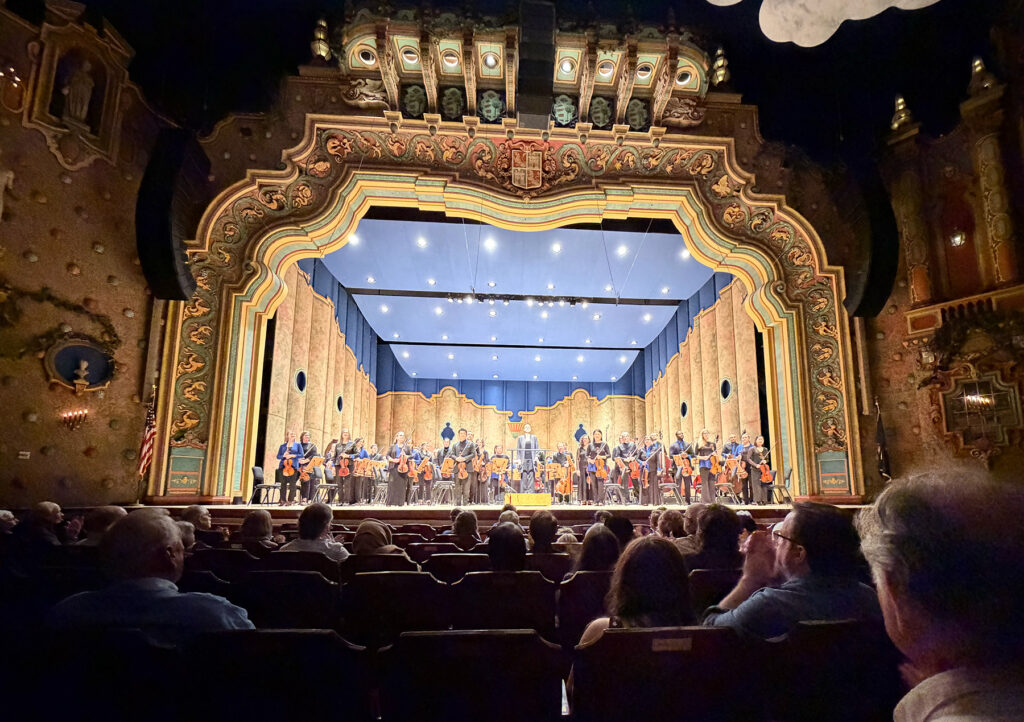
I smiled. Growing up, I had regular opportunities to visit Severance Hall and hear the Cleveland Orchestra. The Richmond Symphony might not be at Cleveland’s level in its heyday, but the music I witnessed today? Impressive, no lie.