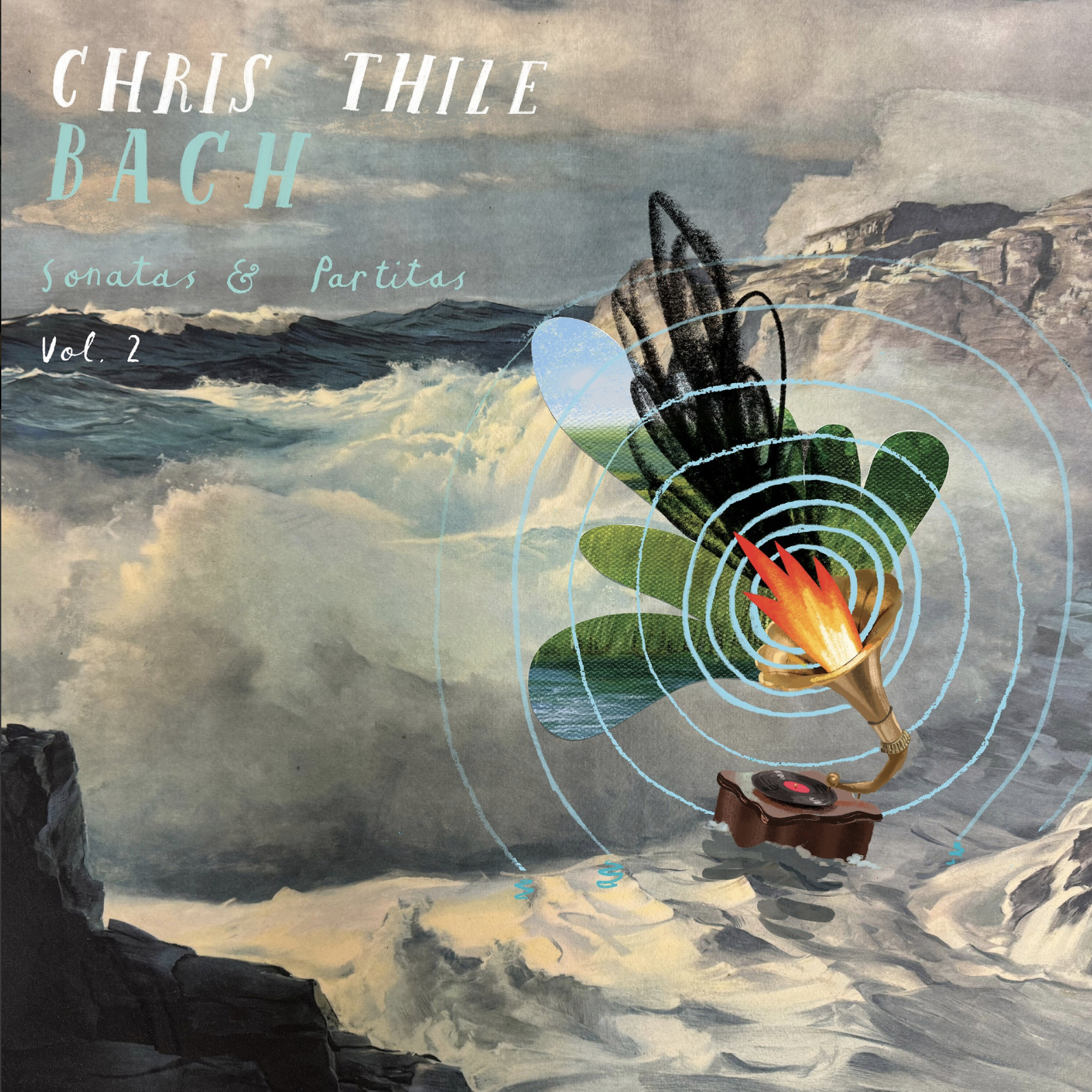
Bach - Sonatas & Partitas, vol. 2 • Thile
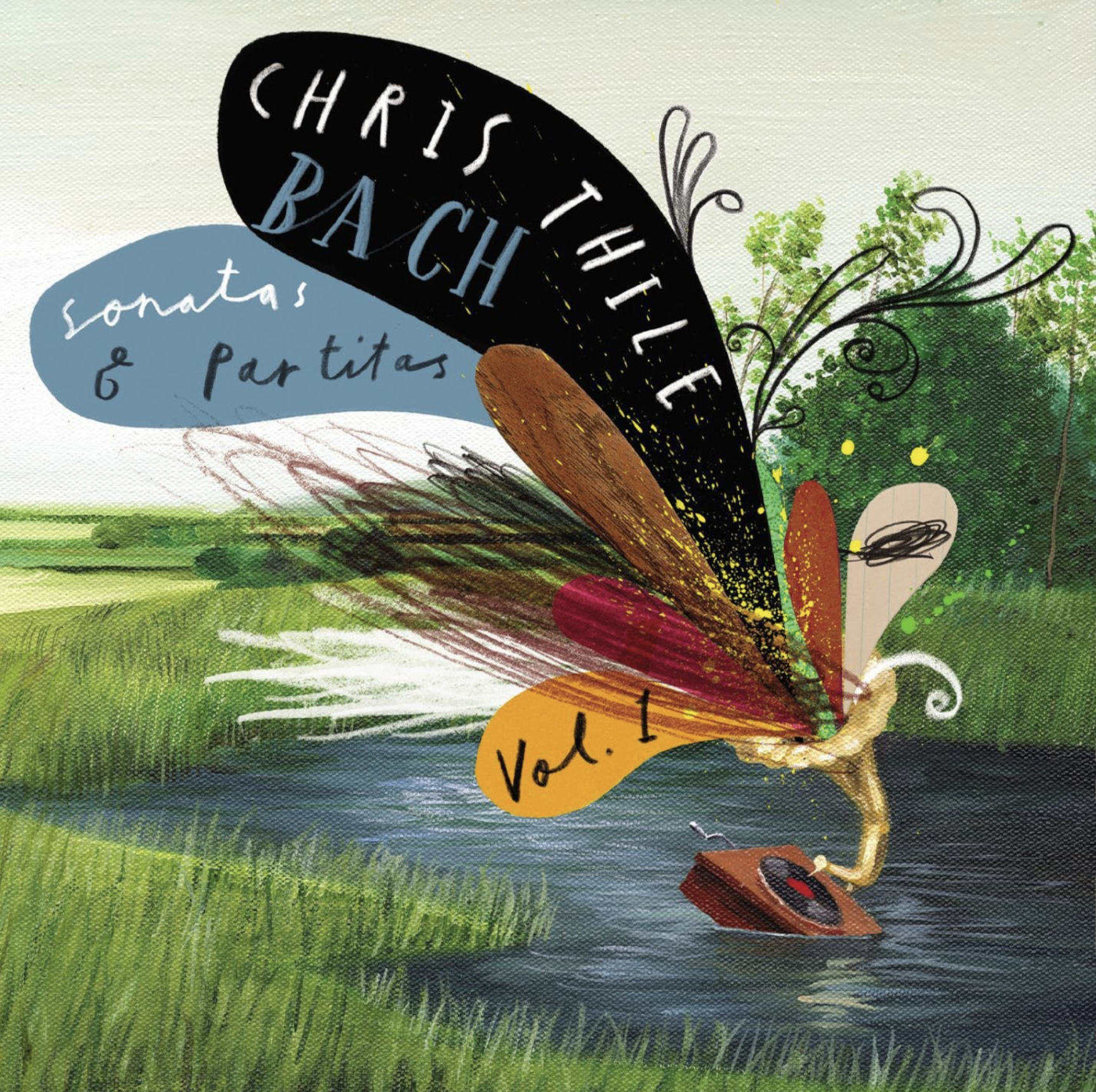
It was the Goat Rodeo recording with Yo-Yo Ma that turned me onto the high art of Chris Thile, mandolinist, who just last year released his second volume of Bach’s solo violin works, played upon his own instrument. The first came out in 2013 and instantly resonated with me, for Thile’s strong virtuosity. This one is very different.
Bach’s sonatas and partitas, BWV 1001-1006 need no introduction. Thile is a well-established bluegrass player who likes to cross boundaries. I got to see him live with Goat Rodeo alum Edgar Meyer (double bass) some years ago here in Richmond. The concert was outstanding, flawless from the standpoint of Thile’s contributions. He’s one of those musicians, you realize soon enough, is extremely gifted.
The mandolin seems to work pretty well with this repertoire; as I think I wrote in my earlier review of volume 1, the mandolin has an affinity with sustain to the harpsichord, at least one in a reverberant space. The Neapolitans had mandolins, of course, and Vivaldi wrote for that instrument. Can’t say that instrument ever came to Germany, although there was a culture around the lute. I don’t have a problem with musicians transposing Bach to their instrument, but not all solutions are the same. There’s something obviously very tactile with the mandolin, which is exploited heavily in this album, from the gentle strumming that opens the first track, to the fugue from BWV 1005 on track 7. There should be little doubt that Thile is on top form, technically in this album. If you enjoyed the first volume, he faithfully performed the three works and did so being true to his instrument. It was a triumph.
It might be fair to say Thile makes compromises in this album, or maybe the sentiment is that he’s mellowed with age and is apt to let more of his personality come into the album? The issues at hand include using extraneous sounds and noises as part of the background while he’s playing. It’s not done throughout which is the odd part; the background chatter (nature sounds, the indeterminate chatter of people) comes and goes in some tracks; in the aforementioned fugue of BWV 1005, audible speech interrupts. I have no idea why this is included and without liner notes accompanying the 96kHz Qobuz release, I can’t speak to it, other than to say it’s annoying.
The first work on the album is BWV 1004, which is the 5-movement partita that includes the famous Ciaccona. The opening is strange, with Thile gently strumming the strings, as to create a superficial effect. It also provides some kind of sustain, the way it’s done, but that effect, while interesting, seems more akin to something a performer would do to impress friends outside a public performance. Imagine if you would a gentle pencil sketch put upon paper, not a real sketch, but something quick and approximate. The first movement’s soundscape is followed by more typical playing. As if the practice session is over, and the performer has moved onto the stage; except Thile’s energy seems missing. The first half is played once (strait, officially twice if you consider the opening strumming); then the second section starts, this time with a bit more articulation on the sound. The second half is repeated, the volume growing ever louder for a period. Then we’re back to the soft texture of the beginning. These shifts in approach bring more questions than satisfaction.
The Corrente is played pretty much in the style we got from his first recording, faithful to the music and without special effect. The Sarabanda goes into new territory, with Thile grabbing color from notes not articulated by Bach. At two and a half minutes in, we’re someplace else. His introduction of new harmonic material is interesting, with no doubt, but given the previous presentation of Bach’s material written as performed, this departure sets us up with different expectations. I like what he’s done musically, but was unprepared for it.
The Giga starts a bit slow then winds up. Here’s where I admired the close miking again, a sound not unfamiliar to his first album. He adopts a different tone in the repeat. Not sure how this is achieved, but I’m guessing he’s leaning a portion of his hand upon the strings to mute them just so. It’s an interesting timbral change.
The famous final movement lasts over fourteen minutes, aligned to many violin recordings. It may be hard enough to imagine how such profound music could be brought to a four-stringed violin, but the stretch is wider for the mandolin. Thile starts simple enough, without pretense. In my setup I noticed some bass energy with his playing, as if there’s a foot tapping along. It’s kind of annoying. In my system the thump almost feels like a heartbeat. On top of this is articulate playing, sensitive to dynamics and progression of emotional energy. After about 5 minutes in, the feel changes; it swings a bit, and we’re no longer in Germany, but we’ve come to Appalachia. The playing is really inspiring. I feel Thile is attempting to make this piece into something he can bring to us given his resources, not leaving the notes alone bare. At around seven minutes, just ahead of the piece turning to the major mode, there’s a difference in recorded effect, with a lot more reverb coming forth. But why?
Why?
It’s as if Thile walked into the pool showers, and I’m focusing on the reverb against the wet tile. The sound isn’t bad, but what’s the context for the sudden change? Are these from different sessions, with different effects applied? I can only say it feels really sloppy.
The light strumming returns at around 11 minutes in. It’d be out of place if he hadn’t already introduced it at earlier in the work. After that, the reverb is gone. The finale from 13 minutes onward is… moving, complete with Thile’s accoutrements, reverb effects, all of it.
The partita was recorded at Reservoir Studios in New York and the remainder of the album was recorded in Tennessee at the Blackberry Farm Resort.
The opening of the C major sonata BWV 1005 features a recurring tapping by Thile onto his instrument, which almost sounds like a time keeping metronome. It doesn’t particularly add to the music; the second movement is the first to offer the environmental sounds.
The final Bach partita, BWV 1006, also starts with environmental sounds but then they just go away when reverb comes into focus. Again—this effect isn’t needed, it isn’t sustained, and in the edit, it feels sloppy.
Near the end of the Loure special effects return; digital effects, elongating Thile’s playing alongside a lot of strong feedback. It sustains as he starts the Gavotte. These effects aren’t needed to amplify the power of Bach’s music, even when Thile, as in this movement, goes “country” with the performance. I don’t mind so much acknowledging the camp sticking to his background and instrument, but the effects offer nothing; I’d go so far to say, given his strong technical skills, it robs the performance of it’s brilliance.
For the Bourée we’re outside again, jamming, it seems, referencing Bach now through the spirit of bluegrass. The effect would have been more effective if used throughout, rather than a departure from playing Bach “strait.”
The background eventually fades in the album’s last track, Bach’s Gigue, before Thile declares “I think we’re good.”
Conclusion
I’m in awe of Chris Thile’s talents, which extends beyond the classical repertoire. His first volume of Bach’s solo works for violin, played on the mandolin, were quite excellent. His playing in this volume again is to be admired, but as noted, there are a number of artistic decisions I think that step this release back from the first’s high glory.
The use of digital effects, the departure from playing things strait to a more casual, bluegrass style, and the use of background “ambiance” are questionable additions to the formula that worked so well in the 2013 release. I know I will come back to this album, but these creative decisions I think detract from the main event. Giving us the sense of playing outdoors among an audience is one thing; but selectively inserting that ambiance here and there felt immature.
There’s little doubt Thile holds Bach in high regard to commit to learning and performing these works. Given his approachable personality, I can see aspects of this performance being authentic to the man. But the strange confluence of these elements leaves in want of more of one or the other; together it disappoints.