G. F. Handel: Messiah • English Baroque Soloists & Monteverdi Choir
Introduction
Early music ensembles tend to reshuffle their rosters more than the big orchestras do. Philadelphia or Vienna tend to keep their players for a year, and the those bigger ensembles tend to keep the principal players season after season, if not decades. A period-instrument group flexes with the piece: a core that can handle chamber music, with players added as the repertoire demands is not unusual. Ensemble Diderot, led by violinist Johannes Pramsohler, grows and shrinks this way while its core stays the same.
Changes in personnel can also come from shocks, and not the choice of repertoire. After Robert King was sentenced to prison for the abuse of minors, many of the King’s Consort’s musicians regrouped as the Retrospect Ensemble. Now that King is performing again, he has regrouped his ensemble. The Monteverdi Choir (MC) and English Baroque Soloists (EBS) took a hit of their own when their founder, John Eliot Gardiner, was removed by the board after a physical assault on the singer William Thomas at the Festival Berlioz in August 2023. Gardiner stepped down in July 2024 and started a new group, the Constellation Orchestra and Choir, which drew many players from the Monteverdi ranks. Some stayed with the Monteverdi organization, while others broke free.
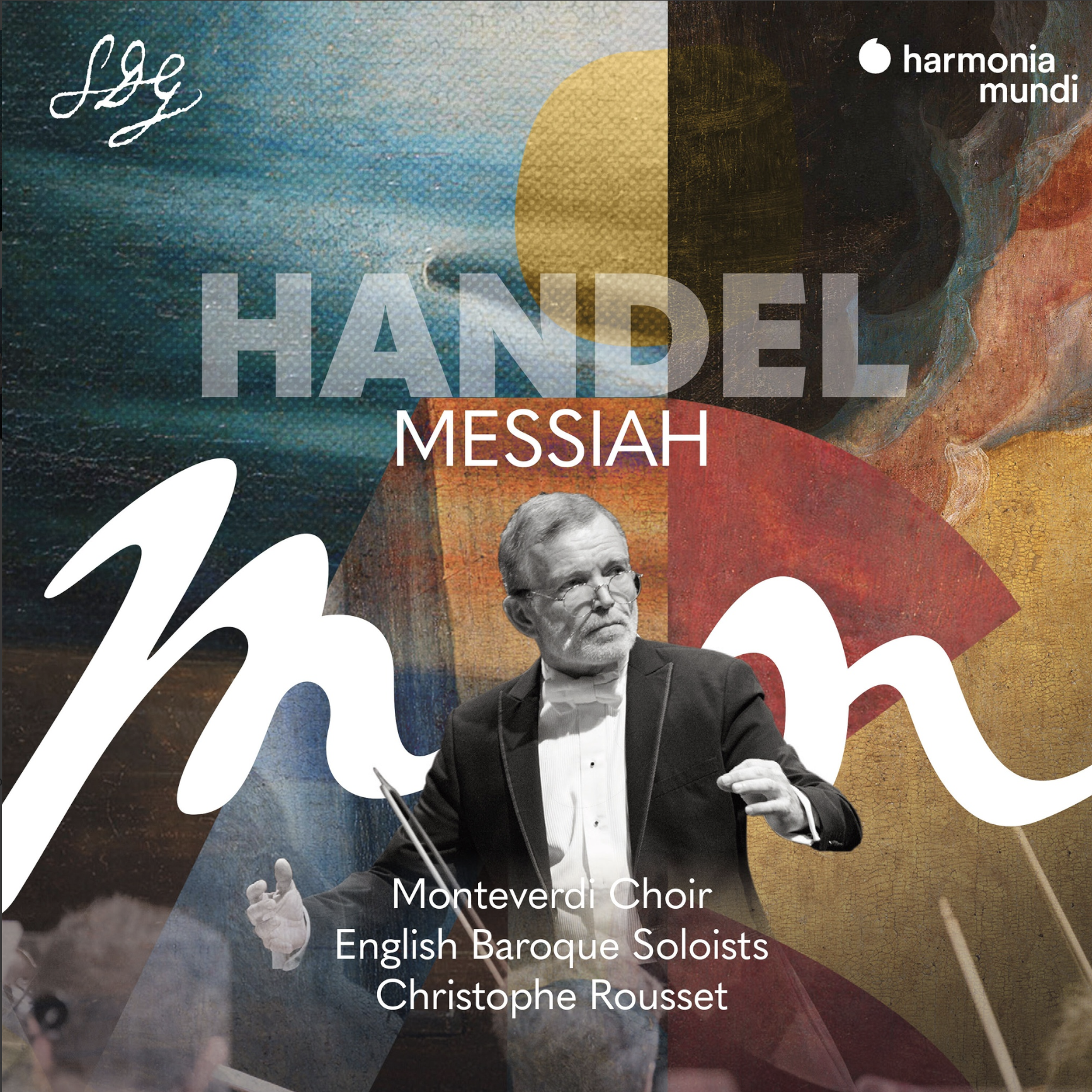
The Monteverdi organization (MCO) then brought in Christophe Rousset, the French harpsichordist and conductor who leads Les Talens Lyriques, presumably to re-establish its musical legitimacy. They set out on tour with a work Gardiner had recorded for Philips in 1982: Handel’s Messiah. Now there is a new recording on Harmonia Mundi, one of Rousset’s house labels.
I wanted to see how much of the roster survived, so I compared Gardiner’s recording of Handel’s Semele with the new Messiah. Four choir members appear on both, which is 12.5% of the new choir, and eleven orchestral players, or 42.3% of the orchestra. A December 2024 roster of Constellation musicians shares 33% of its choir and 43% of its orchestra with the Semele recording. None of the choir on Rousset’s recording appears with the Constellation choir, while 23% of Rousset’s orchestra appears with Gardiner’s Constellation orchestra. Just five musicians are common to all three: Gardiner’s EBS/MC, Rousset’s EBS/MC, and Constellation.
So how does one speak of these ensembles under the same names when their ranks change so dramatically (and quickly)? More importantly for this review, does the group assembled for this recording deliver musically, irrespective of the turmoil in leadership?
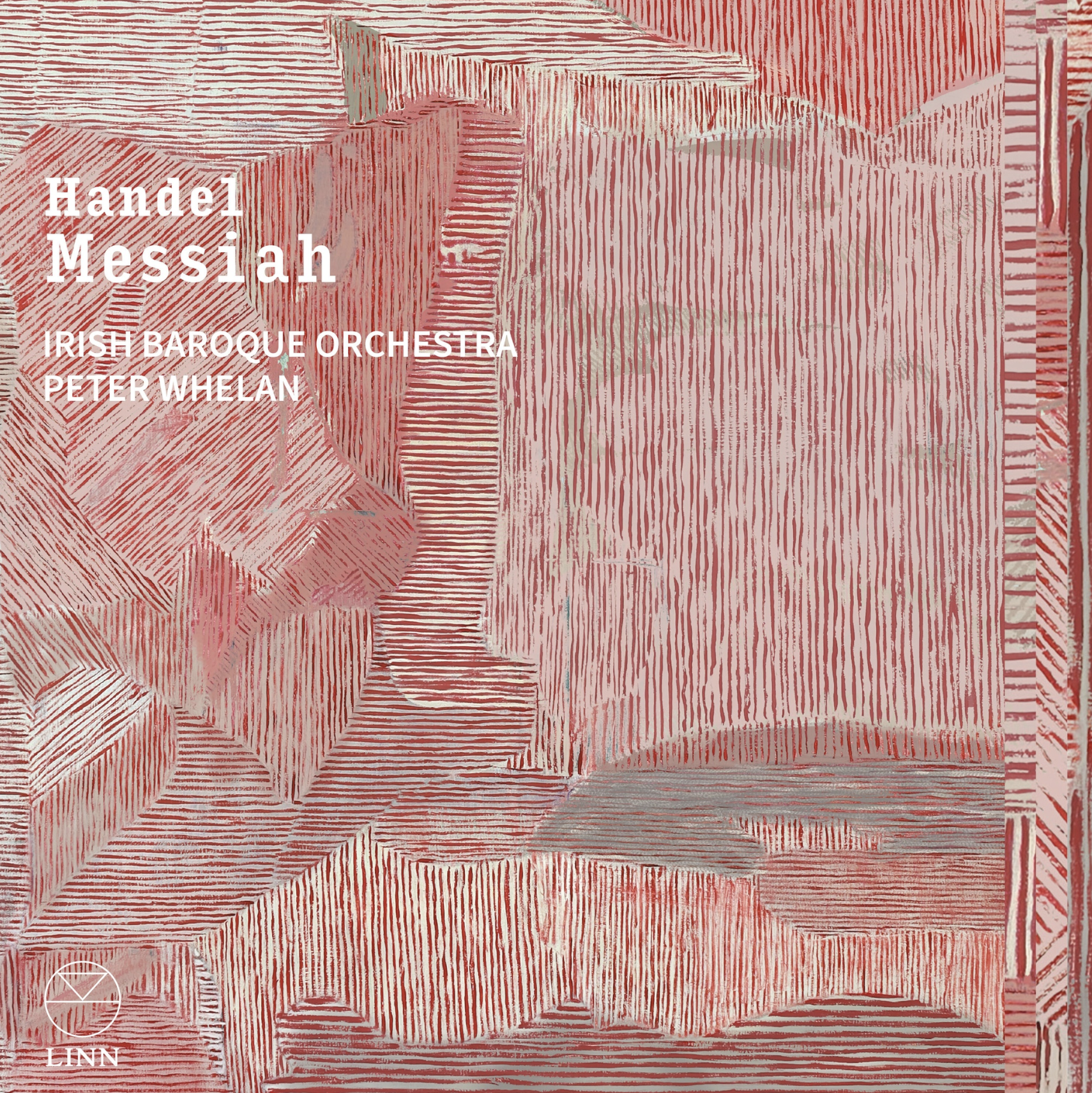
Handel’s Messiah (HWV 56) is a popular work. Most recent in memory for me was the Peter Whelan-directed performance with the Irish Baroque Orchestra, which I liked a lot. I have also heard Rousset live, both in an opera production at the Festival Ambronay and in a harpsichord recital in Washington, D.C.
This new recording was made at St. Martin-in-the-Fields, a church where I am happy to say I’ve attended a musical performance, just opposite Trafalgar Square in London. Rousset uses the 1752 version, the version Handel last conducted himself. His soloists are:
- Ana Vieira Leite, soprano
- Dame Sarah Connolly, mezzo-soprano
- Andrew Staples, tenor
- William Thomas, bass
Leite seems to work almost exclusively with HIPP Baroque groups, while the versatile Dame Sarah Connolly has appeared in Handel’s operatic roles. Staples and Thomas seem to be more generalists. No doubt the inclusion of Connolly was also a strategic move to bring out strong audiences.
Rousset and the English Baroque Soloists
The booklet credits the recording as live with patch sessions, made over 10–16 December 2025 after Rousset and these forces had been performing the work together for about a year. King Charles attended one of the performances captured at St. Martin’s and has long been a supporter of the EBS/Monteverdi enterprise.
The forces are of the fuller-bodied kind: 32 singers in the choir against ten violins, three violas, four cellos and two basses, with a single keyboardist, Paolo Zanzu, covering organ and harpsichord. Unfortunately, the recording doesn’t always serve those forces well. This wasn’t really addressed in the review by Gramophone, which found plenty of superlatives across the recording.
In “Every Valley,” Staples seems caught between the speakers, coming across a bit bigger than life. His vibrato is light, but the keyboard continuo, perhaps an organ, is hard to make out. Connolly’s “But who may abide” brings heavier vibrato and a very wobbly vocal style. I couldn’t place her in the soundstage, though she sounded further back than Staples had. The organ and a cello are audible here. The violins sound more numerous, but the orchestra is a little out of focus. Thomas is expressive in “The people that walked in darkness,” but the vibrato is again prominent.
The Pifa runs a slow 2:43 compared to my Whelan reference. It has the same quiet approach, with a sense of a larger ensemble nudged toward the right channel and separated violins. Leite’s accompagnato, “And lo, the angel of the Lord,” has presence and a dramatic bent, though again with a strong application of vibrato.
The second part has more to offer. “All we like sheep” has a good tempo, and the distribution of the choir is audible, with one section set against another across the soundstage. “Surely, he hath borne our griefs” has the requisite energy from the choir and supportive drama from the instruments. The fugal “And with his stripes…” is also nicely rendered, with a concerted effort from the choir to project the lines with good articulation.
Staples is at his best in “Behold, and see,” where he is the most convincing of Rousset’s soloists in period style, and I enjoyed hearing him. “Thou shalt break them” is less successful. Both tenor and orchestra sound too far away, and the bass is missing from the orchestra, though Staples handles the challenging upward line and the violins sound tight.
The Hallelujah Chorus is curiously interpreted. The choral sound is far softer at the start, and the sopranos don’t dominate, as they shouldn’t. The timpani and drums sneak in rather than offering a shock with their entrance. In the second section, vibrato is added in every direction. The singing becomes full-blooded and reveals more of the recording space, with the choir far louder than the strings—reminiscent, in fact, of some of Gardiner’s conducting. The trumpet does cut through.
In the third section, Connolly and Staples aren’t well blended in “O death,” largely because her vocal style is so different from his. In this version, with Paul Agnew, I’d say their styles are in far better balance. Both Connolly and Staples are good on timing in this recording, but the basso continuo is lighter than I’d like.
That becomes one of my recurring reservations about this Messiah: I often like what Rousset and the musicians are doing, but I don’t always feel that I’m hearing it properly. The left/right balance sounds off, as if a small section of the choir and only the first violins come from the left while almost everything else is pushed far right. The soloists are difficult to locate consistently, and the orchestra isn’t captured convincingly from top to bottom. For what it’s worth, I auditioned the recording via the 96kHz high-definition streaming edition on Qobuz.
Against Gardiner and Whelan
I chose not to make Gardiner’s 1982 Philips Messiah the principal comparison for this review, although it is available on streaming services. Still, given the history of these ensembles, it is impossible to ignore.
Gardiner’s recording was made at St John’s, Smith Square, London, and released in 1983. Its soloists included Margaret Marshall, Catherine Robbin, Charles Brett, Anthony Rolfe Johnson and Robert Hale; Brett and Johnson in particular became mainstays of many recordings. My comparison here is based on the recorded performance without the benefit of the recording's liner notes.
Gardiner’s approach is far more straightforward. The strings have a flat sound, and the recording is far quieter than the other two. Charles Brett’s countertenor is meek in “But who may abide,” and he lacks the carrying power of Alexander Chance for Whelan. In “O death,” the pairing of a female alto and a tenor is a good vocal match, though both vibrate quite a bit, and I again wanted more from the continuo. That older recording may nevertheless offer better-matched soloists than Rousset’s, where Connolly’s voice is simply very different from the others. For some listeners, it may not register as a problem.
I’ve spent much more time with Gardiner’s Bach Cantata project recordings, and I feel I know his style well enough that I would recognize much of its energy in a blind listen. This new Messiah does not possess that Gardiner style. That isn’t necessarily a criticism: there is no reason for the reconstituted EBS and Monteverdi Choir to impersonate their former conductor.
The more revealing comparison for me is Whelan and his Irish Baroque Orchestra, whose recording I reviewed so favorably. Whelan pushes tempos throughout. Rousset’s tempos are fine on their own, but in comparison my preference consistently went to the fleeter readings. In “Every Valley,” the extra speed gives some lift to the exalted text, and the tenor has a nice light vibrato on longer notes. Chance’s countertenor in “But who may abide” has a lilting 6/8 feel, with vibrato saved for the ends of long notes.
The contrast is especially obvious in the Pifa: Whelan takes a quiet 1:32 against Rousset’s 2:43, with violins separated too left and right. In what comes later, the bass has clearer diction and the strings have more dimension. The soprano is simply better recorded, and the soundstage places the singers convincingly across the stereo image.
Whelan’s direction of the choruses is also more delicate, with a better balance and less emphasis on the sopranos. In “Behold and see,” the soprano has clear diction and a light vibrato in the style of Emma Kirkby. In the Hallelujah Chorus, I hear the harmony in all the parts, rather than primarily the top line in the non-unison sections, and the drums and trumpets make their presence felt. “Thou shalt break them” reveals a smaller performing space, better detail in the low end, and clearer diction. Both tenors are good, but Whelan’s performance feels more close-knit stylistically. In “O death,” a countertenor and tenor match vocally, while the harpsichord gives the continuo a grip it lacks elsewhere.
Whelan adopts the “original” version of Messiah, in contrast to Rousset’s 1752 version, and therefore his recording includes a few numbers in excess.
Even with its more intimate forces, the Whelan recording was a real delight in good sound, with a stereo image and depth that the Rousset recording lacks. Some listeners may prefer the fuller sound of the larger EBS, but the engineering doesn’t bring that forward as an advantage.
The soloists matter, too. Rousset’s soprano specializes in early music, but the rest of his singers do not, while Whelan’s soloists are all HIP specialists in Baroque and, in some cases, Renaissance repertoire. For my money, Whelan’s vocalists convey a period style of singing rather than approaching Messiah as something operatic.
I also quickly sampled the Bach Collegium Japan recording from the late 1990s and found its orchestra more prominent in the mix and its choir further back. That only reinforced my sense that some of what troubles me about the new Rousset performance is not necessarily coming from the performers.
The New Monteverdi
The organization has undergone a profound change, and it has brought in a well-known specialist and conductor to help establish a new musical identity. The roster has changed substantially as well, although the movement of musicians between organizations—and the limited availability of historical rosters—makes exact comparisons complicated.
In that context, Handel's Messiah was probably a smart project with which to introduce the new MCO under Rousset’s baton. It is a work audiences know and one capable of filling concert halls. Gardiner’s own recording was more than four decades old, leaving plenty of room for a new interpretation without simply duplicating a recent release. The concerts also gave the organization an opportunity to demonstrate that the Monteverdi Choir and English Baroque Soloists could exist independently of the conductor with whom their identities had been intertwined for so long.
On the evidence of the recording, they can. Whether they have yet found their new voice is another question.
I heard moments in these performances that better the 1982 recording, as we might expect given advances in both recording technology and performance practice. There are some well-conceived passages, particularly in Part II, and Andrew Staples was the vocal star for me, even over the chorus.
The unfortunate part is that this recording doesn’t consistently present the musicians in their best light. Being there live may have felt a lot different. Having been inside St. Martin-in-the-Fields, I know it can be a great place to hear musicians. Somehow that same energy didn’t make it through my loudspeakers. Microphone placement in a live recording can be challenging, but here the indistinct positioning of the soloists, uneven stereo balance and lack of orchestral depth repeatedly affected my response to the performance.
That leaves me considerably more enthusiastic about Whelan’s Messiah, not only because it is a far better mastered recording with greater clarity and depth, but because its solo singers strike me as a more stylistically coherent group. Rousset’s performance has good ideas and some excellent execution; I simply don’t think the recording allows us to hear all of its virtues.
The larger question may take longer to answer. Only time will tell whether both organizations—the Monteverdi Choir and English Baroque Soloists on one side and Gardiner’s Constellation on the other—will survive and develop distinctive identities. The personnel numbers suggest that neither can simply be regarded as the old Monteverdi organization under a different name or conductor.
For now, I think Rousset and the EBS/MC deserve more time to find that new voice. I also hope their future recordings give us a better opportunity to hear it.
This album will be of special interest to listeners who followed the new EBS/MC this past season and, especially, those who had the opportunity to attend one of the live performances.