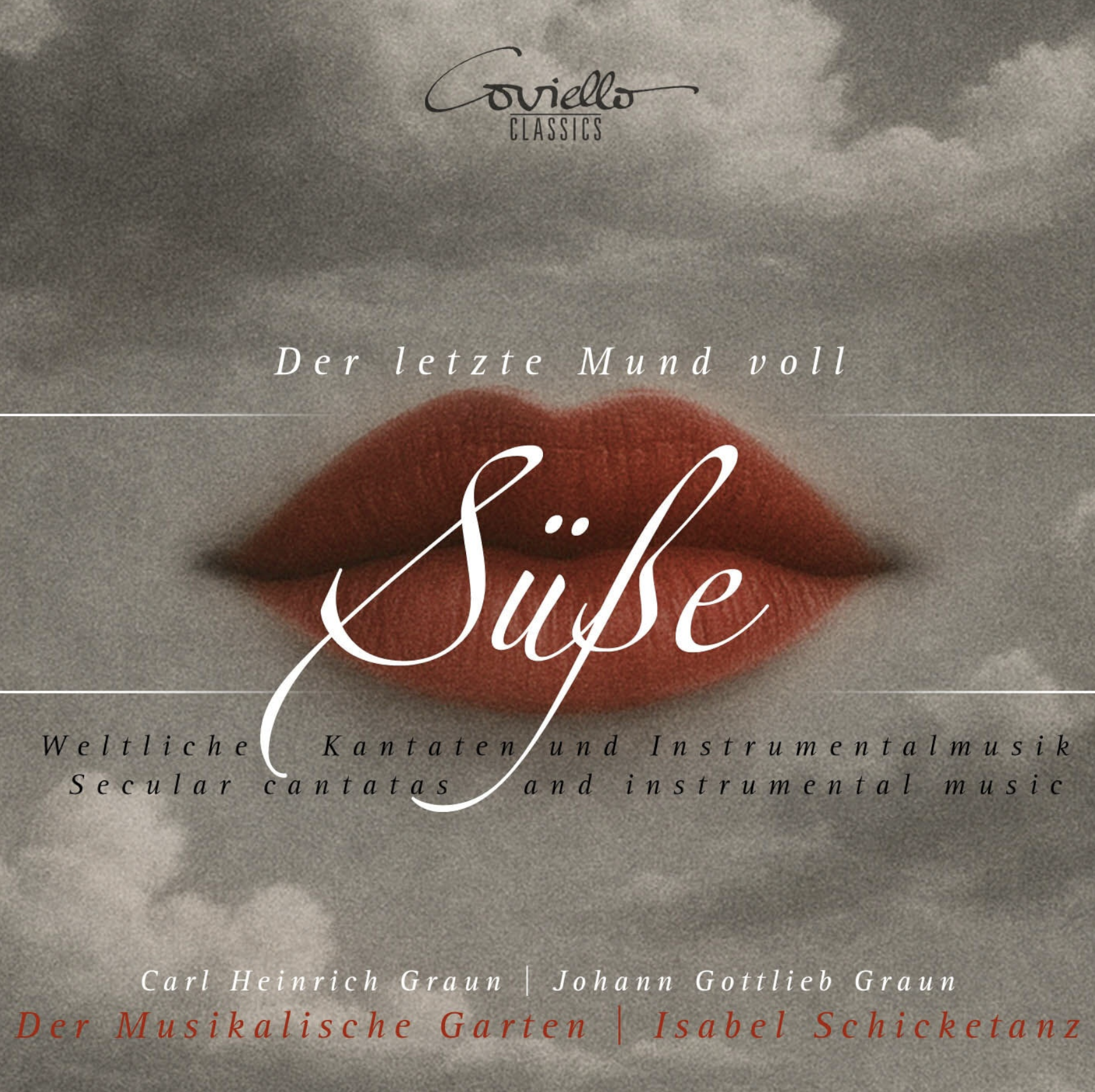
The last mouthful of sweetness (Der letzte Mund voll Süße) • Musikalische Garten & Isabel Schicketanz
The music on offer here is from the Graun brothers, Johann Gottlieb and Carl Heinrich. The first was a violinist and the second was a celebrated opera composer. They both trained in Dresden. J.G. Graun studied with PIsendel and likely trained Wilhelm Friedemann Bach on the violin. During their time, C.H. Graun was the more well-known and established musician.
Previous instrumental albums by the “Musical Garden” have always been favorites of mine; the performance of the opening work, an Overture in D (in two movements) speaks to their past memorable interpretations. From J.G. Graun we also get a trio sonata for two violins in C minor (GraunWV Av:XV:19). The age of the piece is shown in the higher reach of the first violin part. The opening Adagio adopts an introverted, sweet sound from the violins, but the performance is not without dynamic interest. The music is played in time but there’s enough flexibility to indicate that the performers are responsive to the music. The second movement starts with an exposition with one instrument, which, as we might expect, is then harmonized as the movement unfolds. The counterpoint isn’t overly strict. The two violinists, attend lightly, offering us different timbres from both instruments which blend well. The third movement is another Allegro, balanced in length with the opening two movements. Graun’s musical style is moving toward the galant ideal, without abandoning what we might today call the baroque aesthetic. It goes, I think, a step further than J.S. Bach with the trio sonata he includes in the Musical Offering.
From Carl Heinrich we are presented with three vocal works, the first secular cantata Non porto Febo mai . Soprano Isabel Shicketanz has a light, nimble voice, reminding me a bit of the soprano Barbara Schlick. The second movement sets an attractive melody reinforced by the chamber ensemble. The Italian language potentially speaks to the appetite for Italian opera. In the fourth movement, Stemprar se pottess’io il Cor che n’à desio the composer again makes use of repeating melodic material both in the voice and instruments to reinforce for the listener ear-worm potential. His style for me is quite a departure, from say Vivaldi; a better comparison may be Mozart. Graun’s writing may be a bit more formulaic, but in terms of affective style, it occupies that middle ground from one distinctive style and another.
From the same collection of secular cantatas comes the next piece, Hat die Schönheit kein Erbarmen. The piece shows off this singer’s high range, which is delivered in the first movement delicately and sweet. Her use of vibrato didn’t bother me so much, being tightly controlled. Balance for me between instruments and singer is good, even with headphones.
The final piece, Sacra ad amore is cast across four movements. It’s in this work that the style already established doesn’t really veer at all; yet there’s something to be said of the style of his writing for the voice. It’s likely because I listen to more vocal music from the beginning of the period, his style emphasizes melody first, over trying to set the text in a contextual way. As Graun himself was a tenor, the way he sets text so well to the melody feels natural.
The final movement is quite attractive, I thought, which starts with a ritornello from the violins and continuo. The vocal part takes on an especially virtuosic angle. As someone who has difficulty easing into opera, I found these shorter Italian cantatas hit the spot.
Overall, this album does well to showcase the talents of the Graun brothers, and it does it with expert performances that speak to the artists’ admiration for the works themselves.