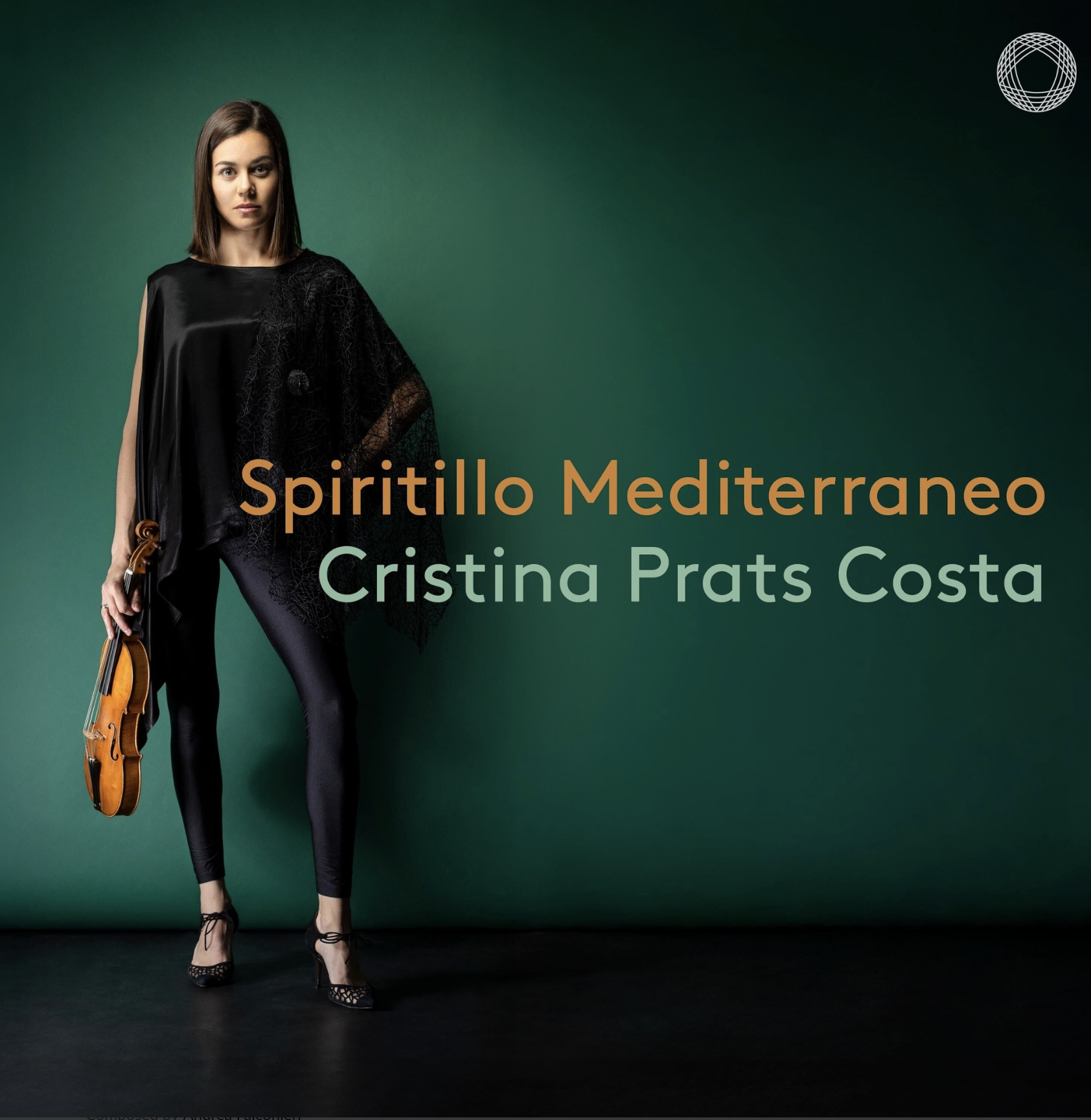
Spiritillo Mediterraneo - Music for Violin and Continuo
This album, featuring the Spanish violinist Cristina Prats Costa, was recorded in Toronto (where she is working toward her DMA), with works by Falconieri, Matteis, Biber, Rebel, de Nebra, Vivaldi, and Schop. The case for calling any of this Mediterranean music is weak: Schop was based in Hamburg, Rebel in Paris, Matteis's collection was written for a Francophile court in London, and Biber was Bohemian, not German, as the liner notes have it.
The booklet's argument is that the Mediterranean was a kind of crossroads for the violin; the other wellspring is the performer's own Spain. A handful of pieces by composers of Spanish origin are dressed with percussion — castanets and hand drums — and the flavour is as spicy as you'd expect. It's fun, but none of it reflects a documented performance practice; the southern seasoning is an interpretive choice, and it pulls hard to justify a title the facts don't support. The one composer who might qualify for this treatment is Falconieri, who, during his life, traveled a bit, and may well have adopted styles foreign from his birthplace.
The album credits no ensemble, but the other performers are:
- Lucas Harris, archlute, theorbo, and Baroque guitar
- Charlotte Nediger, harpsichord
- Michael Unterman, violoncello
- Joseph Phillips, viola da gamba and bass
- Naghmeh Farahmand, daf, darbuka, and tambourine
- Esmeralda Enrique, castanets
Prats Costa is a gifted violinist, and one who aims to entertain; a virtuosic thread runs through everything here. The engineering is the recurring problem: it favours the continuo at the soloist's expense, and the balance can tip outright — track 14 buries her under harpsichord and bass. It isn't tack-sharp in transparency either, though it's good enough to convey texture and colour among the players.
The Biber—the E-minor sonata, C. 142—is a great place to start. The continuo sits in sharper focus, as everywhere, yet Prats Costa still steals attention with her smooth upper register and bowing. The recording's generous reverb captures the dramatic stops and pauses that feel native to Biber's style. Her embellishments are well-measured, though at one point, just ahead of the five-minute mark, the tempo slackens unnaturally before a sectional change. The continuo players coordinate well with her, but left exposed on their own, they could have used a bit more direction.
In the end she makes a showpiece of the Biber. There's no question about her ability to meet its challenges, aesthetically and technically.
The engineering costs her more in something like the Rebel movement, where the reward is in the detail — her stylistic flourishes, the colour and ornament. She's detail-oriented, and the music benefits.
Tracks by Matteis dominate. The final one, the Aria burlesca, gets the percussion treatment too; it doesn't detract, though the southern flavour doesn't quite belong. Listeners who already know the Ayres for the Violin may welcome the addition.
The album opens with four short dances by Falconieri, who came from Naples — Matteis's birthplace too — but spent time in Rome and Parma before returning home. Here again the continuo and percussion carry a Spanish colour; it has character, and it serves the music.
The de Murcia Fandango is where that dramatic, castanet-driven reading finally sounds at home. Maybe the way into this disc is to picture the composers visiting her native Ibiza.
I'm critical of the need to dress these pieces up, and I think the producers did the violinist a disservice by pushing the continuo over the soloist. But collectively the performances entertain, carried by a strong, vivacious technique and a clear interpretive point of view. As an introduction to the violinist through solo works aligned with her tastes and background, the release succeeds.
I look forward to hearing more from Prats Costa. For anyone who enjoys mid-period violin music, this album is built to entertain.