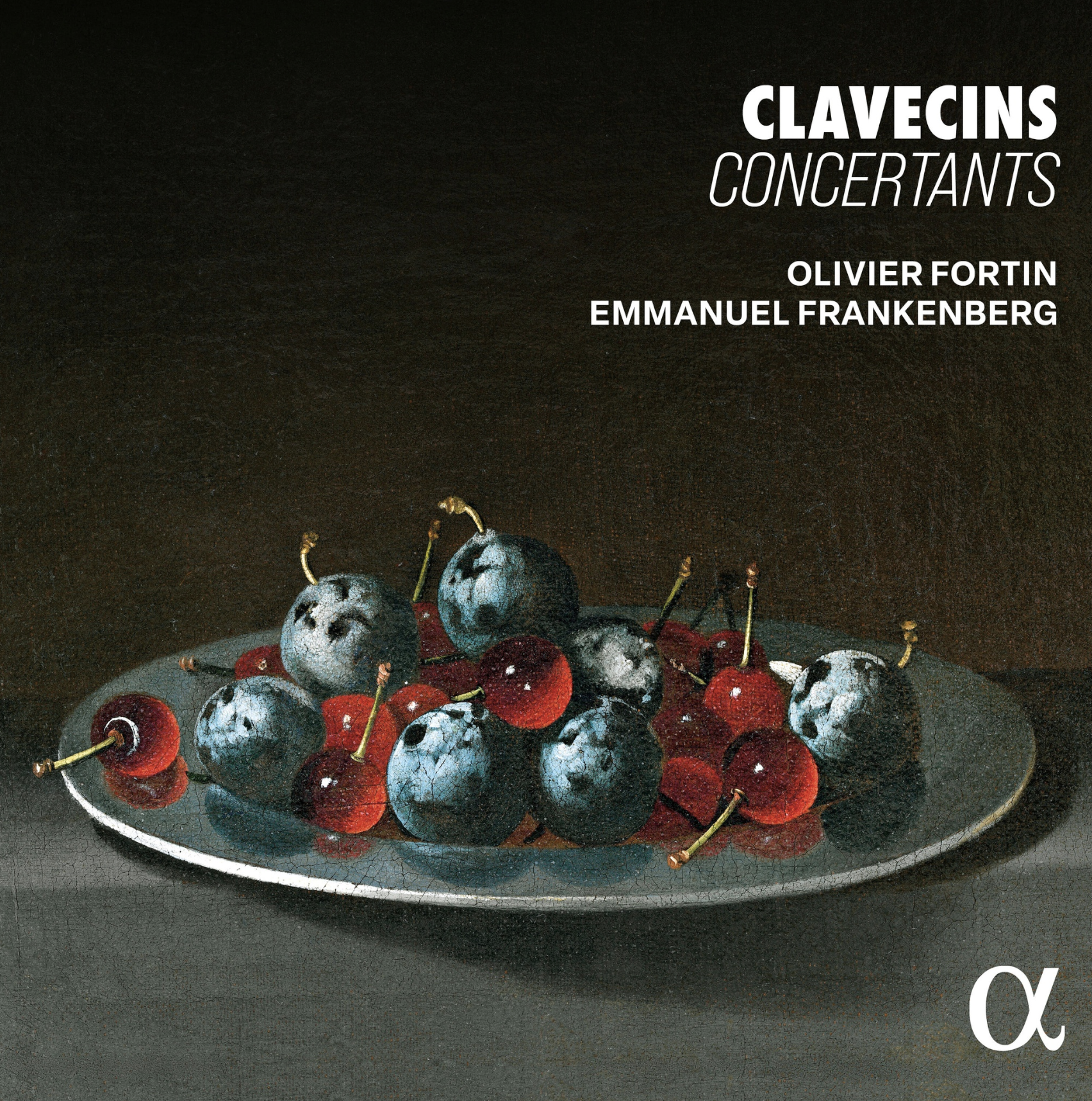
Clavecins Concertants • Fortin & Frankenberg
Introduction
Sir Thomas Beecham is today famous for saying something to the effect:
The sound of a harpsichord: two skeletons copulating on a tin roof, in a thunderstorm.
The comment is of course a dig at the sound of the instrument, but it was certainly not an original idea. During his lifetime, the Victor Talking Machine Company, marketing its Victrola record players, pushed hard on how faithfully their equipment reproduced the sound of music. A spoof ad in Judge magazine punctured that claim with a satirical line about the same equipment: "Every instrument sounds like a skeleton's Charleston on a tin roof."
This sentiment about the sound of a harpsichord aside, this album combines two harpsichords in transcriptions of French baroque repertoire. The liner notes, presented as an interview between the artists, seem to advocate for more cowbell, in the tradition of Christopher Walken's sketch from SNL. Fortin and Frankenberg are smart to credit Skip Sempé's work in this field, as my first exposure to two harpsichords playing transcriptions came by way of Fortin and Sempé's groundbreaking album of works by Bach and Vivaldi.
For most of the program the duo performs as a genuine two-harpsichord pairing, but the liner notes indicate they draw on a choice of three instruments across the album — two of similar sonic character, and a third with a contrasting voice, introduced for variety between tracks. The recording was made at the Sint-Agnesbegijnhof in Sint-Truiden, with editing and mastering split between Alpha's Aline Blondiau and artist Emmanuel Frankenberg. Astute readers may note that Blondiau also mastered the recent Jean Rondeau Louis Couperin release, and it's probably not a coincidence that this album, too, has excellent sound despite the use of a church. And a small note: I very much like the sound of the harpsichord, and two is even better.
The Music
The pieces here were chosen for their adaptability to two keyboards and to these two musicians. The three most familiar works may well be those by Jean-Philippe Rameau: Les Sauvages, drawn from the composer's own later orchestral arrangement of the piece, alongside La Triomphante and a pair of menuets (tracks 13–15). Pageantry is the sentiment brought to light in the overture from Lully's Cadmus et Hermione. There's a fair amount of decoration applied here, but the two artists carry it off with good technique; in my mind's eye, the effect is glittering gold — a fitting metaphor for the décor at Versailles.
This piece, however, can't compare to the minor-mode overture from Marais' Alcione. Sumptuous isn't a big enough word to describe the effect, achieved partly through the lower register of the instruments in the slow, dotted opening. The music captures the flavor of high baroque visual art in sound, and the pairing of two instruments here only deepens the effect. The instruments used, too, deserve credit.
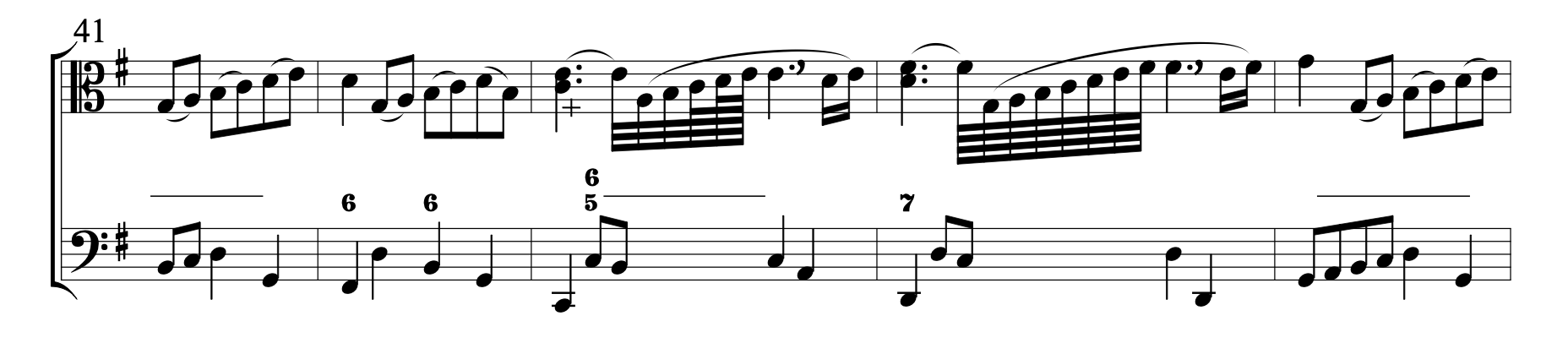
An example of the source material used for this album: an except from the Forqueray La Buisson, scored for viol and basso continuo.
The Chaconne La Buisson, credited to father and son Antoine and Jean-Baptiste Forqueray, takes on a different character than the big overtures — partly a matter of tempo, and partly a co-mingling of the parts without the benefit of the extremes at either end of the keyboard's compass. The result is a denser texture. Compare it to the closing track, Lully/d'Anglebert's Phaëton chaconne, LWV 61: for me, the Phaëton arrangement is the far more successful of the two. Another Forqueray offering is La Régente, which I likewise found harder to follow due to that same density of texture. Compositionally, though, I think it's the more successful piece of the two Forquerays here. As a bonus or a defect, depending on your point of view, the tuning used between the instruments also offers some real color in this piece.
Conclusions
This album offers a number of high baroque examples of French excess in sound, an effect amplified by the use of two instruments. Both players deserve credit for arrangements that never come off as second-best; their familiarity with the style, and their experience in voicing two instruments and dividing material between them, are clearly assets brought to this recording.
One may ask how authentic it is to perform these pieces for two players, given how differently each was originally conceived — some drawn from viol writing, some from solo keyboard, some from full orchestral scoring. It's a fair question for anyone concerned with historical authenticity and performance practice. But before you go scouring the liner notes for a rationale, the music on offer here makes its own case well enough.
Credit to Fortin and Frankenberg for going the extra mile to bring their experience and dedication to their instruments and this period to a glamorous, glittering new release. If you have Beecham-syndrome and trepidation about a double-harpsichord album, start with Marais Chaconne on track 9 and prepare to be… dazzled.