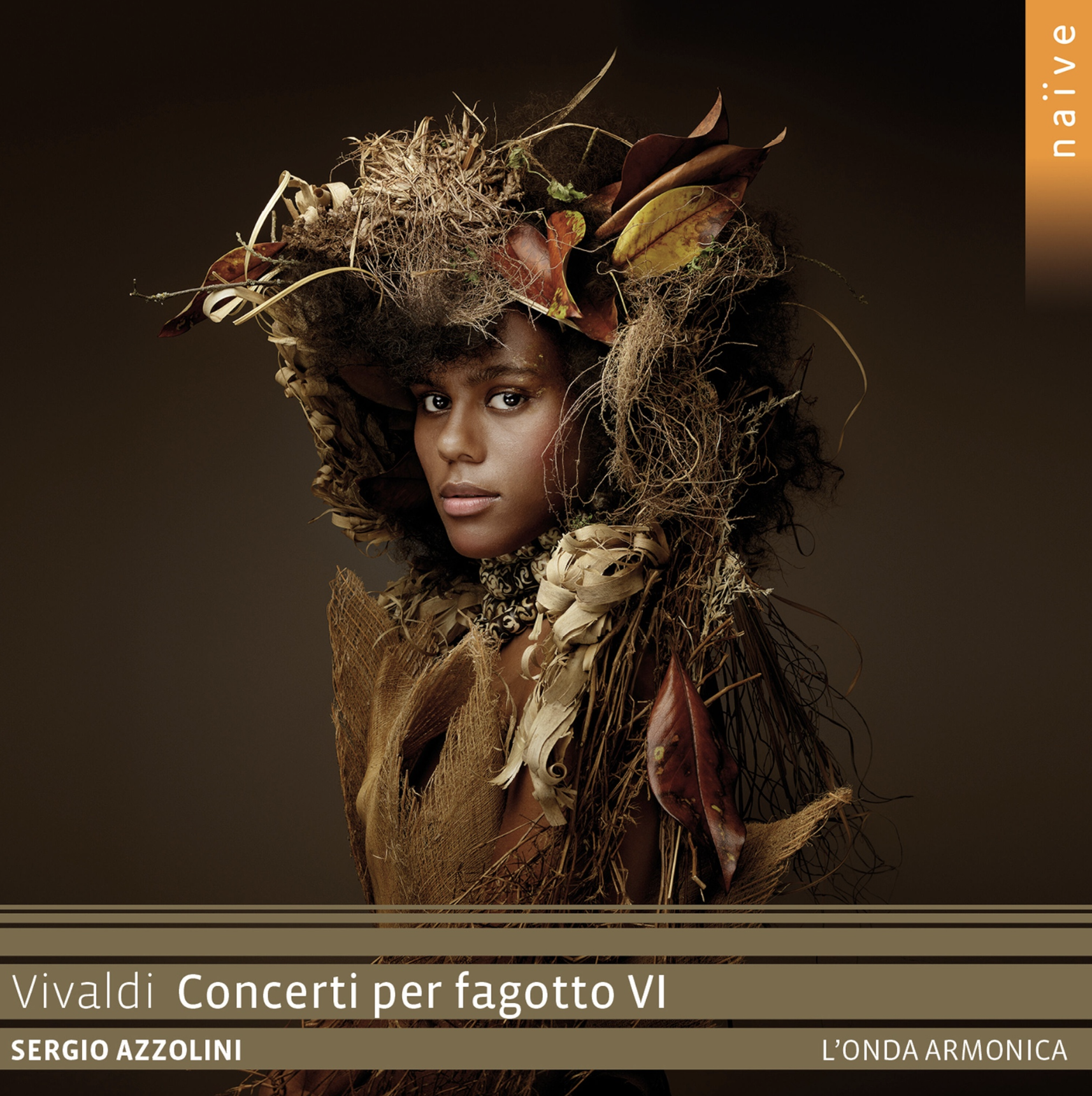
Vivaldi: Concerti per fagotto, vol. 6 • Azzolini
I often lament never learning to play the bassoon. Trained as a music educator, I learned to play many instruments, but bassoon, double bass, and saxophone escaped my reach. Sergio Azzolini has now recorded all of Vivaldi's bassoon concerti across six volumes for Naïve Classics. On this one he's joined by L'Onda Armonica, one of the larger baroque ensembles, and the sound and color this group brings is a hallmark of the album. The liner notes go into some detail about both the performances and the sources for the music: the concerto in C major, for instance, combines material from two sources, since the original survives incomplete. The creative touches involved may offend some purists, but I liked the addition of wind instruments in the Dresden tradition, and the bonus of the concerto in C minor, RV 402, originally scored for cello.
We've come a long way since a student performance of one of Vivaldi's bassoon concertos I remember from Eastman, an approach steeped in polite reserve. Track 15 on this new release offers a far more dynamic result, with Azzolini allowing his instrument some real bite. (Those interested in bite will want to see the photograph of his instrument on the last page — the bell presents a dragon's head, teeth and all. Glory be!)
There's drama to be had, too, in the opening concerto, RV 501, La notte. One shouldn't confuse this with the more famous La notte, RV 104 and RV 439, in G minor for flute and strings — the theme of night must have appealed to Vivaldi more than once. This different concerto, offered here in the major key of B-flat, explores some of the same programmatic ground under a different key and instrumentation.
Drama also comes in the form of color: the concerto RV 487 in F is augmented with winds, including horns. It's needless to say, perhaps, that employing additional musicians here came at an expense — but it's one that should be noticed. One has to assume there's a real love here for the music and its historical tradition, to offer us this version.
Throughout, Azzolini comes off as a technically superior player who has become more inventive, and more exposed in his musical personality, as the project has progressed.
While this album benefits from a high dynamic range, the overall recording isn't the most transparent or detailed — an issue I suspect stems from the capture of an overly live acoustic. Cranking the volume, if you can, on speakers, or switching to headphones, will help assuage some of these issues. None of this should detract from your enjoyment of the music, but it does, for me, separate this recording from others with more detail on offer.
Congratulations to Mr. Azzolini for his six chapters, showcasing Vivaldi's not-widely-understood fascination with the bassoon as a solo instrument. The composer couldn't be displeased with these contributions from such a dedicated advocate for his music — the bassoon might well have been far more celebrated in its own day, had composers then had access to Azzolini's depth of affect and his strong palette of color.