Vivaldi’s Il Cimento dell’Armonia e dell’Inventione (opus 8)
There's no doubt what Vivaldi's most famous music is today, and those four concertos are the first of 12 that make up his contest between harmony and invention, a rather colorful title. But Vivaldi liked titles for his published collections… starting in his third opus with L'estro Armonico, which you could also argue may have been his most famous collection of concertos in his lifetime. They certainly got the attention of Johann Sebastian Bach.
I was revisiting some collections of his opus 8 concertos and wanted to answer the question, given today's date in September 2026, what's the best collection out there?
For this exercise I only want to look at historically-informed performances. My angle is to listen to the following performances, listed here with ensemble and lead violinist, chosen because they're really familiar to me, or not familiar at all:
- The Avison Ensemble (Pavlo Beznosiuk)
- Il Giardino Armonico (Enrico Onofri)
- La Serenissima (Adrian Chandler)
- L'Arte dell'Arco (Federico Guglielmo)
- Europa Galante (Fabio Biondi)
- Accademia Bizantina (Stefano Montanari)
- Raglan Baroque Players (Monica Huggett)
Before I dig in, I'll provide my own history with these recordings. My first Four Seasons CD I purchased was the one with Monica Huggett. I believe the set was done across two individual CDs on Virgin. I never purchased the second set of concertos. Biondi's second recording of the Four Seasons came on a double set, also on Virgin and is often my "go to" seasons disc, but the entire set has good quality. I also own the Montanari recording, which was that group's leader for many years. I'd also purchased Onofri's blue album cover with the exploding violin for the seasons. The second volume was issued on Teldec without a fancy cover, in their normal white styling with an historical painting. I never owned it but attempted to make a copy of it in the early days of CD burning. Alas, my attempt put an end to my CD copying ideas as while I have it, the CD plays back like a ransom note, with clips here and there, and then it just eventually stops. And it's sad because the album is hard to find used, and is not in the Qobuz catalog. But I heard enough to know Onofri was doing a good job. I also purchased the Guglielmo Vivaldi multi-disc set on Brilliant Classics and it includes the entire op. 8 collection, although it was issued first as a standalone release in January 2016. The two fresh ones then are the set by the Avison Ensemble and La Serenissima.
The Brits
So the division here is pretty clear: Raglan (dir. Nicholas Kraemer), Serenissima (dir. Chandler), and Avison (dir. Beznosiuk) represent Britain-based ensembles. Of the three here, the Raglan/Huggett recording is oldest; Avison came out in 2011 and Chandler's first volume arrived in early 2025.
For my taste, Kraemer pushed his ensemble a little harder than either Pinnock or Hogwood did, which at the time of the recordings in the late 80s and early 90s, would have been the prime competition. The recording is a bit softer over all in volume but it has a good width to the sound and reasonable reverb. The ensemble's presentation doesn't come with a lot of transparency, and I'm guessing they probably were using a fuller complement of players than what's more typical as of late. Huggett's violin cuts through nicely and is projected forward, although not necessarily out in front. The soundstage depth isn't too deep.
The sound on the Avison recording (Linn) isn't terribly foreign to the Huggett recording, although there is more sharpness to the string sound. When the ensemble all plays, there's a kind of flatness to the sound. The ensemble I'm guessing is smaller than the one accompanying Huggett. Dynamically, there seems to be less variation from this ensemble. This could be interpretive or because of the numbers of players, or how the music was captured. In general the tempos adopted by Beznosiuk are a bit more relaxed than Kraemer's. While I prefer Huggett's interpretations, the sharpness of the later Linn recording improves on Virgin's sound. The biggest contrast here is likely between this set and Chandler's. The performance of the opening movement of Winter is a good point of comparison. One is very competent. The other, amplified with rubato and the spirit of someone performing in a leather jacket.
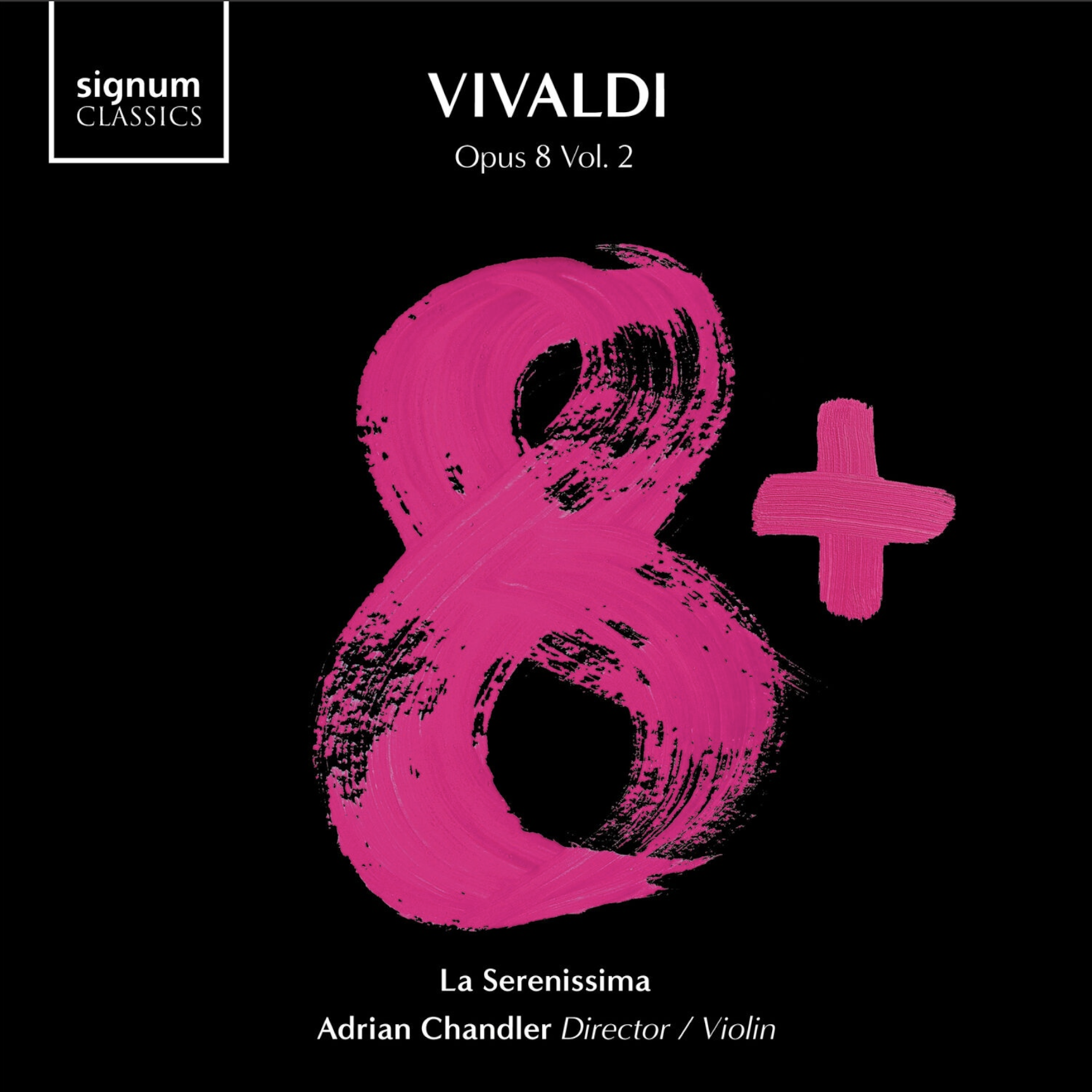
The recording by Adrian Chandler is appreciably louder than the other two. Overall the sound I think is superior to the two just mentioned. The ensemble's contributions are far more transparent and there's a far richer sound, with good detail of Chandler's violin and more bottom to the ensemble's presentation. Also unique to this recording is a lively attempt at interpretation. Sometimes Chandler's playing isn't as clean, in keeping with his more rock-and-roll spirit. The two albums, however, are the more exciting in this grouping.
The Italians
This is a larger field, and maybe not surprising, given Vivaldi's provenance. For some time, Onofri and Biondi were likely the biggest names from Italian HIPP ensembles, each known for doing some interesting things which some penned as "Italian style." Montanari could also be a very affective player, although his style wasn't probably as overt as the first two gentlemen. Guglielmo may not be as well known, but his group has been a prolific recording act, performing quite a few of Vivaldi's works. For this comparison, I only have access to two concertos in addition to the Four Seasons by Onofri.
Guglielmo's playing, and that of his ensemble, has appreciably gotten better over time. By the time I landed on this set, I was surprised how good both the leader and his ensemble sounded. The set's sound quality is also good, with close miking offering good transparency. There's more depth in this recording, at least over width in the sound on my system. The plucked continuo comes across as nice and sharp. Guglielmo's interpretations were good, I think; he's an affective player but doesn't try to get too creative. The performances offer enough, however, with rubato to be interesting.
The Dantone/Montanari recording was made in 1999 and the transparency and sharpness of the L'Arte dell'Arco recording is missing. The dynamic shifts, which are a strong part of these performances, don't get their full value with the sound. Montanari's violin cuts through nicely with a sharp edge. His own style is a bit tamer than the others; however, the ensemble plays up the creativity angle more with the Seasons.
The Biondi recording has excellent sound with strong depth and width. Biondi's style, however, is differentiated by a bit more vibrato. His other trait is playing with rhythms and dynamics. His violin also has a unique sound. I really like how clearly I can hear the lute and harpsichord even though they aren't as close as the lead violinist. Like Montanari, Biondi's stylistic eccentricities are more reserved outside the performance of the Seasons.
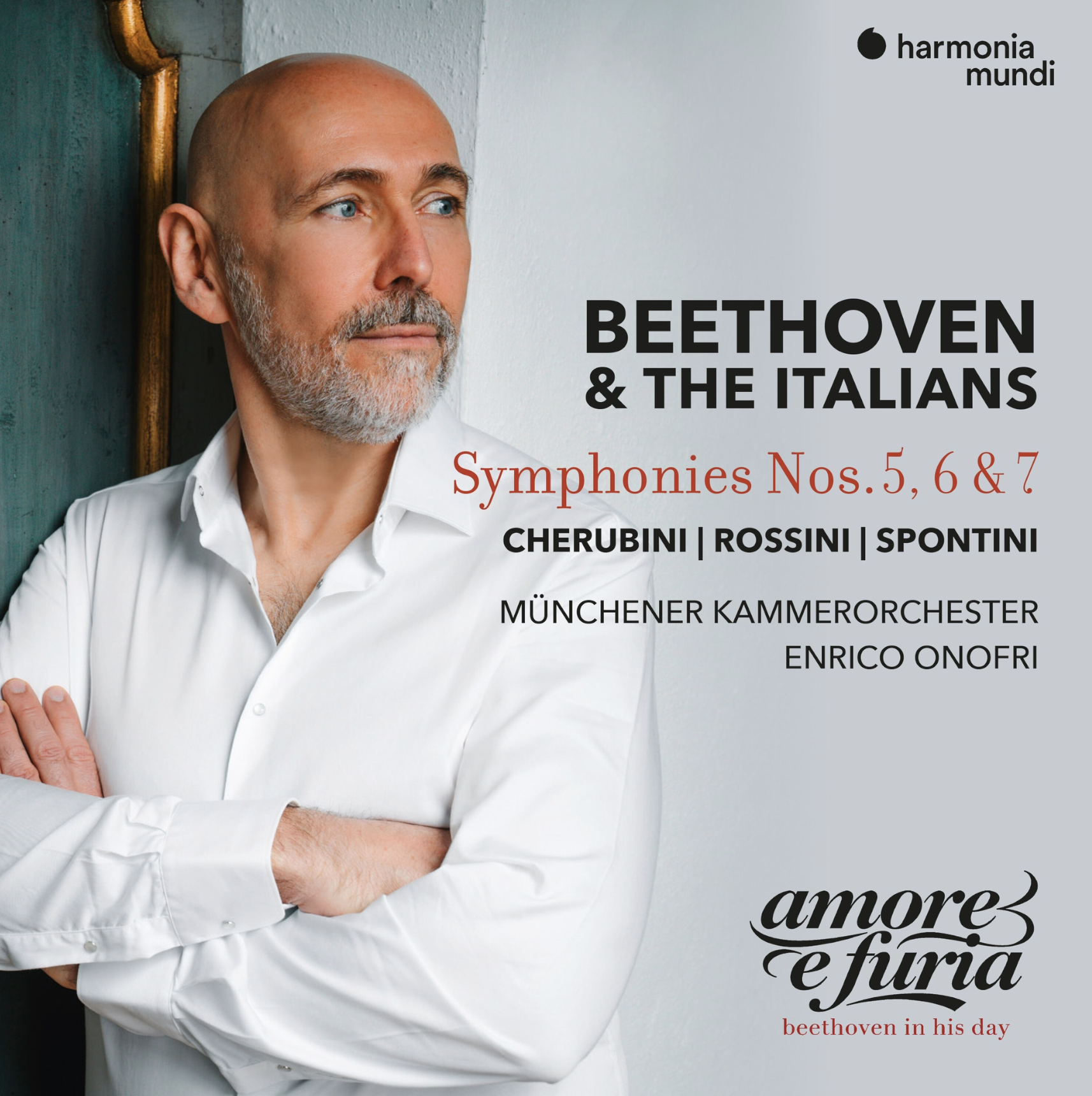
The Il Giardino Armonico Four Seasons album was one of those iconic performances, up there at the time after Nigel Kennedy's release with the English Chamber Orchestra. While directed by Antonini, both he and Onofri's creativity can be sensed in the performances of the Four Seasons, including the famous dog bark in the second movement of Spring. The ensemble's playing is very tight. I'm not convinced that Onofri's solos are superior in any way. For me it's the ensemble creativity that makes this one shine. The disc has a dark background but again lacks that sharp, crisp sound that came out in the Guglielmo and Biondi recordings. And like many others, the creativity is held at bay with the other concertos, but the tight playing and style of Antonini's direction are easy for me to admire.
Contenders
The idea here is that if I only had limited time (to stream), or dollars in my pocket (to buy), which would I recommend? I'll start by saying the Avison Ensemble recording featuring Pavlo Beznosiuk is out for me. The performances lacked excitement and felt more tuned for not interrupting a tea ceremony. Very competent performances, but in this crowd, I want to lean into something that is going to tickle my senses.
That said, the rest for me are all strong in one way or another. You've probably already figured out that I'd choose Chandler over Huggett—both because the soloist's interpretation is more interesting and because the later recording simply sounds better.
On the Italian side, the choice isn't quite as easy. There's a kind of synergy of approach, I think, in the circle of Guglielmo and Montanari, and I'd invite Chandler over too. Those are three recordings that have exciting solos without doing anything too crazy.
Biondi and Antonini, as directors, are both trying hard to use Vivaldi's template as a starting point for a lot of their own creative ideas. Biondi's solos have more athleticism to them than Onofri's. One violinist sounds composed, the other is a sweaty mess in spots.
Don't get me wrong, I like all these recordings, but I'm choosing for you. I think Guglielmo is a good choice here. The recording sounds great and his creative extremes likely won't offend some listeners. In that way he's entertaining but also safe.
And that's where I'd put forth both Guglielmo and Chandler as my two picks for references for Vivaldi's eighth opus.
Now here's my secret: to compare these sets, I mostly relied on two solo-violin concertos. I also have many years of listening to many of these, so I have general impressions to spot-check against.
The sets however also include an oboe concerto (concerto no. 9). It may be unfair to compare these without considering the oboe solos. Well, that gets complicated because it can also be played upon the violin. I'm safe to say, however, that they all had competent oboists when the oboe version was offered, but the oboist Pier Luigi Fabretti in the L'Arte dell'Arco recording didn't have the same level of panache as Il Giardino Armonico's. However we're trying to decide between Chandler and Guglielmo: Chandler chooses to perform the concerto on violin.
A toss-up. The lesson isn't that there's a clear leader in the marketplace for recordings of these sets. It's that there are many choices. And for those who really don't need another set of Four Seasons, me included, I want this discussion to encourage you to seek out the other eight concertos in Vivaldi's collection. They're worth your time, to see how each ensemble attempts to wrestle your attention and delight with Vivaldi’s concertos—many of them too programmatic, at least in title. The differences illustrate many potential interpretations, and those that borrow from the creative juices applied to the Seasons are perhaps those I most admire.