The Golden Tower • L’Apreggiata
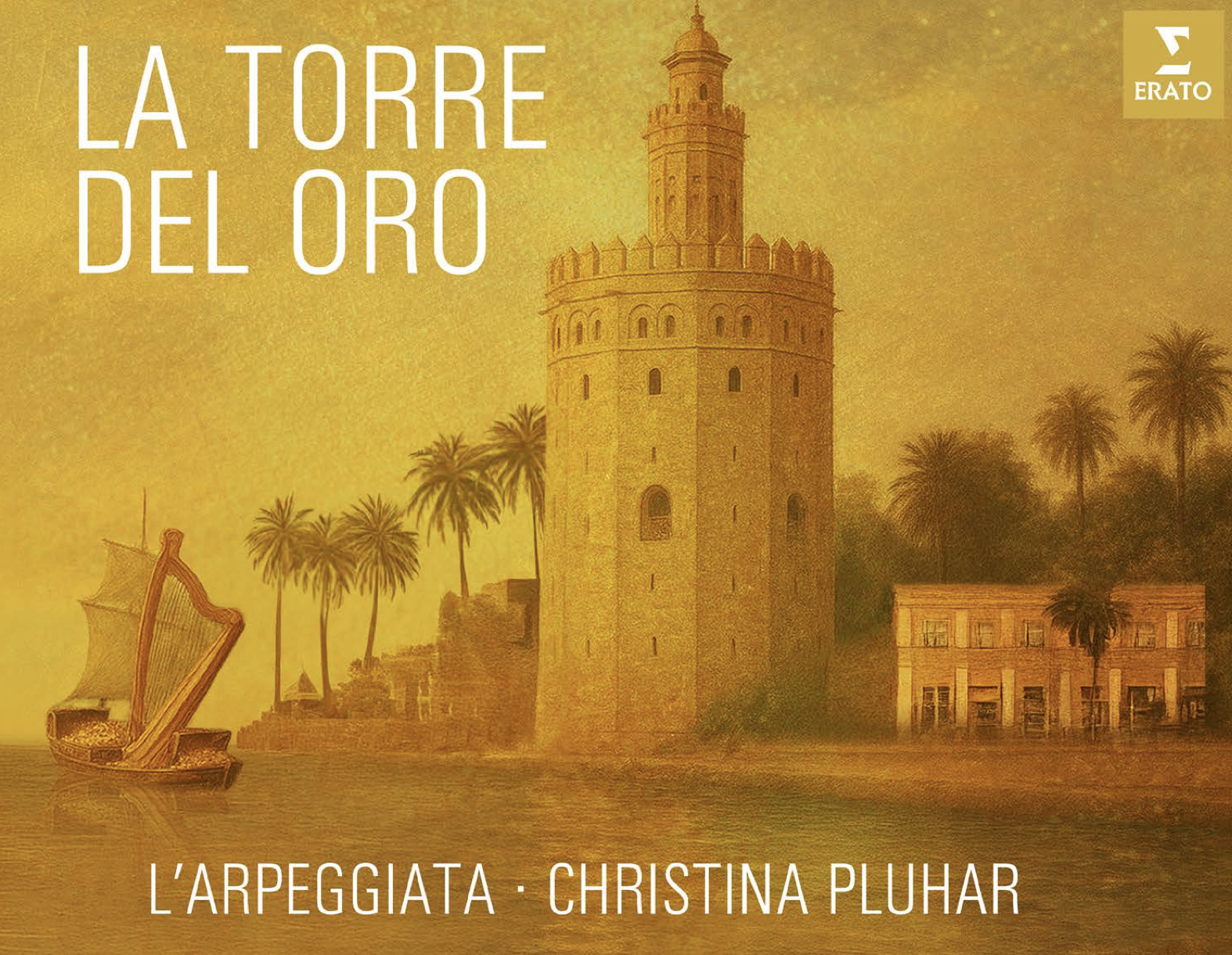
The album takes its name from the Torre del Oro, the twelve-sided watchtower on the banks of the Guadalquivir in Seville — the departure point for Spanish galleons sailing to and from the New World. Pluhar uses it as an organizing metaphor: Seville as a crossroads where knowledge, music, culture, and tradition converged before being carried across the Atlantic and transformed.
The program traces a five-century arc of musical exchange between Spain and its former American territories, placing cultivated Spanish art music in dialogue with orally transmitted South American traditions that emerged from complex, layered processes of cultural blending.
The journey begins with Alonso Mudarra (c.1510–1580), whose vihuela music serves as the program's point of departure, and Santiago de Murcia (1673–1739), baroque guitarist to the Spanish court, whose Fandango — preserved in the Mexican Saldívar Codex — documents the early spread of Iberian repertoire into the colonial world. From there the program moves through Mexican son and huapango traditions, Venezuelan joropo and pajarillo, and ultimately into 20th–21st century songwriting via Hilda Herrera's Argentine zamba La Diablera and Violeta Parra's La Lavandera, thought to be her final composition. Throughout, remarkable instrumental survivals anchor the story: the cuatro, a direct descendant of the Renaissance Spanish guitar; the llanera arpa, derived from the Renaissance Spanish harp; and the tarima, a wooden platform whose zapateado rhythms keep the Baroque inheritance audible centuries on.
I’ve had the occasion of hearing Pluhar’s ensemble on multiple occasions, and after hearing this album, I’m considering whether hearing them perform later this year at the St. Michel en Thiérache might be worth the trip (a different program, I’ll add). They have started their recording career as an HIPP ensemble that over time has transitioned into something else. The liner notes will point out that the concept and arrangements are done by Pluhar. They’re taking music and adapting it to their forces, which often is enhanced with percussion and instruments outside the period; this recording definitely leans into the period sound. While bringing together instruments and voices in approximate ways may offend some invested in the HIPP approach, I have always found that L’Apreggiata adheres to a standard by which the listener is taken care of. Said differently, we benefit from their strong stylistic vision and a desire to move the listener.
This recording was made at the Abbaye de Saint-Michel en Thiérache and at TAC in Bois-Colombes. Mireille Faure is to be commended for this recording, which it appears may also be available as a Dolby Atmos-encoded version; I auditioned the Qobuz stream in stereo at 96kHz. The recording offers good dynamic range and a very generous soundstage, with excellent balance, and good bass representation. It helps to elevate the vision behind this album, taking us upon a journey to the new world.
The singers chosen by Pluhar for her productions is part of the charm of L’Apreggiata. Two of my favorite of her singers return, the incredible Vincenzo Capezzuto and Céline Scheen; they are joined by Luciana Mancini and Manuel A. Sánchez.
One of the pieces I kept noticing on repeated listens that works so well is track 8, El Coco. It features some call and response work and features such a strong protagonist. When regular Doron Sherwin comes in with his cornetto? We can marvel not only in the tight collaboration of all musicians, but in Sherwin’s virtuosity upon his instrument.
Josep Maria Martí Duran excels in the Fandango on track 11. One gets the sense when you hear this ensemble play live that there’s not one musician assembled who is not pulling their weight. It’s more rare to be able to point to one of the ensemble that’s just ravishing in their performance. What’s even better to see in person is how her musicians seem to revel in the experience. I can’t say anything about her musicians and these performances? But this track seems to suggest to me that there was fun to be had in the making of this recording.
In La Petenera, track 13, led in vocals by Capezzuto, there’s required coordination of the instruments, positioned far left and right in the stereo image. The overall sound of the full ensemble, all playing by a minute in, it’s just perfect. It’s easy to hear each component, and they come together in extraordinary balance.
The sound in the third track’s La Diablera is just sublime; the far-right accordion, then the support of the plucked double-bass? The palpable distance with the percussion? And the focused, center-positioned voice? The music is something, but sonic treatment we’re afforded is also worth pointing out.
The energy that opens in track 17’s Pajarito en sol reminds to some degree of the Golpe track from the ensemble’s earlier release featuring Philippe Jaroussky, Los Pájaros Perdidos (track 3, for those who have this album). But the approach here is more jazz improvisation, with solo parts going to keyboardists, percussion, and double bass. Here it feels natural, maybe more so than some of their performances with well-known Baroque “standards,” but above all else, these performances come off feeling both jazzy and authentic. That’s difficult to pull off, I think, but it only helps propel the reason I personally have travelled very far from home to hear this ensemble. They’re that good.
Some may get charmed by the exotic flavor of this album and using vocalists who can sing the Spanish this well helps contribute to that flavor. You’ll hear it in the opening of the second track’s Cumaná 500 años, a piece that simply combines strummed guitar with voice but then is enhanced with additional instruments and percussion. The piece’s form hails from Margarita Island and in neighbouring coastal regions of north-eastern Venezuela and is derived from the romanesca, according to the liner notes. Cumaná, for those wondering, if the name of an old port town situated at the mouth of the Manzanares river.
In many ways this album will take the listener on a journey. The analogy I have, a vision really, is traveling in a boat in one of those Disney attractions, taking you past the “best of” sites, sounds, and music on a journey to places you may never have the benefit of visiting. In this case these locations are locked away from us in time, but somehow, authentically or not, we’ve been afforded the best seat.
Pluhar’s projects are as strong as the material she pulls together: these tracks offer some ripe opportunities for supreme entertainment. I have little doubt this album will become an instant favorite.