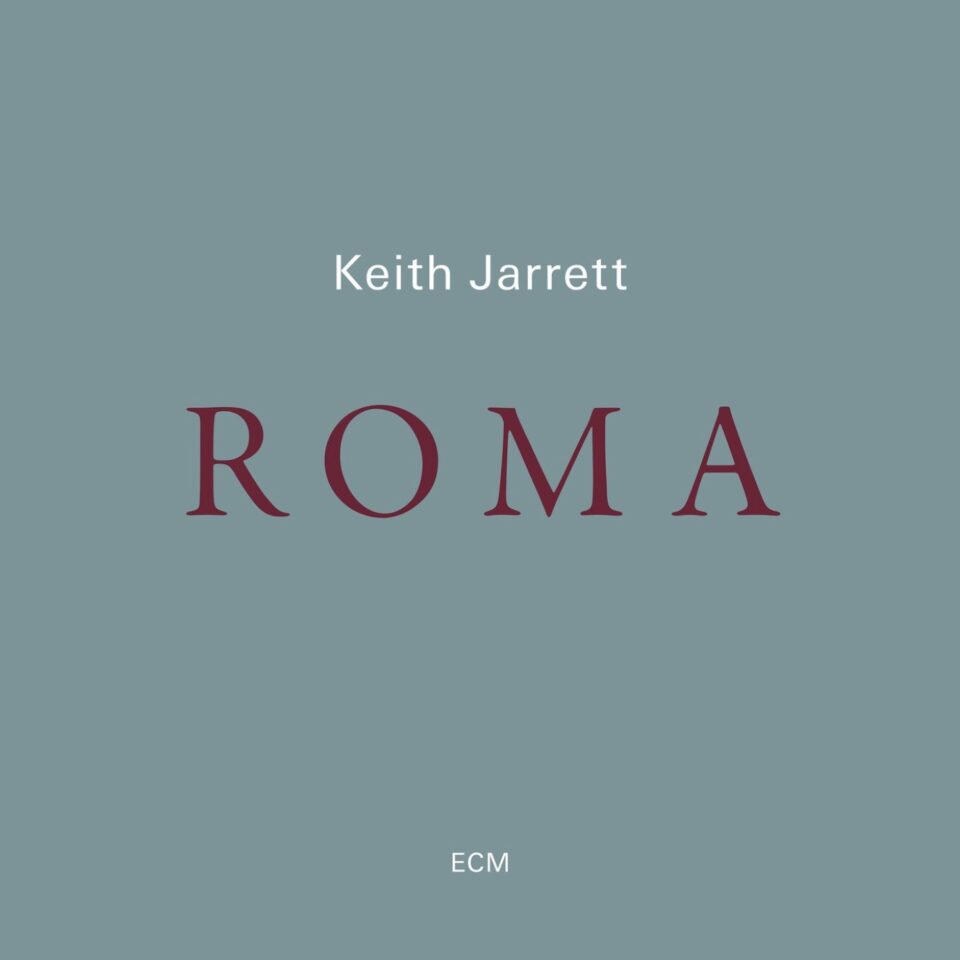
I can’t tell you how satisfying it is to hear Mr. Jarrett again, even if this music dates back to 2016.
The solo concert is presented in ten parts, followed by two encores: “Somewhere Over the Rainbow” and “It’s a Lonesome Old Town.”
The sound of this recording, made at the Sala Santa Cecilia in Rome, is among the best on any of his solo concert albums. The engineer credited in the notes is Martin Pearson, and the piano’s full frequency range is captured in crystalline detail.
Encores
I remember his rendition of “Rainbow” from the La Scala album. This one is, of course, different—both in mood and in its harmonic colors. There seems to be less a feeling of relief here than a sense of an artist still in control of everything after the ten-part performance. The piece never becomes too sappy or schmaltzy; the attack on the piano is crisp, and the presentation is honest. By the end, the sun has set, but the sky is clear and hopes are high.
Harry Tobias and Charles Kisco’s “It’s a Lonesome Old Town” is, by design, a bit darker and spookier in flavor. It reminded me of a mature wine that opens up over time: there’s repetition, but the returning melodic phrases become more piquant the second time around. The effect of the ending is diminished by how quickly the recording cuts off once the applause and whistling begin. I would have welcomed more of the audience’s reaction and a little silence before the album ends.
Roma
If the work has a shape, it begins with disjointed, pointillistic gestures, settles into lovely pockets of tonality—something familiar and wholesome—and then returns to its opening harmonic world, though with different articulation and pianistic effects.
The development in the final movement feels earned. The music’s colors grow darker: deep, grunting gestures in the piano’s lower register, accompanied by grunts from the artist, lead into something dark and charred. In the 48 kHz version I heard via Qobuz, the ending cuts off right after the last note, denying us the pleasure of lingering in the hall’s reverberation or hearing the audience’s reaction. I can’t remember encountering such abrupt editing on an ECM release before.
I can’t say that anything I heard across this work surprised me. A few brief excerpts would surely be enough for many listeners to identify Jarrett. Much of Roma is tonal, a walk through his many familiar styles. The jazzy vamping in Part V is all about feeling good. Part VI evokes a stroll around Rome at night, with harmonies that suggest the façades of old buildings and romantic thoughts.
Part VII is especially appealing: a kind of jazz ballad without words. It feels less like being in a foreign place than being back home—New York, perhaps? Even without lyrics, it seems to be telling us something. It would make perfect movie music.
Part IX gets back to groovy business. It reminds us that we’re listening to a pianist whose command extends across multiple jazz idioms as well as the avant-garde.
It takes several movements to reach these familiar places with Jarrett. Some of his solo concerts take me to places I don’t often want to revisit. Here, though, even the darker passages, such as the gnarly Part II, remain musically compelling enough to hold my interest.
Conclusions
Mr. Jarrett suffered two strokes in 2018, bringing his concert career to a sad close. I don’t know how many recorded concerts remain in ECM’s archives awaiting release, but each new release feels like a gift.
Of his music, I like his interpretations of jazz standards best, and I’ve also enjoyed his forays into the classical world. His solo concerts, however challenging they can be as complete listening experiences, offer an extraordinary glimpse of a musician with the mental and technical capacity to create an extended performance in the moment. In some ways, this album pays tribute to a genre that Jarrett himself helped create.
To my ears, Roma has fewer flubs and more focus than some of his earlier efforts. I hesitate to call it musically profound, but it comes close a couple of times. For those who admire Jarrett’s art and his multifaceted talents, the album seems almost designed to highlight so many of them.
If you have the time and opportunity to shut out the rest of the world for an hour or more, I recommend giving this one a spin. Travel back to Rome in 2016 and take in the experience.