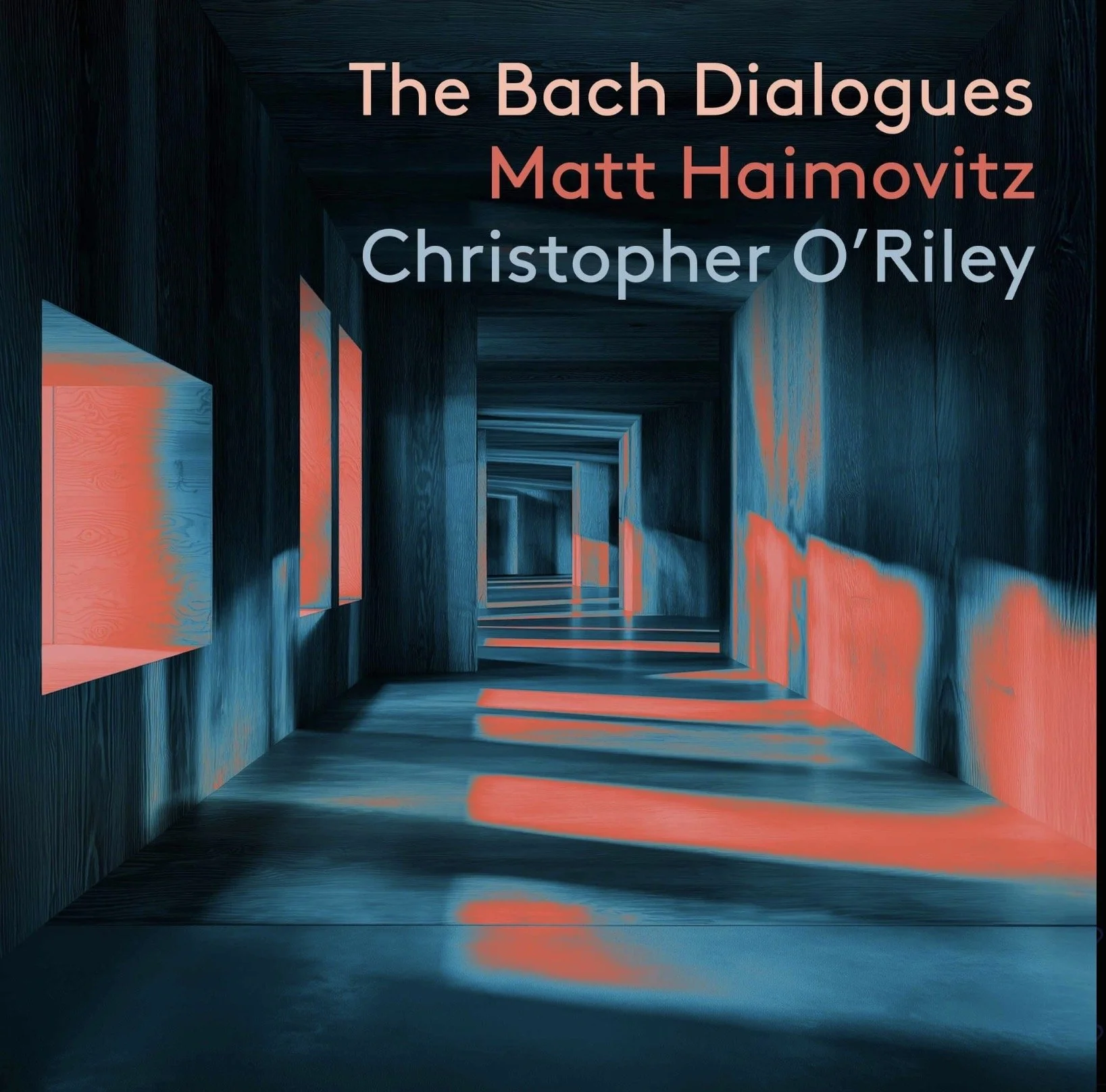
Bach Dialogues • Haimovitz & O’Riley
Today there’s no shortage of recordings of Bach’s viola da gamba sonatas (BWV 1027-1029), however they’re not all performed on the viola da gamba. This album is a case in point, combining a piccolo cello (with five strings) with clavichord. Both performers aren’t typically heard in HIPP circles, and one may be quite interested in the combination of the clavichord with a cello. Like, I dunno, because you haven’t heard that before?
The entire premise of this album is nearly absurd. Cello with clavichord! The liner notes go into some depth to the project, using an interview style. I liked the approach, I don’t need another historical essay about Bach. The format, in PDF with long-pages and big text (take a note, Harmonia Mundi!), is also to be admired. But what’s detailed, how they made the recording at Skywalker Sound by isolating the clavichord from the cello to maintain balance, requiring the two musicians to be connected digitally with headphones? The whole premise sounds absurd. It made me think this was HIPP gone wrong.
For those unaware, the clavichord is an extremely quiet instrument, even this “loud” Swedish model from the 1800s. Haimovitz uses gut strings and a baroque bow, although they go to some lengths to discuss it without a closeup picture. O’Riley isn’t an historical specialist, having recorded Bach on piano. And they never quite go into why they decided to combine cello and this quiet instrument. It shouldn’t even work, but the folks at Skywalker Sound are talented, as I can attest to several albums made at their facilities in California.
Haimovitz is an expressive player, and I found his approach with this music wasn’t necessarily trying to emulate a gamba. I’d go further to say his approach isn’t purely an HIPP one, but the sound of his instrument, it supports the music well. I found O’Riley’s last recording of the WTC II a bit challenging, not maintaining a strong, even tempo across all the sets, but here he’s rhythmically sure.
The opening performance of the trio sonata BWV 529, arranged from the organ original, puts the cello at its higher range, making use of that fifth string. makes for an interesting pairing. You keep thinking the clavichord will get buried by the dominance of the cello, but the recording engineers did a good job. Even pulling out dynamics from the clavichord in the opening of BWV 1029. The tempos are well chosen, with good dynamic and articulation support from Haimovitz with the phrasing. When vibrato is used, it’s used sensitively. From both players there’s a good sense of pulse and propulsion.
I’ll share that so many years ago I was supposed to go hear Haimovitz perform Bach in Annapolis, Maryland. A work colleague had invited me to go, and for reasons I don’t remember, I didn’t end up going. This recording brings him and O’Riley into my living room with great immediacy and despite my reservations with how this pairing might have worked, I am somewhat amazed it does work.
This was a nice discovery. I applaud both musicians for finding the creativity and will to do something outside the box and bring to me-and hopefully you-joy with this recording.