Biber – Rosenkranzsonaten • Leila Schayegh
Introduction
The sonatas known today (in English) as the Rosary or Mystery Sonatas by Heinrich Biber are extraordinary for multiple reasons. One often points to their use of scordatura (string mistuning), their function as devotional program music (depicting scenes from the Rosary prayers), and even numerological analyses suggesting the composer’s intentional tying of measure and note counts to a higher spiritual purpose. What is less often discussed is the simple fact that these pieces are superb music — as we might expect from one of the foremost instrumental virtuosos of his time.
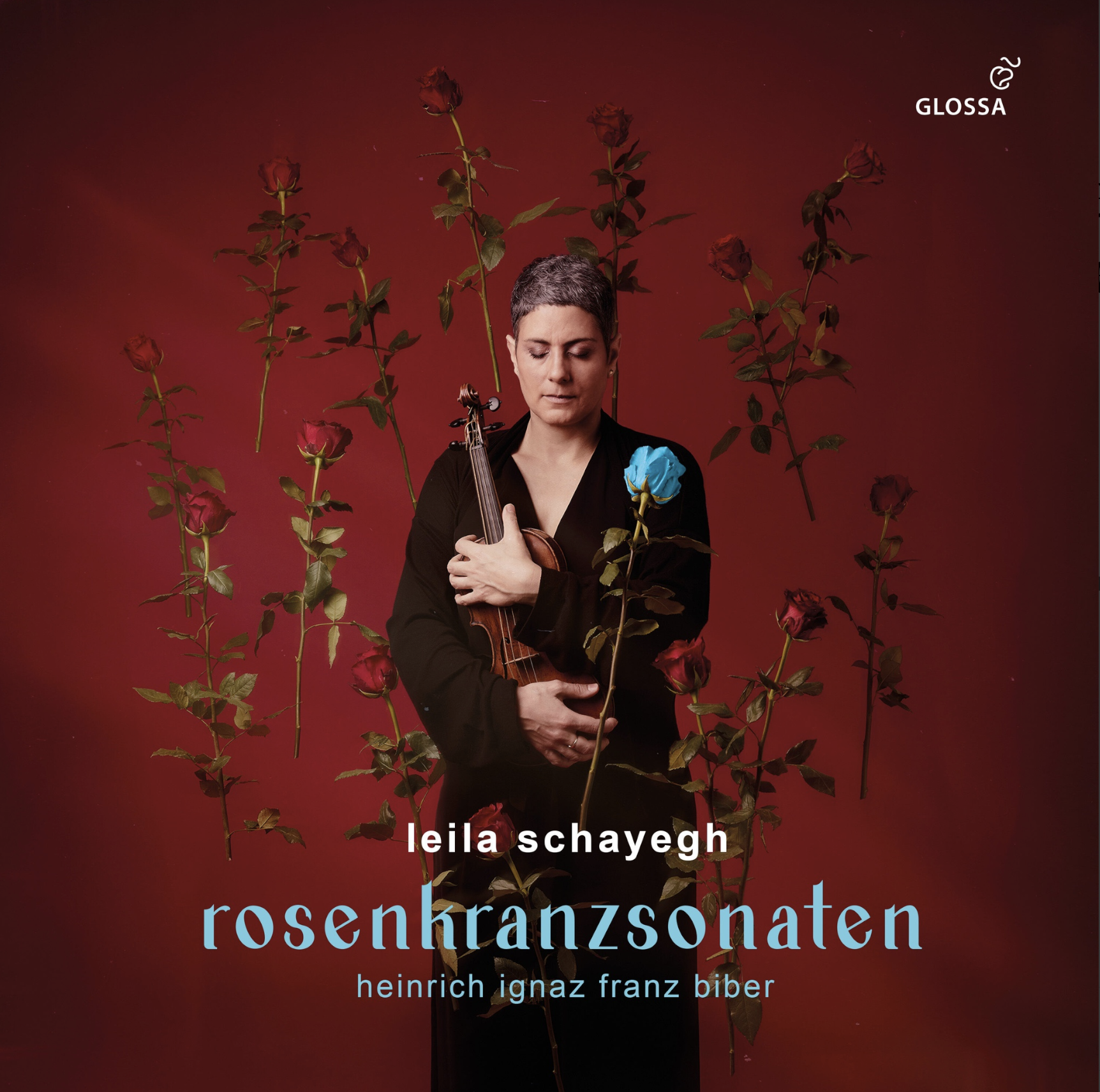
Leila Schayegh, together with her colleagues in La Centifolia providing basso continuo support, follows what has become a familiar interpretive path in approaching these works. Some performers argue for sparse accompaniment (Manze & Egarr), while others favor richly populated continuo teams — Holloway with Tragicomedia comes to mind, as does Letzbor’s most recent recording. Schayegh seems to strike a thoughtful compromise, assembling a diverse ensemble but strategically limiting participation across most of the sonatas, with only two involving the full group.
Like other violinists, she must also decide whether to use a single instrument or multiple ones to accommodate the practical demands of scordatura. The liner notes are excellent, offering background not only on the collection but on Schayegh’s interpretive decisions — including her use of four violins, two by Jacob Stainer, the maker so closely associated with Biber’s world.
Performances
We are fortunate in 2026 to have so many excellent recordings of this set available. Podger, Bismuth, Schmitt, Beyer, Goebel, Huggett, Lina tur Bonet, Lüthi, and Choo — these are among those I return to often. Those familiar with Leila Schayegh’s playing will expect an engaged and serious addition to that company.
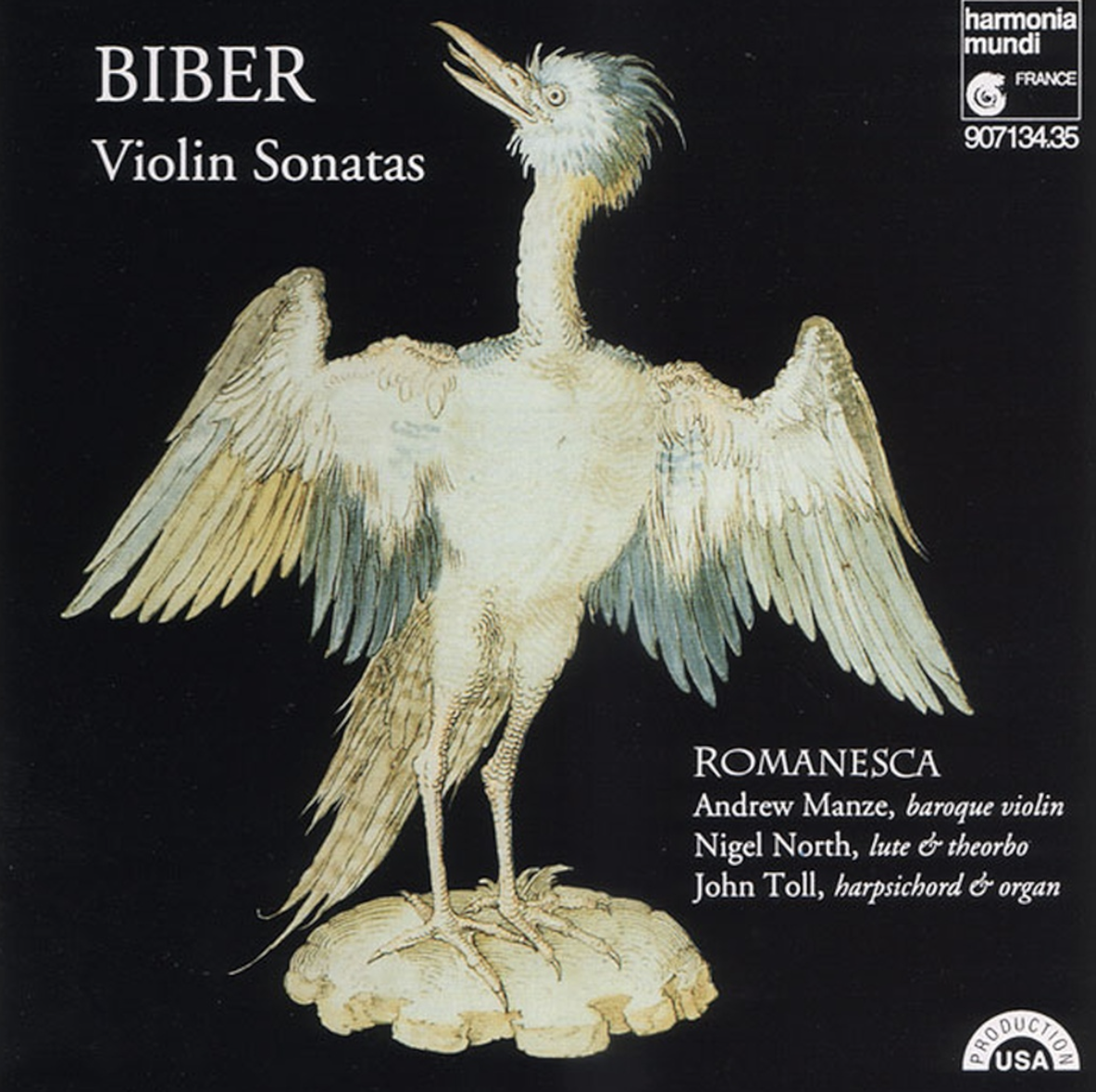
Overall, the musicians seem to embrace these works as devotional music. I recall Manze and Egarr (Harmonia Mundi) explicitly framing their recording this way. I ultimately did not warm to that set — not because of its sparse keyboard accompaniment, but because the violinist resisted exploiting the music’s virtuosic potential. Tempos occasionally felt slow; the tone of reverence sometimes bordered on restraint.
In this new recording, I want to begin with the Fourth Sonata, Darstellung im Tempel (Presentation in the Temple). Schayegh plays with remarkable restraint through much of the piece, her sound blending beautifully with organ and lirone. The tempo never impedes the development of ideas over the repeating bass. As an example of stylus fantasticus — with its short, contrasting sections — the work demands shifts of mood and character. Schayegh provides these with more dynamic and tempo variation than Manze did, at least to my ear.
At around six minutes, violin and lirone are left alone together, dynamics hushed and sinewy, just before Biber opens the floodgates. Near eight minutes, a reprise of the theme allows the listener to cool down and return to contemplation. The performance here is transparent, direct, and technically assured. The recorded sound is sharper and less reverberant than in earlier productions; the organ, in particular, seems superior to the instrument used in the Manze/Egarr recording.
Turning to the opening Sonata — the Annunciation (Mariæ Verkündigung) — the violin is tuned normally. After a dramatic opening, Biber offers variations over a ground bass before another striking close. Meret Lüthi’s recording presents almost three-dimensional sound, with generous reverberation and a decidedly virtuosic approach. Schayegh is more direct and less inclined toward theatrical gesture. Her opening is firm and focused. The variations are delivered with strong projection and clean articulation, and the double stops blend beautifully with the lirone. I am particularly taken with the sound of organ and lirone together in this recording.
The closing differs markedly from many versions, including Lüthi’s and Bismuth’s, which heighten the drama. If one were to borrow a visual analogy, it is the difference between viewing the Sistine Chapel ceiling before restoration and after — not that one is dirty and the other pure, but that one emphasizes bold saturation while the other favors clarity. Schayegh chooses clarity over technicolor.
The fourteenth Sonata, Mariæ Himmelfahrt (Assumption), introduces violone and harpsichord alongside organ and lirone. The expanded continuo team provides welcome contrast. Once the aria begins, I have always felt this sonata carries a certain swagger — even a smile. Here, the ensemble captures that buoyancy without heaviness. Schmitt’s recording, by comparison, can feel weighty and somewhat labored. Despite the increased forces here, Schayegh and La Centifolia maintain a lightness that serves the music well, aided by brisker tempi.
Perhaps the most famous sonata is the tenth, the Crucifixion. Its scordatura physically crosses the strings to symbolize the cross; the bow strokes evoke the hammering of nails. There is also the well-known alternate version attributed to A. Schmelzer with an added coda. In Schayegh’s performance, the emotional dimension is supported beautifully by the ensemble. The players seem to inhabit each other’s sound — a blending that is difficult to describe technically but immediately audible.
Revisiting my longtime reference recording by Goebel, I was struck by how much vibrato shapes his sound. His approach leans heavily into violinistic virtuosity. There is an unmistakable sweetness to his instrument, and an appetite for speed — Schayegh takes a minute and a quarter longer in this sonata. At moments, Goebel almost feels as though he is pressing forward too urgently. In slower sections of dense double stopping, he creates the illusion of multiple instruments. His interpretation emphasizes brilliance; Schayegh’s favors inward reflection.
The final Sonata, the “Guardian Angel” (Der Schutzengel), inevitably invites comparison with Bach’s Ciaccona, though we have no evidence that J.S. Bach knew this work. I revisited Choo (Avie) and Lina tur Bonet (Pan Classics) before hearing Schayegh’s new recording. Tur Bonet records in a drier acoustic with restrained vibrato; Choo avoids vibrato almost entirely. Among the three, I prefer the sound of Schayegh’s instrument itself. The acoustic here is even drier than tur Bonet’s.
Does that matter? For some listeners, perhaps. In a solo work, less reverberation leaves nowhere to hide. In passages where Biber writes descending low notes beneath rising figures, a more resonant space can allow sustained tones to bloom beneath faster motion. Similarly, repeated-note passages can accumulate power through acoustic reinforcement. Schayegh compensates with clean execution and tonal control. Between these three versions, I struggle to form a decisive preference; they differ in detail yet evoke similar emotional responses.
Amandine Beyer (Harmonia Mundi), through judicious vibrato and sharper rhythmic contrasts, brings stronger architectural shaping to the passacaglia. Borrowing something of Goebel’s speed, she ultimately provides, for me, a more overtly moving performance.
Conclusion
Some may object that I have not reviewed this album in isolation but have instead measured it against recordings I know well. But readers often want to know: do I need another recording of Biber’s Rosary Sonatas? That is the question I asked myself.
We are not yet in Four Seasons territory in terms of sheer volume of recordings — though the question is similar: what new perspective does this interpretation offer?
There may never be a recording that surpasses Goebel’s “Guardian Angel” or Huggett’s “Annunciation” for me. Yet this music is rich enough to sustain radically different visions. I still cannot choose between Huggett’s opening sonata and Patrick Bismuth’s; both are compelling, though one is flashier and the other more restrained.
Leila Schayegh’s new recording may disappoint listeners who prefer these sonatas as virtuosic showpieces. Goebel’s Crucifixion, for instance, can feel almost self-consciously brilliant — as if the spotlight rests squarely on the performer. Schayegh’s approach is humbler, allowing the music to speak without overt display. I do not suggest anything about the musicians’ personalities — only about interpretive effect.
The booklet raises the question of whether Biber himself performed these works. I find it difficult to imagine that he did not. If he was a showman, how might he have presented them? As devotional meditation? As virtuosic display? In muted shadows or blinding reflections against gold?
I am biased: I am a devoted admirer of Heinrich Biber. Yes, I believe we need more recordings of these sonatas, even if we have more than enough Four Seasons. Among the highest praise I can offer is that an artist possesses a clear interpretive vision and applies it consistently. Leila Schayegh and La Centifolia do exactly that.
Her approach is inward rather than outward — less concerned with chapel acoustics and more with internal gravity. She is, as always, technically commanding. Moments of lightness and joy coexist with seriousness — serious with a capital “S.” The consistency of that lens may not move every listener equally, but it is unquestionably intentional.
You can decide for yourself. I have mentioned recordings that amplify Biber’s theatricality — tempo, color, contrast, and continuo richness. Schayegh chooses a different path: clarity, discipline, and perhaps devotion.
And that, too, is a legitimate way through this extraordinary music.