Bach - Goldberg Variations • Yunchan Lim
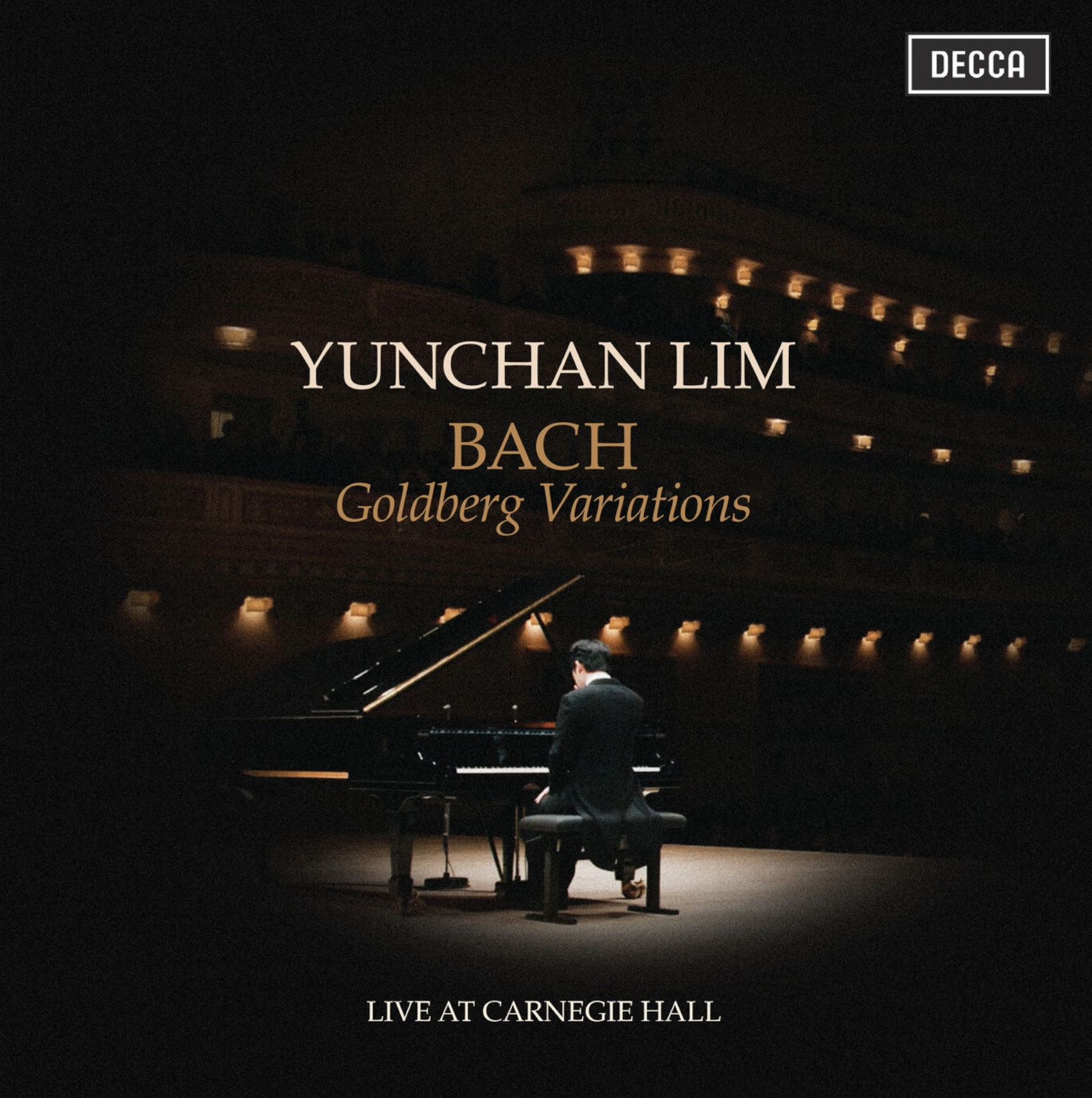
I noticed this album weeks ago online, offered with images of a vinyl pressing. The marketing for this album has been rich. From the cover alone, even with the special treatment of the Decca brand in the corner (the style and colors matching an earlier release by this pianist), one anticipates the luxury dripping off the release. I found myself wanting to understand more about the who and why behind it. As someone whose listening habits lean heavily toward Baroque and early classical music, the sudden prominence of an 18-year-old winner of the Van Cliburn International Piano Competition—Yunchan Lim—initially felt outside my usual orbit. This background piece from the Chicago Symphony Orchestra offers useful context for his musical journey and rapid ascent.
Bach’s Goldberg Variations have become something of a rite of passage for young pianists. I can easily recall the pleasure I found in Dong-Hyek Lim’s performance—paired with a fine Bach–Busoni Chaconne—as well as one of my longtime favorite Goldbergs, the recording by Ji. This new release, recorded live at Carnegie Hall, announces itself immediately as a pianistic reading. For listeners steeped in historically informed performance, this will be clear from the outset: Lim does things at the keyboard that are simply unavailable to the harpsichordist.
Chief among these are his voicing of inner parts, his nuanced use of articulation and dynamics, and, at moments, his willingness to explore the piano’s upper register in ways that depart from the score’s more literal implications. The most natural point of comparison is the recent Goldberg recording by Víkingur Ólafsson. Ólafsson’s interpretation feels tightly controlled, almost curated—a quality reinforced by his later Opus 109 album. Lim’s playing is marginally less contained on the surface, but the technical command is comparable, particularly in the way both pianists make fast music sound effortless.
Sonically, I prefer the clarity of Ólafsson’s recording. There is a palpable difference in engineering: Ólafsson’s sound is closer, more immediate, and carries a slightly brighter high-frequency profile. That said, Lim’s interpretive imagination proves more engaging over the long arc of the work.
This becomes apparent almost immediately. In the second variation, Lim’s emphasis on the left hand—particularly the upward rhythmic figures—draws attention to details in Bach’s writing that can easily pass unnoticed. The third variation offers the pleasure of differentiated articulations within a single hand, paired with a striking separation between left and right, aided by finely judged dynamics. This degree of control, deployed entirely in service of clarity, makes it no surprise that Lim emerged as the youngest Cliburn winner.
The fifth variation is a study in confidence: the way he leans into the cross-hand flourishes, the evenness of the right hand, the perfectly judged trill at the close. This is not mere virtuosity for its own sake; it is technique fully integrated into musical purpose.
In the twelfth variation—the canon at the fourth—Lim again emphasizes the left hand, articulating it with a firmness that repeatedly refocuses the listener’s ear on that voice. The ending unravels lightly and naturally, a recurring strength of this performance.
The nineteenth variation is played with particular sensitivity. Lim balances a light, separated touch with moments of legato phrasing that feel entirely natural, even if they raise inevitable questions about historical plausibility. Similar liberties appear in the repeat of the twentieth variation, which bounces along with an unmistakable sense of fun. The speed inevitably recalls Glenn Gould, but Lim brings far more character to the gesture—less irony, more joy.
Many listeners will be especially curious about the twenty-fifth variation. Lim resists overt romanticism in the initial statement, then pulls the dynamic level down for the repeat. His tempo is well judged, maintaining forward motion without lingering. When he briefly dips into more romantic territory, the cleanliness of the ornaments keeps the line honest. At these soft dynamics, the piano’s voice is remarkable.
I found myself wishing the twenty-sixth variation would burst forth more boldly, yet Lim’s restraint proves persuasive. The dynamics are carefully layered, the technique immaculate. One can only imagine what it must have been like to experience this performance live in New York—surely among the more memorable concert experiences for those in attendance.
The Quodlibet—that ingenious final variation in which Bach weaves together popular tunes over the Goldberg bass—receives a straightforward but deeply affecting reading. Lim does nothing overtly novel here, yet the slight broadening of tempo carries an unmistakable sense of leave-taking, a gentle regret that the journey is nearing its end.
Even the opening and closing Aria reward close attention. I have played this movement hundreds of times, always trying to find something new in it. Though technically modest compared to what follows, it remains deceptively challenging. Lim’s articulation and shaping reveal a quiet sense of wonder, reminding us that simplicity, too, demands mastery.
Conclusion
My own appreciation of Bach spans both modern and historical instruments, grounded in the belief that his music can benefit from maximizing the affect that moves us. The piano—an instrument that evolved well after Bach’s time—offers expressive possibilities that can both risk distortion and unlock new dimensions of meaning. Lim approaches this music with complete command of the instrument and an interpretive language shaped long after Bach, yet his decisions consistently enhance the music’s rhythmic, harmonic, and affective core.
While Ólafsson served as an early point of comparison, Lim ultimately stands on his own. If Ólafsson represents ultimate control, Lim demonstrates an equally deep control—applied with a slightly freer hand and an ear for detail that rarely lets a moment pass unconsidered. I also wanted to spend time comparing this recording with that by Ji: Ji doesn’t possess the same level of ultimate control but his inventive ideas continue to impress me, even after multiple listens. In all these cases, one performance doesn’t stand supreme over the other; thankfully they are all superior in their own way, in my view.
Beyond Ji and Ólafsson there are many other fine recordings of the Goldberg Variations, just as there are many excellent places to eat in a major city. Lim’s belongs firmly in the Michelin-starred category: a carefully constructed journey in which every flavor is intentional and deeply satisfying. This is a performance of the highest artistic order—perhaps even to a degree Bach himself might not recognize. I like to think he would, at the very least, be delighted.
You expect this recording to be good. What may surprise you is just how much it rewards informed listening—especially for pianists who have spent time wrestling with the instrument and its demands. Having done that, hearing what this young artist achieves at the keyboard leaves one response unavoidable: awe.