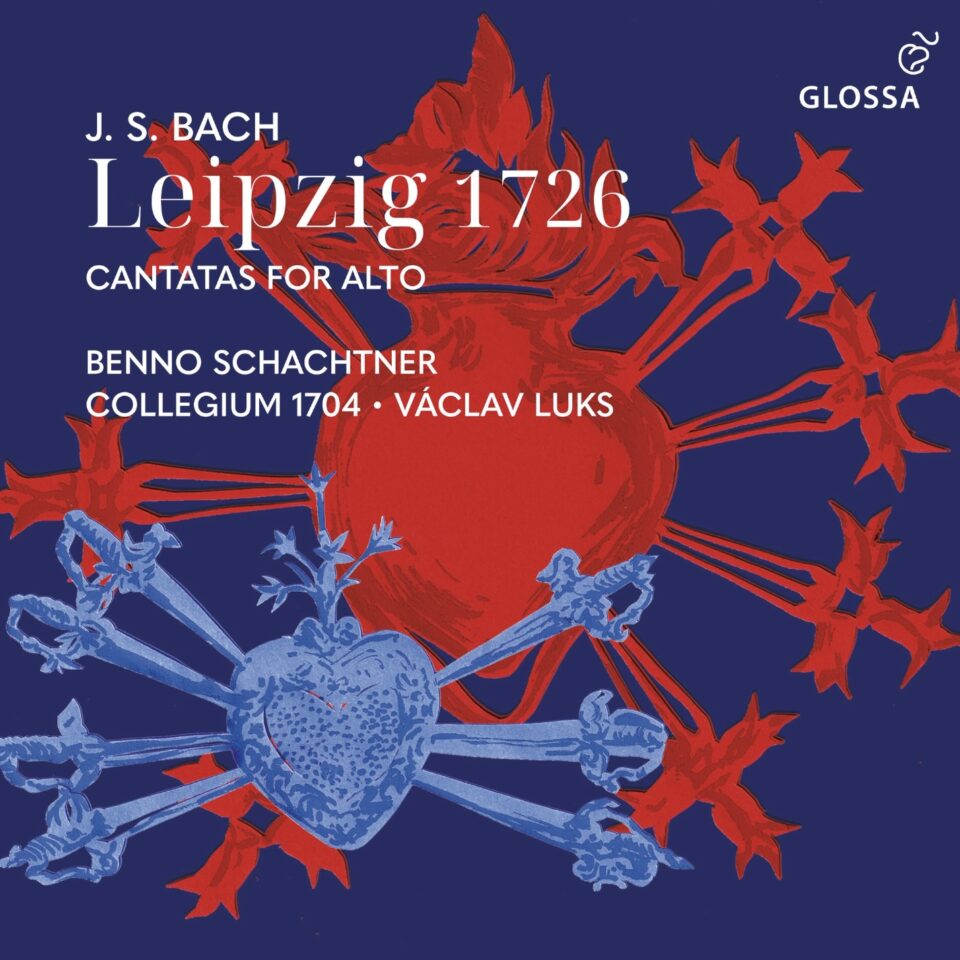
The idea of a single CD devoted to “alto” cantatas or arias by Bach isn’t new. At first sight of this album, I wondered why we might need another.
The star here is Benno Schachtner, a male countertenor. Another star, not promoted on the cover, is organist Johannes Lang. And going further, the final star is the recording location: St. Thomas’ in Leipzig.
An interior picture in the booklet shows the reality of Bach’s time: musicians literally stuffed into the spaces above the parishioners below. I wouldn’t expect good sound from those conditions, but wow, I stand corrected. The album sounds incredible, using the organ installed at St. Thomas’ in 2000, the so-called “Bach organ.”
The three cantatas are Geist und Seele wird verwirret, BWV 35; Vergnügte Ruh, beliebte Seelenlust, BWV 170; and Gott soll allein mein Herze haben, BWV 169. I’m more familiar with the first two. All three include an obbligato organ part, which makes perfect sense given the recording location and access to St. Thomas’ own organist.
Schachtner uses vibrato but has a clear and affable voice. Start, maybe, with track 15, an aria in the third cantata that has an organ solo and features the alto soloist. The tempo and feel of the movement are perfect; the clarity from Schachtner is admirable, and the organ part is technically assured, without overwhelming the texture. Listeners will no doubt recognize the aria at track 17, Stirb in mir, Welt, recycled from Bach’s concerto writing. The expressive voices that join in the final chorale are a surprise, with vibrato from the ensemble. The style supports a one-voice-per-part approach. The interjections from Lang are well done. To round things out, the opening Sinfonia will also be very familiar, here with a well-balanced organ leading the ensemble.
The opening Concerto of BWV 35 also shows Bach’s reuse of previously composed material. I can recall many recordings of this work, and I found Schachtner up there with the other performances. I am not convinced by the vibrato, but the balance and clarity of his voice in the ensemble, combined with the reverb of St. Thomas’, is something special to encounter. The later Sinfonia, track 5, has a bit more weight than I recall in other recordings, given the large organ with pedal support. The result brought smiles and happy tears.
And the famous opening of cantata no. 170: I can’t think of a better take than this one. Luks’ tempo is good, and Schachtner’s voice cuts through the texture just perfectly, without too much schmaltz. Again, the acoustics make something special of the organ’s contribution in the aria Wie jammern mich doch die verkehrten Herzen (track 10). The lightness of that Bach organ is magical against Schachtner’s singing.
Conclusions
I wouldn’t normally recommend a recording of familiar, over-recorded works. But this one is special, and you’ll likely take pleasure in exploring it. Collegium 1704 is a fine ensemble, but the singer and organist steal the limelight. I have not yet been to St. Thomas’, but on this recording the church comes off as an especially divine acoustic atmosphere, and how appropriate for Bach’s music.