J.S. Bach: The Motets • Gaechinger Cantorey
Introduction
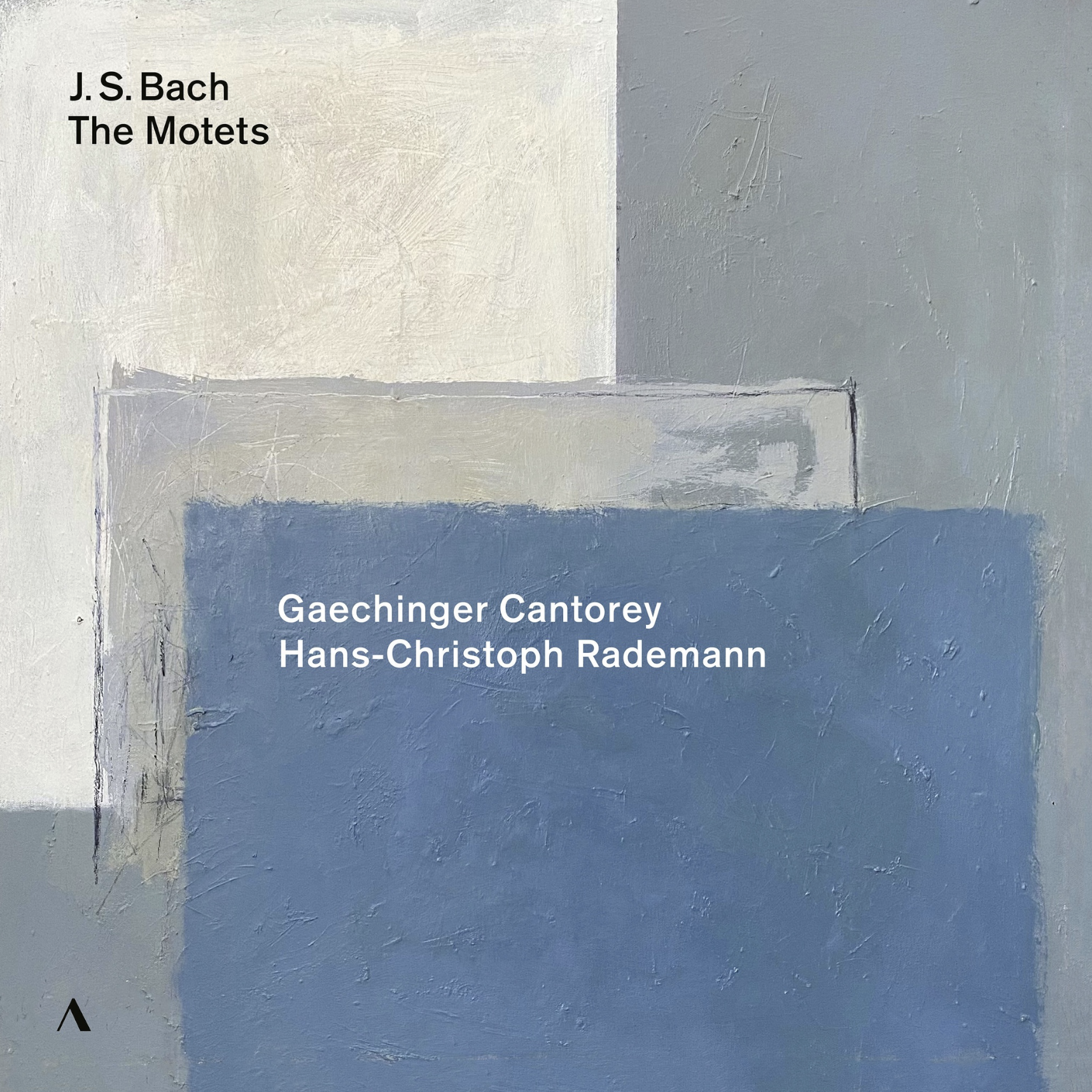
Bach's motets, as the excellent liner notes to this release note, are among his most beloved vocal works. I can see how, for modern audiences, their format — continuous singing — makes for a more easily digestible listening experience. The pieces recorded here include BWV 225–230. What's not included is BWV Anh. 159, which some believe is by Johann Christoph Bach. As a comparison, the release by Bach Collegium Japan (BCJ; BIS, 2009) includes the spurious motet plus BWV 118, and uses instruments to double the voices in that recording.
The choir here — the Gaechinger Cantorey, under Hans-Christoph Rademann — is composed of a good number of singers: 26 are credited in the booklet. Perhaps more unusual is the inclusion of an orchestra: 7 violins, 2 violas, 2 cellos, a single double bass, double reeds, and organ. This appears to be a second recording, the first conducted by Rilling some years ago.
The liner notes make mention of this, saying that performing these works with accompanying instruments today is normal practice. The rationale given is that instrumental parts survive from one of Bach's own performances, where — since the choir used was inexperienced university students — adding instruments to double the vocal lines provided a safety net.
I questioned this assertion, given the number of recordings I've enjoyed that didn't use the supporting instruments. Two I've enjoyed with great relish are the ones by Pygmalion (Harmonia Mundi, 2020) and the Hilliard Ensemble (ECM New Series, 2007).
The exception to this is BWV 230, which includes a basso continuo part and just four-part writing instead of cori spezzati texture. BWV 227 is scored for 5 voices. Hilliard use an organ for BWV 230 and single voices, whereas Pygmalion use a richer continuo group and a multi-voiced choir.
While a motet in itself is an older form, the ones left to us by Bach — maybe with the exception of BWV 225 and 230 — were used for funeral services. The booklet includes details of the tradition of motet singing at St. Thomas' in Leipzig; the notes also share that dating these works is difficult, although they give details to try to establish some context for each. Once again, these liner notes are exceptionally comprehensive — few albums offer something this thorough.
Sound
The BIS recording by BCJ capitalizes on the double-choir effect more than this new recording does. What the Japanese recording gains in left-to-right interest, this recording gains in depth. I felt we were a bit closer to the vocalists in the BCJ recording, though both are good recordings. My ear always favors clarity, and there's more of it in the older BIS recording.
The instruments do not come to the forefront in either recording, and perhaps less so with the GC.
Performances
In BWV 226, Der Geist hilft unser Schwachheit auf, clear diction and vocal articulation reign. The shorter BWV 230 is notable for how the opening theme, which continues throughout, is carefully articulated with space to keep the complex, faster movement clear, even in a reverberant space. The GC is a vocal ensemble first, and the training and direction behind bringing clarity to the audience are very evident.
The longest motet is BWV 227, Jesu, meine Freude, and is also my favorite. It opens in a very direct, homogenous way, very chorale-like. The eleven movements draw on a hymn tune by Johann Crüger — words by Johann Franck — published in Crüger's 1653 hymnal, Praxis pietatis melica.
The third movement gets some real attention through dynamics and energy before the solo parts in the fourth. The soloists use some vibrato, a nice contrast to, say, the Hilliard recording.
I typically start every new recording of the Bach motets with the ninth movement, Gute Nacht, a quite moving piece of music. Unfortunately, I didn't much care for the vibrato the soloists used here. There's a good balance between soloists and full choir, which I credit to the engineers — the differences felt authentic.
Vibrato isn't completely missing from the BCJ recording, but it's less prominent, and seems most apparent with the sopranos. Pygmalion's recording is very different, using full choral forces for this movement, combined with continuo support that includes lutes.
Singet dem Herrn, BWV 225, is notable for staying in the St. Thomas' repertoire after Bach's death. An account of Mozart visiting Leipzig documents this, describing his enthusiastic reaction upon hearing the choir perform the motet. He supposedly demanded the piece but could only be offered the parts, as a full score was not available.
The differentiation between choirs here is more pronounced. The GC pick a nice tempo, one that fits the character of the text with joy. I can once again hear the effort to keep things clear, but the recording doesn't help as much as it could. What I did admire, however, is the division of what's going on between the different vocal parts, with the tenors cutting through nicely.
The second part calms down and provides opportunities for soloists to emerge from the choral texture. It's well done. The soloists offer, to my taste, good expressivity to their parts through dynamics and shaping.
Joy returns in the last part. The total ensemble is in sync, with an energy that reminds me of some of the better moments recorded with John Eliot Gardiner's Monteverdi Choir performing Bach live.
Conclusions
Hans-Christoph Rademann is known for his dedication to performing choral music; his ensemble has a number of excellent recordings, and those of Schütz are especially notable. He's also recorded many late-baroque masterpieces by Bach and his contemporaries.
I therefore expected a good recording, and this one demonstrates the ensemble's pedigree. The liner notes suggest special attention to the latest research in bringing this recording to life.
That said, what holds this release back for me is the engineering itself — not poor, but not quite as transparent as some others available. There's a more palpable energy, in many ways, in this recording over the BCJ one mentioned above, but I'd lean toward Suzuki's for the superior recording. To Suzuki's credit, you get a few more minutes of music as well.
I also like the purity of voices without the instrumental doubling. I mentioned Pygmalion's recording, which also has excellent sound, but Pichon takes some liberties that don't necessarily make for the easiest comparisons. I also mentioned the Hilliard Ensemble, which added female vocalists; their sound isn't to everyone's taste, though I found the simplicity of that recording rewarding.
And I have not mentioned the many other recordings available, many from HIPP specialists, including Gardiner, Herreweghe, Kuijken, among others with less familiar names.
We are fortunate to have so many options when approaching Bach's motets. This new recording has many superlatives. Performance-wise, my only reservation was the use of vibrato in some solo sections, but this preference of mine seems to be a losing cross to bear, as I audition new recordings each week. I can only point out my own biases with the understanding that readers may well ignore them and enjoy the recordings as they are.