Johnny Loves Johann
“You all seated here are a community.”
I attended last evening a performance of violinist Johnny Gandelsman at the University of Richmond’s Modlin Center with four talented choreographers. The music of J.S. Bach was presented by a single man, playing a 5-stringed violin, focusing on Bach’s cello suites and his third partita, BWV 1006. Read more about the artists and the program.
The musical performance was technically sure; the artist rendered Bach’s music with great fidelity despite not using a score on stage. In some cases a few dances were rendered with fast tempi which I didn’t mind.
The dancing for me was problematic as it often didn’t adhere to the formal structure of the music. My first exposure to dance with Bach’s music came by way of Yo-Yo Ma’s video series exploring the cello suites. The first led to the creation of a musical garden in Toronto after trying in Boston. One of the videos featured a dance peer. Another, a skater, if I remember.
I entered the theater ignorant of the approach or any story attached to the performance. Beyond the dancers existed the paper used, attached to a jacket; tennis shoes, and two chairs. The dancing itself was well-executed. But as much as it synched with the music at times, the approach wasn’t for me throughly considered. Bach’s suites are based upon dance forms with formal structures. To ignore these, for me, was a mistake.
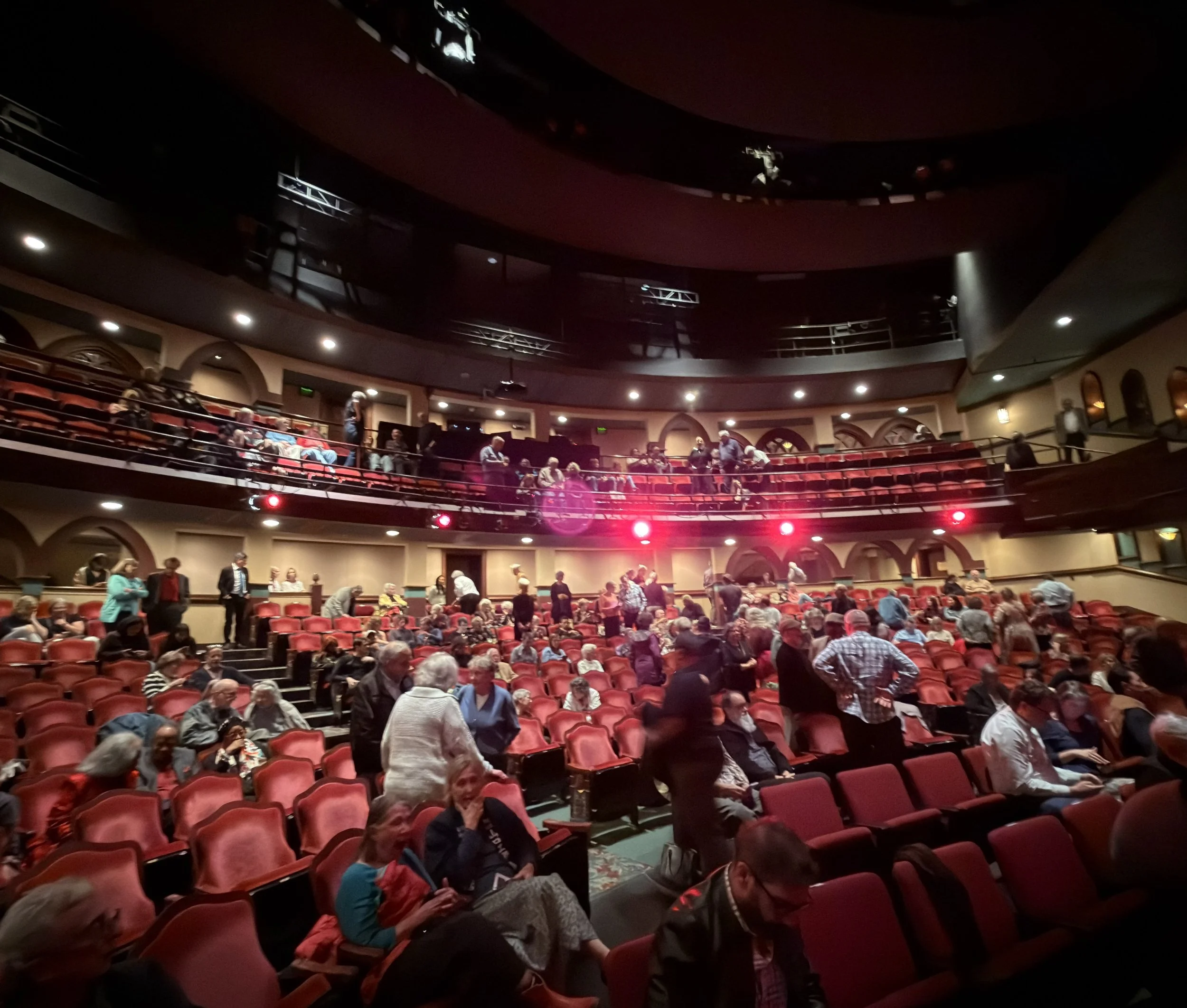
For me the art of this performance was found in the participation of the audience. I often listen to Bach’s music by myself, alone. Offering an opportunity for audience participation, which seemed the case at the University of Richmond’s Jepson Hall, which was likely prompted by the addition of a visual element with dancers, opened the audience a bit for reaction. Giggles. Laughs. Sighs. Enthusiastic applause. That, for me, was telling.
Bach’s music is something I’m occupied with daily. To share that experience with others? Magical.
Every performer on stage at the Jepson Theater was giving their all. Yet I didn’t find the choreography to enhance the music itself. It opened audience participation, yes, but it didn’t ultimately augment the music’s structure or impact for the listener in a comprehensive way. Moments of brilliance, sure. But a sustained examination of Bach’s structures? No. That wasn’t approached.
Which brings me to state that Gandelsman’s performances, overall, were exemplary. He made a few flubs, yes, but given the environment and setup? Not something we can cite him for, given the material. He used vibrato in a few spots where leaving it behind would have been a superior choice, but I found his interpretations of the cello material on the violin to be celebrated.
All this is said with the admission that I’m not a student of dance. The dancers themselves were talented professionals. My criticism has more to do with the design of the choreography than the execution.
Modlin’s executive director invited us to enjoy the performance, reminding us that we, as observers, were part of a community. For me, the reactions of the audience to what they were experiencing was interesting. However, his claim that we were investing in the creation of new material, new art, was a bit disappointing in its presentation.
The concept of fusing dance with Bach’s music is on point. The ultimate realization, as we saw it last evening, was short of the potential for such as collaborative artistic effort.