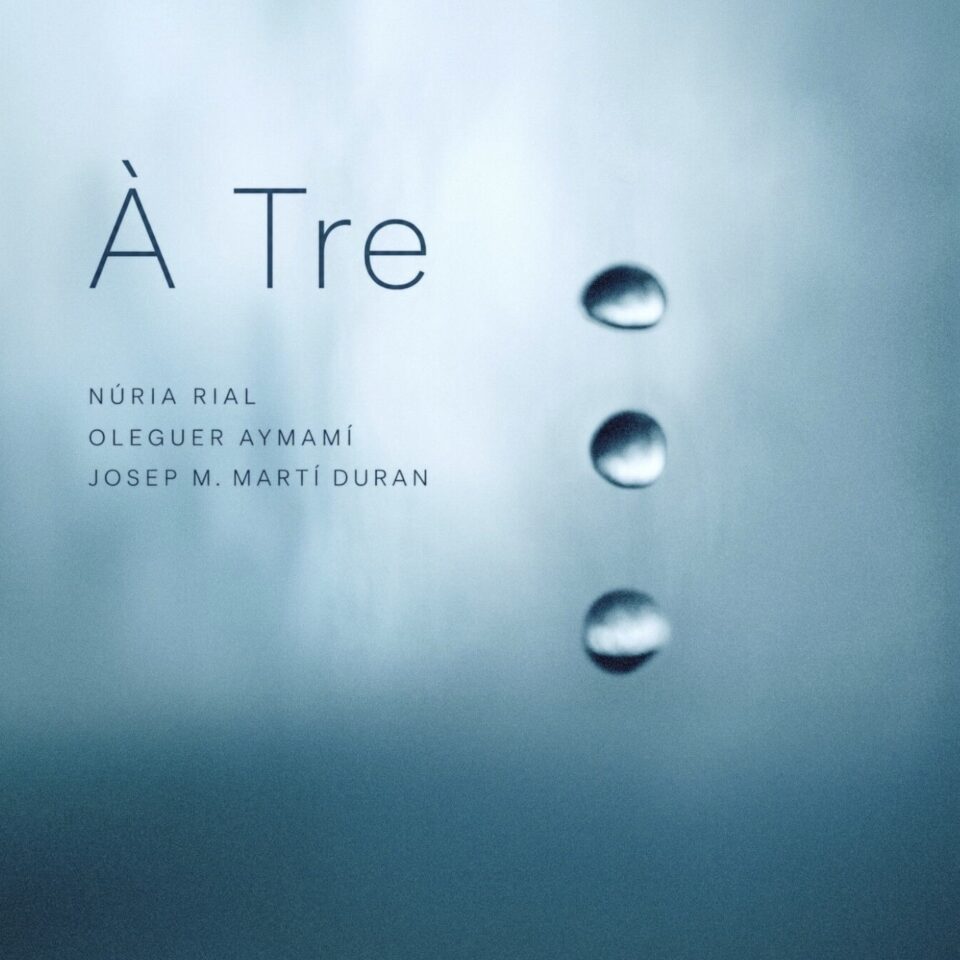
Rial, a singer I’ve admired across several albums, is joined here by Josep Maria Martí Duran (whom I know from L’Arpeggiata) and Oleguer Aymamí. The recording’s copyright is credited to the singer, so I’m surprised by the quality. A big label doesn’t always guarantee better sound, but my gosh, the acoustic signature here is gorgeous. Alfred Fernández Pons and Rial are credited with the editing, Pons with the recording. The soundstage is wide, the focus falls on the cello and lute, and there’s plenty of ceiling for the voice to resonate.
The repertoire is early Spanish and Italian, leaving the Renaissance and entering into the new school of the early baroque. From the Italian side, de Rore, Caccini, Peri, Strozzi, and Monteverdi make for a sampling. Monteverdi is represented by his duet for two tenors, Zefiro torna, performed here by Rial and Aymamí as the two “voices.” The piece resonates with me because it became a “hit” in my college days. Our professor was a fan, and he played it in the more basic “music appreciation” course a friend of mine, Bob, took. He’d tell me what the professor had said about it. I had very little contact with anyone else I could discuss the piece with, so Bob and I dug in. He became, like me, a Monteverdi fan.
I only wish he could hear this rendition. It’s beautiful.
The recording opens with a guitar piece by Gaspar Sanz, the Xácaras, which serves as a kind of warm-up for the album. It’s followed by Rial singing Ahora que estáis dormida by José Marín (b. 1619). It’s not the singer’s strongest piece, technically, but it’s a curious one, for how the sung melody meshes with the continuo. It’s worth the effort to record and present. Two more works by the same composer follow on tracks 5-6.
Among the longer pieces is Peri’s Tu dormi from his 1609 collection, nearly contemporaneous with Monteverdi’s L’Orfeo. We enjoy a long introduction by Duran on lute. Rial’s dynamic control is on display, as is the way she ends some notes with exquisite clarity and just the right amount of vibrato. Sleep is very likely treated here as death, so the piece becomes a kind of lament.
Merula’s Quando gli ucelli portaranno i zoccoli was published in 1638. The lyrics are especially colorful, and a few appearances by the bowed cello punctuate the singer’s text with affect. The music itself doesn’t work well on its own, without careful attention to the text. I’d suggest following along.
The two pieces by Barbara Strozzi succeed through the interest she injects into the music, which remains arresting even if you aren’t following the text. Strozzi gets attention for being a female composer, but she’s got the chops to compete with the best of men.
Caccini’s Torna, deh torna dates from 1614, a text calling for a lover’s return. The Rinuccini text is highly affective, matching the style that would be picked up by compositions for an instrumental voice. Rial does a great job with the technical demands of this style.
Conclusions
Combining Spanish and Italian music with the backdrop of a three-musician collaboration makes for a great recital. There’s variety across several decades, and also an evolution of style over a short but interesting period of musical development. There are questions about whether singers in these composers’ time would have used the same level of vibrato, but Rial controls it, letting a straight, held note blend into vibrato. Historical performance aside, it’s an affective sound, and it’s consistently applied across the album.
The plus for me in this presentation is the gorgeous sound. This is the kind of album you put on with a great hi-fi setup. It showcases so many important aspects of a revealing system, and on mine I was left enchanted.